
Are you looking for ways to improve your social media marketing strategy? Want some creative ideas to help you stand out from your competitors?
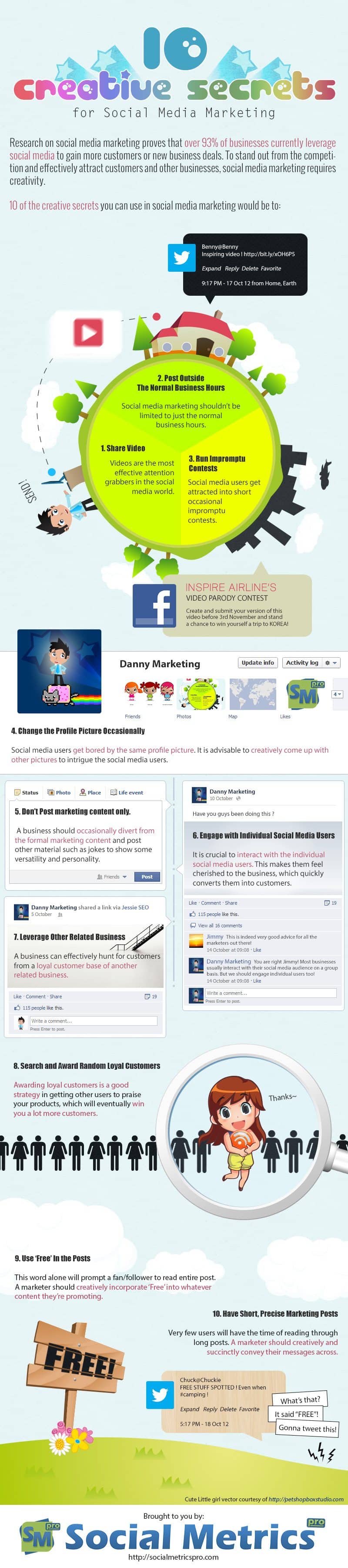
Social Metrics Pro share 10 ways to stand out on social media in this infographic.
Here’s a quick summary:
- Share video
- Post outside normal business hours
- Run contests
- Change your profile picture occasionally
- Don’t post marketing content only
- Engage with individual users
- Leverage other related businesses
- Search and award random loyal customers
- Use “FREE” in your posts
- Have short, precise marketing posts
Check out the infographic for more detail.
In today’s digital age, social media has become a cornerstone of marketing strategies for businesses of all sizes. Whether you’re a startup or an established brand, effectively leveraging social platforms can significantly enhance your online presence and customer engagement. However, standing out in the crowded social media landscape requires more than just posting regular updates. It demands creativity, strategic thinking, and a deep understanding of your audience. Here are ten creative strategies to help beginners excel in social media marketing:
Share Video
Video content has become a cornerstone of effective social media marketing strategies. Platforms like Facebook, Instagram, TikTok, and YouTube prioritize video in their algorithms, making it a powerful tool for reaching and engaging your audience. For small businesses looking to leverage video effectively, here are some in-depth tips and guidance:
- Know Your Goals and Audience
Before creating video content, define your objectives. Are you aiming to increase brand awareness, drive website traffic, boost sales, or educate your audience? Understanding your goals will guide the type of content you produce and the metrics you use to measure success.
Additionally, know your audience intimately. What are their interests, pain points, and preferences? Tailor your video content to resonate with their needs to maximize engagement and effectiveness.
- Choose the Right Platform
Different social media platforms cater to different types of video content. For example:
- YouTube: Ideal for longer, more in-depth videos such as tutorials, product demonstrations, or vlogs.
- Instagram and TikTok: Great for short, engaging videos that capture attention quickly. Use features like Instagram Stories or TikTok’s trending challenges to increase visibility.
- Facebook: Supports various video formats; use live video to engage in real-time with your audience.
Select platforms based on where your target audience spends their time and the type of content that best suits your message.
- Create High-Quality Content
Quality matters in video production. Invest in decent equipment such as a good camera (or smartphone with a high-resolution camera), microphone, and lighting setup. Ensure your videos are clear, well-lit, and have good audio quality to maintain viewer engagement.
Moreover, pay attention to video editing. Use editing software like Adobe Premiere Pro, Final Cut Pro, or free tools like iMovie or Shotcut to polish your videos. Incorporate graphics, subtitles (if applicable), transitions, and music to enhance production value.
- Focus on Storytelling
Effective videos tell a story or evoke emotions. Whether you’re showcasing your brand’s journey, demonstrating product benefits, or sharing customer testimonials, weave a narrative that captivates your audience. Start with a hook to grab attention, deliver your message concisely, and end with a strong call to action (CTA) to encourage viewer interaction.
- Optimize for Mobile Viewing
Most social media users access platforms via mobile devices. Ensure your videos are optimized for mobile viewing by:
- Keeping videos short and to the point.
- Using square or vertical formats for better visibility on mobile feeds.
- Adding subtitles or text overlays for viewers who watch without sound.
- Testing your videos across different devices to ensure compatibility.
- Encourage Engagement and Interaction
Engagement metrics (likes, comments, shares) are crucial for social media algorithms. Encourage interaction by asking questions, prompting viewers to share their thoughts, or running polls within your videos. Respond promptly to comments to foster a sense of community and build relationships with your audience.
- Experiment with Different Types of Videos
Variety keeps your content fresh and engages different segments of your audience. Consider creating:
- Educational Videos: Share knowledge related to your industry or teach your audience how to use your products/services.
- Behind-the-Scenes Content: Provide a glimpse into your business operations, team culture, or events.
- User-Generated Content: Feature content created by your customers (with permission), such as testimonials or creative uses of your products.
Experiment with live streaming as well to connect with your audience in real-time and showcase events, product launches, or Q&A sessions.
- Use Analytics to Refine Your Strategy
Track metrics like views, watch time, engagement rate, and click-through rates to gauge the performance of your video content. Platforms like YouTube Analytics, Facebook Insights, and Instagram Insights provide valuable data on viewer behavior and preferences. Use these insights to optimize future videos, refine your content strategy, and maximize ROI.
- Promote Your Videos
Creating great content is just the first step; promoting it ensures it reaches your target audience. Share your videos across all your social media channels, embed them in relevant blog posts or email newsletters, and collaborate with influencers or partners to extend your reach. Consider using paid advertising options on social platforms to boost visibility and target specific demographics.
- Stay Consistent and Experiment
Consistency is key to building a loyal audience. Establish a regular posting schedule for your video content to keep your audience engaged and returning for more. At the same time, don’t be afraid to experiment with new video formats, trends, or storytelling techniques. Stay updated with social media trends and adapt your strategy to keep your content relevant and engaging.
By leveraging video effectively, small businesses can amplify their brand message, engage with their audience on a deeper level, and drive meaningful business outcomes. With careful planning, creativity, and a focus on delivering value, video content can be a game-changer in your social media marketing efforts.
Post Outside Normal Business Hours
Posting outside normal business hours on social media can be a strategic way for small businesses to reach a broader audience, increase engagement, and maximize the impact of their content. Here are some in-depth tips and guidance on how to effectively leverage this tactic:
- Understand Your Audience’s Behavior
Before adjusting your posting schedule, it’s essential to understand when your target audience is most active on social media. Use platform analytics (e.g., Facebook Insights, Instagram Insights, Twitter Analytics) to identify peak engagement times. Look for trends in user activity across different days of the week and times of the day.
Additionally, consider the demographics of your audience. If your target audience includes working professionals, they might be more active during evenings and weekends when they have leisure time to browse social media. Stay attuned to any regional or cultural differences that may influence when your audience is online.
- Experiment with Different Time Slots
Once you have insights into your audience’s behavior, experiment with posting at various times outside traditional business hours. Test different time slots in the evenings, early mornings, and weekends to determine when your posts generate the most engagement.
Keep a record of your posting times and performance metrics (likes, comments, shares, clicks) to identify patterns and trends. Platforms like Facebook and Instagram allow you to schedule posts in advance, making it easier to maintain a consistent presence during non-business hours.
- Use Social Media Scheduling Tools
Utilize social media management tools like Hootsuite, Buffer, or Sprout Social to schedule posts outside normal business hours efficiently. These tools enable you to plan and schedule content in advance, ensuring your posts go live at optimal times even when you’re not actively online.
Schedule posts strategically based on your audience’s peak engagement times identified through analytics. Experiment with different scheduling options (e.g., posting late at night or early morning) to assess their impact on reach and engagement.
- Engage with a Global Audience
Posting outside normal business hours can be particularly beneficial if your business caters to a global audience or operates in different time zones. By scheduling posts to align with peak times in various regions, you can reach international customers and prospects effectively.
Consider the cultural and linguistic preferences of different audiences when crafting content for global reach. Use language translation tools or collaborate with native speakers to ensure your messaging resonates across diverse demographics.
- Focus on Evergreen and Timeless Content
When posting during non-business hours, prioritize evergreen content that remains relevant over time. Evergreen content includes educational articles, how-to guides, customer testimonials, and industry insights that provide enduring value to your audience.
Avoid time-sensitive promotions or announcements that may get lost if posted during off-peak hours. Save such content for times when your audience is most likely to be actively engaged and ready to take immediate action.
- Monitor and Respond to Engagement
Even outside normal business hours, stay attentive to engagement on your social media posts. Monitor comments, messages, and mentions regularly to promptly respond to inquiries, acknowledge feedback, and engage with your audience.
Prompt responses demonstrate your commitment to customer service and build trust with your audience. Consider setting up notifications or alerts to stay informed about activity on your social media accounts, especially during times when you’re not actively monitoring.
- Use Paid Advertising Strategically
Consider using paid advertising features on social media platforms to amplify your reach during off-peak hours. Paid ads can help ensure your content reaches a wider audience beyond your organic followers, increasing visibility and engagement.
Experiment with different ad formats (e.g., carousel ads, video ads, promoted posts) and targeting options to optimize your campaign performance. Use platform insights and analytics to track the effectiveness of your paid advertising efforts and refine your strategy accordingly.
- Promote Time-Sensitive Offers Strategically
If you have time-sensitive offers or promotions, strategically promote them during both peak and off-peak hours to maximize exposure. Use a combination of scheduled posts, paid advertising, and email marketing to ensure your promotional messages reach your audience at the right time.
Consider creating urgency in your messaging by emphasizing limited-time discounts, flash sales, or exclusive deals available only for a short period. Encourage immediate action from your audience by including clear calls to action (CTAs) in your posts and ads.
- Monitor Competitor Activity
Keep an eye on your competitors’ social media activity, especially during off-peak hours. Analyze their posting frequency, content types, and engagement levels to identify opportunities for differentiation and improvement in your own strategy.
Look for gaps or underserved segments in your industry or niche that you can leverage to stand out. Stay informed about industry trends, customer preferences, and emerging topics to stay ahead of the competition and maintain relevance with your audience.
- Evaluate and Adjust Your Strategy
Regularly review your social media analytics and performance metrics to evaluate the effectiveness of posting outside normal business hours. Measure engagement rates, reach, click-through rates, and conversions to assess the impact of your strategy on overall business objectives.
Based on your findings, make data-driven adjustments to your posting schedule, content strategy, and engagement tactics. Continuously optimize your approach to maximize the ROI of your social media efforts and adapt to evolving audience behaviors and platform algorithms.
Conclusion
Posting outside normal business hours on social media requires careful planning, experimentation, and a deep understanding of your audience’s behavior and preferences. By strategically leveraging non-traditional posting times, small businesses can expand their reach, increase engagement, and build stronger connections with their target audience. Stay agile, monitor performance metrics, and refine your strategy over time to effectively capitalize on opportunities outside standard operating hours and achieve sustainable growth through social media marketing.
Run Contests
Contests are a powerful tool in social media marketing for engaging your audience, increasing brand visibility, and driving user participation. When executed effectively, contests can generate excitement, encourage user-generated content, and foster a sense of community around your brand. Here’s a comprehensive guide with in-depth tips and guidance for small businesses looking to run successful social media contests:
- Define Your Objectives
Before launching a contest, clarify your goals and objectives. Are you aiming to increase followers, generate leads, boost engagement, promote a new product/service, or collect user-generated content? Clearly defining your objectives will help shape the type of contest you run, the rules you set, and how you measure success.
- Choose the Right Platform and Format
Select a social media platform that aligns with your target audience and contest goals. Popular platforms for contests include Instagram, Facebook, Twitter, and TikTok, each offering unique features suited to different contest formats:
- Instagram: Ideal for photo contests, hashtag challenges, and user-generated content (UGC).
- Facebook: Suitable for sweepstakes, voting contests, and comment-to-enter contests.
- Twitter: Best for hashtag contests and retweet-to-win campaigns.
- TikTok: Great for creative challenges and user-generated video content.
Choose a contest format that resonates with your audience and encourages meaningful interaction with your brand.
- Set Clear and Specific Rules
Establish clear rules and guidelines for your contest to ensure fairness and compliance with platform policies. Include details such as eligibility criteria (e.g., age restrictions, geographic limitations), entry requirements (e.g., hashtag usage, content submission guidelines), contest duration, and prize details.
Communicate the rules clearly in your contest announcement post and provide a link to the full terms and conditions on your website or in the post caption. Transparency builds trust with participants and minimizes confusion.
- Offer Valuable and Relevant Prizes
Choose prizes that appeal to your target audience and align with your brand. Prizes can range from your own products/services to gift cards, exclusive experiences, or branded merchandise. Ensure the value of the prize reflects the effort participants are expected to invest in entering the contest.
Consider partnering with other businesses or influencers to co-sponsor prizes or enhance the contest experience. Collaborations can expand your reach and attract participants who may be interested in both brands.
- Create Compelling Contest Visuals and Messaging
Capture attention with visually appealing graphics, videos, or images that clearly communicate the contest details and prizes. Use branded visuals that align with your brand’s identity and resonate with your audience.
Craft compelling messaging that highlights the benefits of participating in the contest. Emphasize the value of the prize, the excitement of the competition, and the opportunity for participants to showcase their creativity or skills.
- Promote Your Contest Strategically
Maximize participation by promoting your contest across multiple channels and touchpoints. Utilize your social media profiles, email newsletters, website banners, and paid advertising to reach a wider audience. Leverage influencers, brand advocates, or partners to amplify your contest’s visibility through their networks.
Create a dedicated hashtag for your contest to facilitate tracking and encourage user-generated content. Encourage participants to share the contest with their friends and followers, extending your reach organically.
- Encourage User-Generated Content (UGC)
Incorporate user-generated content into your contest to foster authentic engagement and showcase customer creativity. For example, ask participants to submit photos, videos, stories, or testimonials related to your brand or a specific theme.
Highlight and share UGC submissions on your social media channels to recognize participants, build community excitement, and inspire others to join the contest. User-generated content enhances brand authenticity and encourages organic word-of-mouth marketing.
- Engage with Participants and Foster Community
Actively engage with participants throughout the contest period to maintain momentum and encourage ongoing participation. Respond to comments, questions, and entries promptly to demonstrate your brand’s responsiveness and appreciation.
Create a sense of community by encouraging participants to interact with each other, share their entries, and support fellow contestants. Facilitate conversations around the contest topic or theme to deepen engagement and strengthen relationships with your audience.
- Measure and Analyze Results
Monitor key metrics such as participation rate, engagement levels, reach, and conversion rates to evaluate the success of your contest. Use platform analytics tools and third-party software to track performance and gather insights into participant demographics and behaviors.
Compare the results against your initial objectives to determine whether the contest achieved its goals. Identify strengths and areas for improvement to refine your future contest strategies and optimize ROI.
- Follow Up and Reward Participants
After selecting a winner(s), announce the results publicly and congratulate the winners. Consider showcasing winning entries or honorable mentions to celebrate participants’ efforts and creativity. Reward winners promptly with their prizes and engage with them to collect testimonials or feedback.
Follow up with all participants to thank them for their participation and encourage continued engagement with your brand. Consider offering exclusive discounts or special offers to participants as a token of appreciation for their support.
Conclusion
Running contests on social media can be a highly effective strategy for small businesses to engage their audience, increase brand awareness, and achieve specific marketing objectives. By defining clear goals, selecting the right platform and format, setting rules, offering valuable prizes, creating compelling visuals, promoting strategically, encouraging user-generated content, fostering community engagement, and analyzing results, small businesses can maximize the impact of their contests and build lasting connections with their audience. Incorporate these tips into your contest strategy to drive meaningful engagement and achieve measurable results through social media marketing.
Change Your Profile Picture Occasionally
Your profile picture on social media serves as a visual representation of your brand identity and plays a crucial role in making a memorable first impression on potential customers. Changing your profile picture occasionally can attract attention, reflect updates or promotions, and keep your brand image fresh. Here’s a detailed guide with tips and guidance for small businesses on effectively managing and updating their profile pictures:
- Maintain Brand Consistency
While changing your profile picture periodically can be beneficial, it’s essential to maintain consistency with your overall brand image. Your profile picture should align with your brand’s colors, fonts, and visual style to ensure immediate recognition by your audience.
Consider incorporating elements such as your logo, brand colors, or a recognizable visual motif into your profile picture. This consistency reinforces brand identity and helps build trust and familiarity with your audience over time.
- Update Based on Seasons or Holidays
One effective strategy for changing your profile picture is to align it with seasonal changes or holidays. For example, update your profile picture to feature seasonal themes such as winter, summer, or holidays like Christmas, New Year’s, Halloween, etc.
Seasonal updates demonstrate that your business is current and actively engaged with your audience. It also adds a touch of personality and relatability, making your brand more approachable and relevant.
- Highlight Special Events or Campaigns
Change your profile picture to promote specific events, product launches, or marketing campaigns. For instance, if you’re running a special promotion, hosting a webinar, or celebrating a milestone, update your profile picture to reflect that occasion.
Use your profile picture as a visual teaser or announcement to generate excitement and curiosity among your followers. Include relevant text, hashtags, or event dates within the image to provide additional context and encourage engagement.
- Showcase Customer Testimonials or User-Generated Content
Feature customer testimonials or user-generated content (UGC) in your profile picture to highlight customer satisfaction and social proof. Create graphics that incorporate positive reviews, photos of satisfied customers using your products, or quotes praising your services.
Not only does this strategy leverage the power of peer recommendations, but it also reinforces trust and authenticity in your brand. Rotate different testimonials periodically to showcase a variety of customer experiences and perspectives.
- Celebrate Company Milestones or Anniversaries
Mark significant milestones, anniversaries, or achievements by updating your profile picture. Whether it’s your business’s founding anniversary, reaching a milestone number of customers, or launching a new product line, use your profile picture to commemorate these accomplishments.
This approach not only celebrates your successes but also reinforces your brand’s longevity, stability, and commitment to excellence. It can also evoke positive emotions and pride among your audience, fostering stronger connections with your brand.
- Align with Current Marketing Campaigns
Coordinate your profile picture changes with ongoing marketing campaigns or initiatives. If you’re promoting a new product, service feature, or a limited-time offer, update your profile picture to reflect the theme or key message of the campaign.
Consistent messaging across your profile picture and other marketing channels reinforces your campaign’s visibility and reinforces brand recall. It also enhances the coherence of your marketing efforts, ensuring that your audience receives a cohesive brand experience.
- Engage Your Audience with Polls or Votes
Encourage interaction and engagement by involving your audience in the process of selecting your next profile picture. Conduct polls or votes where followers can choose from several options or suggest new ideas for your profile picture.
This interactive approach not only invites participation but also makes your audience feel valued and involved in your brand’s decision-making process. It can lead to increased engagement, visibility, and a sense of community among your followers.
- Monitor and Measure Performance
Track the performance and impact of profile picture changes using social media analytics tools. Monitor metrics such as engagement rates, follower growth, profile visits, and comments to assess the effectiveness of different profile picture updates.
Compare the performance of various profile pictures to identify trends or patterns in audience response. Use these insights to inform future decisions about profile picture updates and optimize your strategy for maximum impact.
- Maintain a Schedule for Updates
Establish a regular schedule for updating your profile picture to maintain consistency and keep your audience engaged. Whether you change it monthly, quarterly, or seasonally, a consistent updating schedule ensures your profile remains current and relevant.
Use social media management tools to schedule profile picture changes in advance, especially if you have multiple social media accounts to manage. Plan ahead for upcoming events, campaigns, or seasonal changes to stay organized and maintain a cohesive brand image.
- Seek Feedback and Adapt Accordingly
Lastly, solicit feedback from your audience regarding profile picture updates. Encourage followers to share their thoughts, preferences, and suggestions for future changes through comments, polls, or direct messages.
Take into account constructive feedback and use it to refine your approach to profile picture updates. By listening to your audience’s input and adapting accordingly, you can ensure that your profile picture changes resonate with your followers and support your overall marketing objectives.
Conclusion
Changing your profile picture occasionally is a simple yet effective strategy for small businesses to enhance brand visibility, engage with their audience, and convey timely messages or updates. By maintaining brand consistency, leveraging seasonal themes, highlighting special events, showcasing customer testimonials, aligning with marketing campaigns, engaging your audience, monitoring performance, maintaining a schedule, and seeking feedback, small businesses can optimize the impact of their profile picture updates on social media. Incorporate these tips into your strategy to maintain a dynamic and compelling brand presence that resonates with your audience and reinforces your brand identity effectively.
Don’t Post Marketing Content Only
In the realm of social media marketing, maintaining a balanced content strategy is essential for building meaningful relationships with your audience, fostering engagement, and establishing your brand as a trusted authority in your industry. While promotional content is important for driving sales and conversions, consistently posting marketing-focused content can lead to audience fatigue and decreased engagement. Here’s a comprehensive guide with in-depth tips and guidance for small businesses on diversifying their social media content beyond marketing messages:
- Understand the Value of Diverse Content
Diversifying your social media content beyond marketing promotions allows you to connect with your audience on a deeper level. By offering varied content that educates, entertains, inspires, or informs, you can cater to different interests and motivations within your target demographic.
Consider the different stages of the buyer’s journey—awareness, consideration, and decision-making—and create content that addresses each stage. This approach ensures you provide value at every touchpoint, from raising awareness of your brand to nurturing leads and converting customers.
- Educational and Informative Content
Share knowledge and expertise related to your industry or niche through educational content. Create how-to guides, tutorials, tips, and industry insights that address common challenges or provide valuable information to your audience.
Position your brand as a thought leader by sharing updates on industry trends, emerging technologies, or regulatory changes. This type of content not only demonstrates your authority but also builds trust and credibility among your followers.
- Entertaining and Engaging Content
Capture attention and foster interaction with entertaining and engaging content. Use humor, storytelling, or interactive elements such as polls, quizzes, or challenges to create a memorable experience for your audience.
Share behind-the-scenes glimpses of your business, introduce your team members, or showcase company culture to humanize your brand. Encourage user-generated content (UGC) by inviting followers to share their experiences, stories, or creative interpretations related to your brand.
- Customer Stories and Testimonials
Highlight customer success stories, testimonials, or case studies to demonstrate the real-world impact of your products or services. Share authentic reviews, testimonials, or user-generated content that showcases how your offerings have solved problems or enhanced the lives of your customers.
These stories not only provide social proof but also resonate with potential customers who may relate to similar challenges or aspirations. Encourage satisfied customers to share their experiences on social media and leverage their content to build trust and credibility.
- Interactive and User-Generated Content
Encourage active participation from your audience through interactive content formats. Polls, surveys, contests, quizzes, and challenges prompt followers to engage with your brand actively.
Create polls or surveys to gather feedback, opinions, or preferences from your audience. Host contests that encourage user-generated content, such as photo contests, caption contests, or challenges related to your products or industry.
- Community Engagement and Social Causes
Demonstrate your brand’s values and commitment to social responsibility by supporting relevant causes or initiatives. Share updates on charitable partnerships, community involvement, or sustainability efforts that align with your brand’s mission and resonate with your audience’s values.
Engage in conversations around social issues or current events that are meaningful to your audience. Show empathy, authenticity, and transparency in your communications to build a strong emotional connection with your followers.
- Behind-the-Scenes and Company Culture
Offer a glimpse behind the curtain by sharing behind-the-scenes content that showcases your company culture, workplace environment, or day-to-day operations. Introduce your team members, highlight employee achievements, or share milestones and celebrations within your organization.
Humanize your brand by showcasing the people behind the products or services. This transparency fosters a sense of familiarity and builds stronger relationships with your audience, who may appreciate the personal touch.
- Curated Content and Industry News
Curate relevant content from reputable sources within your industry or niche to provide added value to your audience. Share articles, blog posts, or news updates that educate, inform, or spark discussions related to your industry trends, innovations, or best practices.
Position your brand as a valuable resource by curating content that addresses common questions, challenges, or interests shared by your audience. Add your perspective or insights to curated content to enrich the conversation and showcase your expertise.
- Seasonal and Trending Topics
Stay current and relevant by incorporating seasonal themes or trending topics into your content strategy. Capitalize on holidays, seasonal events, or cultural moments that resonate with your audience’s interests or preferences.
Create themed content around relevant observances or trends, such as seasonal promotions, themed campaigns, or timely updates related to your industry. Tailor your messaging and visuals to align with the seasonal context while maintaining consistency with your brand identity.
- Monitor Engagement and Adjust Strategy
Regularly monitor engagement metrics such as likes, comments, shares, and click-through rates to gauge the effectiveness of your content strategy. Analyze which types of content resonate most with your audience and drive the highest levels of engagement.
Use social media analytics tools to track performance over time and identify trends or patterns in audience behavior. Adjust your content strategy based on insights gained from analytics to optimize engagement, reach new audiences, and achieve your marketing objectives.
Conclusion
Diversifying your social media content beyond marketing messages is crucial for small businesses seeking to build stronger connections with their audience, increase engagement, and establish brand authenticity. By incorporating educational, entertaining, customer-centric, interactive, community-focused, and curated content into your strategy, you can provide ongoing value, foster meaningful relationships, and differentiate your brand in competitive markets. Embrace a holistic approach to content creation that resonates with your audience’s interests, addresses their needs, and reinforces your brand’s identity consistently across social media platforms. By striking the right balance between promotional and diversified content, small businesses can cultivate a loyal following, drive long-term engagement, and achieve sustainable growth through effective social media marketing.
Engage with Individual Users
Engaging with individual users on social media is a powerful strategy for small businesses to build relationships, increase brand loyalty, and foster a community of dedicated followers. By actively interacting with your audience on a personal level, you can enhance customer satisfaction, gain valuable insights, and differentiate your brand from competitors. Here’s a comprehensive guide with in-depth tips and guidance for small businesses on effectively engaging with individual users on social media:
- Monitor Mentions and Direct Messages
Regularly monitor your social media channels for mentions, tags, comments, and direct messages (DMs) from users mentioning your brand. Set up notifications or use social media management tools to stay informed about new interactions in real-time.
Respond promptly to inquiries, comments, and feedback from users to demonstrate responsiveness and customer care. Acknowledge positive comments with gratitude and address any concerns or issues promptly and professionally.
- Personalize Responses
Tailor your responses to individual users by addressing them by name and using a friendly, conversational tone. Personalization shows that you value each customer as an individual and fosters a more meaningful connection.
Avoid generic or automated responses whenever possible. Instead, take the time to understand the context of the user’s message and provide personalized assistance, recommendations, or solutions based on their specific needs or inquiries.
- Show Genuine Interest and Empathy
Engage with users authentically by showing genuine interest in their questions, comments, or experiences. Empathize with their concerns, celebrate their successes, and acknowledge their contributions to discussions related to your brand or industry.
Ask follow-up questions to deepen the conversation and demonstrate your commitment to understanding their perspectives. Actively listen to their feedback and use it to improve your products, services, or customer experience.
- Encourage User-Generated Content (UGC)
Encourage users to create and share content related to your brand, products, or services. Recognize and amplify user-generated content (UGC) by liking, commenting, or reposting posts created by your customers or followers.
Highlight UGC in your social media feeds, stories, or dedicated UGC campaigns to showcase real-world testimonials and experiences. Acknowledge and appreciate participants for their contributions, fostering a sense of community and brand advocacy.
- Initiate Conversations and Ask Questions
Proactively engage with users by initiating conversations and asking questions that spark meaningful interactions. Pose open-ended questions related to your industry, products, or current events to encourage users to share their opinions and insights.
Create polls, surveys, or quizzes to gather feedback, preferences, or suggestions from your audience. Use insights gained from these interactions to refine your marketing strategies, develop new products, or improve customer service.
- Share Customer Stories and Testimonials
Share customer success stories, testimonials, or reviews on your social media channels to highlight positive experiences and build social proof. Feature customers who have benefited from your products or services, showcasing their stories and accomplishments.
Tag or mention customers in your posts to show appreciation and encourage them to share their experiences with their own networks. This not only reinforces trust in your brand but also encourages potential customers to engage based on real-life examples.
- Offer Exclusive Discounts or Promotions
Reward loyal customers and active followers with exclusive discounts, promotions, or early access to new products or services. Use social media platforms to announce limited-time offers or special deals that encourage immediate engagement and purchases.
Create a sense of exclusivity by making these offers available only to your social media followers or participants in specific campaigns or contests. Encourage users to share promotional codes or referral links with their networks to expand your reach organically.
- Participate in Conversations and Tagged Posts
Monitor relevant hashtags, trends, or topics related to your industry or niche and actively participate in conversations where your brand can provide value or contribute insights. Join discussions, share expertise, and engage with users who mention your brand or products.
Respond to tagged posts or mentions by thanking users for their support, answering questions, or offering assistance as needed. Use these opportunities to showcase your brand’s personality, expertise, and commitment to customer satisfaction.
- Host Live Q&A Sessions or Webinars
Engage directly with your audience through live question-and-answer (Q&A) sessions or webinars hosted on social media platforms. Invite followers to submit questions in advance or participate in real-time discussions to address their concerns, provide expert advice, or share industry insights.
Promote upcoming Q&A sessions or webinars through your social media channels to generate anticipation and encourage participation. Record sessions for later viewing and share highlights or key takeaways with your audience to extend engagement beyond the live event.
- Measure Engagement and Adapt Strategies
Monitor key engagement metrics such as likes, comments, shares, mentions, and DMs to evaluate the effectiveness of your engagement efforts. Use social media analytics tools to track trends, identify popular content types, and measure sentiment among your audience.
Based on insights gained from analytics, adapt your engagement strategies to optimize interactions and foster deeper connections with your audience. Continuously experiment with new approaches, content formats, or communication tactics to keep engagement levels high and drive meaningful interactions.
Conclusion
Engaging with individual users on social media is more than just responding to comments or messages—it’s about building relationships, fostering community, and creating memorable experiences that resonate with your audience. By monitoring interactions, personalizing responses, showing genuine interest, encouraging UGC, initiating conversations, sharing customer stories, offering exclusive promotions, participating in discussions, hosting live sessions, and measuring engagement, small businesses can cultivate a loyal following and differentiate themselves in competitive markets. Embrace a customer-centric approach to social media engagement that prioritizes authenticity, empathy, and continuous improvement to strengthen brand loyalty, drive growth, and achieve long-term success.
Leverage Other Related Businesses
Collaborating with other businesses in your industry or related niches can be a strategic way for small businesses to expand their reach, attract new customers, and strengthen their brand presence. By leveraging partnerships with complementary brands, you can tap into shared audiences, pool resources, and create mutually beneficial opportunities. Here’s a comprehensive guide with in-depth tips and guidance for small businesses on effectively leveraging partnerships with other related businesses:
- Identify Complementary Businesses
Start by identifying businesses that offer products, services, or expertise that complement your own offerings. Look for synergies where partnering with these businesses could enhance value for both your customers and theirs.
Consider businesses in adjacent industries, suppliers, distributors, local vendors, or non-competing businesses targeting similar demographics. Focus on finding partners whose values, brand ethos, and target audience align closely with yours to ensure a cohesive partnership.
- Establish Clear Objectives and Expectations
Define clear objectives and goals for your partnership with other businesses. Determine what you aim to achieve through collaboration, whether it’s increasing brand awareness, reaching new customer segments, boosting sales, or enhancing product/service offerings.
Communicate expectations, roles, and responsibilities upfront to avoid misunderstandings and ensure alignment between both parties. Outline key metrics for success and establish a timeline or roadmap for executing collaborative initiatives effectively.
- Build Relationships and Networking
Invest time in building relationships with potential partner businesses through networking, industry events, or mutual connections. Attend trade shows, conferences, or local business gatherings where you can meet and connect with relevant stakeholders.
Initiate conversations with prospective partners to discuss potential collaboration opportunities and explore shared interests or objectives. Building rapport and trust early on can pave the way for productive partnerships and long-term business relationships.
- Offer Mutually Beneficial Value Propositions
Create compelling value propositions that highlight the benefits of collaborating with your business. Consider what unique value you can offer to your partner, such as access to your customer base, expertise in a specific niche, promotional opportunities, or joint marketing efforts.
Propose win-win scenarios where both businesses stand to gain tangible benefits from the partnership. Showcase how collaboration can lead to increased brand visibility, expanded market reach, cost efficiencies, or enhanced customer experiences for both parties involved.
- Collaborate on Co-Branded Campaigns
Develop co-branded marketing campaigns or initiatives that leverage the strengths and resources of both businesses. Collaborate on joint promotions, giveaways, contests, or exclusive offers that appeal to shared audiences and encourage cross-promotion.
Create co-branded content such as blog posts, videos, or social media posts that showcase the partnership and highlight complementary products or services. Use storytelling to convey the value of your collaboration and engage customers through cohesive messaging.
- Cross-Promote Across Channels
Cross-promote each other’s businesses across your respective marketing channels to amplify reach and visibility. Feature your partner in social media posts, newsletters, email campaigns, or website banners to introduce their brand to your audience.
Encourage your partner to reciprocate by promoting your business to their audience through their own channels. Utilize shared hashtags, mentions, or tags to facilitate discoverability and encourage followers to explore both brands collaboratively.
- Offer Joint Discounts or Bundled Packages
Create joint discounts, bundled packages, or exclusive offers that incentivize customers to purchase products or services from both businesses. Design promotions that encourage cross-selling or upselling opportunities while providing added value to customers.
Highlight the savings or benefits of purchasing bundled offerings from both brands to encourage participation. Promote these collaborative offers through targeted marketing campaigns, social media advertisements, or direct communication channels.
- Participate in Joint Events or Sponsorships
Collaborate on hosting or sponsoring events, workshops, webinars, or community initiatives that align with both brands’ values and target audiences. Co-host educational sessions, panel discussions, or networking events that showcase your expertise and offerings.
Participate in industry conferences or trade shows together to increase visibility and demonstrate collective industry leadership. Leverage event sponsorships to showcase your brand prominently and engage directly with attendees interested in both businesses.
- Measure and Evaluate Partnership Impact
Monitor the performance and impact of your collaborations using measurable metrics and analytics tools. Track key performance indicators (KPIs) such as website traffic, social media engagement, sales conversions, or customer acquisition rates attributed to joint initiatives.
Evaluate the success of each partnership based on predefined goals and objectives. Analyze data to identify strengths, areas for improvement, or potential opportunities for scaling collaborative efforts in the future.
- Maintain Ongoing Communication and Collaboration
Maintain regular communication with your partner to nurture the relationship and ensure ongoing collaboration. Schedule periodic meetings, check-ins, or reviews to discuss progress, share insights, and brainstorm new ideas for joint initiatives.
Adapt and refine your collaborative strategies based on feedback, market trends, or changing business objectives. Continuously explore new partnership opportunities and expand your network to forge additional relationships that benefit your business growth.
Conclusion
Leveraging partnerships with other related businesses is a strategic approach for small businesses to expand their market reach, enhance brand visibility, and create mutually beneficial opportunities. By identifying complementary businesses, establishing clear objectives, building relationships, offering mutual value propositions, collaborating on co-branded campaigns, cross-promoting across channels, offering joint discounts, participating in events, measuring impact, and maintaining ongoing communication, small businesses can harness the power of collaboration to achieve shared goals and drive sustainable growth. Embrace strategic partnerships as a pathway to unlocking new market opportunities, attracting new customers, and strengthening your position in competitive industries through innovative and mutually supportive initiatives.
Search and Award Random Loyal Customers
Recognizing and rewarding loyal customers is a powerful strategy for small businesses to enhance customer retention, foster brand advocacy, and cultivate long-term relationships. By actively searching for and acknowledging the loyalty of your customers, you not only show appreciation but also encourage repeat business and positive word-of-mouth referrals. Here’s a comprehensive guide with in-depth tips and guidance for small businesses on effectively identifying and rewarding random loyal customers:
- Define What Loyalty Means for Your Business
Start by defining what loyalty means within the context of your business. Consider factors such as frequency of purchases, total spending, length of time as a customer, engagement on social media, referrals, or participation in loyalty programs.
Establish clear criteria or metrics that determine who qualifies as a loyal customer. This definition will guide your efforts in identifying and rewarding customers who consistently support your business and contribute to its success.
- Use Customer Data and Analytics
Utilize customer relationship management (CRM) software or analytics tools to track and analyze customer behavior, preferences, and purchasing patterns. Leverage data insights to identify customers who demonstrate high levels of loyalty based on predefined criteria.
Monitor metrics such as purchase frequency, average order value, customer lifetime value (CLV), repeat purchases, and engagement metrics (e.g., likes, shares, comments). Segment your customer base to distinguish loyal customers from occasional buyers or first-time purchasers.
- Engage Proactively with Loyal Customers
Engage proactively with loyal customers through personalized communication channels such as email, direct messaging on social media, or personalized notes with purchases. Express gratitude for their continued support and loyalty to your business.
Initiate conversations to gather feedback, suggestions, or testimonials from loyal customers. Show genuine interest in their experiences, preferences, and suggestions for improving products, services, or overall customer experience.
- Surprise and Delight Tactics
Implement surprise and delight tactics to unexpectedly reward loyal customers and create memorable experiences. Surprise loyal customers with personalized gifts, exclusive discounts, free samples, or upgraded services as tokens of appreciation.
Send handwritten thank-you notes or personalized messages to loyal customers to express gratitude and reinforce their importance to your business. Use these gestures to exceed customer expectations and foster positive emotional connections with your brand.
- Create a Random Selection Process
Develop a fair and transparent process for selecting random loyal customers to receive rewards or recognition. Consider using random selection tools or software to ensure impartiality and eliminate bias in choosing recipients.
Rotate selection criteria periodically to ensure all loyal customers have an opportunity to be recognized and rewarded. Communicate the selection process clearly to customers to maintain transparency and credibility in your reward program.
- Highlight Customer Stories and Testimonials
Feature customer stories, testimonials, or reviews from loyal customers on your website, social media platforms, or marketing materials. Showcase their positive experiences, satisfaction with your products/services, and reasons for choosing your brand repeatedly.
Invite loyal customers to share their success stories or testimonials in exchange for recognition and rewards. Amplify their voices and celebrate their loyalty publicly to inspire trust and credibility among potential customers.
- Offer Exclusive Benefits or VIP Status
Create exclusive benefits or VIP status for loyal customers as a part of your loyalty program. Offer perks such as early access to new products, members-only events, personalized recommendations, or dedicated customer service support.
Designate loyal customers as brand ambassadors or advocates who can promote your products/services within their social circles. Encourage them to share their VIP status and exclusive benefits with friends, family, or followers to generate positive word-of-mouth referrals.
- Encourage Referrals and Advocacy
Encourage loyal customers to refer friends, family, or colleagues to your business through referral programs or incentives. Reward customers who successfully refer new customers with discounts, credits, or exclusive rewards.
Facilitate advocacy by providing shareable content, referral links, or social media templates that loyal customers can use to promote your brand. Acknowledge and reward customers for their role in expanding your customer base and driving growth.
- Measure Impact and ROI
Evaluate the impact and return on investment (ROI) of your loyalty rewards program by tracking key performance indicators (KPIs) such as customer retention rate, repeat purchase rate, average order value of loyal customers, and referral conversion rate.
Monitor customer feedback, engagement levels, and sentiment to assess the effectiveness of rewards in enhancing customer satisfaction and loyalty. Use data-driven insights to refine your reward strategies, adjust selection criteria, or introduce new incentives based on customer preferences.
- Maintain Consistency and Long-Term Engagement
Maintain consistency in recognizing and rewarding loyal customers over time to sustain engagement and loyalty. Continuously communicate appreciation, deliver exceptional customer experiences, and adapt reward strategies to evolving customer expectations.
Stay responsive to feedback, preferences, and changing market dynamics to strengthen relationships with loyal customers and differentiate your brand in competitive markets. Cultivate a customer-centric culture that prioritizes loyalty and advocacy as integral to your business’s growth and success.
Conclusion
Identifying and rewarding random loyal customers is a proactive approach for small businesses to nurture relationships, foster brand loyalty, and drive sustainable growth. By defining loyalty criteria, using customer data, engaging proactively, implementing surprise and delight tactics, creating a random selection process, highlighting customer stories, offering exclusive benefits, encouraging referrals, measuring impact, and maintaining long-term engagement, small businesses can build a loyal customer base that advocates for their brand and contributes to ongoing success. Embrace loyalty as a strategic priority, invest in customer relationships, and consistently deliver value to create meaningful connections that extend beyond transactions and inspire customer loyalty over time.
Use “FREE” in Your Posts
Incorporating the word “FREE” into your social media posts and marketing strategies can be a powerful tactic to attract attention, increase engagement, and drive conversions for small businesses. Whether you’re offering free trials, samples, consultations, or downloadable resources, leveraging the allure of “FREE” can effectively capture interest and motivate action from your audience. Here’s a comprehensive guide with in-depth tips and guidance for small businesses on effectively using “FREE” in their marketing efforts:
- Offer Valuable Freebies or Samples
Provide tangible value to your audience by offering freebies, samples, or trials of your products or services. Allow potential customers to experience firsthand what your business has to offer without financial commitment, lowering the barrier to entry and encouraging trial.
Examples include free product samples, trial subscriptions, downloadable templates, eBooks, or access to exclusive content. Ensure that the free offerings align with your target audience’s interests, needs, and pain points to maximize engagement and relevance.
- Highlight Limited-Time Offers
Create a sense of urgency and exclusivity by promoting limited-time offers using the word “FREE.” Encourage immediate action from your audience by specifying deadlines or quantities available, motivating them to take advantage of the offer before it expires.
Use phrases like “Get it FREE for a limited time,” “Offer ends soon,” or “Limited quantity available—claim yours now!” to convey urgency and prompt immediate engagement. Emphasize the value and benefits of the free offer to entice conversions and drive traffic to your website or landing page.
- Promote Free Resources or Tools
Share valuable resources, tools, or educational content for free that provide practical solutions or insights related to your industry or niche. Position your business as a trusted authority by offering expertise, guides, templates, checklists, or tutorials that address common challenges or interests of your target audience.
Examples include free eBooks, whitepapers, how-to guides, webinars, or downloadable templates. Promote these resources through social media posts, email newsletters, or blog articles to attract qualified leads and establish credibility in your field.
- Encourage Engagement and Interaction
Use “FREE” as a call-to-action (CTA) to encourage audience engagement and interaction on social media platforms. Invite followers to participate in contests, quizzes, polls, or challenges where they can win free products, services, or exclusive rewards.
Create interactive posts that encourage likes, shares, comments, or user-generated content (UGC) in exchange for a chance to receive freebies or participate in upcoming promotions. Encourage followers to tag friends or share posts to expand reach and virality.
- Cross-Promote with Partnerships or Collaborations
Collaborate with other businesses or influencers to cross-promote free offerings and expand your reach to new audiences. Partner with complementary brands or industry experts to jointly offer valuable freebies, co-branded content, or collaborative giveaways.
Leverage partnerships to reach a wider demographic, increase brand visibility, and attract qualified leads interested in your products or services. Coordinated efforts with partners can amplify promotional efforts and generate mutual benefits through shared audiences.
- Create Landing Pages or Dedicated Campaigns
Design dedicated landing pages or campaign microsites that showcase your free offerings and capture lead information effectively. Optimize landing pages with compelling visuals, persuasive copywriting, clear CTAs, and user-friendly forms to encourage conversions and minimize bounce rates.
Segment leads based on their interests or preferences to deliver personalized follow-up communications or nurture campaigns. Use analytics and A/B testing to optimize landing page performance, improve conversion rates, and refine your free offer strategies over time.
- Utilize Social Proof and Testimonials
Incorporate social proof and customer testimonials to validate the value and credibility of your free offerings. Showcase positive reviews, testimonials, or user-generated content (UGC) from satisfied customers who have benefited from your freebies or trials.
Feature case studies, success stories, or before-and-after examples that highlight real-world results or outcomes achieved through your free offerings. Use visuals, quotes, or video testimonials to build trust, address potential objections, and inspire confidence in potential customers.
- Measure and Optimize Performance
Track key performance indicators (KPIs) such as click-through rates (CTR), conversion rates, lead generation metrics, and social media engagement to measure the effectiveness of using “FREE” in your marketing campaigns. Use analytics tools to gain insights into audience behavior, preferences, and campaign performance.
Evaluate which free offerings resonate most with your target audience and drive the highest levels of engagement or conversions. Adjust your strategies based on data-driven insights, refine messaging, or experiment with different free incentives to optimize campaign performance over time.
- Comply with Transparency and Legal Guidelines
Ensure transparency and compliance with legal guidelines when promoting free offers or incentives. Clearly disclose any terms, conditions, or limitations associated with free trials, samples, or promotional giveaways to avoid misunderstandings or regulatory issues.
Adhere to industry standards, privacy policies, and consumer protection laws when collecting personal information or processing customer data through free offer campaigns. Build trust with your audience by maintaining integrity, honesty, and clarity in your promotional communications.
- Educate and Nurture Leads
Use free offerings as a gateway to educate and nurture leads through targeted follow-up communications or lead nurturing campaigns. Provide additional value, resources, or incentives to further engage prospects and guide them through the buyer’s journey.
Segment leads based on their level of interest or engagement with your free offerings to deliver personalized content or offers that address their specific needs or preferences. Establish ongoing communication to build relationships, address objections, and convert leads into loyal customers.
Conclusion
Integrating the word “FREE” into your social media posts and marketing strategies is a compelling tactic for small businesses to attract attention, engage audiences, and drive conversions effectively. By offering valuable freebies, highlighting limited-time offers, promoting free resources, encouraging engagement, cross-promoting with partnerships, creating dedicated campaigns, leveraging social proof, measuring performance, complying with legal guidelines, and nurturing leads, small businesses can harness the power of “FREE” to increase brand visibility, generate qualified leads, and foster long-term customer relationships. Embrace creativity, strategic planning, and data-driven insights to optimize your free offer strategies and achieve marketing objectives that drive growth and success in competitive markets.
Have Short, Precise Marketing Posts
Crafting short, precise marketing posts is essential for small businesses to capture attention, convey key messages effectively, and drive engagement on social media platforms. In a digital landscape saturated with content, brevity and clarity are crucial for ensuring your messages resonate with your audience amidst competing distractions. Here’s a comprehensive guide with in-depth tips and guidance for small businesses on effectively creating short, precise marketing posts:
- Know Your Audience and Platform
Understand your target audience’s preferences, behaviors, and expectations when consuming content on different social media platforms. Tailor your messaging and tone to align with the platform’s format and user demographics to maximize engagement.
Consider the unique characteristics of each platform (e.g., character limits on Twitter, visual focus on Instagram) when crafting short posts. Adapt your content strategy to leverage platform-specific features such as hashtags, emojis, or multimedia elements that enhance visibility and appeal.
- Focus on Clarity and Conciseness
Prioritize clarity and conciseness in your marketing posts to deliver messages efficiently and effectively. Use clear, straightforward language that communicates your value proposition, benefits, or call-to-action (CTA) succinctly within a limited word count or character limit.
Avoid unnecessary jargon, complex sentences, or excessive details that can overwhelm or confuse readers. Aim to convey your main point or key message in a concise manner that captures attention and encourages immediate comprehension.
- Craft Compelling Headlines and Hooks
Capture attention with compelling headlines or hooks that intrigue readers and prompt them to engage with your post. Use powerful verbs, questions, statistics, or compelling statements to pique curiosity and compel users to read further or take action.
Include keywords or phrases that resonate with your audience’s interests or pain points to attract targeted engagement. Experiment with different headline formats (e.g., lists, how-tos, questions) to determine which generates the highest levels of engagement and response.
- Highlight Unique Selling Proposition (USP)
Emphasize your unique selling proposition (USP) or key differentiators prominently in your short marketing posts. Clearly articulate what sets your products, services, or brand apart from competitors and why consumers should choose your offerings over alternatives.
Communicate the value, benefits, or solutions your business provides to address customer needs or challenges effectively. Use concise language to highlight features, advantages, or outcomes that resonate with your audience and compel them to take action.
- Use Visuals and Multimedia
Enhance the impact of your short marketing posts by incorporating eye-catching visuals, graphics, or multimedia elements. Visual content such as images, infographics, videos, or GIFs can convey information quickly, evoke emotions, and increase engagement rates on social media.
Choose visuals that complement your message and reinforce your brand identity. Ensure images are high-quality, relevant, and optimized for each platform’s specifications to maintain professionalism and visual appeal across devices and screen sizes.
- Include Clear Call-to-Action (CTA)
Prompt desired actions from your audience by including a clear call-to-action (CTA) in your short marketing posts. Direct users to click a link, visit your website, subscribe to a newsletter, shop now, or engage with your content by liking, sharing, or commenting.
Make CTAs concise, action-oriented, and easy to understand. Use imperative verbs such as “Shop,” “Discover,” “Learn More,” or “Join Now” to encourage immediate responses and guide users toward conversion or engagement objectives effectively.
- Create Focused Messaging
Maintain focus on a single idea, offer, or theme in each short marketing post to prevent diluting your message or overwhelming readers. Highlight one key benefit, product feature, promotional offer, or news update per post to maintain clarity and impact.
Avoid combining multiple messages or CTAs in a single post, which can confuse or distract readers from the intended purpose. Use bullet points or numbered lists to organize information logically and facilitate quick comprehension of key details.
- Experiment with A/B Testing
Use A/B testing or split testing to experiment with different variations of short marketing posts and evaluate their effectiveness. Test variables such as headline variations, CTAs, visuals, content length, or posting times to identify which elements resonate most with your audience.
Monitor performance metrics such as click-through rates (CTR), engagement rates, conversion rates, or social shares to measure the impact of changes and optimize future content strategies. Use insights gained from testing to refine messaging and enhance post effectiveness over time.
- Engage with Your Audience
Encourage interaction and conversation with your audience through short marketing posts by asking questions, soliciting feedback, or inviting opinions. Foster dialogue and community engagement by responding to comments, addressing inquiries, or acknowledging user-generated content (UGC).
Create opportunities for users to share their experiences, preferences, or testimonials related to your products or brand. Use social listening tools to monitor conversations, sentiment, and trends to stay informed and responsive to audience feedback and interests.
- Monitor Performance and Iterate
Regularly monitor the performance of your short marketing posts using analytics tools provided by social media platforms or third-party software. Track key metrics such as reach, engagement, conversion rates, and ROI to assess the effectiveness of your content strategy.
Identify top-performing posts, content formats, or strategies that consistently drive positive results and replicate successful tactics in future campaigns. Continuously iterate and optimize your approach based on data-driven insights to maximize impact and achieve marketing objectives effectively.
Conclusion
Creating short, precise marketing posts is a strategic approach for small businesses to effectively communicate key messages, capture attention, and drive engagement on social media platforms. By knowing your audience, focusing on clarity and conciseness, crafting compelling headlines, highlighting your USP, using visuals, including clear CTAs, creating focused messaging, experimenting with A/B testing, engaging with your audience, and monitoring performance, small businesses can optimize their content strategies to attract, inform, and convert target audiences efficiently. Embrace strategic planning, creativity, and data-driven insights to create impactful short marketing posts that resonate with your audience and contribute to business growth and success in competitive markets.
Conclusion
Mastering social media marketing as a beginner requires experimentation, consistency, and a deep understanding of your audience’s preferences. By implementing these ten creative strategies—such as leveraging video content, engaging outside regular hours, running contests, and maintaining authentic interactions—you can effectively differentiate your brand online. Remember, successful social media marketing is not just about promoting your products/services but also about building meaningful connections and delivering value to your audience. Stay adaptable, track your performance metrics, and continuously refine your approach to stay ahead in the competitive digital landscape. With dedication and creativity, you can establish a strong online presence that resonates with your target audience and drives sustainable growth for your business.

Author:
Mark Ford

How to Create Engaging Instagram Reels Without Ever Showing Your Face
Are you looking for creative ways to make engaging Instagram Reels without stepping in front of the camera? Want to discover proven content ideas that help your brand stand out on social media while keeping your privacy intact? […]