So, you’re in the process of rolling out a content marketing campaign, but are you giving your potential customers the information they want and need?
In today’s digital age, content marketing has become an essential tool for businesses looking to connect with their target audience and build brand awareness. However, simply creating content is not enough. To be successful, you must understand what your customers want from your content marketing strategy.
In this blog post, we will explore the key elements that customers are looking for and how you can tailor your content marketing efforts to meet their needs.
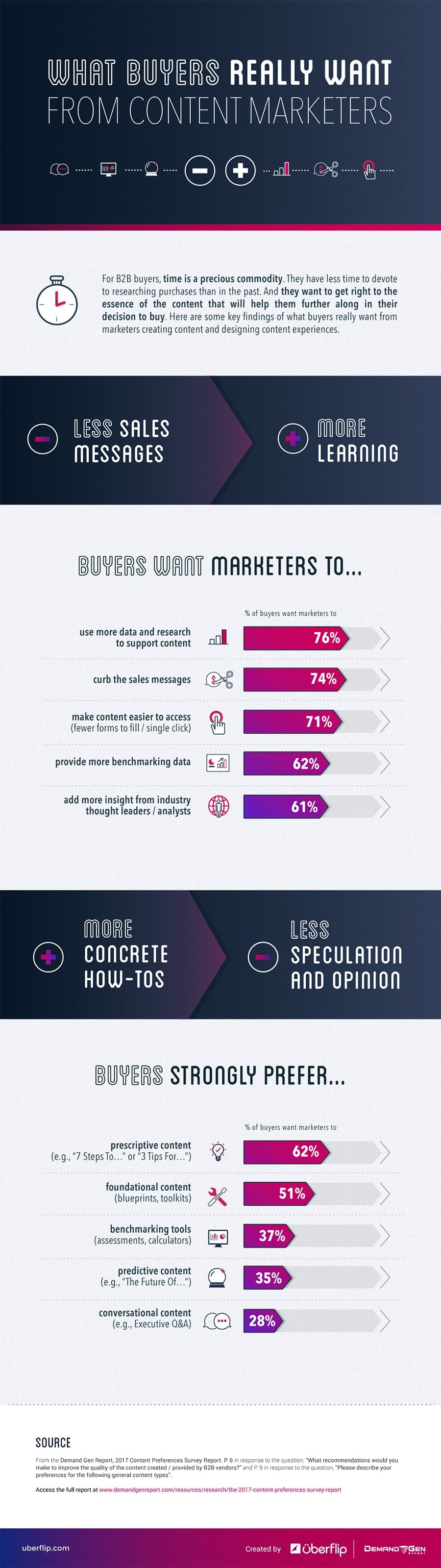
Uberflip take a look at what your buyers want in this infographic.
Understanding the Importance of Customer-Centric Content Marketing
Before diving into what customers want from your content marketing strategy, it’s crucial to grasp the significance of being customer-centric in your approach. The traditional marketing model, which was focused on pushing products or services to consumers, has shifted dramatically.
Today’s consumers are empowered with information, and they have numerous options at their fingertips. They no longer respond well to intrusive advertising or blatant promotional content. Instead, they seek valuable, informative, and engaging content that resonates with their needs, interests, and pain points. Customer-centric content marketing is about building relationships, providing solutions, and adding genuine value to your audience’s lives.
1. Relevance and Personalization
One of the primary things customers want from your content marketing strategy is relevance. Your content should address their specific needs, challenges, and interests. Generic, one-size-fits-all content rarely resonates with audiences.
To create relevant content, you need to segment your audience and tailor your messaging to each segment’s preferences. Use data and analytics to gain insights into your customers’ behaviors and preferences. This information can help you create content that speaks directly to their concerns, making it more engaging and compelling.
Moreover, personalization is key in content marketing. Customers want to feel like your content speaks directly to them. Personalized content can take various forms, from addressing the reader by their first name in email marketing to recommending products or services based on their past interactions with your brand.
2. Educational Value
In the digital age, information is readily available, and customers are hungry for knowledge. They want content that educates them, helps them make informed decisions, and solves their problems. This is why educational content is a powerful tool in content marketing.
To provide educational value, focus on creating content that teaches your audience something new or helps them improve their skills. How-to guides, tutorials, and informative articles are all effective formats for educational content. The key is to position your brand as a trusted source of information in your industry or niche.
For example, if you’re in the fitness industry, you can create content that educates your audience about the benefits of different exercise routines, the science behind nutrition, or how to perform specific exercises correctly. By offering valuable insights, you not only establish yourself as an authority but also build trust with your audience.
3. Authenticity and Transparency
Customers today value authenticity and transparency more than ever. They want to know the real story behind your brand, its values, and its mission. Authenticity is about being genuine and honest in your communications, while transparency involves being open about your business practices.
Authenticity can be conveyed through storytelling. Share your brand’s journey, successes, failures, and the people behind it. Show the human side of your business. This helps customers connect with your brand on a deeper level.
Transparency, on the other hand, involves disclosing information about your products, pricing, and policies. Be upfront about any potential issues or challenges, and always strive to deliver on your promises. When customers feel that a brand is honest and transparent, they are more likely to trust it and become loyal advocates.
4. Entertainment and Engagement
While educational content is essential, customers also want content that entertains and engages them. Boring, overly technical content can turn people away. To capture and hold their attention, inject some creativity and personality into your content.
Use storytelling techniques, humor, or relatable anecdotes to make your content more enjoyable. Interactive elements, such as quizzes, polls, and contests, can also boost engagement and create a sense of community around your brand.
Social media platforms are excellent channels for delivering entertaining and engaging content. Use visuals, videos, and user-generated content to keep your audience entertained and involved in conversations related to your industry or niche.
5. Consistency and Frequency
Consistency is a critical factor in content marketing. Customers want to know they can rely on your brand to provide valuable content regularly. Erratic posting schedules or long gaps between content updates can lead to a loss of trust and engagement.
Create a content calendar to plan your content distribution. Consistently publish content at a frequency that suits your audience and resources. It’s better to have a consistent schedule, even if it means producing less content, than to overwhelm your audience with too much information at once.
Consider the preferences of your audience when determining your posting frequency. Some niches may benefit from daily updates, while others may find weekly or monthly content releases more appropriate.
6. Mobile Optimization
The majority of internet users access content through mobile devices, so optimizing your content for mobile is no longer optional. Customers want content that is easily accessible and enjoyable on their smartphones and tablets.
Ensure that your website and content are responsive, meaning they adapt to different screen sizes. Use mobile-friendly designs and fonts to enhance readability on smaller screens. Additionally, consider mobile-specific formats such as AMP (Accelerated Mobile Pages) for faster loading times.
Mobile optimization not only improves the user experience but also positively impacts your search engine rankings. Google, for instance, prioritizes mobile-friendly websites in its search results.
7. Visual Appeal
Visual content has become increasingly popular in content marketing, and customers are drawn to it. Whether it’s eye-catching images, infographics, videos, or interactive graphics, visual elements can make your content more engaging and shareable.
Invest in high-quality visuals that align with your brand’s identity. Use visuals to break up text, illustrate concepts, and convey information more effectively. A well-designed infographic or a captivating video can communicate complex ideas in a digestible and memorable format.
Additionally, visuals are highly shareable on social media platforms, which can help your content reach a broader audience.
8. Authentic Reviews and Testimonials
Customer reviews and testimonials carry significant weight in the decision-making process. Customers want to hear from their peers about their experiences with your products or services. Authentic reviews and testimonials can help build trust and credibility.
Encourage satisfied customers to leave reviews on platforms such as Google, Yelp, or industry-specific review sites. Showcase these reviews on your website and in your marketing materials. However, it’s essential to maintain transparency by not editing or manipulating customer feedback.
In addition to written reviews, consider incorporating video testimonials. Video adds a personal touch and can convey emotions and authenticity more effectively.
9. Problem-Solving Content
Customers often turn to the internet to find solutions to their problems. Your content marketing strategy should include content that directly addresses common pain points and challenges your target audience faces.
Identify the problems your customers encounter within your industry or niche, and create content that offers practical solutions. This could take the form of step-by-step guides, troubleshooting articles, or case studies that demonstrate how your product or service has solved real-world problems for others.
By positioning your brand as a problem solver, you become a valuable resource for your audience, increasing their trust and loyalty.
10. Two-Way Communication
Effective content marketing isn’t just about broadcasting your message; it’s also about listening to your audience. Customers appreciate brands that engage in two-way communication, where they can provide feedback, ask questions, and receive timely responses.
Actively monitor comments on your blog posts and social media channels. Respond to questions and feedback promptly and professionally. Encourage discussions and conversations around your content, and use feedback to refine your content strategy.
Additionally, consider conducting surveys or polls to gather input from your audience. This can help you tailor your content to their evolving preferences and needs.
11. Accessibility and Inclusivity
Accessibility and inclusivity are increasingly important factors for customers. Your content should be designed to reach a diverse audience, including those with disabilities.
Ensure that your website and content are accessible to individuals with visual, auditory, or motor impairments. Use alt text for images, provide closed captions for videos, and choose fonts and color schemes that are easy to read for everyone.
Inclusivity also extends to the diversity of your content. Represent different perspectives, backgrounds, and experiences in your content to make all members of your audience feel seen and valued.
12. Value Beyond the Sale
Customers want to see that your brand offers value beyond the sale. Your content marketing strategy should go beyond promoting your products or services and focus on providing ongoing value to your audience.
Consider creating content that helps customers get the most out of their purchases. This could include product tutorials, maintenance guides, or tips for using your services effectively. By demonstrating your commitment to customer success, you foster loyalty and repeat business.
Conclusion
In the era of customer-centric marketing, understanding what your customers want from your content marketing strategy is paramount to success. Customers seek relevance, education, authenticity, engagement, and problem-solving content. They value transparency, reviews, and two-way communication. Mobile optimization, visual appeal, and inclusivity also play critical roles in meeting customer expectations.
By aligning your content marketing efforts with these customer desires, you can build stronger relationships, foster trust, and ultimately drive business growth. Remember that content marketing is an ongoing journey of understanding your audience and adapting your strategy to meet their evolving needs and preferences.

Author:
Mark Ford

The Complete Content Mix: What Every Business Should Be Publishing
Are you struggling to decide what types of content your business should be publishing to attract more traffic and engagement? Want to learn how to build the perfect content mix that keeps your audience interested and your brand growing? […]