
Are you struggling to get your social media marketing strategy off the ground? Are you making mistakes that could be putting your target audience off?
Really B2B share their social media sins to avoid in this infographic.
Here’s what makes the list:
- Gluttony
- Lust
- Greed
- Sloth
- Pride
- Wrath
- Envy
Check out the infographic for more detail.
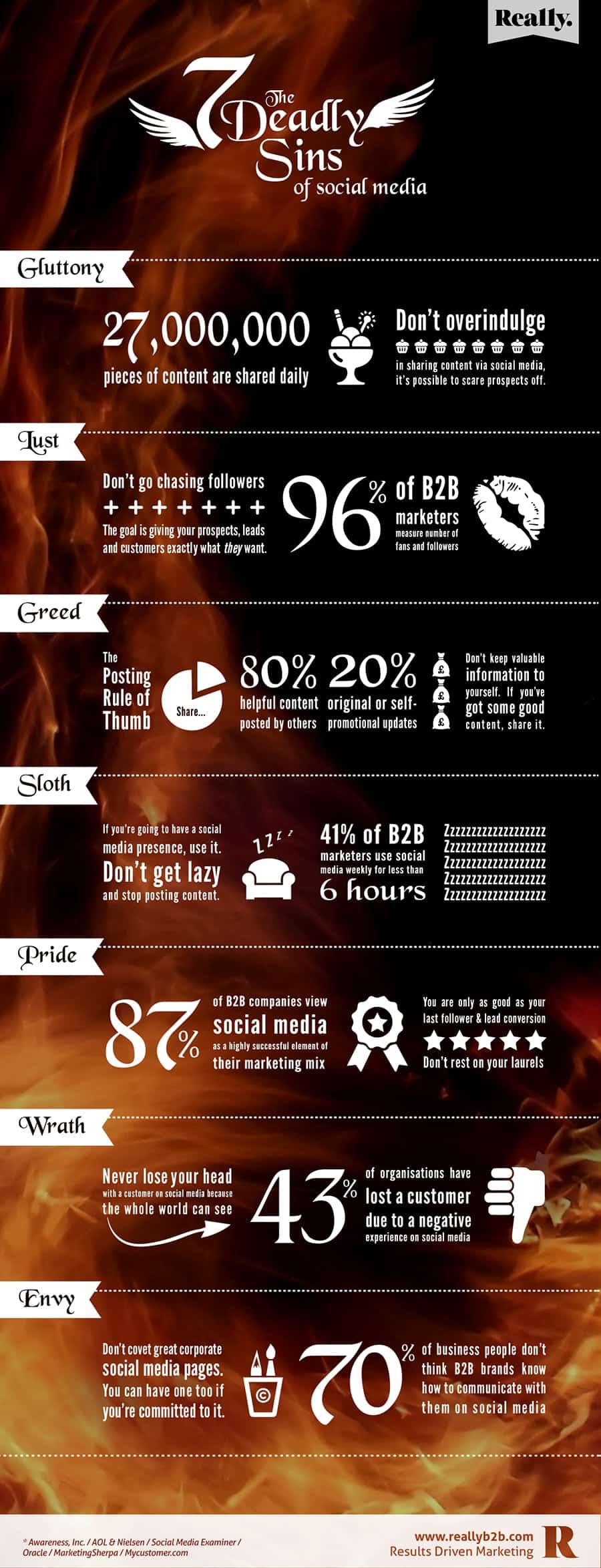
In the modern digital landscape, social media is a powerful tool that can propel brands to new heights. However, just like any potent tool, it can cause significant damage if misused. Many marketers fall into traps that can hinder their success. Here, we’ll explore the seven deadly social media marketing mistakes, each symbolically tied to one of the seven deadly sins: gluttony, lust, greed, sloth, pride, wrath, and envy.
Gluttony
In social media marketing, gluttony manifests as the temptation to overpost and overwhelm your audience with excessive content. Small businesses, eager to stay visible and relevant, often fall into the trap of quantity over quality. Here’s how to navigate this issue effectively:
Understanding the Impact of Overposting:
Overposting refers to flooding your followers’ feeds with numerous posts throughout the day. While the intention might be to increase visibility, it can have detrimental effects:
- Audience Fatigue: Too many posts can overwhelm your audience, leading to reduced engagement and even unfollows. People may perceive your brand as spammy or intrusive.
- Diluted Message: When bombarded with content, your key messages and important updates can get lost in the noise. This diminishes the effectiveness of your communication efforts.
- Resource Drain: Constantly creating and publishing content requires significant time and resources. For small businesses with limited manpower, this can lead to burnout and inefficiency.
Strategies to Avoid Overposting:
- Develop a Content Strategy: Start by outlining your goals and objectives for each platform. Determine the optimal frequency of posts based on your audience’s preferences and engagement metrics. Quality should always take precedence over quantity.
- Create a Content Calendar: Plan your content in advance to maintain consistency without overwhelming your audience. A calendar helps you visualize your posting schedule and ensures a balanced mix of content types (e.g., promotional, educational, entertaining).
- Focus on Quality Content: Rather than rushing to post frequently, invest time in creating valuable and relevant content. This could include informative articles, engaging videos, customer testimonials, or behind-the-scenes glimpses of your business.
- Use Scheduling Tools: Take advantage of social media management tools like Hootsuite, Buffer, or Sprout Social to schedule posts in advance. This allows you to maintain a consistent presence without needing to be online 24/7.
- Monitor and Analyze: Regularly review your analytics to understand which types of content resonate most with your audience. Use this data to refine your content strategy and adjust your posting frequency as needed.
Case Study: Practical Application for a Small Business
Imagine a local bakery, “Sweet Delights,” trying to increase its online presence. Instead of bombarding social media with multiple posts daily, the owner, Sarah, decides to implement a more strategic approach:
- Define Objectives: Sarah identifies her goals, such as increasing brand awareness, driving foot traffic to the bakery, and promoting seasonal offerings.
- Content Planning: She creates a content calendar focusing on key events (e.g., National Cupcake Day) and seasonal specials (e.g., holiday-themed treats). Each post is carefully crafted to showcase Sweet Delights’ unique products and engage followers.
- Frequency: Sarah decides on posting three times a week on Instagram and Facebook, ensuring each post provides value—whether through showcasing new products, sharing baking tips, or highlighting customer stories.
- Quality Focus: She invests in high-quality visuals and captions that reflect the warmth and artisanal nature of Sweet Delights. Each post is designed to evoke emotion and encourage interaction from followers.
- Engagement and Monitoring: Sarah actively engages with followers by responding to comments, asking questions, and sharing user-generated content. She monitors analytics to track engagement levels and adjust her strategy accordingly.
By adopting a more measured approach to content creation and posting, Sarah ensures that Sweet Delights maintains a strong online presence while respecting her audience’s attention span and preferences. This strategic use of social media not only enhances brand perception but also drives tangible business results by attracting more customers to the bakery.
Conclusion
Gluttony in social media marketing can be a pitfall for small businesses eager to make an impact online. By focusing on quality content, strategic planning, and meaningful engagement, businesses can avoid overposting and achieve sustainable growth. Remember, the key to effective social media marketing lies in understanding your audience, delivering valuable content, and maintaining a consistent but respectful presence across platforms.
Lust
In social media marketing, lust can be likened to the intense desire for virality and the pursuit of trends at the expense of your brand’s authenticity and long-term strategy. Small businesses often feel pressured to chase after every trending hashtag or viral challenge in hopes of gaining quick visibility and engagement. However, this approach can backfire if it doesn’t align with your brand’s identity and values. Here’s how small businesses can navigate the realm of social media lust effectively:
Understanding the Pitfalls of Chasing Virality:
- Inauthenticity: Jumping on every trend without considering its relevance to your brand can make your business appear insincere or opportunistic. Followers may perceive your efforts as superficial and disengage.
- Short-lived Impact: Viral content often garners fleeting attention. Once the trend fades, so does the engagement and interest, leaving your brand without substantial long-term benefits.
- Brand Dilution: Constantly shifting your messaging and tone to fit viral trends can dilute your brand’s unique identity. Consistency is key to building a recognizable and trustworthy brand presence.
Strategies to Maintain Authenticity While Embracing Trends:
- Align with Brand Values: Before participating in any trend or viral challenge, evaluate whether it aligns with your brand’s values, voice, and audience. Consider how the trend fits into your overall marketing strategy and whether it enhances your brand narrative.
- Selective Participation: Be selective about the trends you choose to engage with. Focus on those that naturally resonate with your brand’s identity and can be leveraged to showcase your products or services authentically.
- Add Value: Instead of simply jumping on a trend for the sake of visibility, find ways to add value to the conversation. Provide insights, tips, or unique perspectives that demonstrate your expertise and enrich the content.
- Stay Consistent: Maintain a consistent brand voice and messaging across all your social media platforms. Even when participating in trends, ensure that your content reflects your brand’s personality and values to maintain authenticity.
- Monitor Relevance: Regularly review the performance and reception of your trend-related content. If a trend starts to feel forced or doesn’t resonate with your audience, be willing to pivot or shift focus to more relevant topics.
Case Study: Practical Application for a Small Business
Consider a small fashion boutique, “Chic Style Haven,” looking to enhance its social media presence. Instead of blindly chasing viral trends, the owner, Emma, adopts a strategic approach:
- Brand Alignment: Emma identifies Chic Style Haven’s core values of sustainability and timeless fashion. She focuses on trends that align with these values, such as sustainable fashion challenges or seasonal wardrobe essentials.
- Strategic Participation: Rather than participating in every trend, Emma selects those that complement Chic Style Haven’s brand image. For example, she might join a campaign promoting eco-friendly fashion choices or showcase how to style classic pieces in current trends.
- Value-Driven Content: Emma ensures that each trend-related post provides value to her audience. This could include styling tips, behind-the-scenes insights into ethical sourcing practices, or customer spotlights sharing their favorite Chic Style Haven outfits.
- Consistency in Messaging: Throughout her social media channels, Emma maintains consistency in her brand’s messaging and visual aesthetics. Even when embracing trends, she integrates them seamlessly into Chic Style Haven’s overall brand story.
- Feedback and Adaptation: Emma monitors audience engagement and feedback to gauge the effectiveness of her trend-related content. Based on insights gathered from analytics, she adjusts her strategy to focus on trends that resonate most with her target demographic.
By combining a strategic approach with a commitment to authenticity, Emma ensures that Chic Style Haven not only participates in social media trends but also strengthens its brand identity and builds lasting connections with customers who share similar values.
Conclusion
Navigating the allure of social media lust requires small businesses to strike a balance between embracing trends and maintaining authenticity. By aligning trend participation with brand values, adding value to trend-related content, and staying consistent in messaging, businesses can effectively leverage social media trends to enhance visibility and engagement without compromising their unique identity. Remember, sustainable growth on social media comes from building genuine connections and delivering meaningful content that resonates with your audience over time.
Greed
Greed, in the context of social media marketing, manifests as the relentless pursuit of numbers—followers, likes, shares—often at the expense of genuine engagement and meaningful relationships with your audience. Small businesses, eager to expand their online presence quickly, may fall into the trap of prioritizing quantity over quality. Here’s how to recognize and avoid the pitfalls of social media greed:
Understanding the Risks of Chasing Numbers:
- Hollow Engagement: Numbers alone do not translate into meaningful engagement. Purchased followers or engagement metrics may inflate your statistics but do little to foster real connections or conversions.
- Quality vs. Quantity: A large follower count means little if those followers are not genuinely interested in your brand. Building a community of loyal and engaged followers requires more than simply accumulating numbers.
- Authenticity Concerns: Audiences are savvy and can detect inauthentic growth tactics. Greedy practices such as buying followers or participating in engagement pods can damage your brand’s reputation and trustworthiness.
Strategies to Build Authentic Engagement:
- Focus on Targeted Growth: Instead of aiming for mass appeal, focus on attracting followers who are genuinely interested in your products or services. Define your target audience clearly and tailor your content to resonate with them.
- Content Relevance: Create content that addresses your audience’s needs, interests, and pain points. Provide value through educational posts, entertaining content, and solutions to common challenges within your industry.
- Engagement and Interaction: Actively engage with your audience by responding to comments, messages, and mentions promptly. Encourage discussions, ask questions, and show appreciation for customer feedback.
- Community Building: Foster a sense of community around your brand by highlighting user-generated content, featuring customer testimonials, and sharing behind-the-scenes stories. Make your followers feel valued and part of something larger than just a transaction.
- Utilize Analytics: Regularly analyze your social media metrics to understand what content resonates most with your audience. Use insights to optimize your content strategy and improve engagement over time.
Case Study: Practical Application for a Small Business
Imagine a boutique fitness studio, “Fit & Fab Wellness,” looking to grow its social media presence authentically. Here’s how the owner, Mark, navigates the challenge of avoiding social media greed:
- Targeted Audience: Mark defines his ideal clients—fitness enthusiasts looking for personalized training and wellness advice. He tailors his content to address their fitness goals, nutrition tips, and motivational content.
- Quality Content: Rather than posting generic fitness tips, Mark creates detailed workout routines, healthy recipes, and success stories from his clients. Each post aims to educate, inspire, and engage his audience authentically.
- Engagement Strategy: Mark actively interacts with followers by responding to comments, answering questions, and providing personalized advice. He fosters a supportive community where members feel encouraged and motivated.
- Authentic Growth: Instead of buying followers or engaging in follow-for-follow tactics, Mark focuses on organic growth strategies. He collaborates with local influencers, partners with complementary businesses, and participates in community events to expand his reach authentically.
- Measuring Success: Mark regularly monitors his social media analytics to track engagement rates, audience demographics, and content performance. He uses these insights to refine his content strategy, improve engagement, and attract more ideal clients to his fitness studio.
By prioritizing authentic engagement over superficial metrics, Mark ensures that Fit & Fab Wellness builds a loyal community of followers who trust his expertise and value his contributions to their fitness journey.
Conclusion
Greed in social media marketing can lead businesses astray by prioritizing quantity over quality. Small businesses can avoid this trap by focusing on targeted growth, creating valuable content, fostering genuine engagement, and measuring success through meaningful metrics. Remember, building a strong and loyal online community takes time and effort but pays off in the form of increased brand loyalty, customer retention, and sustainable growth over the long term.
Sloth
Sloth in social media marketing refers to the tendency to be inactive or neglectful in engaging with your audience. Small businesses may fall into this trap due to limited resources, time constraints, or a lack of understanding of the importance of active social media presence. However, neglecting your social media channels can have detrimental effects on your brand’s visibility, reputation, and customer relationships. Here’s how small businesses can overcome sloth and effectively manage their social media presence:
Understanding the Consequences of Sloth:
- Missed Opportunities: Inactive social media profiles miss opportunities to connect with potential customers, engage with current followers, and build brand awareness.
- Perception of Inaccessibility: Neglected social media accounts may give the impression that your business is not actively engaged or responsive to customer inquiries, which can harm your brand’s reputation.
- Loss of Competitive Edge: Competitors who maintain an active and engaging social media presence are more likely to attract and retain customers who value online interaction and responsiveness.
Strategies to Overcome Sloth and Improve Engagement:
- Set Clear Goals and Objectives: Define what you want to achieve through your social media efforts—whether it’s increasing brand awareness, driving website traffic, or boosting sales. Clear goals provide direction and motivation for consistent activity.
- Create a Content Calendar: Plan your social media content in advance to ensure regular posting and maintain a consistent presence. A content calendar helps you stay organized, saves time, and ensures you have a balanced mix of content types (e.g., promotions, educational posts, customer testimonials).
- Utilize Scheduling Tools: Take advantage of social media management tools (e.g., Buffer, Hootsuite) to schedule posts ahead of time. This allows you to maintain a consistent posting schedule even during busy periods or when you’re unable to be online.
- Engage Consistently: Actively engage with your audience by responding to comments, messages, and mentions promptly. Encourage conversations, ask questions, and show appreciation for customer feedback. Engagement fosters a sense of community and strengthens customer relationships.
- Monitor and Analyze Performance: Regularly review your social media analytics to gauge the effectiveness of your posts and campaigns. Track metrics such as reach, engagement rates, click-through rates, and follower growth. Use insights to refine your strategy and optimize future content.
Case Study: Practical Application for a Small Business
Consider a local coffee shop, “Morning Brews Cafe,” aiming to enhance its social media presence despite limited staffing. Here’s how the owner, Lisa, addresses sloth and revitalizes their social media strategy:
- Goal Setting: Lisa identifies her goals, which include increasing foot traffic to the cafe, promoting daily specials, and engaging with the local community.
- Content Planning: She creates a monthly content calendar outlining themes, promotions, and events relevant to her audience. This includes sharing behind-the-scenes photos, highlighting customer favorites, and posting about community events the cafe sponsors.
- Consistent Posting Schedule: Lisa schedules posts for Facebook and Instagram using social media management tools. Posts go out at optimal times when her audience is most active, ensuring maximum reach and engagement.
- Engagement Strategy: Lisa dedicates time each day to monitor and respond to comments, messages, and reviews. She encourages customers to share their experiences at Morning Brews Cafe and responds promptly to any inquiries or feedback.
- Monitoring and Adaptation: Lisa regularly reviews analytics to track post performance, audience demographics, and engagement metrics. She notices which types of content resonate most with her audience and adjusts her strategy accordingly.
By implementing a structured approach to social media management, Lisa ensures that Morning Brews Cafe maintains an active and engaging online presence, fostering customer loyalty and attracting new patrons to her business.
Conclusion
Overcoming sloth in social media marketing requires small businesses to prioritize consistent activity, engagement with their audience, and strategic planning. By setting clear goals, creating a content calendar, utilizing scheduling tools, engaging actively, and analyzing performance metrics, businesses can effectively manage their social media presence and reap the benefits of increased brand visibility, customer engagement, and growth opportunities. Remember, regular and meaningful interaction with your audience is key to building a strong online community and fostering long-term relationships with customers.
Pride
Pride in social media marketing manifests as the excessive focus on self-promotion and the failure to prioritize audience engagement and value. Small businesses often struggle with finding the right balance between showcasing their products or services and fostering meaningful connections with their audience. Here’s how to navigate the pitfalls of pride and cultivate a more effective social media strategy:
Understanding the Pitfalls of Overly Self-Promotional Content:
- Audience Disconnect: Constantly bombarding your followers with promotional messages can alienate them. Social media users seek authentic interactions, valuable content, and genuine engagement, not just advertisements.
- Missed Engagement Opportunities: Focusing solely on self-promotion may lead to missed opportunities to engage with your audience on a deeper level. Building relationships requires a two-way dialogue where your audience feels heard and valued.
- Brand Perception: Overly self-promotional content can portray your brand as arrogant or sales-driven, potentially turning away potential customers who prefer brands that prioritize customer satisfaction and community building.
Strategies to Balance Self-Promotion with Audience Engagement:
- Educate, Entertain, and Engage: Instead of solely promoting your products or services, focus on creating content that educates, entertains, or engages your audience. Share industry insights, tips, tutorials, behind-the-scenes stories, user-generated content, or customer testimonials that add value to their lives.
- Content Mix: Strive for a balanced content mix that includes a variety of post types—educational, informative, entertaining, promotional—to cater to different audience preferences and maintain their interest.
- Tell Your Brand Story: Use social media as a platform to tell the story of your brand. Share your mission, values, and what sets your business apart from competitors. Authentic storytelling humanizes your brand and resonates with your audience on a deeper level.
- Customer-Centric Approach: Put your audience at the center of your social media strategy. Ask questions, seek feedback, and actively listen to their responses. Respond to comments and messages promptly and genuinely engage with their content.
- Showcase User-Generated Content: Encourage your customers to create and share content featuring your products or services. User-generated content not only validates your brand but also builds social proof and fosters a sense of community among your followers.
Case Study: Practical Application for a Small Business
Imagine a small skincare brand, “Nature’s Glow,” navigating the balance between self-promotion and audience engagement on social media:
- Value-Driven Content: Instead of solely posting about their products, Nature’s Glow creates content that educates their audience about skincare routines, ingredients to look for, and tips for healthy skin. They also share DIY skincare recipes and lifestyle tips related to wellness and self-care.
- Brand Storytelling: Nature’s Glow uses social media to share their commitment to sustainability, natural ingredients, and ethical sourcing practices. They highlight their journey as a brand, including challenges they’ve overcome and milestones they’ve achieved.
- Engagement Strategy: The brand actively engages with their followers by responding to comments, answering questions about skincare concerns, and providing personalized recommendations. They host Q&A sessions, conduct polls, and share customer testimonials to foster interaction.
- Promotion with Purpose: When promoting their products, Nature’s Glow focuses on showcasing the benefits and results, rather than just pushing sales. They incorporate before-and-after photos, customer reviews, and demonstrations to demonstrate product efficacy.
- Community Building: Nature’s Glow encourages customers to share their skincare routines and experiences using branded hashtags. They feature user-generated content on their social media profiles, celebrating their customers and building a sense of community.
By prioritizing audience engagement, providing value through informative content, and showcasing their brand story authentically, Nature’s Glow not only promotes their products effectively but also builds a loyal community of skincare enthusiasts who trust and engage with their brand.
Conclusion
Finding the balance between self-promotion and audience engagement is essential for small businesses in social media marketing. By focusing on creating valuable content, telling your brand story authentically, listening to your audience, showcasing user-generated content, and maintaining a customer-centric approach, businesses can cultivate a strong online presence and build meaningful relationships with their audience. Remember, social media success lies in building trust, fostering engagement, and delivering value that resonates with your followers.
Wrath
Wrath in social media marketing refers to the manifestation of negative emotions, such as anger or defensiveness, in response to criticism, negative feedback, or online conflicts. Small businesses may encounter situations where they feel attacked or provoked on social media, leading to inappropriate or detrimental responses that can harm their brand reputation. Here’s how to effectively manage criticism and conflict on social media to maintain professionalism and protect your brand’s image:
Understanding the Impact of Wrathful Responses:
- Damage to Reputation: Reacting angrily or defensively to criticism can damage your brand’s reputation. It may portray your business as unprofessional, dismissive of customer concerns, or unwilling to accept feedback.
- Escalation of Conflict: Responding with wrathful or confrontational language can escalate conflicts rather than resolving them. This can lead to a public relations crisis, with negative comments and backlash spreading quickly across social media platforms.
- Loss of Customer Trust: Potential customers observing your negative interactions may be deterred from engaging with your brand. Trust and loyalty are built on positive interactions and responsive customer service.
Strategies to Handle Criticism and Conflict Professionally:
- Stay Calm and Assess: When faced with criticism or negative feedback, take a moment to breathe and assess the situation objectively. Avoid responding impulsively or emotionally, as this can exacerbate the issue.
- Acknowledge and Apologize (if necessary): If the criticism is valid, acknowledge it publicly and apologize if your business is at fault. Demonstrating accountability and a willingness to address concerns can diffuse tension and show your commitment to customer satisfaction.
- Move Conversations Offline: For more complex issues or heated debates, consider moving the conversation to a private message or email. Direct communication allows you to address concerns more effectively without the pressure of public scrutiny.
- Respond Promptly and Professionally: Respond to criticism promptly and professionally, even if you disagree with the feedback. Use respectful language, address the concerns raised, and offer solutions or further assistance as needed.
- Learn and Improve: Use criticism constructively as an opportunity to learn and improve your products, services, or customer experience. Take feedback seriously and consider implementing changes based on customer insights.
Case Study: Practical Application for a Small Business
Imagine a local restaurant, “Gourmet Bites,” encountering negative reviews on social media regarding a recent service issue. Here’s how the restaurant owner, John, manages the situation with professionalism and tact:
- Immediate Response: Upon noticing the negative review, John acknowledges the customer’s experience and expresses regret for their dissatisfaction. He assures them that he will investigate the matter further to understand what went wrong.
- Offer Solutions: John publicly offers to resolve the issue by inviting the customer to contact him directly to discuss the problem in more detail. He provides his email address and phone number for convenience.
- Follow-Up: Privately, John reaches out to the customer to apologize again and offer a complimentary meal as a gesture of goodwill. He listens to their concerns, takes notes, and ensures they feel heard and valued.
- Transparency and Accountability: On the restaurant’s social media platforms, John posts an update acknowledging the customer’s feedback and outlining steps taken to address the issue. He communicates his commitment to improving their service standards based on customer feedback.
- Learning and Improvement: John discusses the incident with his staff to identify areas for improvement. He implements additional training sessions and updates protocols to prevent similar issues from occurring in the future.
By handling criticism with professionalism, responsiveness, and a commitment to customer satisfaction, John not only resolves the immediate issue but also demonstrates transparency and accountability to his online audience.
Conclusion
Effectively managing criticism and conflict on social media requires small businesses to respond calmly, professionally, and empathetically. By acknowledging feedback, offering solutions, moving discussions offline when necessary, and using criticism as an opportunity to learn and improve, businesses can protect their brand reputation and maintain positive relationships with their audience. Remember, how you handle criticism reflects your brand’s values and commitment to customer satisfaction, influencing customer perceptions and loyalty over time.
Envy
Envy in social media marketing refers to the temptation to compare your business’s success, growth, or content with that of competitors or industry peers. Small businesses may feel pressured to emulate competitors’ strategies or achieve similar metrics, leading to feelings of inadequacy or a misguided approach to social media marketing. Here’s how to navigate the pitfalls of envy and cultivate an authentic and effective social media strategy:
Understanding the Pitfalls of Envy:
- Loss of Authenticity: Constantly comparing your business to competitors can lead to imitation rather than innovation. This may result in generic or inauthentic content that fails to differentiate your brand in the market.
- Focus on Quantity Over Quality: Envy-driven strategies may prioritize achieving high follower counts or engagement metrics without considering whether these metrics translate into meaningful business outcomes.
- Neglecting Unique Value Proposition: By fixating on competitors’ successes, businesses may overlook their unique strengths and value propositions that resonate with their target audience.
Strategies to Overcome Envy and Promote Authenticity:
- Define Your Brand Identity: Clearly define your brand’s unique identity, values, and value proposition. Understand what sets your business apart from competitors and emphasize these strengths in your social media messaging and content.
- Set Realistic Goals: Establish clear and realistic goals for your social media marketing efforts based on your business objectives and audience insights. Focus on metrics that align with these goals, such as lead generation, website traffic, or customer engagement.
- Audience-Centric Approach: Shift your focus from competitors to your target audience. Conduct market research and gather insights to understand their needs, preferences, and pain points. Tailor your content and messaging to address these insights effectively.
- Authentic Content Creation: Create content that reflects your brand’s personality, values, and expertise. Share authentic stories, behind-the-scenes glimpses, customer testimonials, and user-generated content that resonate with your audience on a personal level.
- Embrace Differentiation: Highlight what makes your business unique and valuable to your customers. Showcase your unique offerings, customer service excellence, or innovative solutions that set you apart in the market.
Case Study: Practical Application for a Small Business
Consider a small digital marketing agency, “Creative Digital Solutions,” struggling with envy as they compare their social media growth to competitors. Here’s how the agency owner, Sarah, navigates this challenge:
- Brand Differentiation: Sarah conducts a competitive analysis to identify gaps and opportunities in the market. She emphasizes Creative Digital Solutions’ unique approach to personalized client strategies and innovative digital campaigns.
- Authentic Content Strategy: Instead of mirroring competitors’ content, Sarah focuses on showcasing case studies, client success stories, and team expertise. She highlights the agency’s creative process, client collaborations, and industry insights.
- Engagement and Interaction: Sarah encourages engagement by hosting live Q&A sessions, sharing industry tips and updates, and actively responding to comments and inquiries. This fosters a sense of community and positions the agency as a trusted industry authority.
- Metrics that Matter: Sarah sets realistic goals for social media growth based on client acquisition and retention rates. She tracks metrics such as inbound leads generated from social media campaigns and client satisfaction scores to measure success.
- Continuous Improvement: Sarah regularly evaluates the agency’s social media performance, analyzes client feedback, and adjusts strategies to optimize engagement and achieve business objectives effectively.
By focusing on authenticity, emphasizing unique strengths, and prioritizing audience needs over competitor comparison, Creative Digital Solutions strengthens its brand identity and establishes a loyal client base.
Conclusion
Envy in social media marketing can distract small businesses from their unique strengths and authentic voice. By defining your brand identity, setting realistic goals, adopting an audience-centric approach, creating authentic content, and embracing differentiation, businesses can overcome envy and build a compelling social media presence that resonates with their target audience. Remember, success on social media is not just about numbers but about building meaningful connections and delivering value that sets your brand apart in a competitive landscape.
Conclusion
Avoiding these seven deadly social media marketing mistakes is crucial for building a successful and sustainable strategy. By focusing on quality over quantity, staying authentic, engaging with your audience, balancing content types, handling criticism gracefully, and maintaining your unique identity, you can create a strong and engaging social media presence. Remember, social media is about building relationships and providing value to your audience, not just about chasing numbers. By steering clear of these pitfalls, you can foster a loyal community that supports and advocates for your brand, leading to long-term success in the digital landscape.

Author:
Mark Ford