Are you looking for ways to get your content in front of more people? Want to know the content distribution techniques you should add to your marketing strategy?
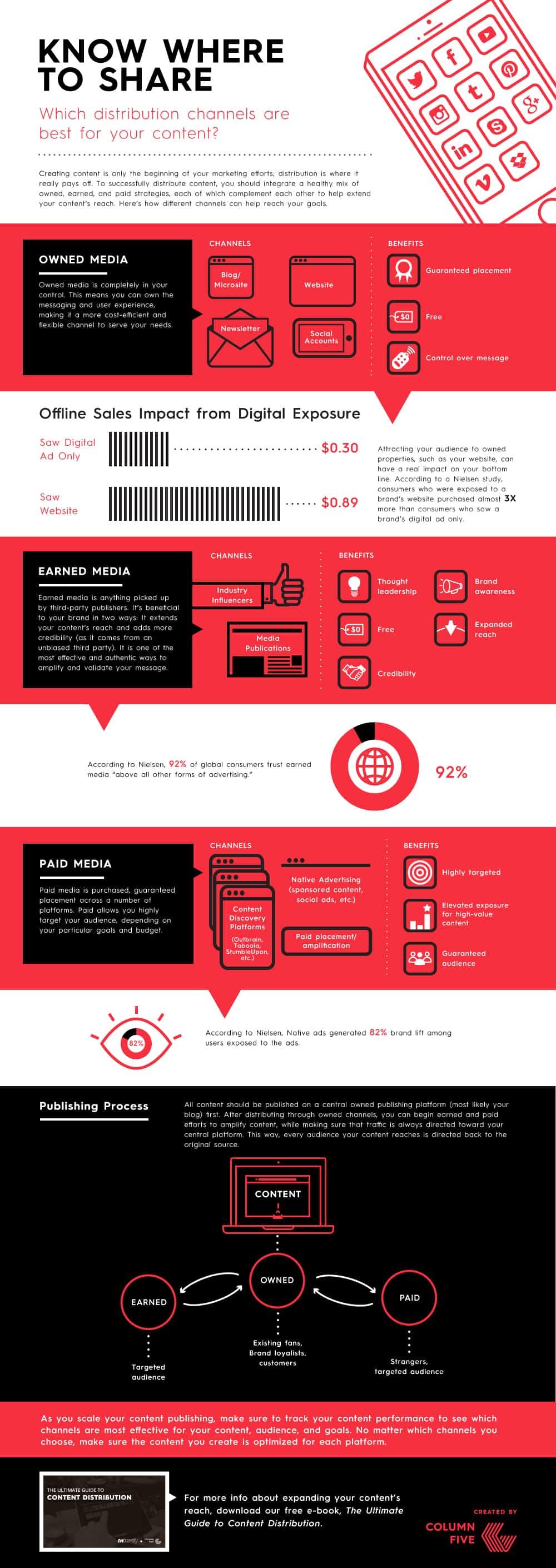
Column Five Media share their guide to distributing content in this infographic.
They break things down into the following categories:
- Owned media
- Earned media
- Paid media
Check out the infographic for more detail.
In today’s digital landscape, content marketing has become one of the most powerful tools for businesses to connect with their target audiences. However, creating quality content is only half the battle. To achieve results, you need to ensure that your content reaches the right people. That’s where content distribution comes into play. The method by which you distribute content can dramatically influence its effectiveness, visibility, and impact.
When it comes to distribution, there are three primary channels to consider: owned media, earned media, and paid media. Each of these methods has its strengths and weaknesses, and an ideal content marketing strategy will often leverage a combination of all three to achieve maximum reach and engagement.
In this post, we’ll break down these three different ways to distribute your content and provide insights on how to use them effectively.
Owned Media
Owned media Owned media serves as the foundation of any content marketing strategy. It refers to the channels you fully control, including your website, blog, email list, and social media profiles. For small businesses, owned media is particularly valuable because it allows you to connect with your audience on your terms and build a lasting brand presence without the recurring costs associated with paid media.
Let’s explore owned media more deeply and provide actionable tips to help small businesses maximize its potential.
Why Owned Media Is Critical for Small Businesses
For small businesses with limited marketing budgets, owned media offers an affordable, long-term strategy. Unlike paid media, where visibility is dependent on ongoing investment, owned media allows you to cultivate an audience over time without incurring regular costs. With consistent effort and focus, owned channels can deliver sustained value by increasing brand awareness, driving organic traffic, and nurturing customer relationships.
Owned media also provides complete control over your messaging. You determine what content to create, how to position your brand, and when to publish. This freedom lets you align your content closely with your business goals, while also maintaining the authenticity that consumers expect from smaller, more personable brands.
Finally, owned media has a compounding effect. As your website gains authority and your email list grows, the value of your owned media increases. Over time, the organic traffic and engagement you generate from these channels can far exceed the returns of a short-term ad campaign.
Key Owned Media Channels for Small Businesses
Here are the most important owned media channels and in-depth tips on how to use them effectively:
- Your Website and Blog
Your website is the heart of your digital presence. It’s where you introduce your brand, showcase your products or services, and host your content. In many cases, your website will be the first point of contact for potential customers, so it’s critical to make a strong impression.
SEO Optimization
Search Engine Optimization (SEO) is essential for getting your website and blog in front of the right audience. Small businesses can benefit greatly from optimizing their content for search engines, as ranking higher on Google can drive significant organic traffic.
Tips:
- Research Keywords: Use tools like Google Keyword Planner, Ahrefs, or SEMrush to identify relevant keywords that your audience is searching for. Prioritize long-tail keywords (e.g., “eco-friendly cleaning services in Austin” instead of just “cleaning services”), as these tend to be less competitive and more specific to local businesses.
- Create Quality Content: High-quality, well-researched content that provides genuine value to your audience will naturally perform better in search rankings. Create blog posts, guides, or product descriptions that answer common customer questions or solve specific problems.
- Optimize Meta Descriptions and Titles: Each page and blog post should have a unique, keyword-optimized meta title and description. This helps search engines understand what your content is about and encourages users to click on your link in search results.
User Experience (UX)
Your website’s user experience directly affects its ability to engage and convert visitors. A fast, mobile-friendly website with clear navigation and compelling calls to action (CTAs) will keep visitors on your site longer and increase the likelihood of conversions.
Tips:
- Improve Loading Speeds: Use tools like Google PageSpeed Insights to identify areas where you can improve loading times. Slow websites can frustrate users and negatively impact SEO rankings.
- Mobile Optimization: Ensure your website is mobile-responsive, as more than half of all web traffic now comes from mobile devices. Test your site on various devices to confirm that text, images, and buttons are easy to interact with.
- Clear CTAs: Whether it’s “Buy Now,” “Sign Up,” or “Contact Us,” every page on your website should have a clear call to action that guides users to the next step in their journey.
- Email Marketing
Email marketing is one of the most effective ways to distribute owned media, particularly for small businesses. An email list consists of individuals who have already expressed interest in your brand, making it a powerful tool for nurturing leads, promoting products, and driving repeat business.
Building an Email List
Growing your email list is critical to making the most out of this owned media channel. It’s essential to give website visitors a reason to subscribe.
Tips:
- Offer Lead Magnets: Provide something of value in exchange for an email address, such as an ebook, discount code, or exclusive content. Make sure the offer is relevant to your audience and clearly advertised on your website.
- Place Opt-In Forms Strategically: Include sign-up forms in highly visible areas of your website, such as your homepage, blog, or checkout page. Use pop-ups or exit-intent pop-ups to capture visitors before they leave your site.
- Create a Consistent Email Cadence: Send regular, valuable content to your subscribers, such as newsletters, promotions, or blog updates. However, be mindful not to overwhelm your audience with too many emails, which could lead to unsubscribes.
Segmentation and Personalization
Segmentation allows you to divide your email list into different groups based on demographics, purchase history, or behavior. By doing so, you can send personalized content that resonates with each segment, resulting in higher open rates and conversions.
Tips:
- Segment by Behavior: Send different emails to customers based on their engagement with your brand. For example, send a “welcome” series to new subscribers and a “re-engagement” email to inactive subscribers.
- Personalized Recommendations: Use purchase data to send personalized product recommendations based on what customers have bought previously. This can increase upselling and cross-selling opportunities.
- Social Media Profiles
Although social media platforms like Facebook, Instagram, Twitter (X), and LinkedIn are owned by third-party companies, your profiles and the content you post fall under owned media. These platforms offer an opportunity to engage directly with your audience, share content, and build a brand personality.
Choosing the Right Platforms
Not every social media platform will be suitable for your business. Small businesses should focus on the platforms that align best with their audience and the type of content they produce.
Tips:
- Understand Your Audience: Analyze where your audience spends their time online. If you’re targeting B2B clients, LinkedIn might be more effective, while Instagram may work better for consumer-facing businesses with a visual focus.
- Focus on Two to Three Platforms: Avoid spreading yourself too thin by trying to manage multiple platforms. Focus on two or three social media sites where you can consistently engage with your audience and post high-quality content.
Building Engagement
Social media is most effective when it’s used as a two-way communication tool. By engaging with your followers, answering their questions, and responding to comments, you can build a community around your brand.
Tips:
- Post Consistently: Develop a regular posting schedule that ensures your audience sees fresh content from your brand without being overwhelmed. Use social media management tools like Hootsuite or Buffer to plan posts in advance.
- Use Stories and Live Video: Many platforms now offer live streaming and story features, which provide a more authentic, real-time way to connect with your audience. Consider using these tools to share behind-the-scenes content, product launches, or Q&A sessions.
- Monitor Analytics: Keep track of how your content performs across platforms. Use each platform’s analytics tools to understand what type of posts are generating the most engagement and adjust your strategy accordingly.
- Content Hubs and Resources
For small businesses, creating a content hub or resource center on your website can significantly boost engagement. A content hub is a dedicated section of your site where visitors can access valuable resources such as articles, whitepapers, guides, infographics, videos, and more.
Tips:
- Create Evergreen Content: Focus on producing evergreen content that remains relevant and valuable over time. Examples include how-to guides, industry reports, or glossaries.
- Use Gated Content for Lead Generation: Some pieces of high-value content (such as ebooks or industry reports) can be gated, meaning visitors need to provide their email address to access them. This can help you grow your email list while delivering valuable information.
- Internal Linking: Link to other pages or posts within your content hub to encourage visitors to explore more of your resources. This not only improves your site’s user experience but also helps with SEO by boosting page views and reducing bounce rates.
Content Calendar and Planning for Owned Media
A content calendar is critical for organizing your owned media efforts. It helps you maintain consistency and stay on track with your content creation goals. Without a content plan, it’s easy to miss opportunities to engage your audience or waste time scrambling to produce content at the last minute.
Tips for Developing a Content Calendar:
- Set Clear Goals: Define the purpose of your content. Are you looking to drive traffic, generate leads, or educate your audience? Knowing your goals will help you tailor your content accordingly.
- Use Themes and Campaigns: Plan out monthly or quarterly content themes that align with your business objectives. For instance, a health and wellness brand might focus on “self-care” in January and “nutrition” in February. This can help streamline your content planning and ensure consistency across channels.
- Repurpose Content: Maximize the value of each piece of content by repurposing it for different formats. For example, a blog post can be turned into an infographic, social media posts, or even a podcast episode.
Conclusion
Owned media is the bedrock of a successful content marketing strategy for small businesses. By optimizing your website, blog, email marketing, and social media profiles, you can build a strong brand presence and engage with your audience in meaningful ways. The key to success lies in consistently delivering value through high-quality content and optimizing each channel to meet your business goals.
With owned media, you’re not dependent on external platforms or ongoing ad spend. Instead, you’re building lasting assets that can continue driving traffic, leads, and sales long into the future.
Earned Media
Earned media Earned media refers to the exposure your brand gains through organic means rather than paid or owned efforts. It’s essentially “free publicity” that comes in the form of mentions, shares, reviews, and media coverage, often driven by customer advocacy, influencers, or satisfied clients. Unlike owned or paid media, earned media isn’t directly under your control, which is why it’s considered one of the most trusted forms of promotion.
For small businesses, mastering earned media is crucial because it can greatly amplify your brand without the financial outlay required by paid campaigns. By building a positive reputation and fostering engagement with your audience, earned media has the potential to expand your reach significantly and drive long-term growth.
Why Earned Media Matters for Small Businesses
Earned media is vital for small businesses because it leverages the power of word-of-mouth, social proof, and community engagement. Today’s consumers place immense trust in recommendations from peers, online reviews, and the opinions of influencers, often more than in direct advertisements. Positive earned media helps establish credibility, boosts brand visibility, and provides third-party validation of your business.
Moreover, earned media can create a viral loop, where each mention, share, or review brings in new customers, which leads to more earned media. This cycle can exponentially increase your brand’s reach without requiring additional investment. When your audience becomes advocates for your brand, they help spread your message organically, leading to greater trust and recognition.
Let’s dive deeper into the different aspects of earned media and explore how small businesses can maximize its benefits.
Key Types of Earned Media for Small Businesses
- Social Media Mentions and Shares
- Customer Reviews and Testimonials
- Media Coverage and PR
- Influencer Marketing
- User-Generated Content (UGC)
- Social Media Mentions and Shares
Social media is one of the most accessible ways to earn media coverage. When your customers or followers mention your brand, share your content, or tag you in their posts, it boosts your visibility and introduces your business to a broader audience. Every mention, comment, and share is a form of earned media that can snowball into significant exposure.
Tips for Generating Social Media Mentions and Shares:
- Create Shareable Content: The more valuable, engaging, or entertaining your content, the more likely your audience is to share it. Consider creating visually appealing content, such as infographics, videos, or memes that are easy to share across platforms. For example, if you’re in the food industry, sharing high-quality images of your dishes or behind-the-scenes videos of your kitchen could spark engagement.
- Encourage User Engagement: Ask your followers to tag you in their posts when they’re using your products or enjoying your services. You can incentivize engagement through contests, giveaways, or challenges. For instance, a small fitness studio might run a hashtag campaign where customers share their workout progress, tagging the studio in their posts.
- Leverage Trending Hashtags: Staying current with social media trends and incorporating popular hashtags into your posts can increase the chances of getting discovered by a wider audience. Participate in conversations around trending topics that relate to your business.
- Respond to Mentions: Show your appreciation by responding to mentions or engaging with users who have shared your content. Acknowledging your audience can encourage them to continue spreading the word about your brand. For small businesses, this can also help build a community and foster a loyal customer base.
- Customer Reviews and Testimonials
Online reviews and customer testimonials are incredibly powerful forms of earned media. Positive reviews on platforms like Google, Yelp, TripAdvisor, or Trustpilot can influence potential customers and boost your brand’s credibility. Small businesses, especially those in service industries, can see substantial benefits from a strong collection of reviews.
Tips for Generating Positive Customer Reviews:
- Provide Excellent Customer Service: It may seem obvious, but delivering top-notch customer service is the first step to earning positive reviews. Delighted customers are more likely to leave glowing feedback, which can, in turn, inspire others to choose your business.
- Ask for Reviews: Don’t be shy about requesting reviews from satisfied customers. Send follow-up emails after a purchase or service asking for feedback, or include a gentle nudge for reviews on your website, social media, or receipts. For example, a coffee shop might print a message on its receipts encouraging customers to leave a review in exchange for a small discount on their next visit.
- Make It Easy to Leave Reviews: Provide clear instructions or direct links to review platforms so that customers can easily share their experiences. Adding review widgets or buttons on your website or in email newsletters can streamline the process.
- Respond to Reviews: Responding to both positive and negative reviews shows that you value customer feedback and are committed to improving your business. Thank customers for their positive reviews, and address any issues raised in negative reviews in a constructive, professional manner.
- Feature Testimonials on Owned Media: Highlighting customer testimonials on your website or social media can amplify the effects of earned media. Showcase reviews in a visually appealing format to build trust and encourage others to leave their own feedback.
- Media Coverage and PR
Getting your business featured in local newspapers, industry blogs, or magazines can provide valuable exposure and credibility. PR (public relations) is an essential element of earned media, as it allows your business to be spotlighted by third-party sources that your audience already trusts.
Tips for Generating Media Coverage:
- Build Relationships with Journalists and Bloggers: Identify local journalists, industry influencers, and bloggers who cover topics related to your business. Reach out to them with a personalized pitch or press release that highlights a unique angle, such as a new product launch, a community event, or your business’s impact on the local economy.
- Offer Exclusive Stories: Offering exclusive insights, interviews, or first looks at new products can make your business more appealing to media outlets. If you have a compelling story to tell—like a charitable initiative, a unique startup journey, or an innovative service—journalists may be more inclined to cover it.
- Leverage Press Releases: Press releases are an effective way to announce newsworthy developments. If you’re launching a new product, hosting an event, or celebrating a business milestone, distribute a press release to relevant media outlets. Many online platforms also allow you to submit press releases directly for increased visibility.
- Participate in Local Events: Hosting or participating in community events is a great way to attract media attention. For example, a small bakery might sponsor a local charity run, gaining coverage in local papers and TV stations. Not only does this bring positive press, but it also demonstrates your business’s commitment to the community.
- Influencer Marketing
While influencer marketing can sometimes blur the lines between earned and paid media, when done organically, it falls under the earned media category. Small businesses can benefit from partnerships with local influencers or micro-influencers who can help spread the word about your brand to their engaged followers.
Tips for Leveraging Influencers for Earned Media:
- Focus on Micro-Influencers: While big-name influencers often charge hefty fees for promotions, micro-influencers (those with 1,000–100,000 followers) can be more affordable and often have higher engagement rates. They are also seen as more authentic, making their recommendations feel like genuine earned media.
- Build Relationships, Don’t Just Pay for Posts: Instead of approaching influencers with a simple transaction, work on building long-term relationships. Engage with their content, send them your products to try, and encourage them to share their experiences if they genuinely enjoy what you offer. This approach results in more organic, trust-based promotion.
- Offer Experiences: Inviting influencers to experience your product or service firsthand can encourage them to share honest, organic feedback with their followers. For example, a small spa business might offer a complimentary service in exchange for a review or mention.
- Monitor Mentions and Interactions: Use tools like Google Alerts, Mention, or Sprout Social to track when influencers or customers mention your business online. Engage with these mentions by commenting, liking, or sharing to increase visibility.
- User-Generated Content (UGC)
User-generated content (UGC) refers to content created by your customers, fans, or followers that features your brand, products, or services. UGC can include photos, videos, reviews, and social media posts, and it’s a valuable form of earned media because it showcases authentic experiences with your brand.
Tips for Encouraging UGC:
- Create a Branded Hashtag: Encourage customers to share their experiences using a specific branded hashtag. This not only makes it easy to track and showcase user-generated content but also builds community around your brand. For example, a small apparel company might encourage customers to post photos of themselves wearing the brand’s clothes with a catchy, unique hashtag.
- Host UGC Campaigns or Contests: Running a UGC campaign or contest can inspire customers to create and share content. Offer a prize or recognition for the best submission, or feature selected UGC on your social media profiles. For example, a small café might hold a photo contest where customers share pictures of their favorite dishes for a chance to win a free meal.
- Share UGC on Your Channels: Highlighting user-generated content on your owned media channels (such as your website or social media) shows that you value your customers’ contributions. It also encourages others to create and share their own content in the hopes of being featured.
Conclusion
Earned media is an invaluable part of any small business’s content marketing strategy. By encouraging social media mentions, generating positive customer reviews, securing media coverage, collaborating with influencers, and leveraging user-generated content, your business can gain widespread recognition without spending heavily on advertising.
While earned media takes time and effort to cultivate, the rewards are substantial: increased trust, organic growth, and a loyal customer base that advocates for your brand. For small businesses with limited budgets, focusing on earned media can provide long-term benefits and help establish your brand’s credibility in a crowded market.
Paid Media
Paid media refers to any type of content or promotion that a business pays for, such as display ads, social media advertising, sponsored posts, pay-per-click (PPC) campaigns, and more. While earned and owned media rely on organic growth and internal resources, paid media gives businesses a more immediate and controllable way to expand their reach and generate leads.
For small businesses, effectively using paid media can help level the playing field in a competitive market by providing instant visibility and targeted engagement. However, because every ad placement comes at a cost, small businesses need to ensure they are getting a strong return on investment (ROI) by carefully planning and managing their paid media strategies.
Why Paid Media Matters for Small Businesses
Unlike earned or owned media, which take time to grow, paid media provides an immediate opportunity to reach new audiences and drive traffic. For small businesses, this can be a highly efficient way to promote new products, build brand awareness, and capture leads. With paid media, businesses can directly target specific demographics, making it easier to attract the right customers.
Additionally, paid media allows for scalability. You can start small with a limited budget and expand your efforts once you see results. Paid media platforms offer detailed metrics and insights, allowing you to measure performance, tweak campaigns, and optimize for better results over time.
Let’s explore different types of paid media and how small businesses can effectively incorporate them into their marketing strategies.
Key Types of Paid Media for Small Businesses
- Pay-Per-Click (PPC) Advertising
- Social Media Advertising
- Display Advertising
- Sponsored Content
- Native Advertising
- Influencer Partnerships
- Pay-Per-Click (PPC) Advertising
PPC advertising is one of the most popular forms of paid media, especially for small businesses that want to drive immediate traffic to their websites. PPC ads appear in search engine results or on partner websites, and you only pay when someone clicks on your ad.
Tips for Effective PPC Campaigns:
- Focus on Keyword Research: The success of your PPC campaigns depends heavily on choosing the right keywords. Use tools like Google Keyword Planner or SEMrush to identify high-traffic keywords that align with your products or services. Focus on specific, long-tail keywords that are less competitive but still relevant to your target audience.
- Set a Budget and Stick to It: PPC campaigns can be expensive if not managed carefully, so it’s crucial to set a clear budget from the start. Most platforms, like Google Ads, allow you to set daily or campaign-level spending limits, so you can control costs. Monitor your budget closely and make adjustments as necessary.
- Create Highly Targeted Ads: PPC ads allow you to target specific demographics, locations, and even devices. For example, if you run a small bakery, you can target people searching for “best bakery near me” within a particular radius of your shop. The more granular your targeting, the more likely you are to reach potential customers who are ready to convert.
- Optimize Landing Pages: Make sure the landing page linked to your PPC ads is relevant and optimized for conversions. A strong call to action (CTA), user-friendly design, and compelling content can increase the likelihood that visitors will take the desired action—whether that’s making a purchase, signing up for a newsletter, or downloading a resource.
- Test and Refine: PPC advertising provides a wealth of data on your campaigns, including click-through rates (CTR), cost-per-click (CPC), and conversion rates. Regularly analyze these metrics and use A/B testing to refine your ad copy, keywords, and targeting for better performance.
- Social Media Advertising
Social media advertising has become a cornerstone of many small business marketing strategies. Platforms like Facebook, Instagram, LinkedIn, and Twitter allow businesses to run highly targeted ads based on user demographics, behaviors, and interests. Social media ads can be used for a wide range of objectives, from building brand awareness to driving direct sales.
Tips for Effective Social Media Ads:
- Choose the Right Platform: Not all social media platforms are created equal when it comes to advertising. Choose platforms where your target audience is most active. For example, Instagram and Facebook are ideal for B2C businesses with visually appealing products, while LinkedIn is better suited for B2B companies looking to engage with professionals.
- Leverage Advanced Targeting: One of the biggest advantages of social media advertising is the ability to target users based on very specific criteria, such as age, location, interests, and behaviors. Take advantage of these tools to ensure your ads are being shown to the most relevant audience. If you own a fitness studio, you could target users who have shown an interest in health, wellness, and fitness in your local area.
- Use Engaging Visuals and Copy: Social media platforms are visually driven, so your ads need to be eye-catching to stand out in crowded feeds. High-quality images, compelling video content, and clear, action-oriented copy can significantly boost engagement. A/B test different visuals and messaging to see which resonates best with your audience.
- Include a Clear Call to Action (CTA): Every social media ad should have a clear CTA, whether it’s to visit your website, sign up for a newsletter, or take advantage of a promotion. Make it easy for users to understand what you want them to do and why it’s worth their time.
- Utilize Retargeting Ads: Retargeting allows you to show ads to users who have previously interacted with your business, such as visiting your website or engaging with your content. This can be an effective way to nurture leads and encourage conversions, especially for users who may have been interested but didn’t convert initially.
- Display Advertising
Display advertising consists of banner ads, pop-ups, or other visual advertisements placed on third-party websites. These ads can be used to increase brand visibility and drive traffic to your website or landing pages. Display ads are often seen on news sites, blogs, and industry publications.
Tips for Effective Display Advertising:
- Target the Right Audience: Display ads allow for audience targeting based on demographics, browsing behavior, and interests. For small businesses, it’s important to narrow your focus to ensure that your ads are being shown to people who are likely to be interested in your product or service. For example, a local home décor store might target people who frequently visit interior design blogs or home improvement websites.
- Use Strong Visuals: Display ads rely heavily on visuals to capture attention. Your ad should be visually appealing, easy to read, and clearly branded. Incorporate bright colors, bold fonts, and attractive images to create a memorable impression.
- Optimize for Mobile: A significant portion of internet users browse on mobile devices, so it’s crucial to ensure that your display ads are optimized for mobile viewing. Responsive ads that adjust to different screen sizes can improve the user experience and lead to higher engagement rates.
- Monitor Performance: Keep an eye on key metrics like impressions, CTR, and conversion rates. Display ads are often better for awareness rather than direct conversions, so monitor these metrics to assess how well your ads are performing and adjust your strategy if necessary.
- Sponsored Content
Sponsored content involves paying for your business’s content to appear on third-party websites, blogs, or social media platforms. Unlike display ads, sponsored content is designed to look and feel like organic content, making it less intrusive and more likely to engage readers.
Tips for Effective Sponsored Content:
- Choose Relevant Platforms: When selecting platforms for sponsored content, focus on those that cater to your target audience. Sponsored content on a well-regarded blog or industry publication can position your brand as a thought leader and attract the right audience.
- Create Value-Driven Content: Sponsored content should offer real value to the reader, not just promote your business. Focus on solving a problem, answering a question, or providing insights that are relevant to your target audience. For example, a small accounting firm might sponsor a blog post on “Top 10 Tax-Saving Tips for Small Business Owners.”
- Disclose Paid Partnerships: Transparency is essential when it comes to sponsored content. Make sure you comply with disclosure regulations by clearly indicating that the content is sponsored, but do so in a way that doesn’t detract from the quality or value of the content.
- Native Advertising
Native advertising is a form of paid media that blends seamlessly with the platform it’s displayed on, whether it’s a website, social media feed, or app. Unlike traditional ads, native ads look like the platform’s organic content, making them less disruptive and more appealing to users.
Tips for Effective Native Advertising:
- Match the Style of the Platform: Native ads should blend in with the look, feel, and tone of the platform they appear on. Whether you’re promoting an article on a news site or a sponsored post on Instagram, make sure the ad fits naturally within the context of the platform.
- Prioritize User Experience: Native ads perform best when they offer value to the audience. Avoid overly salesy or promotional language, and instead focus on providing helpful, informative, or entertaining content. For example, a small eco-friendly business might create a native ad on a lifestyle blog discussing sustainable living tips, with a subtle mention of their products.
- Influencer Partnerships (Paid Collaborations)
While influencer marketing can be part of earned media, many small businesses opt for paid collaborations with influencers to promote their products or services. Influencers have a dedicated following, and their endorsements can significantly boost your brand’s visibility and credibility.
Tips for Paid Influencer Collaborations:
- Choose the Right Influencers: When selecting influencers for paid collaborations, focus on those whose audience aligns with your target market. Micro-influencers, who have smaller but highly engaged followers, often offer better ROI for small businesses than celebrity influencers.
- Establish Clear Goals and Deliverables: Outline your expectations for the collaboration, including the type of content (e.g., Instagram posts, stories, YouTube videos), posting schedule, and specific messaging or hashtags to include. The more specific you are, the more likely the campaign will meet your objectives.
- Track Engagement and ROI: After the campaign, track engagement metrics like likes, comments, shares, and direct traffic to your website. Measuring these outcomes will help you determine the success of the collaboration and refine future influencer partnerships.
Conclusion
Paid media is an essential component of a small business’s content distribution strategy, offering immediate results and a high level of control over your marketing campaigns. By carefully selecting the right type of paid media, targeting the appropriate audience, and regularly analyzing performance, small businesses can maximize their return on investment and achieve measurable growth. Whether through PPC ads, social media campaigns, or influencer partnerships, paid media provides an effective way to elevate your brand and reach your business goals.
Conclusion
Effective content distribution is a crucial part of a successful content marketing strategy. By leveraging a combination of owned media, earned media, and paid media, you can ensure that your content reaches the widest possible audience and drives meaningful engagement. Each distribution channel has its unique benefits, and when used together, they create a powerful, multi-channel strategy that maximizes the impact of your content.
Whether you’re just starting with content marketing or looking to improve your existing efforts, remember to balance these three distribution methods to achieve sustained success in your campaigns.

Author:
Mark Ford