Are you struggling to create email marketing campaigns that generate results? Want to know where you are going wrong and what you can do to fix it?
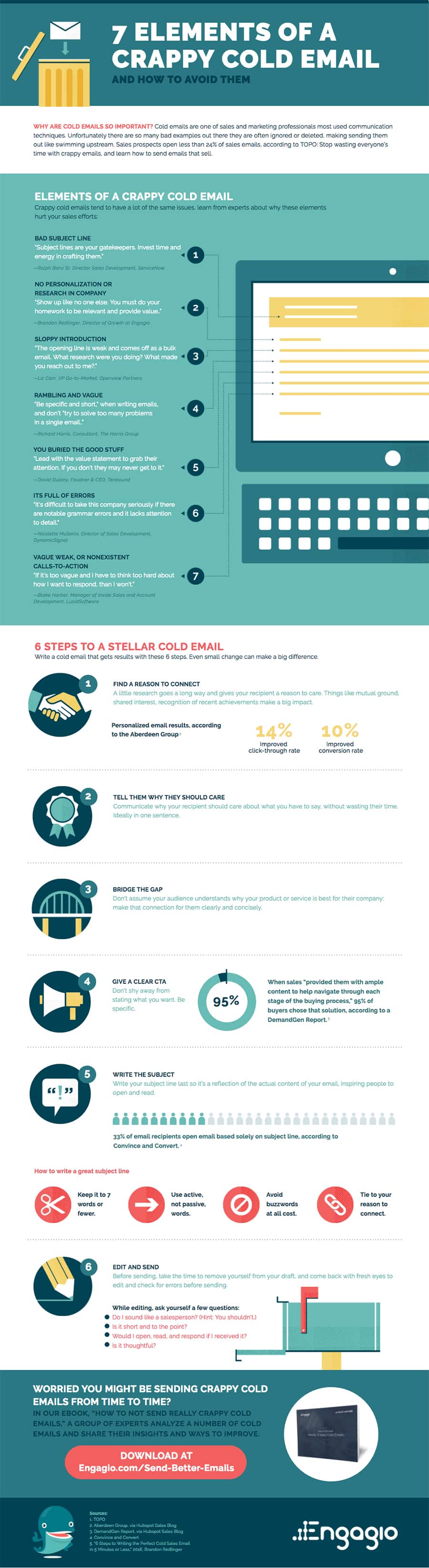
Engagio share their email marketing conversion killers in this infographic.
Here are their key points:
- Bad subject lines
- Lack of personalisation
- Sloppy introduction
- Burying the good stuff
- Vague, weak or non-existent call to action
Check out the infographic for ways to fix these issues and more.
Email marketing remains one of the most powerful tools in the digital marketer’s arsenal. It’s cost-effective, direct, and has the potential to generate significant returns on investment. However, many marketers find their email campaigns falling flat. Why? Often, it’s due to a few common but critical mistakes. Here are seven things that could be killing your email marketing strategy.
Bad Subject Lines
Crafting effective subject lines is both an art and a science. For small businesses, where resources may be limited, getting the subject line right is crucial for the success of your email marketing campaigns. Here’s an in-depth look at why subject lines matter so much and how you can improve them to boost your open rates and overall campaign effectiveness.
Why Subject Lines Matter
Subject lines are the first thing recipients see in their inbox. They play a pivotal role in whether your email is opened or ignored. A compelling subject line can significantly increase your open rates, while a poor one can cause your email to be overlooked or marked as spam. In essence, the subject line is your email’s first impression, and you want it to be a good one.
Characteristics of Bad Subject Lines
Before diving into what makes a subject line great, it’s essential to understand what makes a bad one. Here are some common pitfalls:
- Vagueness: Subject lines that are too vague fail to give the reader a reason to open the email. For example, “Newsletter #5” doesn’t provide any insight into the content or value of the email.
- Misleading: A subject line that promises something the email doesn’t deliver will quickly erode trust. For instance, “Free iPad Inside!” when the email contains no such offer is a surefire way to disappoint and alienate your audience.
- Overly Promotional: Excessive use of promotional language, like “Buy Now!!!”, can come off as spammy and turn readers off.
- Too Long: Subject lines that are too lengthy might get cut off, especially on mobile devices. Important information should be clear and visible without being truncated.
- All Caps and Excessive Punctuation: Using all caps or too many exclamation marks can make your email look like spam. “HUGE SALE NOW!!!” might get filtered into the junk folder.
Tips for Crafting Effective Subject Lines
Now that we’ve identified what to avoid, let’s look at some strategies for creating compelling subject lines that encourage recipients to open your emails.
- Be Clear and Concise
Your subject line should clearly convey the main point or benefit of your email. Aim for brevity while ensuring the key message is delivered. For instance, “Get 50% Off Your Next Purchase” is straightforward and to the point.
- Create a Sense of Urgency
Urgency can drive action. Phrases like “Limited Time Offer” or “Ends Tonight” can motivate readers to open your email right away. However, use urgency sparingly to avoid coming off as pushy.
- Personalize When Possible
Personalization can make your email stand out. Including the recipient’s name or personalizing based on their behavior can increase open rates. For example, “John, Don’t Miss Your Custom Discount” feels more personal than a generic subject line.
- Use Numbers and Lists
Numbers can make your subject line more engaging and specific. For example, “5 Tips for Better Sleep” or “3 Ways to Save on Your Next Order” can attract attention and give a clear idea of what the email contains.
- Ask Questions
Questions can pique curiosity and encourage recipients to open your email to find the answer. For instance, “Are You Making These Common Marketing Mistakes?” can intrigue the reader.
- A/B Testing
A/B testing involves sending two variations of a subject line to small portions of your email list to see which performs better, then sending the winning version to the rest of your list. This data-driven approach can help you refine your subject lines over time.
- Avoid Spam Triggers
Certain words and phrases can trigger spam filters, sending your email straight to the junk folder. Words like “free”, “earn money”, or “act now” should be used carefully. Monitoring your email performance can help you identify and avoid these triggers.
- Leverage Preheader Text
Preheader text is the snippet of text that follows the subject line in the inbox. Use it to provide additional context or reinforce the subject line. For example, if your subject line is “Spring Sale Starts Now”, your preheader could be “Get up to 50% off on select items”.
Examples of Effective Subject Lines for Small Businesses
To illustrate these tips, here are some examples of effective subject lines that small businesses can use:
- E-commerce: “Summer Clearance: Up to 70% Off All Items”
- Service-Based Business: “Book Today and Save 20% on Your Next Service”
- Restaurants/Cafés: “Try Our New Menu – Free Dessert with Your Meal”
- Local Shops: “Exclusive Event: VIP Access to New Arrivals”
- Health and Wellness: “Discover 3 Ways to Boost Your Energy Today”
Analyzing and Improving Subject Lines
Continual improvement is key to successful email marketing. Here’s how to analyze and enhance your subject lines over time:
- Track Open Rates: Regularly monitor the open rates of your emails to identify trends and understand what types of subject lines resonate with your audience.
- Gather Feedback: If possible, gather feedback from your audience about your emails. This can provide insights into what they find engaging or off-putting.
- Stay Updated: Email marketing trends evolve, so it’s important to stay updated on best practices and new strategies. Follow industry blogs, attend webinars, and participate in forums to keep your skills sharp.
- Use Tools: Utilize email marketing tools that offer subject line analysis and suggestions. Tools like CoSchedule’s Headline Analyzer or Mailchimp’s subject line helper can provide valuable insights and recommendations.
For small businesses, the subject line is a critical component of email marketing success. By avoiding common pitfalls and applying best practices, you can craft subject lines that grab attention, encourage opens, and drive engagement. Remember, your subject line is your first chance to make a good impression – make it count. Continually test, analyze, and refine your approach to stay ahead in the competitive landscape of email marketing.
Lack of Personalisation
Personalisation in email marketing is more than just a trend—it’s a necessity. In today’s digital landscape, consumers expect communications tailored to their interests, behaviors, and needs. For small businesses, leveraging personalisation can significantly enhance engagement, build stronger customer relationships, and drive conversions. Here’s an in-depth look at why personalisation matters and how you can implement it effectively in your email marketing strategy.
Why Personalisation Matters
Personalised emails deliver six times higher transaction rates than non-personalised ones. When recipients see content that resonates with their preferences and past interactions, they are more likely to engage with it. Personalisation helps to cut through the noise, making your emails stand out in crowded inboxes. It builds trust and loyalty, showing customers that you understand and value them as individuals.
Common Personalisation Mistakes
Before exploring the best practices, it’s crucial to identify and understand common personalisation mistakes that can hinder your email marketing efforts:
- Using Only First Names: Simply adding the recipient’s first name to the email may not be enough. While it’s a start, deeper personalisation involves more than this superficial touch.
- Irrelevant Content: Sending content that doesn’t match the recipient’s interests or past behavior can lead to disengagement and unsubscribes.
- Generic Segmentation: Broad segmentation categories like “men” and “women” are often too general. More detailed segmentation can yield better results.
- Over-Personalisation: While personalisation is important, overdoing it can feel invasive. Finding a balance is key to maintaining trust.
Effective Personalisation Strategies
To harness the power of personalisation, small businesses need to adopt a multi-faceted approach. Here are some effective strategies to enhance your email personalisation efforts:
- Segment Your Audience
Segmentation is the foundation of effective personalisation. Divide your email list into smaller groups based on criteria like demographics, purchase history, browsing behavior, and engagement levels. Here are some segmentation ideas:
-
- Demographic Segmentation: Age, gender, location, and job title.
- Behavioral Segmentation: Past purchases, browsing history, and email engagement.
- Psychographic Segmentation: Interests, lifestyle, and values.
By targeting these specific segments with tailored content, you can significantly increase relevance and engagement.
- Use Dynamic Content
Dynamic content allows you to create emails where different sections of the content are tailored to different recipients based on their data. For example, you could show different product recommendations based on what a customer has previously purchased or browsed.
-
- Product Recommendations: Use past purchase data to suggest similar or complementary products.
- Location-Based Content: Tailor content based on the recipient’s geographic location, such as local events or store promotions.
- Behavioral Triggers: Send emails triggered by specific actions, like abandoning a cart or browsing a particular category.
- Leverage Purchase History
Tailoring your emails based on past purchase behavior can greatly enhance personalisation. For instance, if a customer bought a camera, you might send them emails about accessories or tutorials on how to use it.
-
- Replenishment Reminders: For consumable products, send reminders when it’s time to reorder.
- Follow-Up Emails: After a purchase, send follow-up emails with related product suggestions or usage tips.
- Anniversary and Loyalty Emails: Celebrate customer milestones, such as the anniversary of their first purchase or loyalty program milestones, with special offers.
- Behavioral Triggers
Behavioral triggers automate emails based on specific actions taken by recipients, ensuring timely and relevant communication. Common triggers include:
-
- Welcome Series: Send a series of emails to new subscribers, introducing them to your brand and offerings.
- Abandoned Cart Emails: Remind customers of items they left in their cart, often with an incentive to complete the purchase.
- Re-Engagement Emails: Target inactive subscribers with special offers or engaging content to bring them back.
- Personalised Subject Lines and Preheaders
Personalising the subject line and preheader text can significantly increase open rates. Incorporate the recipient’s name, location, or recent activity to catch their attention.
-
- Name Inclusion: “John, Don’t Miss Out on Our Exclusive Offer!”
- Location-Based: “New York, Your Spring Fashion Guide is Here!”
- Behavioral: “Last Chance to Grab the Items in Your Cart, Sarah!”
- Personalised Content Based on Preferences
Allow subscribers to set their preferences and tailor your content accordingly. For example, let them choose the frequency of emails, types of products they’re interested in, or specific topics they want to hear about.
-
- Preference Centers: Create a preference center where subscribers can update their interests and preferences.
- Surveys and Feedback: Periodically send surveys to understand your subscribers’ evolving interests and tailor your content accordingly.
- Automated Workflows
Implement automated workflows to streamline and enhance personalisation. Automation can help deliver timely, relevant content without manual effort.
-
- Birthday and Anniversary Emails: Send personalised offers and messages on birthdays or anniversaries.
- Post-Purchase Follow-Ups: Automate follow-up emails to gather feedback or suggest complementary products.
- Event-Based Triggers: Set up workflows for specific events, like webinar registrations or product launches.
Tools and Technologies for Personalisation
To effectively personalise your email marketing, leverage the following tools and technologies:
- Email Marketing Platforms
Use platforms like Mailchimp, HubSpot, or Constant Contact that offer advanced segmentation, dynamic content, and automation features.
- Customer Relationship Management (CRM) Systems
Integrate your email marketing with a CRM system like Salesforce or Zoho CRM to access detailed customer data and history for better personalisation.
- Data Analytics Tools
Use tools like Google Analytics and email analytics features from your email platform to track behavior and engagement, providing insights for further personalisation.
- Personalisation Engines
Advanced personalisation engines like Dynamic Yield or Segment can help tailor content and recommendations in real-time based on user data.
Best Practices for Personalisation
To ensure your personalisation efforts are effective and well-received, follow these best practices:
- Respect Privacy
Be transparent about data collection and usage. Ensure you have consent to use personal data and provide easy opt-out options.
- Test and Iterate
Continuously test different personalisation strategies to see what works best. A/B testing can help refine your approach and improve results.
- Balance Personalisation with Privacy
While personalisation can boost engagement, avoid being too invasive. Ensure that your efforts feel helpful and not creepy to your audience.
- Measure Results
Regularly analyze the performance of your personalised emails. Track metrics like open rates, click-through rates, and conversions to gauge effectiveness.
For small businesses, personalisation in email marketing is a powerful way to connect with customers, build loyalty, and drive sales. By implementing segmentation, dynamic content, behavioral triggers, and leveraging tools and technologies, you can create tailored email experiences that resonate with your audience. Remember to respect privacy, continuously test and iterate, and measure your results to refine your strategy over time. Personalisation is not just about addressing recipients by their names; it’s about delivering meaningful, relevant content that meets their unique needs and preferences.
Sloppy Introduction
The introduction of your email is crucial. It sets the tone for the rest of the message and determines whether your recipients will continue reading or move on. A sloppy introduction can immediately disengage your audience, rendering the rest of your carefully crafted email ineffective. Here’s an in-depth guide on how to create compelling introductions that captivate your readers from the start.
Why the Introduction Matters
The introduction is the hook that grabs your reader’s attention. It’s your first opportunity to make an impression and establish the context for your email. A strong introduction can engage the reader, make them feel valued, and encourage them to read further. On the other hand, a poorly executed introduction can lead to high bounce rates, low engagement, and ultimately, a failed campaign.
Characteristics of a Sloppy Introduction
Before we delve into creating great introductions, it’s important to understand what makes an introduction sloppy. Common characteristics include:
- Generic Openings: Starting with something impersonal and bland like “Dear Customer” fails to make a connection.
- Overly Formal Language: Using stilted or overly complex language can make your email seem insincere or intimidating.
- Lack of Clarity: If the purpose of the email isn’t clear from the beginning, readers might lose interest.
- Lengthy Preambles: Taking too long to get to the point can cause readers to lose patience.
- No Value Proposition: Failing to communicate the benefit or value of the email early on can make it seem irrelevant.
Tips for Crafting Engaging Introductions
- Start with a Personal Touch
Personalisation can significantly increase engagement. Use the recipient’s name and reference past interactions if applicable. This makes the email feel more like a conversation rather than a mass message. For example, “Hi Sarah, we noticed you enjoyed our spring collection last year and wanted to share our new summer arrivals with you.”
- Use an Engaging Hook
Capture the reader’s attention with an interesting hook. This could be a surprising fact, a relevant question, or an intriguing statement. For instance, “Did you know that 70% of people prefer shopping online during summer? Here’s how you can stay ahead of the trend.”
- Be Clear and Concise
Clarity is crucial. Clearly state the purpose of the email within the first few lines. Avoid long-winded introductions and get straight to the point. For example, “We’re excited to introduce our new loyalty program that offers you more rewards and discounts.”
- Highlight the Benefit Early
Communicate the value or benefit to the reader right away. Why should they keep reading? What’s in it for them? For instance, “Unlock exclusive discounts on your favorite items with our latest offers.”
- Match Your Brand’s Voice
Ensure your introduction aligns with your brand’s voice and style. Whether it’s casual and friendly or professional and authoritative, consistency helps build brand recognition and trust. For example, a friendly tone might be, “Hey there, summer’s here, and we’ve got something special just for you!”
- Create a Sense of Urgency
Introducing a sense of urgency can prompt readers to act quickly. This can be particularly effective in time-sensitive promotions. For example, “Don’t miss out—our 48-hour flash sale starts now!”
- Ask a Relevant Question
Asking a question can engage readers and make them curious to find out more. Ensure the question is relevant to the content of the email. For example, “Looking for a way to boost your productivity this summer?”
- Use Storytelling Elements
Incorporating a brief story or anecdote can make your introduction more engaging and relatable. For instance, “Last summer, our community saved thousands on eco-friendly products. This year, we’re taking it a step further.”
Examples of Effective Introductions for Small Businesses
Here are some examples of how small businesses can craft compelling email introductions:
- E-commerce: “Hi Jane, as a valued customer, we wanted you to be the first to know about our exclusive 30% off sale on summer essentials.”
- Service-Based Business: “Hello Mark, need a quick refresh for your home? Our team is offering a free consultation for the first 50 respondents.”
- Local Shop: “Hey Alex, we’re thrilled to announce the grand opening of our new store in downtown. Join us for a special event and exclusive discounts!”
- Health and Wellness: “Hi Lisa, ready to kickstart your wellness journey? Check out our top tips for a healthier lifestyle this summer.”
- Non-Profit: “Dear Supporter, your generosity has made a huge impact. Here’s how your donations are changing lives and how you can continue to help.”
Best Practices for Writing Effective Introductions
- Know Your Audience
Understand who your audience is and what they care about. Tailor your introduction to address their needs, interests, and pain points.
- Keep It Short and Sweet
Avoid lengthy introductions. Aim for 2-3 sentences that clearly convey the message and value. Brevity helps maintain the reader’s interest.
- Use Action-Oriented Language
Encourage readers to take the next step by using action-oriented language. Phrases like “discover”, “join”, “unlock”, and “get started” can be effective.
- Test Different Approaches
Experiment with different types of introductions to see what resonates best with your audience. A/B testing can help you determine which style and tone generate the highest engagement.
- Analyze and Optimize
Regularly review your email performance metrics to understand what works and what doesn’t. Use these insights to continually refine your introduction strategies.
- Ensure Mobile Compatibility
Many people read emails on their mobile devices. Make sure your introduction (and entire email) is optimized for mobile viewing. This includes using short sentences and avoiding large blocks of text.
Tools and Techniques for Crafting Better Introductions
To improve your email introductions, consider leveraging the following tools and techniques:
- Email Marketing Platforms
Platforms like Mailchimp, Constant Contact, and HubSpot offer templates and tools to help you craft and test effective email introductions.
- A/B Testing
Use A/B testing to compare different introductions and determine which one performs better. This can provide valuable insights into what resonates with your audience.
- Analytics Tools
Utilize analytics tools to track open rates, click-through rates, and other key metrics. This data can help you understand the effectiveness of your introductions and overall email content.
- Customer Feedback
Gather feedback from your subscribers through surveys or direct interactions. Understanding their preferences can help you tailor your introductions more effectively.
A strong introduction is vital for the success of your email marketing campaigns. By avoiding common pitfalls and implementing best practices, you can craft engaging, relevant, and compelling introductions that captivate your readers and drive better results. Remember to keep it personal, clear, and concise while highlighting the value and maintaining a consistent brand voice. Continuous testing and optimization will help you refine your approach and achieve sustained email marketing success.
Burying the Good Stuff
When it comes to email marketing, burying the “good stuff” – the key information or offers – can drastically reduce the effectiveness of your campaigns. The way you structure and present the content in your emails significantly influences whether your recipients will engage with your message or ignore it. For small businesses, ensuring that important information is prominently and clearly displayed is crucial to driving engagement and conversions. Here’s an in-depth guide on how to avoid burying the good stuff and make your emails more impactful.
Why Highlighting Key Information Matters
In today’s fast-paced world, people receive numerous emails daily and often skim through their inboxes quickly. If the main message or offer of your email isn’t immediately apparent, there’s a high chance it will be overlooked. Highlighting key information helps ensure that your recipients understand the value of your email right away, increasing the likelihood of them taking the desired action.
Common Mistakes That Lead to Burying the Good Stuff
Before exploring best practices, it’s important to identify common mistakes that cause important information to get buried:
- Lengthy Introductions: Starting with long-winded introductions or irrelevant content can push the main message down, making it less noticeable.
- Dense Text: Using large blocks of text without proper formatting can make it difficult for readers to quickly find the key points.
- Poor Layout: A cluttered or poorly designed layout can obscure important information and make the email hard to navigate.
- No Visual Hierarchy: Failing to use visual elements to highlight key information can result in the main message getting lost in the email content.
- Misleading Headers: Using headers that don’t accurately reflect the content below them can confuse readers and lead them to miss important details.
Tips for Highlighting Key Information
To ensure that the most important information in your emails stands out, consider the following tips and strategies:
- Use a Strong Subject Line and Preheader
The subject line and preheader text are the first things recipients see and can set the stage for the content inside. Ensure these elements clearly convey the main message or offer. For example, if you’re offering a discount, your subject line could be “Unlock 20% Off Your Next Purchase” and the preheader might read “Exclusive Offer Inside – Shop Now!”
- Lead with the Main Message
Place the most important information at the top of your email. This ensures that even if recipients only read the first few lines, they will see the key message. For instance, “Get 50% off your first order – limited time offer!” should be prominently displayed at the beginning.
- Use Bullet Points and Lists
Bullet points and lists are effective for breaking up text and highlighting important information. They make it easier for readers to scan the email and quickly grasp the key points. For example, list the benefits of a new product or the details of a promotion.
- Employ Visual Hierarchy
Use design elements like headers, bold text, and different font sizes to create a visual hierarchy. This helps guide the reader’s eye to the most important parts of the email. For example, use a large, bold header for your main offer and smaller subheaders for additional details.
- Incorporate Images and Graphics
Relevant images and graphics can draw attention to key information. For instance, if you’re promoting a new product, include a high-quality image of the product with a caption highlighting its main features or benefits.
- Utilize Buttons for Calls to Action
Buttons are more visually striking than text links and can significantly improve click-through rates. Ensure your primary call to action (CTA) is placed prominently and designed to stand out. For example, a bright, contrasting button that says “Shop Now” or “Claim Your Discount” can be very effective.
- Keep It Concise
Avoid overwhelming your readers with too much information. Keep your emails concise and to the point, focusing on the key message you want to convey. If you have a lot of information to share, consider breaking it up into multiple emails or using links to drive traffic to your website.
- Create a Clear Path
Structure your email so there’s a clear path from the introduction to the main message and the CTA. Use whitespace effectively to avoid clutter and ensure that each section of the email is distinct and easy to follow.
Examples of Effective Email Structures
To illustrate these tips, here are examples of effective email structures for small businesses:
- E-commerce Promotion Email
-
- Subject Line: “Spring Sale: Up to 50% Off Storewide!”
- Preheader: “Limited time offer – shop your favorites now.”
- Introduction: “Hello [First Name],”
- Main Message: “Enjoy up to 50% off on our entire collection. Don’t miss out on these amazing deals!”
- Bullet Points: List top-selling products or categories on sale.
- CTA Button: “Shop Now”
- Additional Info: Brief section on new arrivals or upcoming events.
- Service-Based Business Newsletter
-
- Subject Line: “Exclusive Tips for a Greener Lawn This Spring”
- Preheader: “Get expert advice and special discounts inside.”
- Introduction: “Hi [First Name],”
- Main Message: “Spring is the perfect time to rejuvenate your lawn. Here are our top tips to help you get started.”
- Bullet Points: List the tips.
- CTA Button: “Book a Consultation”
- Additional Info: Highlight any special promotions or services.
- Event Invitation Email
-
- Subject Line: “Join Us for Our Grand Opening Celebration!”
- Preheader: “RSVP today and enjoy exclusive perks.”
- Introduction: “Dear [First Name],”
- Main Message: “We’re excited to invite you to our grand opening event! Enjoy exclusive discounts, free samples, and more.”
- Bullet Points: List event details like date, time, location, and highlights.
- CTA Button: “RSVP Now”
- Additional Info: Mention any special guests or activities.
Tools and Techniques for Highlighting Key Information
To improve how you highlight key information in your emails, consider leveraging the following tools and techniques:
- Email Marketing Platforms
Platforms like Mailchimp, Constant Contact, and HubSpot offer templates and design tools that make it easy to create visually appealing emails with clear hierarchies.
- Design Tools
Tools like Canva and Adobe Spark can help you create custom images and graphics to highlight key information.
- Analytics Tools
Use analytics tools to track engagement metrics such as open rates, click-through rates, and heat maps. This data can help you understand which parts of your email are capturing attention and which are being overlooked.
- A/B Testing
Conduct A/B testing to compare different email structures and designs. This can help you determine the most effective ways to highlight key information and drive engagement.
For small businesses, ensuring that the good stuff in your emails stands out is critical to your email marketing success. By leading with the main message, using visual hierarchy, incorporating images and buttons, and keeping your content concise, you can create emails that capture attention and drive action. Regularly testing and analyzing your emails will help you refine your approach and continue to improve your email marketing efforts. Remember, the goal is to make it as easy as possible for your readers to see and act on the key information in your emails.
Vague, Weak, or Non-Existent Call to Action
A call to action (CTA) is a crucial component of any email marketing campaign. It’s the element that drives recipients to take the next step, whether that’s making a purchase, signing up for an event, or downloading a resource. A vague, weak, or non-existent CTA can render even the most well-crafted email ineffective. Here’s an in-depth guide on how to create powerful CTAs that drive action and improve your email marketing results.
Why a Strong CTA Matters
A strong CTA is the bridge between your email content and the desired action you want your readers to take. It provides clear direction and encourages engagement. Without a compelling CTA, recipients may not know what to do next, leading to missed opportunities for conversions and engagement.
Characteristics of Vague, Weak, or Non-Existent CTAs
Before exploring best practices, it’s essential to identify common issues with CTAs that can undermine your email marketing efforts:
- Vague Language: CTAs that are unclear or ambiguous fail to convey a specific action. For example, “Click here” or “Learn more” doesn’t provide enough information about what the recipient can expect.
- Lack of Urgency: CTAs that don’t create a sense of urgency can lead to inaction. Phrases like “Buy now” are more compelling than “Check it out.”
- Buried CTAs: Placing the CTA in a less prominent location or not visually distinguishing it can make it easy to miss.
- Too Many CTAs: Including multiple CTAs can confuse readers about what action to take. It’s generally better to focus on one primary CTA.
- Non-Existent CTAs: Failing to include a CTA at all leaves the reader without clear guidance on what to do next.
Tips for Crafting Effective CTAs
- Use Clear and Specific Language
Your CTA should be straightforward and clearly convey the action you want the recipient to take. Instead of “Click here,” use specific language like “Download your free guide” or “Start your free trial.”
- Create a Sense of Urgency
Urgency can motivate readers to act immediately. Phrases like “Limited time offer,” “Ends tonight,” or “Only a few spots left” can prompt quick action. However, be careful not to overuse urgency, as it can lose effectiveness over time.
- Make It Visually Prominent
Design your CTA to stand out from the rest of your email content. Use contrasting colors, larger font sizes, and buttons instead of text links. The CTA should be easy to spot and click.
- Place CTAs Strategically
The placement of your CTA is crucial. It should be above the fold so that it’s visible without scrolling. Additionally, consider placing a secondary CTA at the end of your email as a reminder.
- Limit the Number of CTAs
Having too many CTAs can overwhelm and confuse recipients. Focus on one primary action you want your readers to take. If necessary, include a secondary CTA, but ensure it doesn’t compete with the primary one.
- Use Action-Oriented Language
Encourage action by using verbs that inspire movement. Phrases like “Get started,” “Join now,” “Discover,” and “Shop now” are more compelling than passive language.
- Personalize Your CTAs
Personalization can make your CTAs more relevant and appealing. For example, “Jane, claim your 20% discount” feels more personalized than a generic “Claim your discount.”
- Test Different CTAs
A/B testing different CTAs can help you determine which ones are most effective. Test variations in wording, design, and placement to find the optimal combination.
Examples of Effective CTAs for Small Businesses
To illustrate these tips, here are examples of effective CTAs tailored for small businesses:
- E-commerce Promotion
-
- Primary CTA: “Shop Now and Save 20%”
- Secondary CTA: “Browse New Arrivals”
- Service-Based Business
-
- Primary CTA: “Book Your Free Consultation”
- Secondary CTA: “Learn More About Our Services”
- Event Invitation
-
- Primary CTA: “RSVP Today”
- Secondary CTA: “View Event Details”
- Newsletter Signup
-
- Primary CTA: “Subscribe for Exclusive Updates”
- Secondary CTA: “See What You’ll Get”
- Downloadable Resource
-
- Primary CTA: “Download Your Free Ebook”
- Secondary CTA: “Explore Our Resource Library”
Tools and Techniques for Enhancing CTAs
To improve the effectiveness of your CTAs, consider leveraging the following tools and techniques:
- Email Marketing Platforms
Platforms like Mailchimp, Constant Contact, and HubSpot offer templates and design tools to help you create visually compelling CTAs. They also provide A/B testing features to optimize your CTAs.
- Analytics Tools
Use analytics tools to track the performance of your CTAs. Metrics like click-through rates, conversion rates, and heat maps can provide insights into how recipients interact with your CTAs.
- Design Tools
Tools like Canva and Adobe Spark can help you create custom CTA buttons and graphics that stand out.
- Behavioral Data
Utilize behavioral data to personalize your CTAs. For example, if a recipient has previously shown interest in a particular product category, tailor the CTA to highlight related offers.
Best Practices for CTA Placement and Design
- Above the Fold
Ensure your primary CTA is visible without requiring the recipient to scroll. This maximizes the chances of it being seen and acted upon.
- Repetition with Variation
If you include a secondary CTA, consider varying the design or wording slightly to reinforce the action without being redundant.
- Whitespace and Contrast
Use ample whitespace around your CTA to make it stand out. High contrast between the CTA button and the background can draw the recipient’s eye.
- Mobile Optimization
Ensure your CTAs are easily clickable on mobile devices. This means using larger buttons and avoiding text links that are hard to tap.
Common Mistakes to Avoid
- Being Too Aggressive
While urgency is important, being overly aggressive can turn recipients off. Balance urgency with a friendly tone to encourage action without seeming pushy.
- Ignoring A/B Test Results
Failing to act on A/B test results can prevent you from optimizing your CTAs. Use the data to continuously refine your approach.
- Neglecting Follow-Up
Ensure your CTA leads to a well-designed landing page or follow-up action. A great CTA followed by a poor landing page experience can negate your efforts.
A strong, clear, and compelling call to action is vital for the success of your email marketing campaigns. By using specific language, creating a sense of urgency, making your CTAs visually prominent, and placing them strategically, you can significantly increase the effectiveness of your emails. Regularly testing and analyzing your CTAs will help you refine your approach and drive better results. For small businesses, mastering the art of the CTA can lead to higher engagement, more conversions, and ultimately, greater success in your email marketing efforts. Remember, the goal is to make it as easy and enticing as possible for your recipients to take the desired action.
Conclusion
Improving your email marketing strategy involves paying attention to these critical elements: crafting compelling subject lines, personalising content, creating engaging introductions, highlighting key information, and including strong calls to action. By addressing these common pitfalls, you can significantly increase the effectiveness of your email campaigns and drive better results for your business.
Remember, email marketing is both an art and a science. Continually test different approaches, analyze your results, and refine your strategy based on what works best for your audience. With careful planning and execution, email marketing can be a powerful tool to build relationships, drive engagement, and boost sales.

Author:
Mark Ford