Are you looking for ways to improve your email marketing strategy? Have you considered how email personalisation can help?
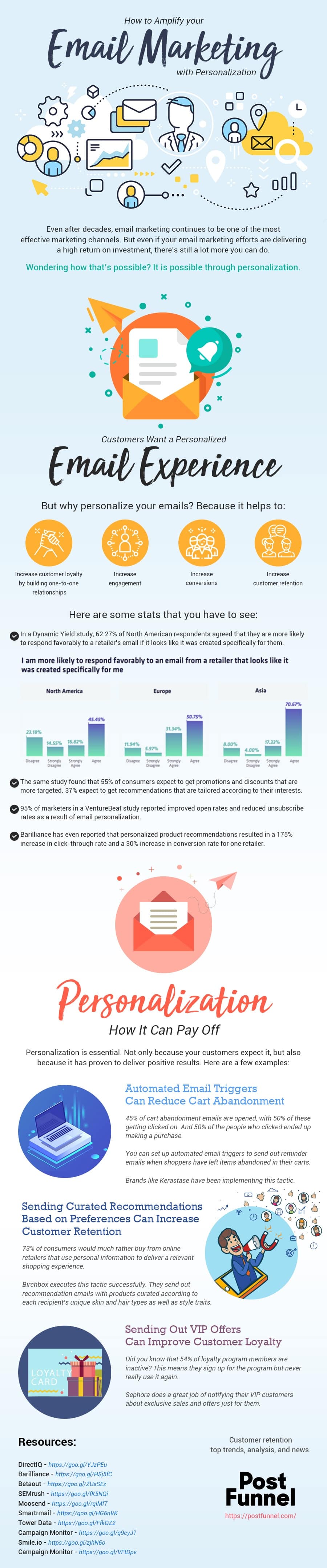
PostFunnel share their guide to email personalisation in this infographic.
They start by listing some benefits of personalisation:
- Increase customer loyalty
- Increase engagement
- Increase conversions
- Increase customer retention
Check out the infographic for more detail.
In today’s competitive digital landscape, email marketing remains one of the most effective channels for engaging customers and driving sales. However, with inboxes flooded with generic emails, personalisation has become crucial for standing out and making meaningful connections. In this post, we’ll explore how personalisation can amplify your email marketing strategy by increasing customer loyalty, engagement, conversions, and retention.
Increase Customer Loyalty
Understanding Customer Preferences
Building customer loyalty is essential for small businesses aiming for long-term success. Loyal customers not only repeat purchases but also become brand advocates, promoting your business through word-of-mouth. Here are in-depth tips and guidance on how to enhance customer loyalty through personalisation in your email marketing strategy.
- Understand Your Customer Segments
Data Collection: Start by collecting data about your customers. Use sign-up forms, surveys, and website analytics to gather information about their preferences, demographics, and purchase history. Tools like Google Analytics or customer relationship management (CRM) systems can help you segment your audience effectively.
Create Buyer Personas: Develop detailed buyer personas for different segments of your audience. For example, if you sell outdoor gear, your personas might include a casual hiker, a seasoned mountaineer, and a family looking for camping supplies. Understanding their motivations and behaviors will enable you to tailor your messaging.
- Personalise Email Content
Dynamic Content: Use dynamic content to create personalised emails that cater to the specific interests of each customer segment. For instance, if a customer frequently buys running shoes, send them targeted emails featuring new arrivals in running gear or related accessories.
Product Recommendations: Leverage algorithms to provide personalised product recommendations based on past purchases or browsing behavior. This can be done through “You may also like” sections in your emails, encouraging customers to explore more of what they love.
Birthday and Anniversary Offers: Acknowledge important dates in your customers’ lives by sending personalised greetings and exclusive offers. For example, offer a discount or a special gift on their birthday. This gesture shows that you value them as individuals, fostering loyalty.
- Build a Strong Brand Relationship
Consistent Communication: Maintain a consistent communication strategy that reinforces your brand identity. Use a consistent tone and style that resonates with your audience across all emails. Whether your brand is playful, professional, or inspirational, ensure that your email content reflects this.
Storytelling: Use storytelling in your emails to connect emotionally with your audience. Share success stories of customers who have used your products or services. Highlight your brand’s mission and values, showcasing how you make a positive impact in your community or industry.
Engagement Through Feedback: Regularly ask for feedback through personalised surveys. Tailor questions based on previous purchases or interactions. For example, after a customer purchases a product, send a follow-up email asking about their experience. This not only shows you care but also helps you improve your offerings.
- Incorporate Loyalty Programs
Reward Points System: Establish a loyalty program that rewards customers for repeat purchases. Personalise the program by allowing customers to track their points through email updates. For instance, if a customer has reached a specific milestone, send a congratulatory email along with a reward offer.
Exclusive Access: Provide loyal customers with exclusive access to new products, events, or promotions. Sending emails that invite them to early access sales or special events fosters a sense of belonging and exclusivity.
Tiered Rewards: Create tiered loyalty levels that incentivise customers to reach higher tiers for greater rewards. Tailor your communication to encourage progression through the tiers. For example, send a personalised email when they reach a new level, outlining the new benefits they’ve unlocked.
- Leverage User-Generated Content
Encourage Reviews and Testimonials: Encourage satisfied customers to share their experiences through reviews or testimonials. Send personalised emails after a purchase, inviting them to leave feedback. Highlight these testimonials in future emails to build trust and community.
Social Media Engagement: Engage with customers on social media platforms by sharing user-generated content (UGC). Encourage customers to tag your brand in their posts featuring your products. Highlighting this content in your emails not only showcases customer satisfaction but also fosters a sense of community.
- Monitor and Adapt Your Strategy
Track Engagement Metrics: Regularly monitor key metrics such as open rates, click-through rates, and conversion rates. Use A/B testing to experiment with different personalisation strategies, subject lines, and content types. Understanding what resonates with your audience will allow you to refine your approach continuously.
Customer Retention Analysis: Analyze customer retention rates to identify patterns or trends. If certain segments show declining loyalty, investigate why and adapt your strategy accordingly. This proactive approach demonstrates your commitment to meeting customer needs.
Conclusion
By focusing on personalisation in your email marketing strategy, small businesses can significantly enhance customer loyalty. Understanding your customers, tailoring content, building strong relationships, incorporating loyalty programs, leveraging user-generated content, and continuously monitoring your strategies are key steps to cultivating loyal customers.
Remember, loyalty is built over time through consistent and meaningful interactions. By investing in personalisation, you’ll not only foster loyalty but also create a dedicated customer base that advocates for your brand, driving sustainable growth for your business.
Increase Engagement
Segmenting Your Audience
Engagement is a critical metric in email marketing, directly impacting open rates, click-through rates, and overall customer interaction with your brand. When your emails resonate with recipients, they are more likely to engage, leading to increased brand loyalty and conversions. Here’s how small businesses can leverage personalisation to enhance email engagement.
- Segment Your Audience Effectively
Detailed Segmentation: Go beyond basic demographics and create detailed segments based on purchase behavior, engagement level, location, and interests. For example, segment your audience into first-time buyers, repeat customers, and inactive subscribers. Tailor your messaging to each group’s specific needs and behaviors.
Lifecycle Stages: Consider the customer journey and segment your audience accordingly. For instance, send onboarding emails to new subscribers, special offers to loyal customers, and re-engagement campaigns to inactive users. Understanding where each customer is in their journey allows you to create relevant content that resonates with their current needs.
- Utilise Dynamic Content
Personalised Content Blocks: Use dynamic content to change sections of your emails based on recipient data. This could include varying product recommendations, images, or even calls to action (CTAs) depending on user preferences. For example, if you know a customer enjoys outdoor activities, highlight relevant products or blog posts in your email.
Interactive Elements: Incorporate interactive elements such as polls, quizzes, or sliders that encourage recipients to engage directly within the email. For example, a poll about their favorite products can increase interaction and provide you with valuable insights.
- Craft Compelling Subject Lines
Personalisation in Subject Lines: Personalise subject lines by including the recipient’s name or referencing their previous interactions. For example, “Jane, check out the new hiking gear we think you’ll love!” can create a sense of personal connection and increase open rates.
Create Urgency and Curiosity: Use language that evokes a sense of urgency or curiosity. Phrases like “Limited time offer!” or “You won’t want to miss this!” can entice recipients to open your emails. Experiment with different styles to see what resonates best with your audience.
- Optimise Email Timing and Frequency
Timing Strategies: Analyze your audience’s behavior to determine the best times to send emails. Use A/B testing to identify when recipients are most likely to engage. For instance, if you find that emails sent in the late afternoon have higher open rates, schedule your campaigns accordingly.
Frequency Management: Avoid overwhelming your subscribers by finding the right balance in email frequency. Monitor engagement metrics to see how often your audience prefers to hear from you. If open rates decline, it may indicate that you need to reduce the number of emails sent.
- Incorporate Personalised CTAs
Tailored Calls to Action: Personalise CTAs based on the recipient’s past interactions. For instance, if a customer has shown interest in a specific product category, use CTAs like “Explore More Outdoor Gear” instead of generic options. This targeted approach increases the likelihood of clicks.
A/B Test CTAs: Experiment with different wording, colors, and placements for your CTAs to determine what drives the highest engagement. Small changes can have a significant impact on click-through rates.
- Foster a Two-Way Communication Channel
Encourage Feedback: Invite your audience to share their thoughts and opinions through surveys or direct responses to your emails. Use personalised surveys to gather insights on their preferences, satisfaction, and suggestions for improvement. This engagement shows that you value their input and are willing to adapt based on their feedback.
Respond Promptly: If customers reply to your emails or engage with your content, ensure that you respond promptly. Acknowledging their feedback or answering questions creates a dialogue, reinforcing the relationship and encouraging further engagement.
- Leverage User-Generated Content (UGC)
Highlight Customer Stories: Encourage customers to share their experiences with your products or services. Incorporate UGC in your emails, such as customer photos or testimonials. For example, if a customer shares a photo of themselves using your product, feature it in your newsletter. This not only builds community but also encourages others to engage and share their experiences.
Create Hashtag Campaigns: Develop a branded hashtag for customers to use on social media. Encourage them to share their content with this hashtag, and include a selection of the best submissions in your email campaigns. This fosters a sense of belonging and encourages more customers to participate.
- Monitor Engagement Metrics and Adjust Strategy
Track Key Metrics: Regularly monitor key engagement metrics, such as open rates, click-through rates, and conversion rates. Use analytics tools to gain insights into which segments are engaging and which are not. This data can inform your future email strategies.
Iterate and Improve: Use the insights gained from tracking engagement to continuously refine your email campaigns. A/B testing different approaches and adjusting based on customer feedback and behavior will help you develop more effective strategies over time.
Conclusion
Increasing engagement through personalisation in email marketing is essential for small businesses looking to build lasting relationships with their customers. By segmenting your audience, utilising dynamic content, crafting compelling subject lines, optimising timing and frequency, incorporating personalised CTAs, fostering two-way communication, leveraging user-generated content, and continuously monitoring your metrics, you can create engaging email experiences that resonate with your audience.
As you implement these strategies, remember that engagement is a dynamic process that requires ongoing effort and adaptation. By staying attuned to your customers’ needs and preferences, you’ll foster a more engaged audience that not only drives sales but also becomes advocates for your brand.
Increase Conversions
Personalised Landing Pages
Increasing conversions through your email marketing strategy is crucial for driving sales and achieving your business goals. Personalisation plays a significant role in making your emails more relevant and compelling to recipients. Here are in-depth tips and guidance for small businesses looking to enhance conversions through personalisation.
- Personalise Landing Pages
Consistency Between Email and Landing Page: Ensure that the content of your landing pages aligns with what was promised in the email. If you featured a specific product in your email, the landing page should prominently display that product along with additional information and related items. This consistency helps to reduce bounce rates and improves the chances of conversion.
Tailored Content: Use personalisation on landing pages to display content relevant to the individual user. For example, if a recipient clicked on an email about summer dresses, dynamically showcase similar dresses, accessories, or promotions related to summer fashion on the landing page. Tools like Optimizely can help you implement dynamic content based on user data.
- Optimise Abandoned Cart Emails
Timely Reminders: Send automated reminders to customers who have left items in their shopping carts. Personalise these emails by including images of the abandoned products, along with a compelling message that encourages them to complete their purchase.
Incentives for Completion: Consider offering a small discount or free shipping as an incentive for completing their purchase. Phrases like “Complete your purchase and enjoy 10% off!” can effectively motivate customers to return and finalize their transactions.
Engaging Subject Lines: Craft engaging subject lines for your abandoned cart emails. Personalised messages like “Don’t forget your items, [First Name]!” create a sense of urgency and personal connection, increasing the likelihood of opens and clicks.
- Leverage Social Proof
Customer Testimonials: Incorporate testimonials and reviews from satisfied customers in your emails. Highlighting positive experiences from real customers adds credibility and can sway potential buyers. Use dynamic content to showcase testimonials relevant to the specific products featured in the email.
Showcase User-Generated Content: Encourage customers to share their experiences using your products on social media. Feature these posts in your emails to demonstrate real-life usage and satisfaction. This not only builds trust but also creates a sense of community around your brand.
- Utilise Personalised Offers
Targeted Discounts and Promotions: Send personalised discounts based on previous purchases or browsing behavior. For example, if a customer frequently buys skincare products, consider offering them a special discount on their next skincare purchase. Personalised offers make customers feel valued and encourage them to take action.
Limited-Time Promotions: Create urgency by incorporating time-sensitive promotions. Personalise these offers by highlighting how long the offer is valid for the specific recipient. For instance, “Hurry, [First Name]! Your 20% off coupon expires in 48 hours!” creates a sense of urgency that can prompt immediate action.
- A/B Testing for Optimisation
Test Different Personalisation Strategies: Regularly conduct A/B testing to evaluate the effectiveness of different personalisation techniques. Experiment with varying subject lines, content formats, CTAs, and segmentation strategies. For example, test different types of subject lines—personalised vs. generic—to see which performs better in terms of open rates and conversions.
Analyze Results: Use the insights gained from A/B tests to refine your email marketing strategy. If certain personalisation approaches yield higher conversion rates, incorporate those elements into your future campaigns.
- Create Clear and Compelling CTAs
Personalised CTAs: Tailor your calls to action (CTAs) to align with the recipient’s interests. Instead of generic CTAs like “Shop Now,” use personalised options such as “Discover Your Perfect Outfit” or “Complete Your Order, [First Name]!” Personalised CTAs resonate more with recipients and can significantly increase click-through rates.
Visibility and Design: Ensure that your CTAs stand out visually in your emails. Use contrasting colors, bold text, and clear language to make them easily identifiable. Experiment with different placements—such as within the email body or at the end—to determine what drives the highest engagement.
- Segment Your Email List Strategically
Targeted Campaigns: Segment your email list based on behavior, demographics, and interests to create targeted campaigns that resonate with specific groups. For example, if you have a segment of customers who frequently purchase eco-friendly products, craft campaigns that highlight new eco-friendly arrivals or sustainability initiatives.
Lifecycle Campaigns: Develop targeted campaigns based on the customer lifecycle. For instance, create welcome emails for new subscribers, re-engagement emails for inactive customers, and loyalty rewards for repeat buyers. Personalising these communications increases the likelihood of conversions at each stage.
- Monitor and Analyse Conversion Metrics
Track Key Metrics: Use analytics tools to monitor key conversion metrics, such as click-through rates, conversion rates, and overall ROI from your email campaigns. Understanding which campaigns drive the most conversions allows you to focus your efforts on the most effective strategies.
Iterate and Improve: Based on your analysis, refine your personalisation strategies over time. If certain approaches yield higher conversions, incorporate those insights into your future email marketing efforts.
Conclusion
Increasing conversions through personalisation in email marketing requires a strategic approach that combines tailored content, timely reminders, social proof, and clear calls to action. By personalising landing pages, optimising abandoned cart emails, leveraging customer testimonials, and strategically segmenting your audience, small businesses can enhance their conversion rates and drive sales.
Continually monitoring and analysing your efforts will help you adapt your strategies and ensure that you’re meeting your customers’ needs effectively. As you implement these techniques, remember that personalisation not only boosts conversions but also fosters a deeper connection with your audience, ultimately driving long-term business success.
Increase Customer Retention
Loyalty Programs
Customer retention is vital for small businesses seeking sustainable growth. Retaining existing customers is often more cost-effective than acquiring new ones, and loyal customers tend to spend more over time. Personalisation in email marketing can significantly enhance retention by fostering strong relationships with your customers. Here are in-depth tips and guidance for small businesses looking to increase customer retention through personalised email strategies.
- Segment Your Email List for Relevance
Detailed Segmentation: Segment your email list based on customer behavior, purchase history, and engagement levels. For instance, categorize customers into groups like frequent buyers, occasional shoppers, and lapsed customers. This allows you to tailor your communication effectively to each group’s unique needs.
Behavioural Triggers: Use behavioural triggers to send targeted emails. For example, if a customer hasn’t made a purchase in a while, send a re-engagement email offering a special discount. If a customer frequently purchases specific types of products, send targeted recommendations based on their interests.
- Personalise Communication
Tailored Content: Personalise your email content to reflect the interests and preferences of each customer. Use their names in greetings and refer to past purchases or interactions. For instance, “Hi Sarah, we thought you might love these new yoga mats since you purchased one last month!” creates a sense of connection and relevance.
Dynamic Content: Incorporate dynamic content that changes based on the recipient’s data. For example, show different product recommendations or offers based on their browsing history or previous purchases. This customisation enhances the likelihood of engagement and repeat purchases.
- Provide Exceptional Customer Service
Follow-Up Emails: After a purchase, send follow-up emails to thank customers and ask for feedback. This demonstrates that you value their opinion and are committed to improving their experience. A simple email like, “Thank you for your order! We’d love to hear how you liked it,” can go a long way in fostering loyalty.
Customer Support Engagement: Use email to provide easy access to customer support. If a customer has a question or issue, encourage them to reach out directly through email. Make sure to respond promptly and resolve any issues to reinforce trust in your brand.
- Implement a Loyalty Program
Reward Points System: Establish a loyalty program that rewards customers for their repeat purchases. Send personalised emails highlighting their points balance and how close they are to unlocking rewards. For instance, “You’re just 50 points away from your next reward!” creates a sense of anticipation and encourages future purchases.
Exclusive Offers for Loyalty Members: Create exclusive promotions or early access to new products for loyalty program members. Personalise these offers based on their purchase history, making them feel special and appreciated for their loyalty.
- Engage with Valuable Content
Educational and Informative Content: Send emails that offer value beyond promotions. Share tips, how-to guides, or informative content related to your products or services. For instance, if you sell gardening supplies, provide seasonal gardening tips or maintenance guides. This positions your brand as a valuable resource and keeps customers engaged.
Personalised Recommendations: Include personalised product recommendations based on their purchase history or browsing behavior. For example, “Since you bought the beginner’s gardening kit, you might be interested in these advanced tools!” encourages customers to explore additional products.
- Re-Engagement Campaigns
Identify Lapsed Customers: Use your analytics to identify customers who haven’t made a purchase in a while. Develop re-engagement campaigns that remind them of your brand and entice them back with special offers or updated product information.
Targeted Messaging: Craft personalised messages that resonate with lapsed customers. For example, “We miss you, [First Name]! Here’s 15% off your next order to welcome you back!” adds a personal touch that can rekindle interest.
- Solicit Feedback and Act on It
Customer Surveys: Regularly send personalised surveys to gather feedback on customer experiences. Use questions tailored to their specific interactions or purchases. For example, “How did you find your recent purchase of [Product Name]? We’d love your thoughts!”
Implement Changes: Show customers that you value their feedback by implementing changes based on their suggestions. Send follow-up emails informing them of improvements made as a result of their feedback, reinforcing the relationship and trust.
- Celebrate Customer Milestones
Anniversary Emails: Recognise important milestones, such as the anniversary of a customer’s first purchase or the duration of their subscription. Send personalised emails celebrating these milestones with special offers or messages of appreciation.
Birthday Offers: Offer special discounts or gifts on customers’ birthdays. A simple email saying, “Happy Birthday, [First Name]! Enjoy 20% off as our gift to you!” not only personalises their experience but also makes them feel valued.
- Monitor Retention Metrics
Key Performance Indicators (KPIs): Track key retention metrics such as repeat purchase rate, churn rate, and customer lifetime value (CLV). Understanding these metrics helps you identify trends and areas for improvement.
Adjust Strategies: Regularly evaluate your retention strategies based on the data collected. If certain approaches are yielding higher retention rates, double down on those tactics. Conversely, if some strategies are less effective, refine or pivot your approach.
Conclusion
Increasing customer retention through personalisation in email marketing is crucial for building lasting relationships with your customers. By effectively segmenting your audience, personalising communication, providing exceptional customer service, implementing loyalty programs, engaging with valuable content, creating re-engagement campaigns, soliciting feedback, celebrating milestones, and monitoring retention metrics, small businesses can foster a loyal customer base.
Investing time and resources in personalised email strategies will not only enhance customer retention but also lead to increased brand loyalty and long-term success. As you implement these tactics, remember that retaining customers is an ongoing process that requires dedication and responsiveness to their evolving needs and preferences.
Conclusion
Personalisation in email marketing is no longer optional; it’s essential for success. By increasing customer loyalty, engagement, conversions, and retention through tailored strategies, you can create a powerful email marketing program that resonates with your audience. Start by understanding your customers, segmenting your audience, and leveraging dynamic content to deliver highly relevant messages.
As you refine your approach and implement these personalisation strategies, you’ll not only amplify your email marketing efforts but also foster deeper connections with your customers, driving long-term success for your business.

Author:
Mark Ford