Are you struggling to get people to open your marketing emails? Want to learn the secrets to writing subject lines that grab attention and drive more clicks?
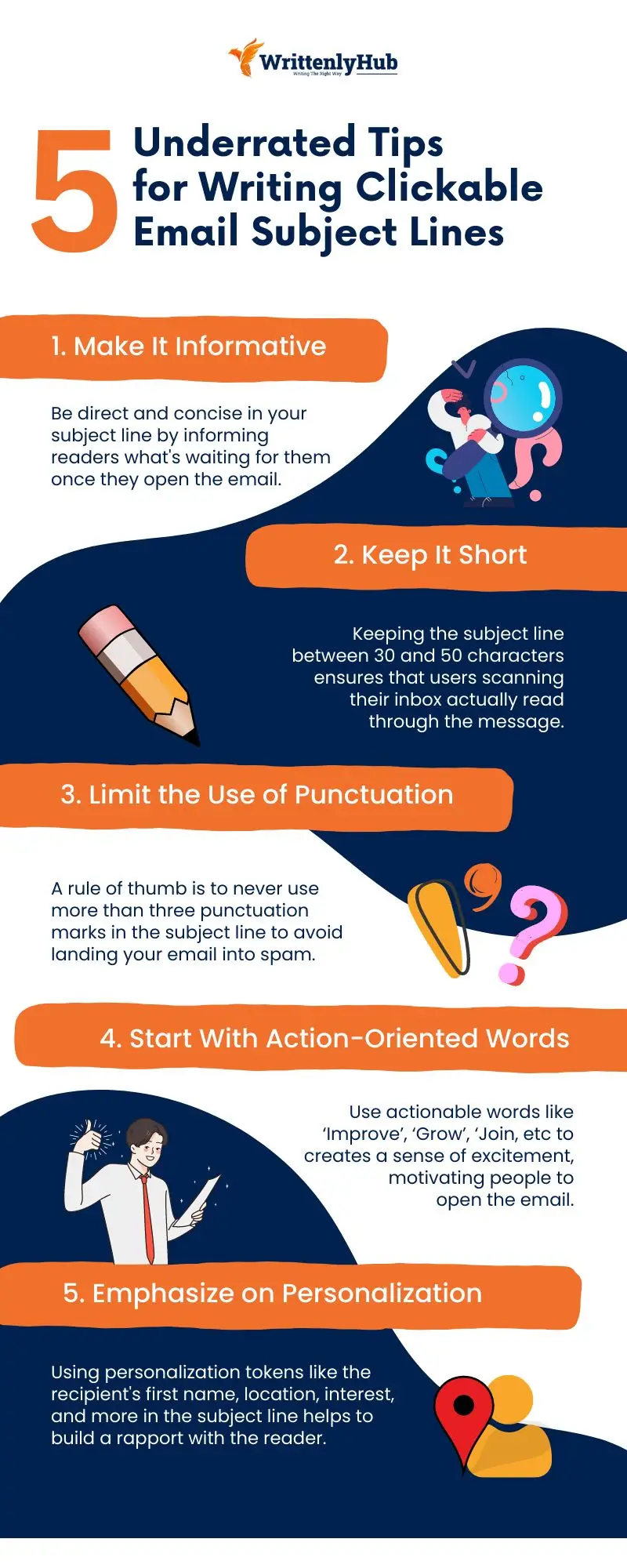
You’ll find some email marketing basics in this infographic.
Here’s a summary of what’s covered:
- Make It Informative
- Keep It Short
- Limit the Use of Punctuation
- Start With Action-Oriented Words
- Emphasise on Personalisation
Check out the post below for more.
Writing a great email is pointless if no one opens it. That’s where your subject line comes in — it’s the first impression your message makes and the deciding factor in whether a reader clicks or ignores it. Marketers who master subject line writing consistently enjoy higher open rates, better engagement, and stronger results from their campaigns. This guide will reveal the essential secrets behind writing subject lines that actually get opened.
Let’s explore five underrated strategies that will help you grab attention, inspire curiosity, and earn those all-important clicks. Each tip focuses on a different aspect of subject line writing, giving you a clear framework to follow. By the end, you’ll have a complete playbook for writing subject lines that deliver.
Make It Informative
An informative subject line tells readers exactly what to expect when they open your email. Being clear and direct builds trust and makes your audience more likely to engage with your message. It also helps to filter out the people who aren’t interested, improving the quality of your open rates. Clarity almost always outperforms cleverness, especially in business and marketing emails.
- Focus on delivering a key takeaway or benefit upfront.
- Avoid vague or cryptic wording that confuses readers.
- Use language that highlights the value of the content inside.
- Make sure the subject line accurately matches the email body.
Keep It Short
Attention spans are short, and inboxes are crowded. Keeping your subject line concise ensures it can be read quickly — even on mobile devices, where space is limited. The sweet spot is usually between 30 and 50 characters, which allows you to communicate clearly without overwhelming your reader. Short subject lines are easier to scan and less likely to get cut off.
- Aim for around 6 to 8 words for maximum clarity.
- Avoid unnecessary filler words or overly long phrases.
- Test subject line lengths to see what works best for your audience.
- Prioritise the most important words at the beginning.
Limit the Use of Punctuation
Overusing punctuation can make your subject lines look spammy and reduce deliverability. Too many symbols or exclamation marks can even trigger spam filters, sending your email straight to the junk folder. A well-placed punctuation mark can add emphasis, but restraint is key. Think professional and polished rather than loud and desperate.
- Stick to a maximum of three punctuation marks per subject line.
- Avoid multiple exclamation marks or question marks in a row.
- Use colons and dashes sparingly to separate ideas.
- Test punctuation styles to see which improve open rates.
Start With Action-Oriented Words
Action-oriented words grab attention and create momentum, encouraging readers to click. Starting your subject line with a strong verb sets the tone and gives readers a reason to act. This technique works well for promotions, calls-to-action, and educational content because it tells people exactly what they can do next.
- Begin with power verbs like “Join,” “Discover,” “Improve,” or “Boost.”
- Choose words that evoke curiosity or a sense of urgency.
- Keep the action relevant to the value of your email.
- Test different action words to see which ones resonate most.
Emphasise on Personalisation
Personalised subject lines make readers feel seen and valued, which leads to higher open rates. Whether you include their name, location, or reference their interests, personalisation helps build a stronger connection. It signals that your email isn’t generic and has been tailored for them, which is more likely to capture their attention.
- Use first-name personalisation tokens where appropriate.
- Segment your audience to send targeted, relevant messages.
- Incorporate details like location or past purchases when possible.
- Avoid overusing personalisation, which can feel forced or intrusive.
Conclusion
Subject lines are the gateway to successful email marketing — get them right, and your message stands a much better chance of being read. By making them informative, keeping them short, limiting punctuation, starting with action words, and personalising where appropriate, you’ll create subject lines that consistently get clicks.
Remember, subject line writing is both a science and an art. Test different approaches, analyse your open rates, and refine your strategy based on what works best for your audience. Over time, you’ll discover the perfect balance between clarity, intrigue, and personalisation — and your email marketing results will speak for themselves.

Author:
Mark Ford