
Are you thinking about starting a podcast but not sure which format will best support your marketing goals? Want to discover how to choose a podcast style that matches your brand voice and connects with your audience?
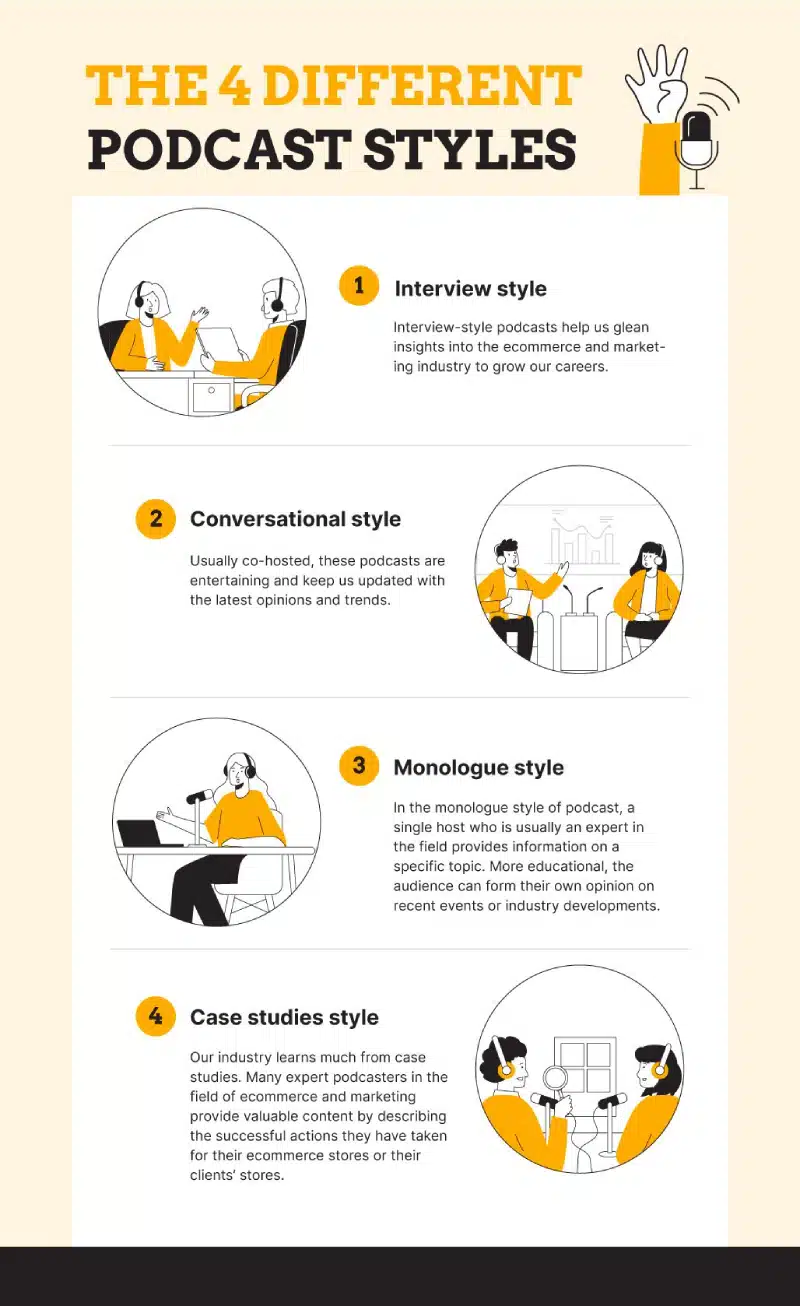
You’ll find some podcast basics in this infographic.
- Interview Style
- Conversational Style
- Monologue Style
- Case Study Style
Check out the post below for more.
Podcasts have become one of the most powerful storytelling tools in modern marketing. They allow brands to connect with audiences on a personal level, share insights, and establish thought leadership in their field. But before you hit record, it’s essential to choose the right podcast format for your goals. The structure you select shapes not only your message but also how listeners engage with it.
In this post, we’ll explore four popular podcast styles—Interview, Conversational, Monologue, and Case Study—and how each can support your marketing strategy. Whether you’re aiming to build authority, entertain, or educate, understanding these formats will help you find the best fit for your voice and brand.
Interview Style
Interview-style podcasts are among the most popular formats in marketing and business. They feature conversations with industry experts, clients, or influencers who offer valuable insights, fresh perspectives, and inspiring stories. This approach not only keeps your content dynamic but also helps you build relationships and credibility through association with reputable guests.
- Invite guests who reflect your brand’s values and audience interests to ensure authenticity and relevance.
- Prepare thoughtful, open-ended questions that encourage storytelling rather than simple answers.
- Promote your guest’s expertise across social media and tag them to extend your podcast’s reach.
- End each episode with actionable takeaways so listeners feel they’ve gained real value.
Conversational Style
The conversational podcast format is relaxed, friendly, and often co-hosted. It mimics the feel of sitting in on an engaging chat between colleagues or friends. This approach works particularly well for brands that want to appear approachable and relatable, turning industry updates and marketing discussions into natural, enjoyable dialogue.
- Choose co-hosts with complementary expertise and chemistry to keep conversations engaging.
- Mix opinions with facts to maintain credibility while keeping the tone light and accessible.
- Encourage spontaneous discussion to showcase genuine reactions and personality.
- Keep episodes well-paced by steering conversations back to the core topic when they drift.
Monologue Style
The monologue format is ideal for thought leaders and subject matter experts who have a lot to say about their field. With a single host speaking directly to the audience, it allows complete control over tone, structure, and messaging. This format is often more educational, perfect for businesses aiming to share deep insights or showcase niche expertise.
- Focus on one specific topic per episode to maintain clarity and depth.
- Use storytelling and personal experience to make solo episodes more engaging and relatable.
- Script key points in advance but allow for natural delivery to avoid sounding robotic.
- Add variety with sound effects, music, or short pre-recorded segments to break up monologues.
Case Study Style
Case study podcasts focus on real-world success stories, highlighting specific strategies or outcomes. For marketers, this format is a powerful way to demonstrate results and prove authority through evidence. By walking listeners through actual projects or campaigns, you turn theory into tangible lessons that inspire confidence and trust.
- Choose case studies that clearly align with your audience’s challenges or goals.
- Structure each episode around the problem, the approach, and the measurable results.
- Invite clients or collaborators to share their side of the story for added credibility.
- End with practical insights that listeners can apply to their own marketing efforts.
Choosing the Right Format for Your Marketing Strategy
Selecting the right podcast format depends on your brand’s tone, resources, and objectives. Think about how you want to position yourself—educator, conversationalist, or storyteller—and what type of engagement you hope to achieve. Your ideal format should complement your existing marketing strategy and align with the type of content your audience finds most valuable.
- Define your primary podcast goal: brand awareness, authority building, or lead generation.
- Consider your production capacity—some formats require more editing, guests, or planning.
- Analyse audience preferences by studying existing podcasts in your niche.
- Experiment with pilot episodes to test engagement and refine your chosen style.
Blending Formats for Variety and Growth
While each format offers distinct benefits, mixing styles can add diversity to your content. For example, a primarily interview-based podcast could occasionally include solo episodes for thought leadership or case study segments for proof of expertise. Blending formats keeps your content fresh while giving your audience multiple ways to connect with your brand.
- Alternate between interviews and monologues to balance authority and community.
- Use conversational episodes for lighter topics or industry commentary.
- Introduce mini case studies within interviews to demonstrate results.
- Collect listener feedback to decide which episode types resonate most.
Tips for Making Any Podcast Style Work
Regardless of format, consistency and quality are key to a successful podcast. Listeners return not just for information but for a familiar voice and dependable experience. Treat your podcast as part of your broader marketing funnel, integrating it with your social media, blog content, and email campaigns for maximum reach.
- Maintain a consistent publishing schedule to build audience loyalty.
- Invest in clear audio quality and editing to project professionalism.
- Write compelling episode titles and show notes optimised for search.
- Repurpose episodes into bite-sized clips or blog posts to extend value.
How Podcasting Enhances Brand Authority
Podcasts create an intimate and authentic way to share your brand’s story. Unlike written or visual media, they rely on tone, pacing, and emotion to establish trust and connection. Whether through interviews or case studies, podcasts position your brand as a reliable source of insight and leadership in your field.
- Use episodes to address common client questions and industry challenges.
- Invite respected voices to co-host or appear as guests for credibility.
- Reference your company’s experiences and projects to reinforce expertise.
- End each episode with a subtle call to action linking back to your main services.
Common Pitfalls When Choosing a Podcast Format
New podcasters often rush into recording without fully understanding how their chosen format affects workflow and audience perception. A mismatch between content type and structure can make episodes feel disjointed or lose listener interest. Taking time to plan ensures your style enhances, rather than hinders, your marketing goals.
- Avoid copying popular formats without adapting them to your niche and audience.
- Don’t underestimate the prep time required for interviews or co-hosted episodes.
- Be mindful of episode length—keep it concise and value-driven.
- Gather listener analytics regularly to adjust your approach over time.
Adapting Your Format as Your Brand Evolves
Your podcast should grow alongside your marketing strategy. As your audience expands or your services shift, you may find one format more effective than another. Stay flexible and open to experimenting—evolution keeps your show relevant and ensures it continues serving both your listeners and your business.
- Review engagement metrics quarterly to identify trends or drop-offs.
- Introduce new segments or formats gradually to avoid confusing listeners.
- Rebrand or update artwork and tone if your business direction changes.
- Keep your focus on delivering genuine value rather than following trends.
Conclusion
Finding your podcast voice is about more than just choosing a microphone or theme—it’s about defining how you want to connect with your audience. Whether through interviews, conversations, solo insights, or real-world stories, the right podcast format can amplify your marketing strategy and strengthen your brand’s presence.
By aligning your format with your goals and audience expectations, you can create a podcast that not only entertains but also drives measurable business results.

Author:
Mark Ford