Are you looking for a way to engage your customers with the right message at the right time? Want to discover how lifecycle email marketing can guide users from onboarding through to long-term loyalty?
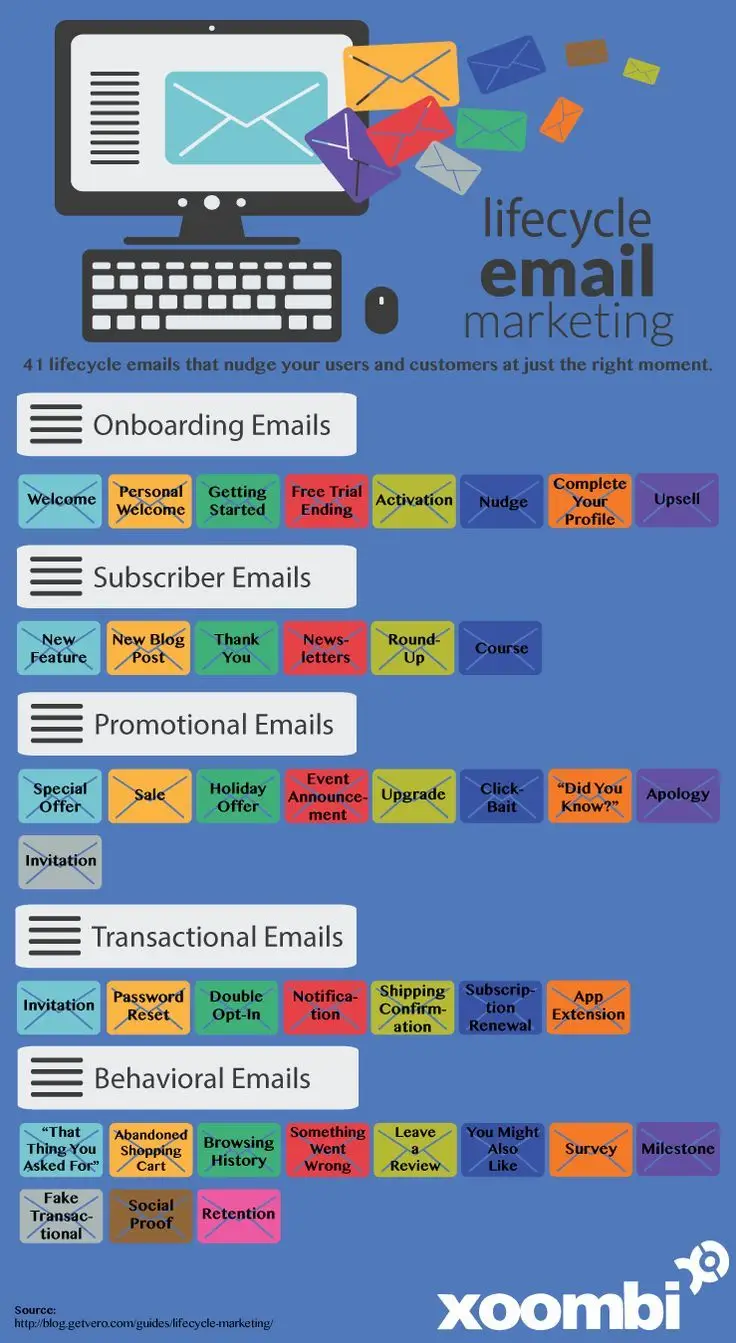
You’ll find some email marketing basics in this infographic.
Here’s a summary of what’s covered:
- Onboarding Emails
- Subscriber Emails
- Promotional Emails
- Transactional Emails
- Behavioural Emails
- The Role of Onboarding in Long-Term Success
- Keeping Subscribers Engaged Over Time
- Driving Conversions with Promotions
- Building Trust with Transactional Emails
- Personalisation Through Behavioural Triggers
Check out the post below for more.
Email marketing remains one of the most effective ways to build long-term relationships with customers. But sending random campaigns is no longer enough. Today, businesses need to understand where their customers are in the buying journey and tailor messages to meet their specific needs. This is where lifecycle email marketing becomes a powerful tool for growth.
Lifecycle email marketing is about delivering the right message at the right time, guiding customers from first contact through to loyalty and advocacy. From onboarding new users to encouraging repeat purchases, lifecycle emails ensure that every touchpoint feels timely, relevant, and valuable. In this post, we’ll explore the different types of lifecycle emails and how they nurture customers at every stage.
Onboarding Emails
Onboarding emails are the first step in building a lasting relationship. They welcome new subscribers, guide them through your product or service, and ensure they feel confident about their decision to connect with your brand. When done well, onboarding creates an immediate sense of trust and sets the tone for all future communications.
- Send a warm welcome email that introduces your brand and values.
- Offer a “getting started” guide to help customers use your product quickly.
- Use activation emails to encourage the first meaningful action.
- Remind users to complete their profile or explore advanced features.
Subscriber Emails
Subscriber emails keep your audience engaged by providing ongoing value. These emails go beyond the initial welcome and focus on maintaining interest through regular updates and useful content. They strengthen your brand presence and ensure customers don’t forget about you between purchases or interactions.
- Share new features to keep subscribers updated on improvements.
- Send regular newsletters or blog updates to provide fresh content.
- Show appreciation with thank-you messages to build goodwill.
- Offer round-ups or courses that deliver structured, ongoing value.
Promotional Emails
Promotional emails are designed to drive action, whether that’s making a purchase, attending an event, or upgrading a service. While they should not overwhelm your audience, well-crafted promotional campaigns can boost sales and encourage customers to engage with new offers. Timing and relevance are critical to their success.
- Use special offers and sales to create urgency and excitement.
- Highlight seasonal or holiday promotions to tie into customer needs.
- Announce events or product launches with clear calls to action.
- Send upgrade offers that encourage customers to invest in premium options.
Transactional Emails
Transactional emails are triggered by customer actions and often have the highest open rates. They include confirmations, notifications, and essential account-related messages. While their primary purpose is functional, they also provide opportunities to reinforce trust and subtly encourage further engagement.
- Send password reset and security notifications promptly and clearly.
- Use shipping confirmations to reassure customers about their orders.
- Encourage renewals with subscription reminders before expiry.
- Offer app extensions or add-ons to enhance the customer’s experience.
Behavioural Emails
Behavioural emails are based on customer activity and are powerful for increasing engagement and retention. They react to how a customer interacts with your brand, whether that’s browsing history, an abandoned cart, or leaving a review. By showing attentiveness, these emails make customers feel valued and understood.
- Send abandoned cart reminders to recover lost sales opportunities.
- Encourage reviews to boost credibility and trust in your brand.
- Suggest products with “you might also like” recommendations.
- Celebrate milestones with personalised messages that build loyalty.
The Role of Onboarding in Long-Term Success
Onboarding sets the foundation for the customer journey, and when done effectively, it increases the chances of retention. This stage is about educating and empowering customers so they can quickly see the value in what you offer. Without a strong onboarding process, many new users may disengage before they ever experience your product’s benefits.
- Create a multi-step onboarding series that gradually introduces features.
- Include visuals or video tutorials to make instructions more engaging.
- Offer incentives to complete key actions, like discounts or rewards.
- Provide ongoing nudges to ensure new users stay active.
Keeping Subscribers Engaged Over Time
Once customers are onboard, the goal is to keep them connected to your brand. Subscriber emails maintain engagement by blending useful information with relevant updates. This consistent communication prevents your audience from drifting away and ensures you remain a trusted resource in their inbox.
- Share educational resources that position your brand as an authority.
- Curate content in round-ups to save subscribers time and effort.
- Create interactive experiences such as quizzes or mini-courses.
- Personalise updates based on subscriber preferences or behaviour.
Driving Conversions with Promotions
Promotional emails are an opportunity to drive measurable results, but they need balance. Too many sales-focused messages can turn customers away, while the right promotion at the right time can generate excitement and conversions. Effective promotional campaigns mix urgency with genuine value.
- Craft holiday promotions that feel timely and exclusive.
- Use scarcity techniques such as limited-time deals to spark action.
- Highlight customer benefits clearly in subject lines and headers.
- Follow up with apologies or “missed offer” emails to re-engage interest.
Building Trust with Transactional Emails
Although transactional emails are often overlooked, they can be powerful trust-building tools. Customers expect these messages, which means they typically have high open rates. By designing them thoughtfully, you can strengthen your brand while reassuring customers that their interactions are secure and reliable.
- Add branding elements to transactional emails to reinforce identity.
- Use clear and friendly language to make communications approachable.
- Include subtle cross-sell suggestions where appropriate.
- Provide clear contact details for customer support.
Personalisation Through Behavioural Triggers
Behavioural emails are the most personalised form of lifecycle marketing. They respond directly to customer actions, showing that your brand understands their needs. This approach not only improves conversions but also makes customers feel individually recognised and valued.
- Track browsing behaviour to recommend relevant products.
- Send personalised surveys to gather insights and feedback.
- Use social proof in follow-ups to encourage hesitant customers.
- Implement retention campaigns for customers showing signs of disengagement.
Conclusion
Lifecycle email marketing is about more than sending messages; it’s about nurturing relationships at every stage of the customer journey. From the first welcome email to retention campaigns, each interaction builds trust, encourages engagement, and strengthens loyalty. By combining onboarding, subscriber, promotional, transactional, and behavioural emails, you can create a complete strategy that delivers value at the right time.
When customers feel guided, appreciated, and understood, they are far more likely to stay with your brand for the long term. Lifecycle emails make this possible by ensuring every stage of the journey is supported. Start thinking about where your customers are today, and use lifecycle email marketing to meet them exactly where they need you.

Author:
Mark Ford