
Social media has become an integral part of our lives. Platforms like Twitter, Facebook, Instagram, and LinkedIn have revolutionized the way we connect, share, and communicate with others.
Whether you’re an individual looking to build a personal brand or a business trying to reach a wider audience, one common question arises: How often should you post on social media?
In this blog post, we’ll delve into the world of social media posting frequencies, focusing primarily on Twitter but also touching on other popular platforms.
We’ll explore the factors that influence posting frequency, best practices for different platforms, and the impact of posting frequency on engagement and growth.
Infographic by Constant Contact.
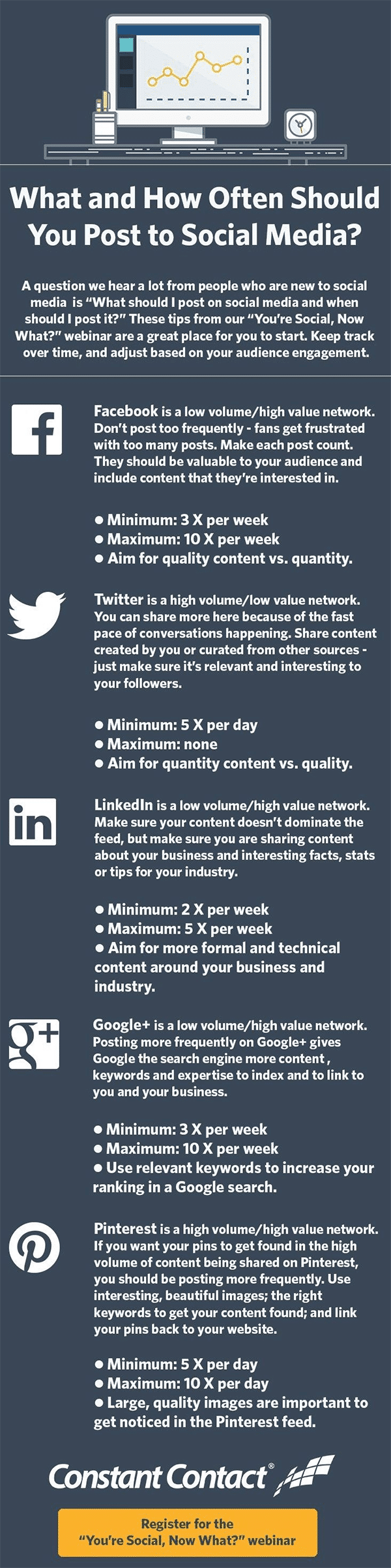
The Importance of Posting Frequency
Before we dive into the specifics, let’s understand why posting frequency matters in the realm of social media. In essence, your posting frequency determines how often your content appears in the feeds of your followers. The more frequently you post, the more opportunities you have to engage with your audience. However, finding the right balance is crucial; posting too much can overwhelm your followers, while posting too little might cause your content to get lost in the vast sea of updates.
1. Platform Algorithms
Social media platforms employ complex algorithms to determine what content appears in users’ feeds. These algorithms consider various factors, including the frequency of your posts. Posting consistently can signal to these algorithms that your content is relevant and should be shown to a wider audience.
2. Audience Engagement
Your posting frequency can impact how engaged your audience remains with your content. Posting too infrequently may lead to your followers forgetting about your account, while posting too frequently might annoy them and lead to unfollows. Striking the right balance is key to maintaining a strong and engaged follower base.
3. Brand Visibility
For businesses and individuals looking to build their brand presence, a consistent posting schedule helps in brand visibility. It keeps your brand at the forefront of your audience’s minds and increases the chances of being discovered by new potential followers or customers.
Twitter Posting Frequency
Now that we’ve established the importance of posting frequency, let’s focus on Twitter, one of the most popular microblogging platforms. Twitter has its own unique dynamics and best practices when it comes to posting frequency.
1. Daily Tweets
On Twitter, it’s generally recommended to post at least once a day to maintain a consistent presence. This ensures that your followers regularly see your content in their feeds. However, you can increase your posting frequency to multiple times a day if you have enough high-quality content to share.
2. Optimal Tweets per Day
Research and studies suggest that the optimal number of tweets per day for engagement falls between 3 to 7 tweets. This range allows you to provide value to your audience without overwhelming them with a constant stream of updates.
3. Timing Matters
When you post on Twitter is just as important as how often you post. Pay attention to your audience’s time zone and behavior patterns. Tweeting when your target audience is most active can significantly increase engagement.
4. Consistency Is Key
Consistency is crucial on Twitter. Create a posting schedule and stick to it. Consistency helps your followers know when to expect new content from you, fostering trust and loyalty.
5. Quality Over Quantity
While posting frequency is important, don’t sacrifice quality for quantity. It’s better to have fewer, well-crafted tweets than to flood your feed with mediocre content. Your tweets should provide value, entertain, inform, or engage your audience in some way.
Facebook Posting Frequency
Moving beyond Twitter, let’s explore posting frequency on Facebook, a platform known for its diverse user base and various content types.
1. Facebook Pages
For Facebook Pages (often used by businesses and organizations), posting frequency can vary. It’s generally advisable to post at least 3 to 5 times a week to maintain visibility. However, the exact frequency may depend on your audience’s preferences and engagement levels.
2. Avoid Overposting
Unlike Twitter, where frequent updates are common, overposting on Facebook can lead to reduced engagement. It’s essential to strike a balance between staying active and not overwhelming your followers.
3. Consider Timing
Similar to Twitter, the timing of your posts on Facebook can impact their visibility. Use Facebook Insights or other analytics tools to determine when your audience is most active and schedule your posts accordingly.
4. Experiment and Adapt
The ideal posting frequency on Facebook can vary widely depending on your target audience and content type. Experiment with different posting schedules and analyze the performance of your posts to find what works best for your Page.
Instagram Posting Frequency
Instagram, a platform known for its visual content, has its own guidelines when it comes to posting frequency.
1. Visual Storytelling
Instagram is all about visual storytelling. To maintain a strong presence, it’s recommended to post consistently, ideally at least once a day. This ensures that your followers continually see your brand’s story in their feed.
2. Stories and Highlights
In addition to your regular feed posts, Instagram Stories and Highlights offer opportunities for more frequent updates. Stories, in particular, are designed for quick, in-the-moment content, making them ideal for sharing daily updates or behind-the-scenes glimpses.
3. Quality and Aesthetics
Instagram is highly visual, and the quality of your content matters. Focus on creating visually appealing and cohesive posts. Consistency in aesthetics and content style can help in building a recognizable brand presence.
LinkedIn Posting Frequency
LinkedIn is the go-to platform for professional networking and business-related content. Here’s how you should approach posting frequency on this platform:
1. Business-Centric Approach
LinkedIn is best suited for a business-centric approach. Posting frequency on LinkedIn can be lower compared to platforms like Twitter or Instagram. Aim for 2 to 5 posts per week.
2. Thought Leadership
Use LinkedIn to establish yourself or your brand as a thought leader in your industry. Share insightful articles, thought-provoking posts, and engage in meaningful discussions with your connections.
3. Consistent Engagement
While you may not need to post daily on LinkedIn, it’s essential to engage consistently. Commenting on others’ posts, sharing relevant content, and participating in groups can all contribute to your visibility and credibility.
Factors Influencing Posting Frequency
Now that we’ve discussed platform-specific guidelines, let’s consider some broader factors that influence posting frequency on any social media platform.
1. Audience Preferences
Understanding your audience is paramount. Conduct surveys, analyze user data, and pay attention to feedback to tailor your posting frequency to your followers’ preferences.
2. Content Type
Different content types may require different posting frequencies. For example, a meme page might post multiple times a day, while a travel blogger might post a few times a week with detailed travel stories and photos.
3. Seasonal and Trend-Based Posting
Take advantage of seasonal trends and popular topics to guide your posting frequency. Posting more frequently during relevant events or trending conversations can boost your visibility.
4. Resources and Capacity
Consider your resources and capacity when deciding on posting frequency. Do you have the time and resources to create and schedule daily posts, or is a less frequent schedule more sustainable?
Measuring the Impact of Posting Frequency
Determining the effectiveness of your posting frequency is crucial for refining your social media strategy. Here are some key metrics to track:
1. Engagement Rate
Monitor the likes, comments, shares, and clicks on your posts. A high engagement rate indicates that your posting frequency resonates with your audience.
2. Follower Growth
Track the growth of your follower count over time. A steady increase suggests that your posting frequency is attracting new followers.
3. Reach and Impressions
Keep an eye on the reach and impressions of your posts. Are your posts being seen by more people as you increase your posting frequency?
4. Click-Through Rate (CTR)
If you’re sharing links to your website or blog, monitor the CTR. This metric shows how effective your posts are at driving traffic to your external content.
5. Social Media Analytics
Most social media platforms offer built-in analytics tools that provide insights into your post performance. Use these tools to gain a deeper understanding of how your posting frequency affects your results.
Conclusion
Posting frequency on social media is not a one-size-fits-all approach. It varies depending on the platform, your audience, and your content type. Finding the right balance between staying active and not overwhelming your followers is crucial.
Remember that consistency, timing, and content quality are key factors in determining the impact of your posting frequency. Regularly analyze your social media metrics to refine your strategy and adapt to the ever-evolving landscape of social media.
Ultimately, the goal of posting on social media is to engage with your audience, build brand awareness, and achieve your desired objectives, whether that’s growing your following, driving traffic to your website, or establishing thought leadership. So, experiment, adapt, and stay connected with your audience to make the most of your social media presence.

Author:
Mark Ford