Are you struggling to get more people to open your marketing emails? Want to learn how simple psychological triggers can dramatically boost your open rates?
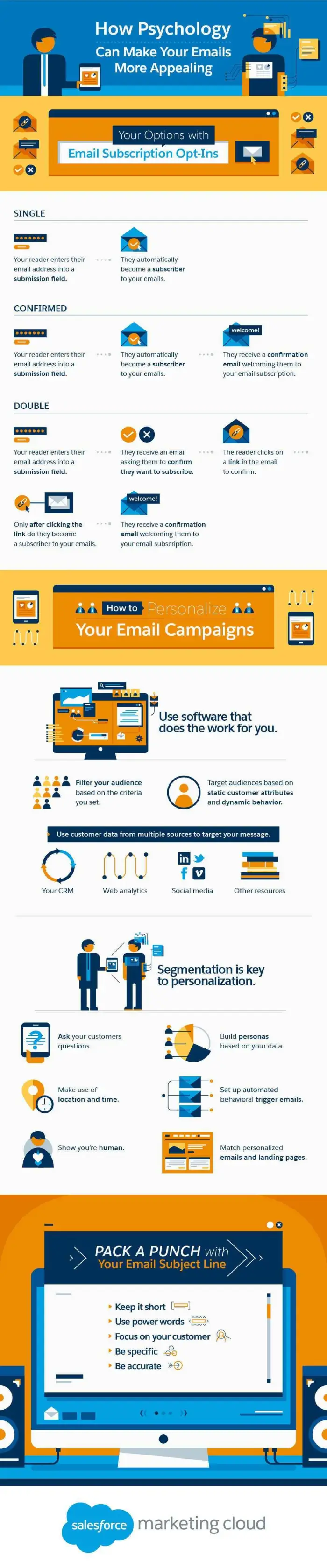
You’ll find some email marketing basics in this infographic.
Here’s a summary of what’s covered:
- Email Subscription Opt-Ins: Setting the Stage for Success
- Personalising Your Email Campaigns
- Segmentation for Personalisation
- Crafting Strong Subject Lines
- Using Behavioural Triggers for Perfect Timing
- Building Trust Through Consistency
- Making Emails Feel More Human
- Testing and Optimising for Continuous Improvement
Check out the post below for more.
Email marketing is one of the most powerful tools in any marketer’s toolkit, but getting people to actually open your emails can be a challenge. With inboxes overflowing, you need more than just good timing and a nice design to stand out. That’s where psychology comes in. By understanding what motivates people and how they behave online, you can craft emails that capture attention and spark curiosity.
This post explores the psychological triggers that make email campaigns irresistible, breaking them down into practical steps you can apply today. Whether you’re building your list, personalising content, or refining subject lines, these insights will help you boost open rates and keep your audience engaged.
Email Subscription Opt-Ins: Setting the Stage for Success
The first psychological trigger starts before the email is ever opened — at the moment someone joins your list. A smooth, well-designed opt-in process creates trust and anticipation, making subscribers more likely to engage with your future emails. The goal is to remove friction while building a sense of connection and commitment.
- Use a single, clear call-to-action to keep the sign-up process simple and appealing.
- Offer a small incentive, like a discount or free guide, to encourage immediate action.
- Set expectations upfront by explaining what type of content subscribers will receive.
- Send a warm welcome email quickly to capitalise on the initial excitement.
Personalising Your Email Campaigns
People are more likely to open and engage with emails that feel like they were written specifically for them. Personalisation uses data to create relevant, timely messages that speak directly to the recipient’s needs or interests. This psychological approach taps into our natural preference for content that feels personal and tailored.
- Use automation tools to segment your audience based on behaviour, demographics, or preferences.
- Pull data from CRM systems, analytics, and social media for a well-rounded customer profile.
- Tailor offers and messaging to match where subscribers are in the customer journey.
- Address recipients by name and use conversational language to build rapport.
Segmentation for Personalisation
Segmentation takes personalisation further by grouping subscribers into smaller, more specific audiences. This allows you to send highly targeted campaigns that feel relevant, boosting open rates and click-throughs. Segmentation leverages the psychological principle of relevance — people pay more attention to messages that feel designed just for them.
- Gather insights by asking subscribers simple questions at sign-up or via surveys.
- Build audience personas based on shared behaviours, goals, or pain points.
- Trigger campaigns based on location, timing, or actions like past purchases.
- Pair your segmented emails with matching landing pages for a consistent experience.
Crafting Strong Subject Lines
The subject line is often the only factor determining whether someone opens your email. A strong subject line grabs attention, sparks curiosity, and sets clear expectations about what’s inside. This is where psychological triggers like urgency, novelty, and benefit-driven language can make a big difference.
- Keep subject lines short so they display fully on mobile devices.
- Use power words that create curiosity, excitement, or urgency.
- Focus on the benefits the reader will get by opening the email.
- Be specific and avoid misleading wording that might damage trust.
Using Behavioural Triggers for Perfect Timing
Timing plays a crucial role in email open rates. Sending your message at the moment your subscriber is most likely to act can dramatically improve results. Behavioural triggers let you automate campaigns based on real-time actions, aligning your message with the subscriber’s mindset.
- Send follow-up emails immediately after someone downloads a resource or abandons a cart.
- Use time-based triggers, like birthdays or anniversaries, to create personal moments.
- Analyse open and click data to find the best days and times for your audience.
- Test and refine your timing to continuously improve campaign performance.
Building Trust Through Consistency
Trust is a powerful psychological driver — and without it, even the most perfectly timed, personalised emails will fail. Consistent branding, tone of voice, and value delivery reassure subscribers that your emails are worth opening. Over time, trust leads to habit, making your emails a welcome part of their inbox routine.
- Use consistent sender names and branding so subscribers immediately recognise you.
- Deliver valuable content in every email so readers associate you with quality.
- Maintain a regular send schedule to build anticipation and reliability.
- Honour privacy and make it easy for subscribers to manage their preferences.
Making Emails Feel More Human
In a digital world, human connection is what cuts through the noise. Emails that sound like they were written by a real person, for a real person, build relationships that encourage higher open rates. Psychological triggers like empathy and authenticity are key here.
- Write in a conversational tone rather than sounding overly corporate.
- Share stories, anecdotes, or insights to build emotional connection.
- Show personality with language that reflects your brand’s character.
- Invite replies to encourage two-way communication and engagement
Testing and Optimising for Continuous Improvement
Psychology isn’t a one-time effort — it’s an ongoing process of learning what resonates with your audience. A/B testing lets you experiment with subject lines, personalisation strategies, and timing to see what actually drives opens and clicks. Continuous optimisation ensures your campaigns get better over time.
- Test one variable at a time, like subject line length or tone, to isolate results.
- Monitor open rates, click-throughs, and conversions to find patterns.
- Experiment with different personalisation levels to find the right balance.
- Document your results to inform future campaigns and build best practices.
Conclusion
Email marketing is as much about psychology as it is about technology. By understanding what motivates people — and using that knowledge to guide your opt-ins, personalisation, subject lines, timing, and tone — you can significantly improve your open rates and overall engagement.
The key is to stay human, stay relevant, and keep testing. When you align your emails with how your audience thinks and feels, you transform them from just another message in the inbox into something worth opening every time.

Author:
Mark Ford