
Are you looking for ways to turn more of your website visitors into paying customers? Want to learn how a CRM-powered content marketing approach can help boost your conversions?
You’ll find some marketing basics in this infographic.
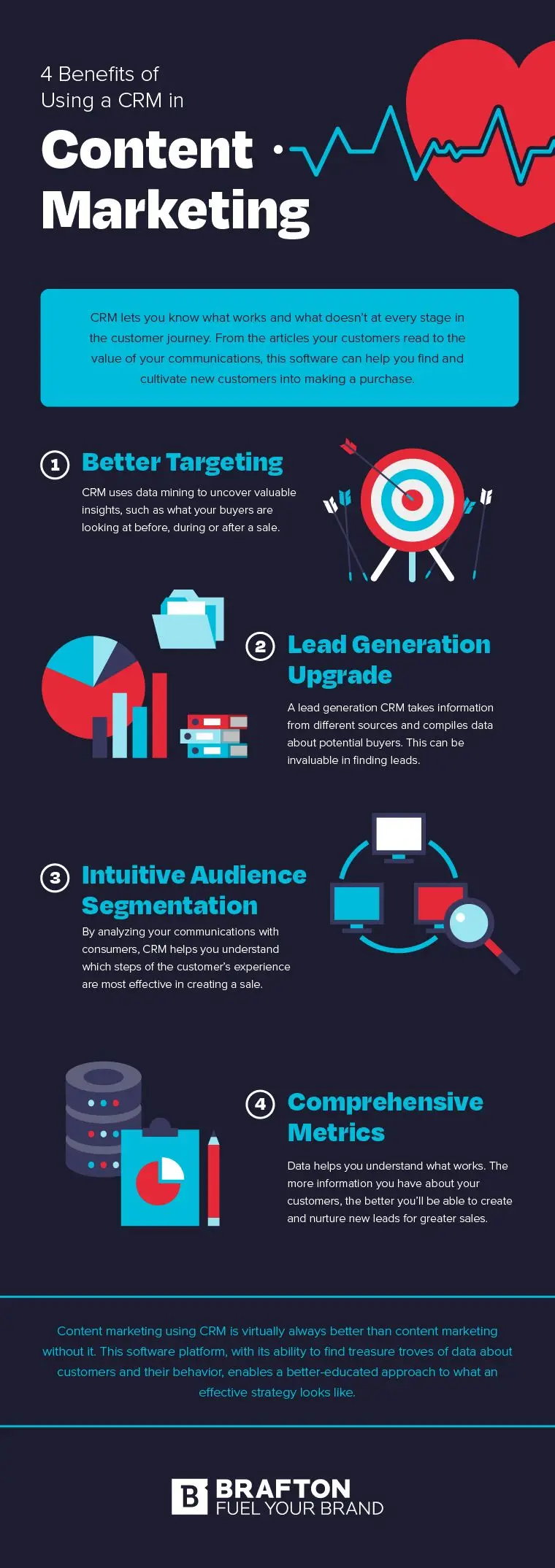
Here’s a summary of what’s covered:
- Better Targeting
- Lead Generation Upgrade
- Intuitive Audience Segmentation
- Comprehensive Metrics
Check out the post below for more.
Content marketing is one of the most powerful ways to attract, engage, and convert your audience. But without the right tools, it’s easy to miss opportunities or overlook valuable customer insights. That’s where a CRM (Customer Relationship Management) system comes in. By combining CRM data with content marketing, you can sharpen your strategies, personalise your communications, and ultimately drive more conversions.
In this post, we’ll explore how a CRM-powered content marketing approach can transform your results. We’ll cover better targeting, upgrading lead generation, intuitive audience segmentation, and comprehensive metrics — the four cornerstones of CRM-driven marketing success.
Better Targeting
Effective content marketing starts with understanding who your audience is and what they want. A CRM system helps you collect and analyse buyer data to identify patterns and behaviours. This allows you to craft targeted messages that resonate at the right stage of the customer journey. By aligning content with buyer intent, you reduce wasted effort and increase your chances of conversion.
- Use CRM data mining to uncover customer interests and browsing behaviour.
- Track what buyers are engaging with before, during, and after a purchase.
- Tailor your content strategy to match buyer intent and decision-making stages.
- Continuously refine targeting by testing and adjusting content performance.
Lead Generation Upgrade
Finding new leads can be a challenge without the right information. A CRM enhances your lead generation by consolidating data from multiple sources. This gives you a fuller picture of potential customers, including their preferences and readiness to buy. With this knowledge, your content marketing can become more precise in attracting and nurturing qualified leads.
- Compile lead information from various channels into a centralised system.
- Use CRM insights to create content that addresses common buyer pain points.
- Segment new leads by behaviour to prioritise those most likely to convert.
- Automate lead nurturing with targeted email campaigns and follow-ups.
Intuitive Audience Segmentation
Not all customers are the same, which means your content shouldn’t treat them as such. CRM software allows you to break down your audience into segments based on their actions, demographics, or interests. By analysing communication patterns, you can deliver content that’s personalised and relevant. This approach helps guide prospects smoothly along the sales journey.
- Segment your audience using demographics, purchase history, and engagement data.
- Personalise messages to align with each group’s unique needs and challenges.
- Identify which stages of the customer journey are most effective in driving sales.
- Adjust segmentation strategies regularly to reflect changes in customer behaviour.
Comprehensive Metrics
Data is the foundation of successful content marketing, and a CRM provides comprehensive metrics to guide your decisions. From engagement rates to sales conversions, these insights reveal what’s working and what isn’t. The more information you have about your customers, the more effectively you can refine your content strategy. Strong metrics ensure your campaigns stay on track and deliver measurable results.
- Monitor performance metrics to identify your most effective content.
- Use customer behaviour data to inform future content creation.
- Measure conversion rates to assess the true ROI of your campaigns.
- Create dashboards that allow real-time tracking of marketing performance.
Conclusion
A CRM-powered content marketing approach is a game-changer for businesses aiming to boost conversions. By providing better targeting, stronger lead generation, intuitive audience segmentation, and comprehensive metrics, a CRM ensures your marketing efforts are driven by data and customer insight. This results in more meaningful content, stronger connections with your audience, and a higher likelihood of turning prospects into loyal customers.
Embracing CRM in your content marketing doesn’t just make your campaigns more efficient — it makes them more effective. With the right system in place, you can turn every piece of content into a tool for growth, ensuring your business thrives in an increasingly competitive digital landscape.

Author:
Mark Ford