Are you struggling to turn email subscribers into paying customers? Want to learn how to guide your leads through every stage of the email marketing funnel?
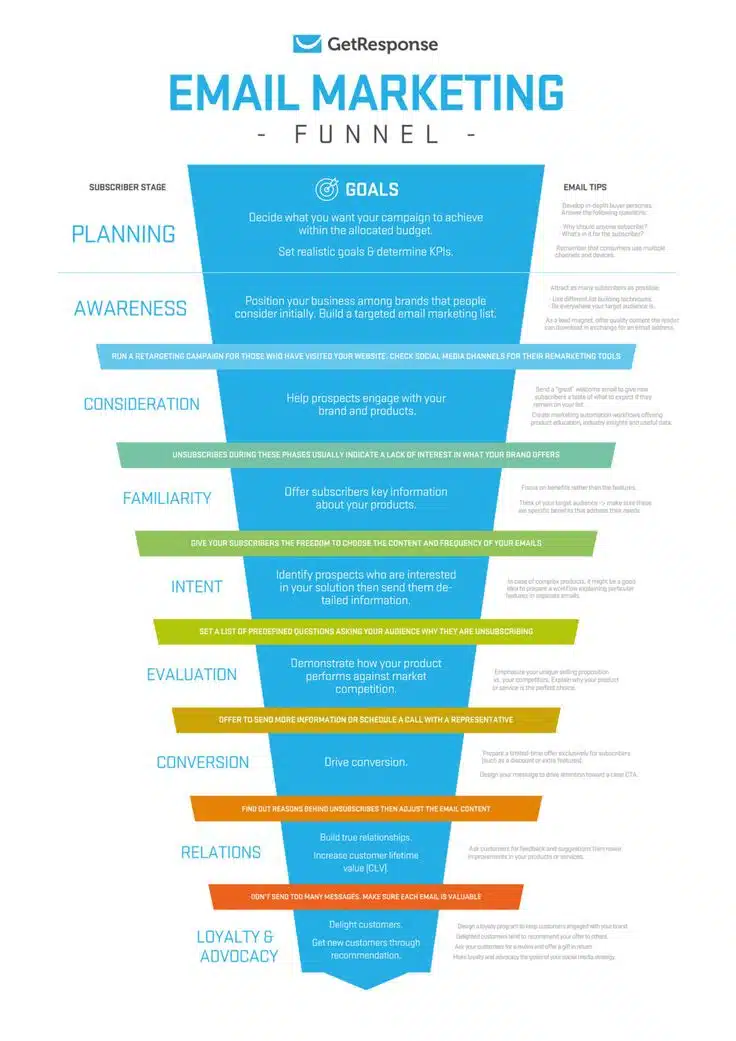
You’ll find some email funnel basics in this infographic.
It breaks things down as follows:
- Goals
- Awareness
- Consideration
- Familiarity
- Intent
- Evaluation
- Conversion
- Relations
- Loyalty & Advocacy
Check out the post below for more.
Email marketing remains one of the most powerful tools for turning prospects into paying customers. But to do it well, you need more than one-off promotions or newsletters—you need a strategy.
That’s where the email marketing funnel comes in. By guiding subscribers through every stage of their journey, you’ll build trust, drive conversions, and retain loyal customers.
Goals
Before sending your first email, get clear on what you want to achieve. Setting specific goals and measurable KPIs is essential for building a focused and effective campaign. These goals will guide the tone, content, and structure of every email you send. Without this foundation, your funnel will lack direction.
- Decide if your focus is brand awareness, lead generation, or direct sales.
- Define KPIs such as open rates, click-through rates, or conversion rates.
- Set budget limits and allocate resources accordingly.
- Ensure goals align with broader business and marketing objectives.
Awareness
At this stage, the goal is to get noticed and start building your list. You want to introduce your brand to new people and encourage them to subscribe. Use attention-grabbing content and lead magnets to bring your audience into the funnel. Make your business one of the first they consider.
- Use blog posts, social ads, or gated content to attract new leads.
- Offer valuable freebies (like ebooks or checklists) in exchange for email sign-ups.
- Keep your sign-up forms short and frictionless to boost conversion rates.
- Include a clear opt-in and explain what subscribers can expect.
Consideration
Now that you’ve captured attention, it’s time to build interest. Your emails should showcase your value and help people understand what sets you apart. At this point, prospects are comparing options—make sure you stand out. Engaging content here is key to keeping them in the funnel.
- Share case studies, testimonials, or product spotlights to show your strengths.
- Address common objections or misconceptions through email FAQs.
- Use storytelling to help prospects envision themselves using your product.
- Include interactive elements like polls or quizzes to increase engagement.
Familiarity
Your audience is starting to recognise your name in their inbox—but they’re still learning. This is the time to provide useful information and reinforce your brand. Focus on helping them get to know your product, your mission, and the benefits you offer. Build confidence without pushing too hard.
- Highlight key features and how they solve specific customer problems.
- Share behind-the-scenes content to make your brand feel more personal.
- Break complex topics into digestible, helpful emails.
- Position your product or service as the logical next step in their journey.
Intent
When a subscriber shows genuine interest, they’re signalling intent to buy. This is where you turn up the value and get more specific with your messaging. Focus on giving them the detailed insights they need to make a decision. Let them know you understand their needs and are ready to help.
- Send targeted content based on their browsing or download behaviour.
- Offer product comparisons or solution guides to support decision-making.
- Provide access to free trials, demos, or limited-time offers.
- Segment your list and personalise content to reflect their pain points.
Evaluation
Your lead is actively comparing you against competitors. They need to be reassured that your solution is the best fit. In this stage, you’ll demonstrate credibility, proof, and value. Give them everything they need to choose you with confidence.
- Emphasise what makes you different—price, features, service, or speed.
- Use data, stats, and third-party reviews to reinforce your claims.
- Share success stories from similar customers or industries.
- Make your product benefits crystal clear with visual comparisons or charts.
Conversion
This is the moment of truth. If you’ve nurtured your lead correctly, they should be ready to take action. Make it easy for them to convert by removing any remaining barriers. Keep your messaging focused, urgent, and benefit-driven.
- Include a strong, singular CTA in each conversion-focused email.
- Offer incentives such as discounts, bonuses, or limited-time offers.
- Reinforce the benefits of taking action now rather than waiting.
- Provide clear instructions and a friction-free path to purchase or booking.
Relations
The sale isn’t the end—it’s the beginning of a long-term relationship. Your focus now shifts to keeping customers happy and engaged. Happy customers stick around longer, spend more, and become brand advocates. Nurturing doesn’t stop at conversion—it just evolves.
- Send personalised thank-you emails and onboarding sequences.
- Ask for feedback and use it to improve future campaigns.
- Share helpful tips and tutorials to help them get more from your product.
- Recognise loyal customers with exclusive content or rewards.
Loyalty & Advocacy
Delighted customers don’t just stay—they tell others. This final stage is all about turning loyal buyers into enthusiastic promoters. Use email to deepen the connection and encourage referrals. Create experiences that customers want to talk about.
- Highlight referral programmes or rewards for sharing your brand.
- Feature customer stories or reviews in your email content.
- Offer sneak peeks of new products or invite them to VIP experiences.
- Use personalisation and appreciation to reinforce the relationship.
Final Thoughts
Email marketing isn’t just about selling—it’s about guiding people through a relationship with your brand. A well-structured funnel ensures you’re sending the right message at the right time, to the right person.
With clear goals and consistent value, you can nurture leads from first click to long-term loyalty. Start by mapping your email content to each funnel stage—and watch your results transform.

Author:
Mark Ford