Whether you’re an Apple fan or not, there’s no denying the effect the iPhone has had on the way we consume content, and the way in which that content is displayed to us.
The iPhone, a ubiquitous piece of technology that has become an integral part of our daily lives, has undeniably transformed the world of design and visual communication.
Since its inception in 2007, the iPhone has not only altered the way we communicate but has also had a profound impact on various aspects of design, from user interface (UI) and user experience (UX) design to photography, typography, and graphic design.
In this blog post, we will explore the evolution of design and visual communication in the era of the iPhone, focusing on its influence on both professional designers and the general public.
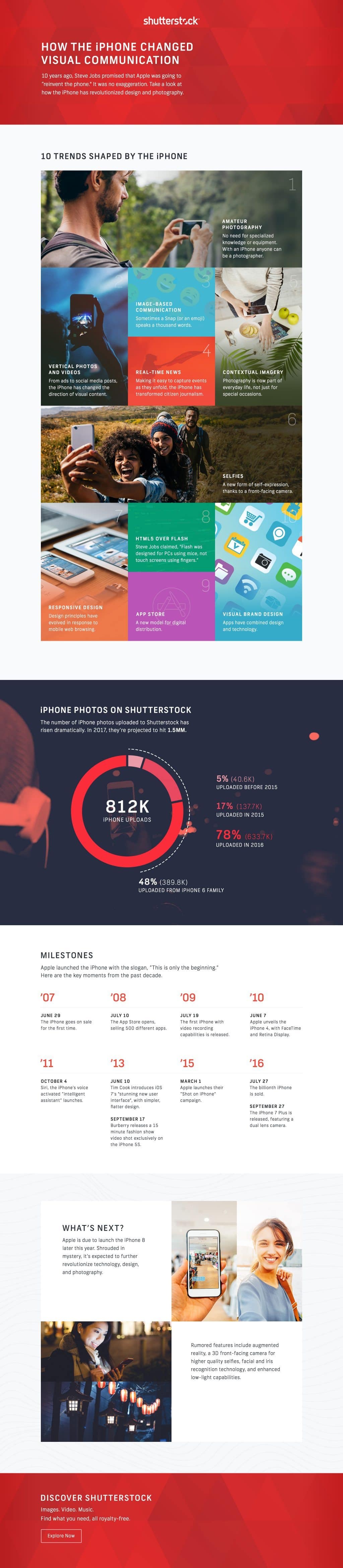
Shutterstock show us just how much the iPhone has changed design and visual communication in this infographic.
I. The Birth of the iPhone and the Touchscreen Revolution
The iPhone, introduced by Apple Inc. in 2007, marked a paradigm shift in the world of mobile phones. Its most revolutionary feature was the introduction of a capacitive touchscreen. This innovative technology replaced traditional physical keyboards and buttons, opening up a world of possibilities for designers.
- The Death of Physical Buttons: Prior to the iPhone, mobile phones were dominated by physical buttons and keypads. Designers had limited flexibility in terms of layout and functionality. The iPhone’s touchscreen eliminated the need for physical buttons, allowing for a sleek and minimalist design.
- Intuitive Touch Interactions: The iPhone introduced intuitive touch interactions, such as pinch-to-zoom, swipe, and tap gestures. This not only simplified the user experience but also set new standards for how users interacted with digital interfaces.
- Responsive Design: To accommodate various screen sizes, designers had to adopt responsive design principles. This shift in thinking pushed designers to create adaptable layouts and prioritize content hierarchy.
II. The Rise of App Design
One of the most significant ways the iPhone has influenced design is through the proliferation of mobile apps. The App Store, launched in 2008, provided a platform for developers and designers to create a wide range of applications, from productivity tools to games.
- User-Centered Design: The success of an app heavily relies on its user interface and user experience. The iPhone forced designers to adopt user-centered design principles, emphasizing usability and user feedback.
- Icon Design: App icons became a critical aspect of mobile design. Designers needed to create visually appealing icons that conveyed the essence of the app while adhering to Apple’s design guidelines.
- Skeuomorphic vs. Flat Design: The iPhone’s early years saw a trend toward skeuomorphic design, where digital elements mimicked real-world objects. However, Apple’s shift to flat design in later iOS versions influenced the entire design industry, emphasizing simplicity and minimalism.
III. Mobile Photography and Visual Storytelling
The iPhone’s camera capabilities have transformed the way we capture and share moments. With each new iPhone release, the camera technology improved, giving rise to mobile photography and visual storytelling.
- The Rise of Instagram: The iPhone, equipped with increasingly advanced cameras, played a pivotal role in the rise of Instagram. The platform’s square photo format and filters became iconic, influencing photography trends worldwide.
- Every Moment is Capturable: The convenience of having a high-quality camera in your pocket at all times has changed how we document our lives. From travel adventures to everyday moments, the iPhone has democratized photography.
- Visual Communication: Visual content, such as images and short videos, gained prominence in communication. Platforms like Snapchat and TikTok relied heavily on visual storytelling, reshaping how we share our experiences and ideas.
IV. Typography and Graphic Design
The iPhone has not only impacted digital design but also had a significant influence on typography and graphic design.
- Readability and Accessibility: Designers had to adapt fonts and typography to ensure readability on small screens. Additionally, considerations for accessibility became paramount, as designers needed to cater to diverse user needs.
- Custom Fonts: With iOS allowing custom font installations, designers gained more creative freedom in branding and design. Custom fonts became a powerful tool for creating unique visual identities.
- App Icons and Visual Identity: Developing a distinctive visual identity for apps became crucial in a competitive market. Strong branding and well-designed icons were essential for app recognition and success.
V. The iPhone’s Impact on Design Education and Industry
The iPhone’s influence extends beyond design practice—it has also affected design education and the design industry as a whole.
- Design Education: Design schools and programs adapted to include mobile app design and user experience as essential components of the curriculum. Students are now trained to think critically about designing for mobile devices.
- Freelancing and Remote Work: The iPhone facilitated remote work and freelancing opportunities for designers. The ability to communicate, share designs, and collaborate on projects from anywhere has reshaped the industry.
- Economic Opportunities: The App Store and the mobile app industry created new economic opportunities for designers and developers. It became possible for individuals or small teams to create and sell successful apps.
VI. Challenges and Ethical Considerations
While the iPhone has brought about remarkable changes in design and visual communication, it has also raised certain challenges and ethical considerations.
- Addiction and Overuse: The addictive nature of smartphones and apps has raised concerns about overuse and its impact on mental health. Designers are increasingly challenged to create interfaces that encourage healthy usage.
- Privacy and Data Security: Designers must balance user experience with privacy concerns. The collection and use of personal data have sparked debates about ethical design practices.
- Inclusivity and Accessibility: As mobile devices became ubiquitous, designers had to consider a broader range of user needs, including those with disabilities. Ensuring inclusivity and accessibility became a design imperative.
Conclusion
The iPhone’s influence on design and visual communication cannot be overstated. Its introduction brought about a touchscreen revolution, reshaped app design, and democratized photography. Designers have had to adapt to new challenges and opportunities, from responsive design to ethical considerations. As the iPhone continues to evolve, it will undoubtedly continue to shape the future of design, making it an exciting field to watch and be a part of. Whether you’re a professional designer or simply a user of technology, the iPhone has changed the way you experience and interact with the world.

Author:
Mark Ford