In today’s digital age, owning a website has become essential for individuals, businesses, and organizations of all sizes. Whether you run a personal blog, an e-commerce store, or a professional portfolio, having an online presence can help you reach a global audience.
However, along with the benefits of running a website come various legal responsibilities and considerations. To protect your interests and ensure that your website complies with the law, it’s crucial to have the right legal documents in place.
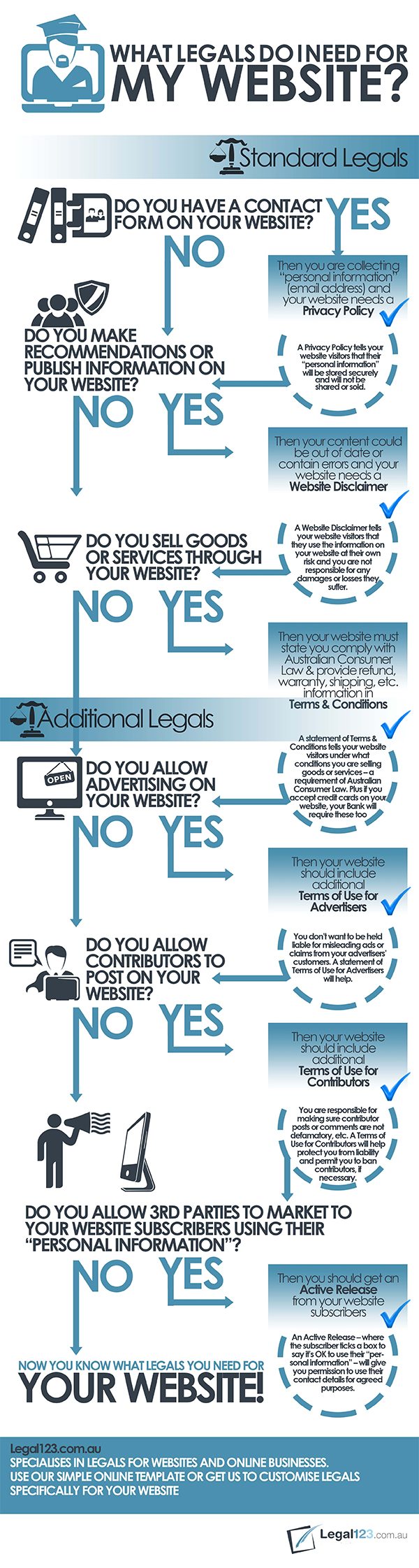
In this blog post, we will discuss the essential legal documents that website owners may need.
Infographic by Legal 123.
- Privacy Policy
A privacy policy is one of the most critical legal documents for any website. It outlines how your website collects, uses, and protects user data. Even if your website doesn’t directly collect personal information, you may still gather data through cookies, analytics, or third-party integrations. A privacy policy is essential for transparency and compliance with data protection laws like the General Data Protection Regulation (GDPR) in Europe and the California Consumer Privacy Act (CCPA) in the United States.
Key elements of a privacy policy include:
- What data is collected: Specify the types of data you collect, such as names, email addresses, IP addresses, or payment information.
- How data is used: Explain the purposes for which you collect and process user data, such as for order fulfillment, marketing, or analytics.
- Data sharing: If you share user data with third parties, disclose this in your policy and specify the reasons for sharing.
- User rights: Inform users about their rights, including the right to access their data, request deletion, or opt out of data collection.
- Security measures: Describe the security measures you have in place to protect user data.
- Contact information: Provide contact details for users to reach out with questions or concerns.
- Terms of Service (Terms and Conditions)
A terms of service agreement, also known as terms and conditions, sets the rules and guidelines for how users interact with your website. It establishes a legally binding contract between you and your visitors or customers. Some common provisions found in terms of service agreements include:
- Acceptance of terms: Specify that users agree to abide by your terms when they access or use your website.
- User responsibilities: Outline user responsibilities, such as not engaging in illegal activities or violating copyright.
- Dispute resolution: Explain how disputes will be resolved, whether through arbitration, mediation, or litigation.
- Intellectual property: Clarify the ownership of content on your website and how users can or cannot use it.
- Limitation of liability: Define your liability limitations in case of website errors, downtime, or other issues.
- Termination: Explain under what circumstances you can terminate a user’s access to your website.
- Governing law: Indicate the jurisdiction and laws that will govern your terms of service.
- Cookies Policy
If your website uses cookies to track user behavior, you must have a cookies policy. Cookies are small text files that are stored on users’ devices to collect information about their online activity. In many countries, including the EU, websites are required to obtain user consent before placing cookies on their devices. A cookies policy should include:
- Types of cookies used: Explain the different types of cookies your website uses, such as functional cookies, analytics cookies, or advertising cookies.
- Purpose of cookies: Describe the purposes for which each type of cookie is used, such as improving website functionality or analyzing user behavior.
- Cookie consent: Explain how users can provide or withdraw consent for cookie usage.
- Opt-out options: Provide instructions for users who want to disable or delete cookies.
- Third-party cookies: If you use third-party cookies (e.g., for advertising or social media integration), disclose this and provide links to the privacy policies of those third parties.
- Disclaimer
A disclaimer is a statement that limits your liability for the information provided on your website. While a disclaimer cannot protect you from all legal claims, it can help clarify the nature of the content on your site and reduce the risk of misunderstandings or legal disputes. Depending on your website’s content, you may include disclaimers related to:
- Information accuracy: Clarify that the information on your website is for general informational purposes and not legal, financial, or professional advice.
- Endorsements and testimonials: If you feature endorsements or testimonials, disclose that results may vary and that the experiences of others may not be typical.
- External links: State that you are not responsible for the content or accuracy of external websites linked from your site.
- Affiliate relationships: If you participate in affiliate marketing, disclose your affiliate relationships and potential commissions earned.
- Copyright Notice
A copyright notice informs users that the content on your website is protected by copyright law. While copyright protection automatically applies to original content, displaying a copyright notice can deter potential infringers and make it clear that you take copyright seriously. Include the following elements in your copyright notice:
- The copyright symbol (©), the year of publication, and the copyright owner’s name (e.g., “© 2023 Your Website Name”).
- A statement indicating that all rights are reserved, meaning that users must seek permission to reproduce or use your content in any way.
- Terms for User-Generated Content
If your website allows users to submit content, such as comments, reviews, or forum posts, it’s important to have terms for user-generated content. These terms outline the rules and expectations for user contributions and help you manage and moderate user-generated content effectively. Key provisions may include:
- Content guidelines: Specify what types of content are allowed and prohibited, including offensive, illegal, or spammy content.
- Moderation policies: Explain how you will moderate user-generated content and what actions you can take, such as deleting or suspending accounts for violations.
- Copyright and licensing: Clarify that users grant you a license to use their submitted content and that they are responsible for ensuring they have the necessary rights to do so.
- Indemnification: State that users are responsible for any legal claims or damages arising from their contributed content.
- Refund and Return Policy (E-commerce Websites)
If your website operates as an e-commerce platform, having a clear refund and return policy is crucial for customer satisfaction and legal compliance. Your policy should cover:
- Eligibility: Specify which products or services are eligible for refunds or returns and any conditions or time limits.
- Process: Explain the steps customers need to follow to request a refund or return, including contacting customer support and providing proof of purchase.
- Timelines: Outline the timeframes for processing refunds or returns and when customers can expect to receive their funds or replacements.
- Exceptions: Mention any items or circumstances that are not eligible for refunds or returns, such as digital downloads or personalized products.
- Contact information: Provide contact details for customer support or inquiries related to refunds and returns.
- Accessibility Statement
Website accessibility is a legal requirement in many countries, including the United States under the Americans with Disabilities Act (ADA). An accessibility statement demonstrates your commitment to making your website accessible to individuals with disabilities. In your statement, you can:
- Explain your dedication to accessibility and ensuring that all users can access your content and services.
- Provide contact information for users to report accessibility issues or request accommodations.
- Reference specific accessibility standards or guidelines that you follow, such as the Web Content Accessibility Guidelines (WCAG).
- Outline the steps you’ve taken or plan to take to improve accessibility on your website.
- Affiliate Disclosure
If your website participates in affiliate marketing programs where you earn commissions for promoting products or services, you must disclose these relationships to your audience. An affiliate disclosure should:
- Clearly state that you may receive compensation for promoting products or services through affiliate links.
- Inform users that the presence of affiliate links does not influence your content or recommendations.
- Include a disclaimer that users should perform their research and make informed decisions before purchasing products or services.
- Child Online Privacy Protection Act (COPPA) Compliance (if applicable)
If your website targets children under the age of 13 or knowingly collects personal information from children, you must comply with the Child Online Privacy Protection Act (COPPA) in the United States. COPPA requires obtaining parental consent and providing specific protections for children’s data. Your compliance measures may include:
- Obtaining verifiable parental consent before collecting personal information from children.
- Explaining how you use children’s data and how parents can review or delete it.
- Maintaining strict data security measures to protect children’s information.
Conclusion
Operating a website comes with legal responsibilities, and having the right legal documents in place is crucial to protect both your interests and the rights of your users. While the specific documents you need may vary depending on your website’s nature and jurisdiction, the key documents discussed in this blog post provide a solid foundation for legal compliance and transparency. Remember that laws and regulations can change, so it’s essential to keep your legal documents up to date and seek legal advice when necessary to ensure full compliance with the latest requirements.

Author:
Mark Ford