
Are you tweeting too much and not posting enough Facebook? Would you like some tips on how often you should post?
Your social media presence is a great way to get yourself known and get people talking about your brand. However, users of each platform will respond in different ways so knowing how often to post will help maximise engagement with your fans.
To give you some guidance Sumall have created this easy to follow infographic.
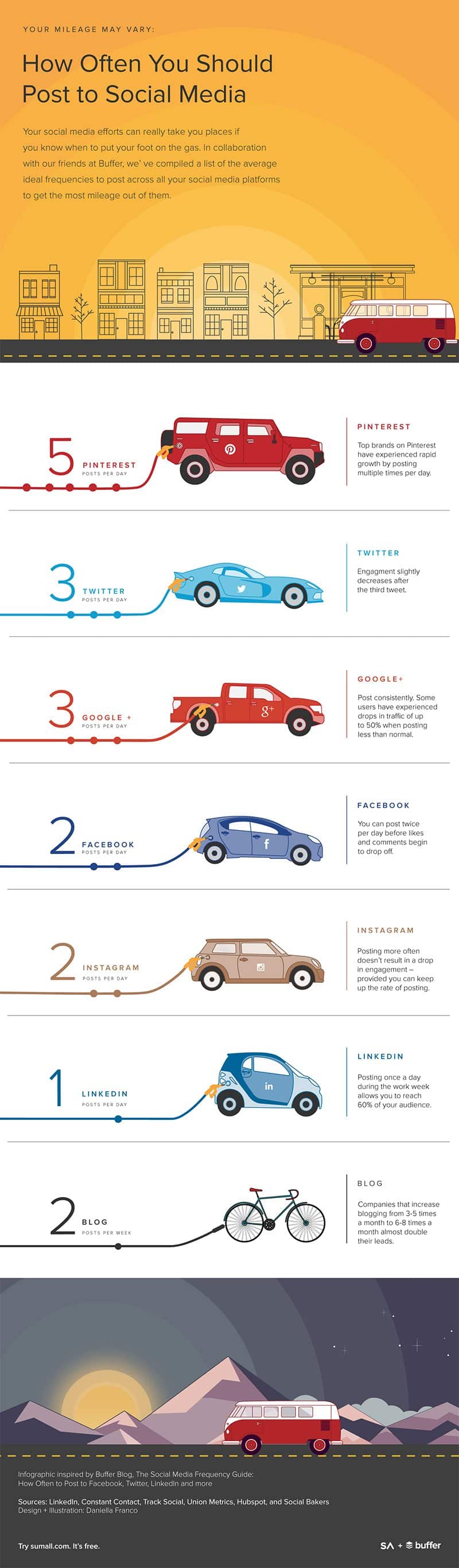
Social media has become an integral part of our daily lives. Whether you’re an individual trying to stay connected with friends and family or a business looking to expand its online presence, social media platforms provide a powerful means of communication and engagement. However, one common question that both individuals and businesses often ask is, “How often should I post on social media?” In this quick guide, we will explore the optimal posting frequency for various social media platforms and provide some best practices to help you make the most of your social media presence.
Why Posting Frequency Matters
Before we dive into the specifics of how often you should post on different social media platforms, let’s take a moment to understand why posting frequency matters.
- Maintaining Engagement: Regular posting keeps your audience engaged. If you post too infrequently, your followers may lose interest, and your content may get buried in their feeds.
- Algorithmic Considerations: Social media platforms use algorithms to determine which content to show users. Posting consistently can improve your visibility on these platforms and help your content reach a wider audience.
- Brand Awareness: For businesses, consistent posting reinforces your brand presence. It helps in brand recognition and builds trust among your audience.
- Content Variety: Frequent posting allows you to diversify your content. You can share a mix of promotional content, informative posts, and engaging visuals, keeping your feed interesting.
Now, let’s explore the recommended posting frequencies for some of the most popular social media platforms.
With over 2.8 billion monthly active users, Facebook remains a giant in the social media landscape. Here’s how often you should consider posting on this platform:
- Personal Profiles: For individuals, posting once a day or a few times a week is typically sufficient to stay connected with friends and family.
- Business Pages: Businesses should aim to post at least 3-5 times per week on their Facebook pages. This frequency strikes a balance between maintaining engagement and not overwhelming your audience.
Remember to analyze your audience’s response and adjust your posting schedule accordingly. Quality content is more important than quantity on Facebook.
Instagram is a highly visual platform with more than 1 billion monthly active users. The optimal posting frequency on Instagram depends on the type of content you create:
- Feed Posts: For standard feed posts, posting 3-7 times a week is a good rule of thumb. Consistency is key on Instagram, so aim for a regular schedule.
- Stories: Instagram Stories have a shorter lifespan, so you can post multiple times a day without overwhelming your followers. Aim for 3-10 Stories per day to keep your audience engaged.
- IGTV: If you create longer-form content for IGTV, posting once a week is generally sufficient.
- Reels: Instagram Reels are short, engaging videos. Posting 3-5 Reels per week can help boost your visibility.
The Instagram algorithm rewards frequent activity, so make sure to engage with your followers by responding to comments and messages.
Twitter is known for its fast-paced and real-time nature. Here’s how often you should consider tweeting:
- Personal Accounts: Individuals can tweet multiple times a day, depending on their preferences and availability. Some users even tweet dozens of times a day.
- Business Accounts: Businesses should aim for at least 3-5 tweets per day. Twitter’s fast-moving feed requires consistent updates to maintain visibility.
Twitter is a platform where you can experiment with posting frequency. Pay attention to the engagement your tweets receive and adjust accordingly.
LinkedIn is a professional networking platform with over 774 million users. The posting frequency on LinkedIn is more moderate compared to other platforms:
- Personal Profiles: For individuals, posting once a week or every two weeks is sufficient to maintain a professional presence.
- Company Pages: Businesses can post 2-5 times a week on their company pages. Focus on sharing industry insights, company updates, and thought leadership content.
LinkedIn’s audience values quality and professionalism, so prioritize well-crafted posts over quantity.
Pinterest is a visual discovery and bookmarking platform with over 478 million monthly active users. It’s all about sharing and discovering creative ideas. Here’s how often to pin on Pinterest:
- Personal Accounts: For individuals, pinning a few times a week is enough to keep your boards active and engaging.
- Business Accounts: Businesses should aim for 5-10 pins per day to maintain a strong presence on the platform.
Pinterest rewards consistent pinning, and it’s a great platform for evergreen content that can continue to drive traffic over time.
TikTok
TikTok is a short-form video platform that has skyrocketed in popularity, with over 1 billion monthly active users. Posting frequency on TikTok is unique due to the format:
- Content Creation: TikTok encourages users to create and share short videos regularly. Posting at least once a day or a few times a week can help you grow your following.
TikTok’s algorithm prioritizes new and engaging content, so experimentation and creativity are key to success.
YouTube
YouTube is the largest video-sharing platform, with over 2 billion logged-in monthly users. Consistency is crucial on YouTube due to the nature of video content:
- Video Uploads: For a YouTube channel, posting at least once a week is recommended. Some creators even upload multiple times a week.
- Live Streaming: Live streaming can complement regular uploads, allowing creators to interact with their audience in real-time.
YouTube’s algorithm rewards channels that consistently produce high-quality, engaging content, so stick to a schedule that works for you.
Best Practices for Posting on Social Media
Now that we’ve covered the recommended posting frequencies for various social media platforms, let’s explore some best practices to enhance your social media strategy:
- Know Your Audience: Understand your target audience’s preferences and habits. This knowledge will help you tailor your posting frequency and content to their interests.
- Use Scheduling Tools: Social media scheduling tools like Buffer, Hootsuite, and Later can help you plan and automate your posts, ensuring consistency.
- Monitor Analytics: Regularly analyze the performance of your posts using platform-specific analytics tools. This data can help you refine your strategy.
- Engage With Your Audience: Respond to comments, messages, and mentions promptly. Engaging with your audience fosters a sense of community.
- Mix Content Types: Share a variety of content types, including text, images, videos, and interactive content. Keep your feed diverse and engaging.
- Stay Up-to-Date: Social media trends and algorithms can change frequently. Stay informed about platform updates and adjust your strategy accordingly.
- Experiment and Adapt: Don’t be afraid to experiment with different posting frequencies and content formats. Adapt based on what works best for your audience.
In Conclusion
The optimal posting frequency on social media can vary depending on the platform and your specific goals. It’s essential to strike a balance between staying consistent and providing valuable content to your audience. Remember that quality always trumps quantity, and engagement is key to building a loyal following on social media. By following the guidelines and best practices outlined in this quick guide, you can create a social media strategy that helps you connect with your audience and achieve your objectives effectively.

Author:
Mark Ford