

In the vast digital landscape of the internet, getting noticed can seem like an insurmountable challenge. Whether you’re running a blog, an online store, or a corporate website, one thing is clear: visibility matters.
This is where SEO, or Search Engine Optimization, comes into play.
In this comprehensive guide, we’ll break down SEO for beginners, explaining what it is, why it’s crucial, and how it works. By the end, you’ll have a solid understanding of the fundamental principles to help your online presence shine.
Infographic by Rise Interactive.
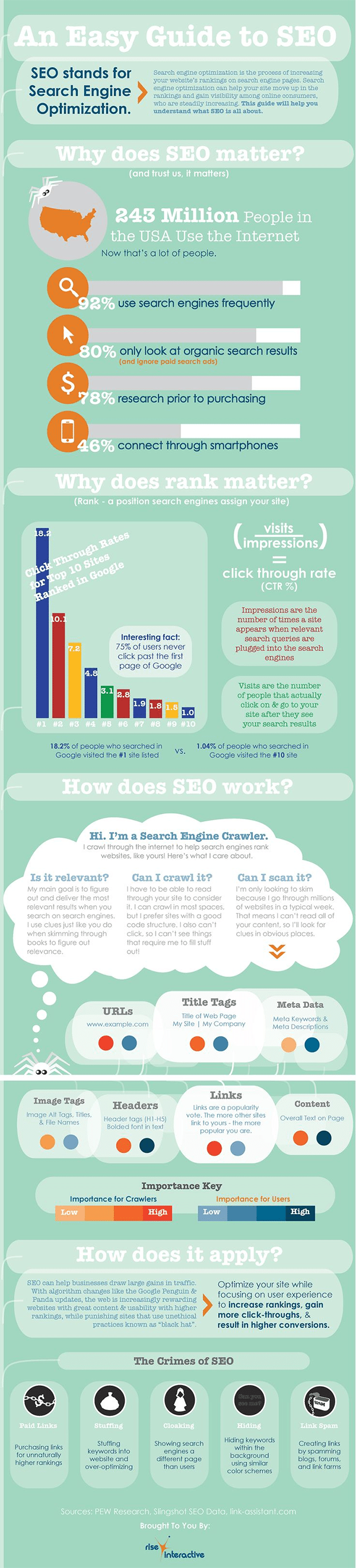
Chapter 1: Understanding SEO
What is SEO?
SEO stands for Search Engine Optimization. At its core, SEO is a set of practices and strategies aimed at improving a website’s visibility on search engine results pages (SERPs). When you search for something on Google, Bing, or any other search engine, the websites that appear on the first page tend to get the most attention and traffic. SEO is the process of optimizing your website to appear as high as possible in these search results.
Why Does SEO Matter?
SEO matters because it can have a profound impact on your online presence. Here are some key reasons why SEO is crucial:
- Increased Visibility: The higher your website ranks on SERPs, the more likely people are to click on it. Improved visibility can lead to more organic (non-paid) traffic to your site.
- Targeted Traffic: SEO allows you to target specific keywords and phrases relevant to your content or business. This helps you attract visitors who are genuinely interested in what you have to offer.
- Credibility and Trust: Websites that appear on the first page of search results are often perceived as more trustworthy and credible by users. SEO can help establish your site as an authority in your niche.
- Competitive Advantage: If your competitors are investing in SEO and you’re not, you could be losing potential customers to them.
- Cost-Effective Marketing: Organic traffic generated through SEO is cost-effective compared to paid advertising. While it takes time and effort, the long-term benefits are substantial.
How Do Search Engines Work?
Before diving deeper into SEO, it’s essential to understand how search engines work. Here’s a simplified overview:
- Crawling: Search engines use automated bots called crawlers or spiders to discover web pages. These bots follow links from one page to another, indexing the content they find.
- Indexing: Once a page is crawled, the search engine indexes it, meaning it categorizes the content and stores it in a massive database. This database is used to retrieve relevant pages when someone performs a search.
- Ranking: When a user enters a search query, the search engine uses complex algorithms to determine which pages are most relevant to that query. These algorithms consider various factors to rank pages in order of relevance.
Chapter 2: On-Page SEO
On-page SEO refers to the optimization techniques you apply directly on your website to improve its search engine rankings.
1. Keyword Research
Keyword research is the foundation of on-page SEO. It involves finding the right keywords and phrases that your target audience is likely to search for. Tools like Google Keyword Planner or SEMrush can help you identify these keywords. Once you have a list, strategically incorporate them into your content.
2. Quality Content
Content is king in the world of SEO. High-quality, valuable content not only attracts readers but also improves your site’s ranking. Ensure your content is well-written, informative, and relevant to your audience’s needs.
3. Meta Tags
Meta tags, including title tags and meta descriptions, are HTML elements that provide a brief summary of your page’s content. These tags appear in search results and can significantly influence click-through rates. Make sure your meta tags accurately represent your content and include relevant keywords.
4. URL Structure
Your website’s URL structure should be clear and concise. Use descriptive, keyword-rich URLs that provide a hint about the content of the page. Avoid long, convoluted URLs with random strings of characters.
5. Header Tags
Header tags (H1, H2, H3, etc.) are used to structure your content. They make it easier for both search engines and readers to understand the hierarchy of information on your page. Include your target keywords in header tags when relevant.
6. Image Optimization
Images can enhance your content, but they can also slow down your website if they’re not optimized. Compress images to reduce their file size, use descriptive file names, and include alt text to describe the image for accessibility and SEO purposes.
7. Internal Linking
Internal linking is the practice of linking to other pages within your website. It helps users navigate your site and distributes link equity (SEO value) throughout your pages. Use descriptive anchor text when linking and prioritize relevant, high-quality links.
Chapter 3: Off-Page SEO
Off-page SEO encompasses strategies and tactics that happen outside your website but have a significant impact on its search engine rankings.
1. Backlinks
Backlinks, also known as inbound links, are links from other websites to yours. Search engines view backlinks as a vote of confidence in your content. Not all backlinks are equal; quality matters more than quantity. Building a diverse, authoritative backlink profile is essential.
2. Social Signals
While social media activity doesn’t directly influence search rankings, it can indirectly affect your SEO. Sharing content on social media can increase its visibility and potentially lead to more backlinks.
3. Online Reputation Management
Your online reputation matters. Positive reviews and mentions on review sites, forums, and social media can boost your website’s credibility and, consequently, its search rankings.
4. Guest Posting
Writing guest posts for reputable websites in your niche can help you gain exposure and backlinks. Ensure that your guest posts provide value to the audience and include a link back to your site when appropriate.
Chapter 4: Technical SEO
Technical SEO involves optimizing the technical aspects of your website to improve its search engine performance.
1. Site Speed
A slow-loading website can frustrate users and negatively impact your SEO. Use tools like Google PageSpeed Insights to identify and address speed issues. Compress images, minify CSS and JavaScript, and leverage browser caching to improve load times.
2. Mobile Optimization
With the increasing use of mobile devices for web browsing, mobile optimization is crucial. Ensure that your website is responsive and provides a seamless experience on all screen sizes.
3. XML Sitemap
An XML sitemap is a file that provides search engines with a roadmap to your website’s content. Submitting your sitemap to search engines helps them index your pages more effectively.
4. SSL Certificate
Secure Sockets Layer (SSL) certificates encrypt the connection between your website and users’ browsers, enhancing security and boosting your search engine rankings. Google also gives preference to HTTPS websites.
5. Canonical Tags
Canonical tags are used to indicate the preferred version of a page when duplicate content exists on your site. This prevents search engines from penalizing your site for duplicate content issues.
Chapter 5: Monitoring and Measuring SEO
After implementing various SEO strategies, it’s essential to monitor and measure your efforts to understand what’s working and what needs improvement.
1. Google Analytics
Google Analytics is a powerful tool that provides insights into your website’s performance. It tracks various metrics, including traffic, bounce rate, and conversion rate. Use this data to assess the effectiveness of your SEO efforts.
2. Google Search Console
Google Search Console offers valuable information about how Google views your website. It provides data on indexing, search queries, and any issues that may affect your site’s visibility.
3. Rank Tracking Tools
Tools like SEMrush, Ahrefs, and Moz allow you to track your keyword rankings and monitor your competitors. Regularly check your rankings and adjust your strategy accordingly.
4. User Experience (UX) Metrics
User experience is a crucial factor in SEO. Metrics like page load times, mobile-friendliness, and ease of navigation directly impact user satisfaction and, in turn, your search rankings.
Chapter 6: White Hat vs. Black Hat SEO
In the world of SEO, there are two main approaches: white hat and black hat.
White Hat SEO
White hat SEO refers to ethical, rule-abiding practices that focus on providing value to users. It includes strategies like keyword research, quality content creation, and building natural backlinks. White hat SEO aims for long-term success and prioritizes user experience and content quality.
Black Hat SEO
Black hat SEO involves unethical, manipulative tactics to achieve quick, but often short-lived, results. This can include keyword stuffing, link farming, and cloaking (showing different content to users and search engines). Black hat SEO can lead to penalties or even deindexing by search engines, severely damaging a website’s reputation.
Chapter 7: SEO for Content Types
SEO isn’t limited to text-based content. It’s essential for various content types, including:
1. Video SEO
YouTube is the second-largest search engine in the world, making video SEO crucial for content creators. Optimize your video titles, descriptions, and tags with relevant keywords. Encourage engagement through likes, comments, and shares.
2. Image SEO
If your website relies heavily on images, optimize them for search engines. Use descriptive file names, alt text, and consider image sitemaps to improve image search rankings.
3. E-commerce SEO
For online stores, e-commerce SEO is vital. Optimize product descriptions, use high-quality images, and ensure a seamless shopping experience. Pay attention to on-page SEO and leverage user reviews.
4. Local SEO
Local businesses benefit from local SEO, which involves optimizing for location-based keywords. Claim your Google My Business listing, encourage reviews, and ensure consistency in your NAP (Name, Address, Phone Number) information.
Chapter 8: SEO Trends and Future Considerations
The world of SEO is dynamic, with ongoing trends and future considerations that can shape your strategy. Keep an eye on these developments:
1. Voice Search Optimization
As voice-activated devices become more common, optimizing for voice search is crucial. People use different phrasing when speaking than when typing, so adapt your content accordingly.
2. Mobile-First Indexing
Google has shifted to mobile-first indexing, meaning it primarily uses the mobile version of a website for ranking and indexing. Ensure your site is mobile-friendly and loads quickly on mobile devices.
3. E-A-T (Expertise, Authoritativeness, Trustworthiness)
Google places a high emphasis on E-A-T. Establish yourself or your website as an authority in your niche by producing high-quality, trustworthy content and gaining authoritative backlinks.
4. Core Web Vitals
Google introduced Core Web Vitals as ranking factors, focusing on page speed, responsiveness, and visual stability. Prioritize these metrics to improve user experience and SEO.
Chapter 9: SEO Resources for Beginners
As a beginner in SEO, you’ll find a wealth of resources to deepen your knowledge and skills:
1. Blogs and Websites
Follow reputable SEO blogs and websites like Moz, Search Engine Journal, and Neil Patel’s blog for the latest industry updates and insights.
2. Online Courses
Consider enrolling in online courses or certifications like Google’s Digital Garage or Moz Academy to learn SEO fundamentals.
3. SEO Tools
Explore SEO tools like Google Keyword Planner, SEMrush, Ahrefs, and Moz to aid in your research and optimization efforts.
4. Communities and Forums
Join online communities and forums like Reddit’s r/SEO or the Moz Community to connect with other SEO enthusiasts and professionals.
Chapter 10: Conclusion
SEO may seem complex at first, but it’s a valuable skill for anyone with an online presence. By understanding the basics of SEO, implementing best practices, and staying up-to-date with industry trends, you can enhance your website’s visibility, attract more organic traffic, and ultimately achieve your online goals. Remember that SEO is an ongoing process, and success requires patience, dedication, and a commitment to providing value to your audience. So, get started on your SEO journey today and watch your online presence thrive.

Author:
Mark Ford

The Most Common Local SEO Mistakes That Stop You Getting Found Online
Are you struggling to understand why your business isn’t showing up in local search results when customers are actively looking for your services? Want to uncover the common local SEO mistakes that could be quietly costing you enquiries and visibility? […]


