So you’ve done your research, you’ve discovered Google has over 200 ranking factors, but which of them should you spend your time on?
Unless you have an army of SEO workers it’s pretty much impossible to work on all 200 ranking factors so take the time to understand which can have the biggest effect and concentrate your time on those.
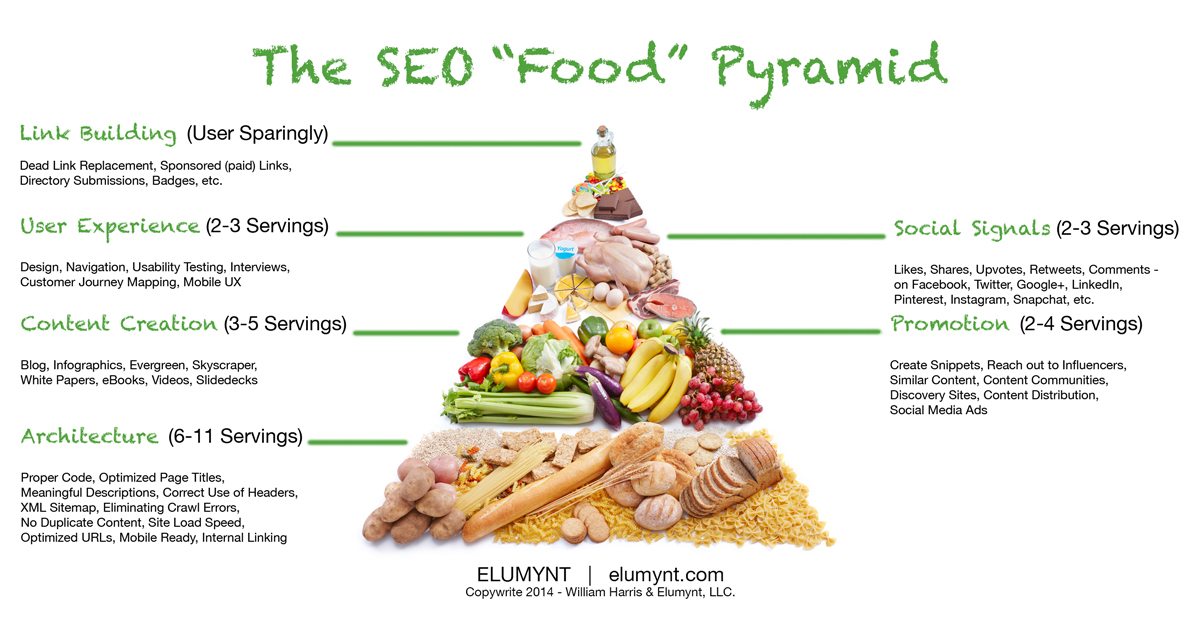
The guys over Elumynt have put together this SEO pyramid showing which factors they believe are the most important.
Search Engine Optimization (SEO) is a dynamic and ever-evolving field, with search engines like Google continually updating their algorithms to provide users with the best possible search results. As a website owner or digital marketer, it’s crucial to stay up-to-date with the latest SEO trends and focus on the ranking factors that matter the most. In this comprehensive guide, we’ll explore the key SEO ranking factors you should concentrate on to improve your website’s visibility and drive organic traffic.
1. Quality Content is King
While many SEO strategies have come and gone, one thing remains constant: high-quality content is the foundation of a successful website. Search engines are designed to deliver valuable and relevant content to users. Therefore, creating informative, engaging, and well-researched content should be your top priority.
- Keyword Research: Start by conducting thorough keyword research to identify the phrases and terms your target audience is searching for. Tools like Google Keyword Planner and SEMrush can help you discover relevant keywords with search volume.
- Content Relevance: Ensure your content aligns with the intent of the search queries. Google’s algorithms are becoming increasingly adept at understanding user intent, so make sure your content satisfies their needs.
- Quality over Quantity: It’s better to have a few pieces of exceptional content than numerous mediocre ones. Focus on creating in-depth, comprehensive, and valuable content that truly addresses your audience’s questions and concerns.
- Unique and Original: Avoid duplicate content at all costs. Search engines penalize websites with duplicate content, so make sure your articles, blog posts, and product descriptions are unique.
- Regular Updates: Keep your content fresh and relevant by updating it regularly. Outdated content can harm your rankings.
2. On-Page SEO Optimization
On-page SEO refers to the factors you can control on your website to improve search engine rankings. These elements play a crucial role in how search engines interpret and rank your pages.
- Title Tags: Craft descriptive and concise title tags for each page, including relevant keywords. These tags are often the first thing users see in search results.
- Meta Descriptions: Write compelling meta descriptions that provide a brief summary of your content. A well-crafted meta description can improve click-through rates.
- Header Tags: Use header tags (H1, H2, H3, etc.) to structure your content and make it more readable. Incorporate keywords where appropriate.
- Optimized Images: Compress images to reduce load times and use descriptive alt text to help search engines understand the content of the images.
- Internal Linking: Link to other relevant pages within your website to enhance navigation and distribute link equity.
- Mobile Optimization: Ensure your website is mobile-friendly. Google prioritizes mobile-first indexing, so a responsive design is crucial.
- Page Speed: Faster-loading pages not only improve user experience but also contribute to higher rankings. Use tools like Google PageSpeed Insights to identify and fix speed issues.
- Schema Markup: Implement schema markup to provide search engines with structured data about your content. This can result in rich snippets in search results.
3. High-Quality Backlinks
Backlinks, also known as inbound links, are links from other websites to yours. They are a powerful ranking factor because they serve as “votes of confidence” in your site’s authority and credibility. However, not all backlinks are created equal.
- Quality over Quantity: It’s better to have a few high-quality, relevant backlinks from authoritative websites than a multitude of low-quality ones. Focus on building relationships with reputable websites in your niche.
- Natural Link Building: Avoid black-hat SEO techniques like buying links or participating in link farms. Google can penalize your site for such practices. Instead, focus on creating valuable content that naturally attracts backlinks.
- Guest Blogging: Contributing guest posts to reputable websites in your industry can be an effective way to earn backlinks while showcasing your expertise.
- Broken Link Building: Find broken links on other websites in your niche and offer to replace them with links to your relevant content.
- Monitor Backlinks: Regularly monitor your backlink profile using tools like Ahrefs or Moz to identify and disavow toxic or spammy links that could harm your rankings.
4. User Experience (UX)
User experience has become increasingly important in SEO. Search engines want to provide users with the best possible experience, so they consider various UX factors when ranking websites.
- Mobile-Friendliness: As mentioned earlier, ensure your website is responsive and provides an excellent user experience on mobile devices.
- Page Layout and Design: A clean and organized page layout enhances user experience. Avoid clutter and make navigation intuitive.
- Page Dwell Time: The amount of time users spend on your website can impact rankings. Engage your audience with compelling content to increase dwell time.
- Bounce Rate: High bounce rates can be a sign of poor user experience. Improve the relevance and quality of your content to reduce bounce rates.
- Page Loading Speed: We mentioned this earlier, but it’s worth emphasizing again. Faster-loading pages lead to a better user experience.
- Secure Website: Ensure your website has an SSL certificate to establish trust with users and protect their data.
5. Technical SEO
Technical SEO involves optimizing the technical aspects of your website to improve its search engine performance.
- XML Sitemap: Create an XML sitemap and submit it to Google Search Console. This helps search engines understand your website’s structure and index it more efficiently.
- Robots.txt: Use a robots.txt file to instruct search engine crawlers on which pages to crawl and index and which ones to exclude.
- Canonical Tags: Implement canonical tags to prevent duplicate content issues and indicate the preferred version of a page.
- Structured Data: As mentioned earlier, use schema markup to provide structured data to search engines.
- SSL Certificate: Ensure your site is secure with an SSL certificate. Google gives preference to secure websites in search results.
- Crawl Errors: Regularly check for crawl errors and broken links using Google Search Console or other SEO tools.
- Site Speed: Invest in a fast and reliable hosting provider to ensure your website loads quickly.
6. Content Length and Depth
While the quality of your content is crucial, so is the length and depth of your articles and pages. In many cases, longer and more comprehensive content tends to perform better in search results.
- Comprehensive Guides: Consider creating in-depth guides and resources that thoroughly cover a topic. These often attract more backlinks and provide value to readers.
- Word Count: While there’s no fixed rule for word count, aim for a minimum of 1,000 words for blog posts. Longer, well-researched articles tend to rank higher.
- Useful Multimedia: Incorporate relevant images, videos, infographics, and other multimedia elements to enhance the user experience.
7. Social Signals
While the direct impact of social signals (likes, shares, and comments on social media) on SEO rankings is a topic of debate, there’s evidence to suggest that a strong social media presence can indirectly benefit your SEO efforts.
- Social Sharing: Encourage social sharing of your content by adding share buttons to your website and promoting your content on social platforms.
- Brand Signals: A strong brand presence on social media can increase brand recognition, which can lead to more branded searches and improved rankings.
- Traffic and Engagement: Social media can drive traffic to your website, and engaged users may spend more time on your site, which can positively impact SEO.
8. Local SEO
For businesses with physical locations, optimizing for local search is essential. Local SEO helps you appear in local search results and on map listings.
- Google My Business: Claim and optimize your Google My Business listing. Provide accurate information, including your business name, address, phone number, and business hours.
- NAP Citations: Ensure that your business’s name, address, and phone number (NAP) are consistent across all online directories and listings.
- Local Keywords: Use local keywords in your content and meta tags. This helps search engines understand your geographic relevance.
- Online Reviews: Encourage satisfied customers to leave positive reviews on platforms like Google, Yelp, and Facebook.
- Local Link Building: Build local backlinks by partnering with other local businesses and organizations.
9. User Engagement Metrics
Search engines consider user engagement metrics when determining the quality and relevance of your content.
- Click-Through Rate (CTR): A high CTR indicates that your search listings are compelling and relevant. Optimize your title tags and meta descriptions to improve CTR.
- Bounce Rate: As mentioned earlier, a high bounce rate can signal poor user experience. Analyze your content and website design to reduce bounce rates.
- Average Session Duration: Longer average session durations indicate that users find your content valuable and engaging. Create content that keeps users on your site.
- Conversion Rate: Track conversion rates for different pages and optimize your content to encourage conversions.
10. Regular SEO Audits and Monitoring
SEO is an ongoing process, and regular audits and monitoring are essential to maintain and improve your rankings.
- SEO Audits: Conduct regular SEO audits to identify issues and opportunities for improvement. Use tools like Screaming Frog, SEMrush, or Moz to analyze your website.
- Keyword Tracking: Monitor your keyword rankings to see how your website is performing in search results.
- Competitor Analysis: Keep an eye on your competitors’ SEO strategies and adapt to changes in your industry.
- Algorithm Updates: Stay informed about Google’s algorithm updates and adjust your SEO strategy accordingly.
- Analytics and Reporting: Use tools like Google Analytics and Google Search Console to track your website’s performance and make data-driven decisions.
In conclusion, SEO is a multifaceted discipline that requires continuous effort and adaptation. By focusing on these key ranking factors, you can improve your website’s visibility in search engine results and drive organic traffic. Remember that SEO is a long-term strategy, and results may take time to materialize. Stay patient, stay informed, and stay committed to providing value to your audience through high-quality content and a positive user experience.

Author:
Mark Ford