
Are you targeting businesses (B2B) or consumers (B2C) with your social media strategy? Are you using the correct platforms and content to find them?
In the ever-evolving world of digital marketing, staying up-to-date with the latest trends is crucial to ensuring your brand’s success. Social media, in particular, has become an integral part of marketing strategies for businesses of all sizes.
To effectively navigate the social media landscape and maximize your marketing efforts, it’s essential to understand the current trends and which platforms and content types are driving results.
In this comprehensive guide, we will explore the latest trends in social media marketing, focusing on the platforms and content types that are proving to be most effective.
Grazitti share the social media trends you need to know in this infographic.
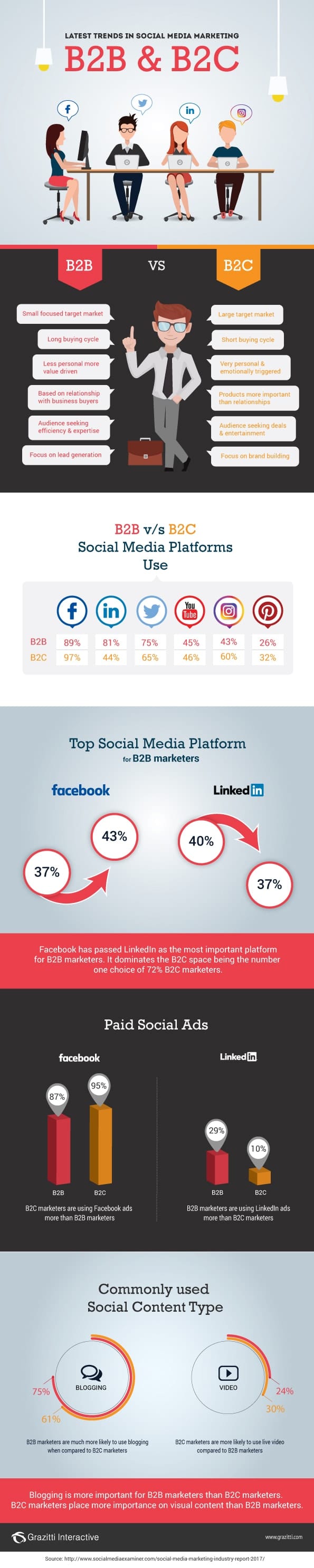
The State of Social Media Marketing
Before delving into the specific trends, let’s take a moment to understand the current state of social media marketing.
1. Ubiquity of Social Media: Social media platforms have become a ubiquitous part of people’s lives. With billions of active users worldwide, they offer an unparalleled reach for brands to connect with their target audience.
2. Shift in Consumer Behavior: Consumers increasingly rely on social media for product recommendations, brand engagement, and even direct shopping. Social media has transitioned from a mere leisure activity to a powerful e-commerce tool.
3. Algorithmic Changes: Social media platforms are constantly updating their algorithms, which can significantly impact the visibility of your content. Staying informed about these changes is vital for effective marketing.
4. Rise of Influencer Marketing: Influencer marketing has gained prominence, with influencers playing a crucial role in shaping consumer opinions and driving engagement.
5. Evolving Content Formats: The way content is consumed on social media is continually evolving. From images and text to video, live streaming, and interactive content, marketers need to adapt to these changing formats.
Now, let’s dive into the specific trends that are shaping the social media marketing landscape.
1. Video Content Dominance
Video content is reigning supreme in the world of social media marketing. It’s no surprise given that videos are highly engaging and easily shareable. Here are some key video trends to keep in mind:
a. Short-form Videos: Short-form videos, often under a minute in length, have gained immense popularity on platforms like TikTok and Instagram Reels. They offer a quick and entertaining way to grab your audience’s attention.
b. Live Streaming: Live streaming continues to grow as a valuable tool for real-time engagement. Platforms like Facebook Live, Instagram Live, and Twitch enable brands to connect with their audience in an authentic way.
c. Stories: Stories, ephemeral content that disappears after 24 hours, have become a staple on platforms like Instagram, Facebook, and Snapchat. They provide a sense of urgency and keep audiences coming back for more.
d. Interactive Videos: Interactive videos, where viewers can make choices that affect the narrative, are gaining traction. They provide an immersive experience and encourage active engagement.
e. User-generated Content (UGC): Encouraging users to create and share their own video content related to your brand can be highly effective. UGC adds authenticity and social proof to your marketing efforts.
2. Social Commerce is Booming
E-commerce and social media are merging at an unprecedented rate. Consumers can now shop directly through social media platforms, making it essential for brands to embrace social commerce.
a. Shoppable Posts: Platforms like Instagram and Pinterest allow businesses to create shoppable posts, where users can click on a product and make a purchase without leaving the app.
b. In-app Checkout: Social media platforms are introducing in-app checkout features, simplifying the purchasing process for users and increasing conversion rates.
c. Augmented Reality (AR) Shopping: AR is being used to enhance the shopping experience. For instance, try-on filters for clothing and makeup products enable users to visualize how products will look on them before buying.
d. Chatbots for Customer Support: Chatbots integrated into social media platforms provide instant customer support and can guide users through the purchasing process.
3. The Power of Micro-Moments
Micro-moments are those brief instances when consumers turn to their devices for quick answers and solutions. These moments are ripe with marketing opportunities, and brands need to be ready to seize them.
a. Local SEO and Geotargeting: Optimizing your social media content for local search and utilizing geotargeting features can help you reach users in their micro-moments of need.
b. Voice Search Optimization: As voice-activated devices become more common, optimizing your content for voice search is crucial. Answering users’ questions concisely can earn you a spot in their micro-moments.
c. Instant Messaging: Platforms like WhatsApp and Facebook Messenger are popular channels for consumers seeking quick information. Utilize chatbots and automated responses to engage with users in real-time.
4. Social Media Stories and Fleets
Stories, a feature pioneered by Snapchat and adopted by platforms like Instagram, Facebook, and Twitter, are a dynamic way to share content. Fleets, Twitter’s version of stories, have also gained traction.
a. Behind-the-Scenes Content: Stories and Fleets are ideal for sharing behind-the-scenes glimpses of your brand, giving followers an intimate look at your operations.
b. Exclusive Offers: Use stories to share exclusive promotions and offers that are only available to your social media followers for a limited time.
c. Highlights: Platforms like Instagram allow you to save and organize your stories into highlights, creating a mini-archive of important content.
5. The Continued Growth of Influencer Marketing
Influencer marketing is here to stay and has become an essential component of many social media marketing strategies. However, it’s evolving in several ways:
a. Micro-Influencers: Smaller, niche-focused influencers with dedicated followings are often more effective than celebrities with millions of followers. Micro-influencers have a more personal connection with their audience.
b. Authenticity: Authenticity is paramount. Audiences can spot inauthentic endorsements from a mile away, so it’s crucial for influencers to genuinely believe in the products or services they promote.
c. Long-term Partnerships: Brands are increasingly forming long-term partnerships with influencers to build trust and consistency in their messaging.
6. The Importance of Social Listening
Social listening involves monitoring social media channels for mentions of your brand, products, competitors, and industry trends. It’s not just about tracking what people say about you; it’s about understanding the sentiment and using that information to inform your strategy.
a. Real-time Feedback: Social listening provides real-time feedback that can help you address customer concerns promptly and make improvements to your products or services.
b. Competitive Analysis: Monitoring your competitors can give you insights into their strategies and help you identify gaps you can exploit.
c. Trend Spotting: Social listening allows you to identify emerging trends and adapt your content and messaging accordingly.
7. Niche Platforms and Communities
While the major social media platforms like Facebook, Instagram, and Twitter continue to dominate, niche platforms and online communities are gaining traction.
a. Reddit: Reddit is a hub for specialized communities. Engaging with relevant subreddits can provide valuable insights and opportunities to connect with highly targeted audiences.
b. Clubhouse: Audio-based platform Clubhouse has gained popularity for hosting discussions and conversations. It’s an excellent platform for thought leadership and networking.
c. Discord: Originally a platform for gamers, Discord has evolved into a community-building platform for various interests. Brands can create their own Discord servers to engage with fans.
8. Social Responsibility and Authenticity
Consumers are increasingly conscious of social and environmental issues, and they expect brands to be socially responsible. Authenticity is crucial when addressing these concerns.
a. Cause Marketing: Brands that align with a cause and actively support it can resonate with socially conscious consumers. However, authenticity is key, and actions should speak louder than words.
b. Transparency: Being transparent about your business practices, sustainability efforts, and social responsibility initiatives builds trust with your audience.
c. Employee Advocacy: Encourage employees to share their experiences and perspectives on social media. This humanizes your brand and adds authenticity to your online presence.
9. Privacy Concerns and Data Protection
Privacy concerns have led to increased scrutiny and regulations around data collection and usage. Brands need to be aware of these concerns and prioritize data protection.
a. Consent-based Marketing: Obtain clear and explicit consent from users before collecting and using their data for marketing purposes.
b. GDPR and CCPA Compliance: If you operate in regions covered by regulations like the General Data Protection Regulation (GDPR) or the California Consumer Privacy Act (CCPA), ensure your marketing practices are compliant.
c. User Education: Educate your audience about how their data is used and provide options for them to control their privacy settings.
10. Metrics and Analytics
Finally, as social media marketing becomes increasingly data-driven, it’s crucial to focus on metrics and analytics.
a. ROI Measurement: Track the return on investment (ROI) for your social media efforts. Understand which platforms and campaigns are delivering the best results.
b. Engagement Metrics: Monitor metrics like likes, shares, comments, and click-through rates to gauge the effectiveness of your content.
c. Customer Lifetime Value (CLV): Calculate the CLV of social media-acquired customers to understand the long-term impact of your efforts.
Conclusion
Social media marketing is a dynamic and ever-changing field. Staying informed about the latest trends and adapting your strategy accordingly is essential for success. The trends discussed in this guide provide valuable insights into the current landscape, but it’s crucial to continually monitor the evolving social media landscape and be ready to pivot your strategy as needed. By harnessing the power of video content, embracing social commerce, and understanding micro-moments, your brand can thrive in the world of social media marketing. Remember that authenticity, social responsibility, and data protection are not just trends but enduring principles that should guide your social media efforts for years to come.

Author:
Mark Ford