
Are you looking for help setting up or improving your social media strategy? Need help crafting campaigns that hit the spot with your audience?
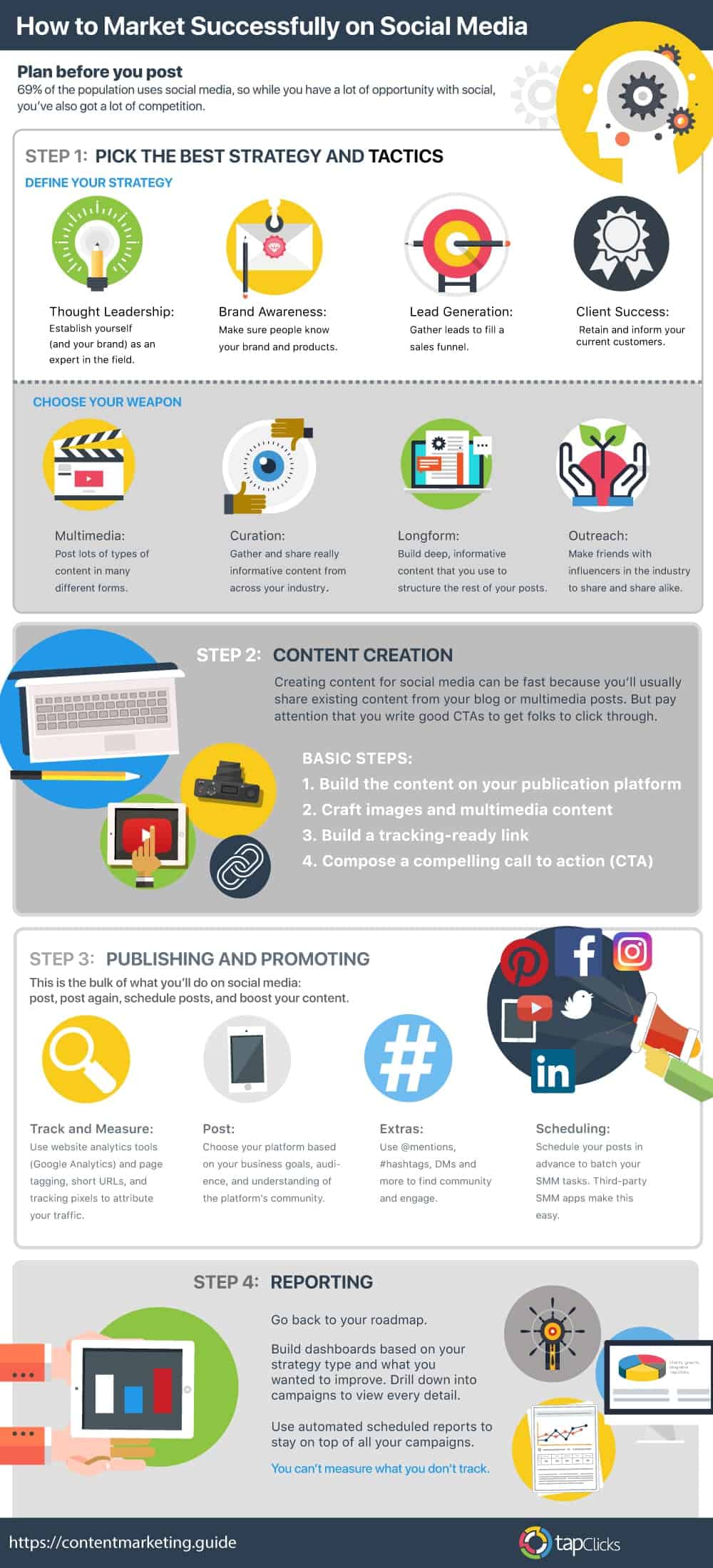
tapClicks share their strategy for social media success in this infographic.
Here’s a quick summary:
- Strategy and tactics
- Content creation
- Publishing and promoting
- Reporting
Check out the infographic for more detail.
In today’s digital age, social media marketing is a cornerstone of any successful business strategy. It’s not just about having a presence on various platforms but about leveraging these platforms to build your brand, engage with your audience, and drive growth. This guide will walk you through a comprehensive four-step social media marketing strategy that any business can implement to achieve measurable results.
Strategy and Tactics
For small businesses, crafting a robust social media strategy is vital to compete effectively and make the most out of limited resources. Here’s an in-depth look at how small businesses can develop and implement successful social media strategies and tactics.
Define Your Goals
Setting clear goals is the first step in creating a social media strategy. Goals should be SMART: Specific, Measurable, Achievable, Relevant, and Time-bound. Here are some examples tailored for small businesses:
- Brand Awareness: Increase brand visibility by growing your social media followers by 20% in six months.
- Lead Generation: Generate 50 new leads per month through social media campaigns.
- Customer Engagement: Boost engagement rates (likes, comments, shares) by 30% in the next quarter.
- Website Traffic: Drive 500 new visitors to your website monthly from social media channels.
- Sales: Achieve a 10% increase in sales through social media promotions within the next six months.
Understand Your Audience
Knowing your audience is crucial for creating content that resonates and engages. Here’s how to get a deeper understanding of your target audience:
- Create Buyer Personas: Develop detailed profiles of your ideal customers. Include demographics such as age, gender, income level, education, and location. Also, consider psychographics like interests, hobbies, and values.
- Engage with Your Audience: Use social media platforms to engage with your audience directly. Conduct polls, ask questions, and participate in conversations to gain insights into their preferences and pain points.
- Analyze Customer Data: Utilize data from your CRM system, website analytics, and social media analytics to identify patterns in customer behavior. This data can help you tailor your content and strategy to better meet their needs.
Competitive Analysis
Understanding what your competitors are doing can provide valuable insights and help you refine your strategy. Here’s how to conduct a thorough competitive analysis:
- Identify Key Competitors: List your main competitors. These could be local businesses in the same industry or larger companies that cater to a similar market.
- Analyze Their Social Media Presence: Look at their profiles on different social media platforms. Note the type of content they post, their posting frequency, engagement levels, and follower counts.
- Evaluate Their Strengths and Weaknesses: Identify what your competitors are doing well and where they are lacking. This can help you find opportunities to differentiate your business.
- Use Tools: Tools like SEMrush, Social Blade, and BuzzSumo can help you gather data on your competitors’ social media performance.
Choose the Right Platforms
Selecting the appropriate social media platforms is critical for reaching your target audience effectively. Here’s how to make informed choices:
- Identify Where Your Audience Spends Time: Use tools like Facebook Audience Insights and Google Analytics to see which platforms your audience prefers.
- Consider Platform Strengths: Each platform has its strengths. For instance, Instagram is great for visual content and younger audiences, LinkedIn is ideal for B2B marketing, and Facebook is excellent for community building.
- Focus on a Few Platforms: As a small business, it’s better to excel on a few platforms rather than spread yourself too thin. Focus on the platforms that will have the most significant impact.
Develop Tactics
Tactics are the actionable steps you’ll take to achieve your goals. Here are some tactics for different objectives:
- Brand Awareness:
- Run Contests and Giveaways: Encourage users to follow your account and share your content for a chance to win a prize.
- Collaborate with Influencers: Partner with influencers who can introduce your brand to a wider audience.
- Use Paid Ads: Invest in paid advertising to boost your visibility and reach a larger audience.
- Lead Generation:
- Offer Free Resources: Provide valuable resources like eBooks, webinars, or whitepapers in exchange for contact information.
- Use Lead Generation Ads: Platforms like Facebook and LinkedIn offer ad formats specifically designed to capture leads.
- Host Webinars: Conduct webinars on topics relevant to your industry and promote them on social media to attract potential leads.
- Customer Engagement:
- Interactive Content: Create polls, quizzes, and live videos to engage your audience actively.
- Respond Promptly: Reply to comments and messages quickly to show that you value your audience’s input.
- Share User-Generated Content: Encourage your customers to share their experiences with your products and repost their content.
- Website Traffic:
- Include Links: Always include links to your website in your posts, especially for blog articles, product pages, and landing pages.
- SEO-Friendly Posts: Use keywords relevant to your business in your social media posts to improve their searchability.
- Guest Blogging: Write guest posts for other blogs and include links back to your site.
- Sales:
- Exclusive Social Media Offers: Provide special discounts or promotions exclusively for your social media followers.
- Product Demonstrations: Use videos to showcase how your products work and their benefits.
- Testimonials and Reviews: Share positive reviews and testimonials to build trust and encourage purchases.
Budgeting
A crucial part of strategy development is budgeting. Here’s how to allocate your social media marketing budget effectively:
- Content Creation: Allocate funds for creating high-quality content, including hiring graphic designers, videographers, and writers if necessary.
- Advertising: Set aside a portion of your budget for paid advertising to boost your reach and achieve specific goals.
- Tools and Software: Invest in tools for scheduling posts, analyzing performance, and managing your social media accounts.
- Training: Consider budgeting for training or courses to stay updated on the latest social media trends and best practices.
Monitoring and Adapting
Your strategy should be flexible enough to adapt to changing trends and insights. Here’s how to stay agile:
- Regular Audits: Conduct regular audits of your social media accounts to ensure they are optimized and aligned with your strategy.
- Track Performance: Use analytics tools to track the performance of your posts and campaigns. Look for trends and insights that can inform your strategy.
- Stay Updated: Follow industry blogs, attend webinars, and participate in online communities to stay informed about the latest social media trends and updates.
- Feedback Loops: Create feedback loops with your audience. Use their feedback to refine your tactics and improve your strategy continuously.
Real-Life Examples
Learning from real-life examples can provide inspiration and practical insights. Here are a few examples of small businesses successfully implementing social media strategies:
- Local Coffee Shop:
- Goal: Increase foot traffic.
- Tactic: Use Instagram Stories to showcase daily specials and encourage customers to visit. Run Instagram ads targeting local users to promote new menu items.
- Result: A significant increase in in-store visits and engagement on Instagram.
- Online Boutique:
- Goal: Boost online sales.
- Tactic: Partner with fashion influencers to showcase products. Use Facebook and Instagram Shops to make it easy for users to purchase directly from social media.
- Result: A noticeable increase in sales and a growing follower base.
- Fitness Trainer:
- Goal: Build a personal brand and attract new clients.
- Tactic: Create valuable content like workout videos and nutrition tips on YouTube and Instagram. Engage with followers by responding to comments and hosting live Q&A sessions.
- Result: Increased brand recognition and a steady stream of new clients.
By focusing on these strategic elements, small businesses can build a solid foundation for their social media marketing efforts. Remember, the key to success is not only in the planning but also in the consistent execution and willingness to adapt based on insights and feedback
Content Creation
Creating compelling content is at the heart of a successful social media marketing strategy. For small businesses, effective content creation can be a game-changer, helping to build brand identity, engage with customers, and drive sales. Here’s an in-depth guide to content creation tailored for small businesses.
Plan Your Content
Planning your content ensures consistency and relevance. Here’s how to effectively plan your content:
- Develop a Content Calendar: A content calendar helps you organize what you will post and when. This can be as simple as a spreadsheet or a dedicated tool like Trello or Asana. Include important dates, holidays, and events relevant to your business.
- Content Themes: Establish content themes for different days of the week or month. For example, “Motivation Monday” for inspirational quotes, “Tutorial Tuesday” for how-to guides, etc.
- Align with Marketing Goals: Ensure your content aligns with your broader marketing goals. If you’re launching a new product, plan posts that build anticipation and provide detailed information about the product.
Types of Content
Diversifying your content keeps your audience engaged. Here are different types of content small businesses can create:
- Blog Posts: Share blog articles to drive traffic to your website. Write about topics relevant to your industry, offer tips, and address common customer questions.
- Images: High-quality images are crucial for platforms like Instagram and Pinterest. Showcase your products, behind-the-scenes glimpses, or customer photos.
- Videos: Videos are highly engaging. Create tutorials, product demos, customer testimonials, or behind-the-scenes videos. Live videos can also help you connect with your audience in real time.
- Infographics: Infographics are a great way to present complex information in an easily digestible format. Use tools like Canva or Piktochart to create visually appealing infographics.
- User-Generated Content: Encourage your customers to share their experiences with your products. Reposting user-generated content builds community and trust.
- Polls and Surveys: Use polls and surveys to engage your audience and gather valuable feedback. These can be quick and easy ways to boost interaction on your posts.
Content Creation Tools
Leverage tools to streamline the content creation process:
- Graphic Design: Tools like Canva, Adobe Spark, and Pablo by Buffer are excellent for creating professional graphics without needing a graphic designer.
- Video Creation: Use tools like Lumen5, Animoto, and InShot to create and edit videos. Even basic smartphone apps can produce high-quality videos.
- Photo Editing: Apps like Adobe Lightroom, Snapseed, and VSCO can enhance your photos, making them more visually appealing.
- Content Scheduling: Tools like Buffer, Hootsuite, and Later allow you to schedule posts in advance, ensuring a consistent posting schedule.
Brand Consistency
Maintaining brand consistency across all content is crucial for brand recognition. Here’s how to ensure consistency:
- Brand Guidelines: Develop brand guidelines that outline your brand’s voice, tone, color schemes, fonts, and imagery styles. Ensure everyone involved in content creation adheres to these guidelines.
- Templates: Create templates for different types of posts. This can save time and ensure that all your posts have a cohesive look.
- Voice and Tone: Consistently use the same voice and tone in your captions, replies, and messages. Whether your brand is casual, professional, or humorous, stick to a style that resonates with your audience.
Quality Over Quantity
While it’s important to post regularly, the quality of your content is paramount. Here’s how to ensure high-quality content:
- Value-Driven Content: Focus on creating content that provides value to your audience. This could be educational, entertaining, or inspirational content that meets the needs or interests of your audience.
- High-Quality Visuals: Invest in good photography and video equipment if possible. High-quality visuals are more likely to capture attention and engagement.
- Proofread: Always proofread your content to avoid grammatical errors and typos. Tools like Grammarly can help with this.
Content Ideas and Inspiration
Generating fresh content ideas can be challenging. Here are some sources of inspiration:
- Industry Trends: Stay updated with the latest trends in your industry and create content around them.
- Customer Feedback: Pay attention to the questions and feedback from your customers. Create content that addresses their concerns and interests.
- Competitor Analysis: Look at what your competitors are doing. This can provide insights into what works and inspire new content ideas.
- Seasonal Content: Create content around holidays, seasons, and special events. This can include holiday promotions, seasonal tips, or event coverage.
Engaging Content Strategies
Creating content is one thing; making it engaging is another. Here’s how to ensure your content captivates your audience:
- Storytelling: Use storytelling to connect with your audience emotionally. Share stories about your brand, your team, or your customers.
- Interactive Content: Engage your audience with polls, quizzes, and interactive posts. This not only boosts engagement but also provides insights into your audience’s preferences.
- Call-to-Action (CTA): Always include a clear CTA in your posts. Whether it’s visiting your website, signing up for a newsletter, or commenting on a post, a CTA guides your audience on what to do next.
- User Engagement: Encourage your followers to engage with your content by asking questions, prompting them to share their opinions, or inviting them to participate in contests and giveaways.
Scheduling and Frequency
Finding the right balance in your posting schedule is key to maintaining an engaged audience without overwhelming them:
- Consistency: Stick to a consistent posting schedule. This helps your audience know when to expect new content from you.
- Optimal Posting Times: Research when your audience is most active on social media and schedule your posts for those times. Tools like Sprout Social and Hootsuite offer analytics that can help determine the best times to post.
- Frequency: Post regularly, but not too frequently. Posting too often can overwhelm your audience, while posting too infrequently can cause them to lose interest. Aim for quality over quantity.
Analyzing and Adapting
Content creation is an ongoing process that requires regular analysis and adaptation:
- Performance Metrics: Track the performance of your posts using analytics tools provided by social media platforms. Key metrics include engagement rates, reach, clicks, and shares.
- Feedback: Pay attention to the feedback from your audience. What do they like or dislike? Use this information to refine your content strategy.
- A/B Testing: Experiment with different types of content, posting times, and formats to see what works best. A/B testing can provide valuable insights into what resonates with your audience.
- Content Audit: Regularly review your past content to identify trends and patterns. Determine which types of content perform best and why. Use these insights to inform future content creation.
Case Studies
Here are some examples of small businesses that have successfully implemented effective content creation strategies:
- Local Bakery:
- Content: High-quality photos of baked goods, behind-the-scenes videos of the baking process, customer testimonials, and seasonal promotions.
- Strategy: Posting daily on Instagram and Facebook, engaging with followers through stories, and using local hashtags to increase visibility.
- Result: Increased foot traffic to the bakery, higher engagement rates, and a growing number of followers.
- Handmade Jewelry Store:
- Content: Product photos, videos of the jewelry-making process, customer photos, and educational posts about different gemstones.
- Strategy: Collaborating with local influencers, running Instagram contests, and using Pinterest to drive traffic to their online store.
- Result: Boost in online sales, more website traffic, and a loyal customer base.
- Fitness Trainer:
- Content: Workout videos, nutrition tips, client transformation stories, and motivational quotes.
- Strategy: Posting workout challenges, hosting live workout sessions, and engaging with followers through comments and direct messages.
- Result: Increased client sign-ups, higher engagement rates, and a strong online community.
Conclusion
Effective content creation is a cornerstone of a successful social media marketing strategy for small businesses. By planning your content, diversifying your content types, maintaining brand consistency, focusing on quality, and continuously analyzing performance, you can create compelling content that engages your audience and drives business growth. Remember, the key to success is staying flexible and adapting to the ever-changing social media landscape.
Publishing and Promoting
Publishing and promoting your content effectively are crucial steps in ensuring that your social media efforts pay off. For small businesses, strategic publishing and targeted promotion can significantly enhance visibility, engagement, and conversions. Here’s an in-depth guide to help small businesses master these aspects.
Scheduling Posts
Consistency is essential for building a strong social media presence. A consistent posting schedule helps keep your audience engaged and ensures that your brand remains top of mind. Here’s how to effectively schedule your posts:
- Create a Content Calendar: Plan your posts in advance using a content calendar. This will help you organize your content, ensure a balanced mix of post types, and align your social media activity with important dates and events.
- Use Scheduling Tools: Tools like Buffer, Hootsuite, Later, and Sprout Social allow you to schedule posts across multiple platforms. This saves time and ensures your content goes live at optimal times, even when you’re busy.
- Frequency: Determine the ideal posting frequency for each platform. For example, posting once or twice a day on Instagram and Facebook is usually sufficient, while Twitter might require more frequent updates due to its fast-paced nature.
Best Times to Post
Posting at the right times can significantly boost your engagement rates. Here’s how to find the best times to post for your audience:
- Analyze Your Audience: Use analytics tools provided by social media platforms to understand when your audience is most active. Facebook Insights, Instagram Insights, and Twitter Analytics offer valuable data on when your followers are online.
- General Guidelines: While specific optimal times vary by industry and audience, general guidelines suggest:
- Facebook and Instagram: Lunchtime (11 AM – 1 PM) and evenings (7 PM – 9 PM) tend to be high-engagement periods.
- Twitter: Early mornings (8 AM – 10 AM) and late afternoons (5 PM – 6 PM) often see higher engagement.
- LinkedIn: During business hours (8 AM – 5 PM) on weekdays, particularly Tuesdays and Thursdays.
- Experiment and Adjust: Regularly test different posting times and analyze the results to refine your strategy. What works for one business might not work for another, so continuous adjustment is key.
Paid Advertising
Organic reach can be limited, especially on platforms like Facebook and Instagram, where algorithm changes have reduced the visibility of unpaid posts. Here’s how to effectively use paid advertising:
- Set Clear Objectives: Define what you want to achieve with your ads. Common objectives include increasing brand awareness, driving website traffic, generating leads, or boosting sales.
- Targeting Options: Use the advanced targeting options available on social media platforms to reach your ideal audience. You can target users based on demographics, interests, behaviors, and even past interactions with your business.
- Ad Formats: Choose the right ad format for your goals. Options include:
- Image and Video Ads: Great for showcasing products or telling your brand’s story.
- Carousel Ads: Allow you to display multiple images or videos in a single ad, ideal for highlighting different products or features.
- Collection Ads: Combine images and videos to create a more immersive experience, driving engagement and conversions.
- Lead Generation Ads: Specifically designed to capture user information, such as email addresses, directly within the platform.
- Budget Management: Start with a small budget and gradually increase it as you identify which ads perform best. Use A/B testing to compare different ad creatives, headlines, and targeting options.
- Monitor and Optimize: Regularly review your ad performance using the platform’s analytics tools. Optimize your ads based on what’s working, such as tweaking targeting parameters or adjusting your ad copy.
Engage with Your Audience
Engagement is a two-way street. Actively interacting with your audience can build stronger relationships and foster a loyal community. Here’s how to enhance engagement:
- Respond Promptly: Reply to comments, messages, and mentions as quickly as possible. This shows that you value your audience’s input and encourages further interaction.
- Personalize Your Responses: Avoid generic replies. Personalize your responses to show that you’re genuinely interested in what your followers have to say.
- Encourage Conversations: Ask questions in your posts to spark discussions. Use calls-to-action that invite followers to share their thoughts, experiences, or opinions.
- User-Generated Content: Encourage your followers to create content related to your brand. Repost their photos, videos, and stories, giving them credit. This not only provides you with fresh content but also strengthens your relationship with your customers.
- Host Live Sessions: Use live video features on platforms like Facebook, Instagram, and YouTube to engage with your audience in real time. Live Q&A sessions, product demonstrations, and behind-the-scenes looks can drive significant engagement.
Collaborations and Influencer Marketing
Collaborating with influencers and other brands can expand your reach and lend credibility to your business. Here’s how to approach collaborations and influencer marketing:
- Identify Relevant Influencers: Look for influencers whose audience aligns with your target market. Consider their engagement rates, content quality, and overall fit with your brand values.
- Build Relationships: Before proposing a collaboration, engage with influencers by commenting on their posts and sharing their content. This helps establish a connection and increases the likelihood of a successful partnership.
- Define Clear Objectives: Be clear about what you want to achieve from the collaboration. Whether it’s increasing brand awareness, driving sales, or growing your follower base, having defined goals will guide the partnership.
- Create Authentic Partnerships: Ensure that the collaboration feels natural and authentic. Influencers should genuinely believe in your product or service, as their followers can quickly detect insincerity.
- Track and Measure: Use unique discount codes, affiliate links, or UTM parameters to track the performance of your influencer campaigns. Analyze the results to determine the ROI and effectiveness of each partnership.
Use Hashtags
Hashtags can increase the visibility of your posts and help you reach a broader audience. Here’s how to use hashtags effectively:
- Research Popular Hashtags: Use tools like Hashtagify, RiteTag, and Instagram’s Explore feature to find popular and relevant hashtags in your industry.
- Create Branded Hashtags: Develop unique hashtags specific to your brand or campaigns. Encourage your followers to use these hashtags when sharing content related to your business.
- Mix Popular and Niche Hashtags: Combine popular hashtags with less competitive, niche hashtags to maximize reach and engagement. Popular hashtags have a broader audience, while niche hashtags can help you connect with a more targeted group.
- Avoid Overuse: While using hashtags is beneficial, don’t overdo it. Aim for a balance—using 5-10 relevant hashtags is generally effective without appearing spammy.
- Monitor Hashtag Performance: Track the performance of your hashtags to see which ones drive the most engagement. Adjust your strategy based on these insights.
Monitor and Adjust
Regularly monitoring your social media performance is crucial for continuous improvement. Here’s how to effectively track and adjust your strategy:
- Analytics Tools: Use built-in analytics tools on each platform to track key metrics such as reach, engagement, click-through rates, and conversions. Third-party tools like Google Analytics, Sprout Social, and Hootsuite can provide additional insights.
- Set Benchmarks: Establish benchmarks based on your past performance and industry standards. This will help you measure progress and set realistic goals.
- Identify Trends: Look for patterns in your data to identify what types of content perform best, when your audience is most active, and which platforms drive the most engagement.
- Adjust Your Strategy: Use the insights gained from your analytics to refine your content calendar, posting times, and promotional tactics. Continuously experiment and adapt to stay ahead of changing trends and audience preferences.
Case Studies
Here are examples of small businesses that have successfully implemented publishing and promoting strategies:
- Local Restaurant:
- Strategy: Use Instagram Stories and Facebook posts to showcase daily specials and behind-the-scenes content. Run targeted Facebook ads to reach local foodies.
- Result: Increased foot traffic, higher engagement rates on social media, and a growing follower base.
- Tactics: Engaging with customers by responding to comments and messages, encouraging user-generated content by asking customers to share their dining experiences, and using local hashtags to boost visibility.
- E-commerce Store:
- Strategy: Utilize a mix of organic posts and paid ads on Instagram and Facebook to promote new products and seasonal sales. Collaborate with micro-influencers to reach a broader audience.
- Result: Increased website traffic, higher conversion rates, and more sales.
- Tactics: Posting high-quality product photos, running contests and giveaways to boost engagement, and tracking ad performance to optimize campaigns.
- Fitness Studio:
- Strategy: Share workout videos, client testimonials, and nutrition tips on Instagram and Facebook. Host live workout sessions to engage with the audience in real time.
- Result: Higher class attendance, more social media followers, and increased client retention.
- Tactics: Using branded hashtags, responding promptly to comments and messages, and encouraging followers to share their fitness journeys using the studio’s hashtags.
Conclusion
Effective publishing and promoting are critical components of a successful social media marketing strategy for small businesses. By scheduling posts consistently, posting at optimal times, leveraging paid advertising, engaging with your audience, collaborating with influencers, using hashtags strategically, and continuously monitoring performance, small businesses can significantly enhance their social media presence and achieve their marketing goals. Stay flexible, be willing to experiment, and always keep your audience’s preferences and behaviors at the center of your efforts.
Reporting
Reporting is a critical step in any social media marketing strategy. It allows you to measure the effectiveness of your efforts, understand your audience, and make data-driven decisions to improve your campaigns. For small businesses, detailed and regular reporting can help optimize limited resources and achieve better results. Here’s an in-depth guide to effective social media reporting.
Define Key Metrics
Identifying the key metrics that align with your goals is the first step in effective reporting. Here are some common social media metrics and how they can inform your strategy:
- Reach: The number of unique users who have seen your content. This metric helps you understand how far your content is spreading.
- Engagement: The total number of interactions (likes, comments, shares, saves) your content receives. High engagement indicates that your content resonates with your audience.
- Impressions: The total number of times your content is displayed, regardless of whether it was clicked or not. This metric shows how often your content appears in users’ feeds.
- Click-Through Rate (CTR): The percentage of users who clicked on a link in your post. A high CTR indicates that your content is compelling and relevant to your audience.
- Conversion Rate: The percentage of users who completed a desired action (such as filling out a form or making a purchase) after clicking on your post. This metric is crucial for measuring the effectiveness of your social media campaigns in driving business outcomes.
- Follower Growth: The number of new followers gained over a specific period. Steady growth indicates a growing interest in your brand.
- Sentiment Analysis: The analysis of the emotions and opinions expressed in user comments and mentions. Understanding sentiment helps gauge public perception of your brand.
Use Analytics Tools
Each social media platform offers built-in analytics tools, and third-party tools can provide more comprehensive insights. Here’s how to use these tools effectively:
- Platform-Specific Tools:
- Facebook Insights: Provides data on post performance, audience demographics, page views, and more.
- Twitter Analytics: Offers insights into tweet performance, audience interests, follower growth, and engagement metrics.
- Instagram Insights: Shows data on post reach, impressions, follower demographics, and engagement.
- LinkedIn Analytics: Provides information on post engagement, follower demographics, and company page performance.
- Pinterest Analytics: Offers insights into pin performance, audience interests, and traffic driven to your website.
- Third-Party Tools:
- Google Analytics: Tracks social media traffic to your website, providing insights into user behavior and conversions.
- Sprout Social: Offers detailed analytics across multiple platforms, helping you track performance and generate reports.
- Hootsuite Analytics: Provides comprehensive data on your social media activities, allowing you to measure ROI and optimize your strategy.
- Buffer Analyze: Focuses on social media metrics and provides insights to help you grow your following and engagement.
Create Reports
Regularly creating reports is essential for tracking your progress and identifying trends. Here’s how to structure your reports effectively:
- Executive Summary: Start with a brief overview of the key findings and insights. Highlight the most important metrics and any significant changes.
- Metrics Overview: Provide a detailed breakdown of the key metrics, including reach, engagement, impressions, CTR, conversion rate, follower growth, and sentiment analysis.
- Top-Performing Content: Identify and analyze the posts that received the most engagement. Discuss what made these posts successful and how you can replicate their success.
- Audience Insights: Offer insights into your audience demographics, including age, gender, location, and interests. Understanding your audience helps tailor your content to their preferences.
- Campaign Performance: Evaluate the performance of any paid advertising campaigns. Include data on ad spend, impressions, clicks, CTR, conversions, and ROI.
- Competitor Analysis: Compare your performance with that of your competitors. Highlight areas where you are excelling and identify opportunities for improvement.
- Recommendations: Based on the data and insights, provide actionable recommendations for improving your social media strategy. Include specific actions, such as adjusting posting times, experimenting with new content types, or refining targeting parameters.
Adjust Your Strategy
Using the insights from your reports to adjust your strategy is crucial for continuous improvement. Here’s how to make data-driven adjustments:
- Identify Trends: Look for patterns in your data to identify trends. For example, if videos consistently receive higher engagement than images, consider creating more video content.
- Optimize Posting Times: If your data shows that posts published at certain times receive more engagement, adjust your posting schedule accordingly.
- Refine Content: Use the insights from top-performing content to inform your future content creation. Focus on the types of content that resonate most with your audience.
- Improve Targeting: Analyze the performance of your paid campaigns to refine your targeting. Use the data to reach more relevant audiences and improve ROI.
- Experiment and Test: Regularly experiment with new content types, formats, and strategies. Use A/B testing to compare the performance of different approaches and make informed decisions.
Benchmarking
Comparing your performance to industry benchmarks can provide context and help you set realistic goals. Here’s how to effectively benchmark your performance:
- Identify Benchmarks: Look for industry reports and studies that provide benchmark data for social media performance. Platforms like Sprout Social, Hootsuite, and HubSpot often publish such reports.
- Compare Metrics: Compare your key metrics (engagement rate, CTR, conversion rate, etc.) with industry averages. This helps you understand where you stand and identify areas for improvement.
- Set Goals: Use the benchmark data to set realistic and achievable goals. Aim to meet or exceed industry averages while continuously striving for improvement.
Stay Updated
Social media platforms are constantly evolving, with new features and trends emerging regularly. Staying updated on these changes is crucial for maintaining an effective strategy. Here’s how to stay informed:
- Follow Industry Blogs: Subscribe to blogs and newsletters from social media experts and platforms. Websites like Social Media Examiner, HubSpot, and Sprout Social provide valuable insights and updates.
- Attend Webinars and Conferences: Participate in webinars, workshops, and conferences focused on social media marketing. These events offer opportunities to learn from experts and stay current with the latest trends.
- Join Online Communities: Engage with online communities and forums where social media marketers share tips, experiences, and updates. Platforms like Reddit, LinkedIn groups, and Facebook groups can be valuable resources.
Case Studies
Here are examples of small businesses that have successfully implemented effective reporting strategies:
- Local Retail Store:
- Goal: Increase in-store traffic and sales through social media.
- Strategy: Regularly track key metrics such as reach, engagement, and conversion rates from social media campaigns.
- Results: Used insights to adjust ad targeting, optimize posting times, and focus on high-performing content, resulting in a 20% increase in foot traffic and a 15% increase in sales.
- Tactics: Monthly reports highlighting top-performing posts, audience insights, and campaign performance. Continuous experimentation with different types of content and ad formats.
- Online Fitness Coach:
- Goal: Grow online client base and increase engagement.
- Strategy: Use Instagram Insights and Facebook Analytics to track follower growth, engagement rates, and website traffic.
- Results: Identified that workout videos and client testimonials performed best, leading to a 30% increase in engagement and a 25% increase in new client sign-ups.
- Tactics: Weekly reports focusing on engagement metrics, follower growth, and content performance. Adjusted content strategy based on top-performing posts and audience feedback.
- Handmade Jewelry Brand:
- Goal: Drive online sales and build brand awareness.
- Strategy: Track performance metrics using Google Analytics and Instagram Insights to understand the effectiveness of social media efforts.
- Results: Used data to optimize product posts and run targeted ads, resulting in a 40% increase in website traffic and a 20% increase in online sales.
- Tactics: Monthly reports with detailed analysis of social media performance, top-performing products, and ad campaign results. Continuous refinement of targeting and content strategy based on data insights.
Conclusion
Effective reporting is crucial for small businesses looking to maximize their social media marketing efforts. By defining key metrics, using analytics tools, creating comprehensive reports, adjusting your strategy based on insights, benchmarking performance, and staying updated on industry trends, small businesses can make informed decisions that drive growth and success. Regularly reviewing and refining your approach ensures that your social media strategy remains effective and aligned with your business goals.
Conclusion
Implementing a successful social media marketing strategy involves a combination of strategic planning, creative content creation, effective publishing and promotion, and diligent reporting. By following these four steps, any business can build a strong social media presence, engage with their audience, and achieve their marketing goals. Remember, social media marketing is an ongoing process that requires regular evaluation and adjustment. Stay flexible, be willing to experiment, and always keep your audience at the center of your efforts.

Author:
Mark Ford