So you’ve got an idea for a business, something nobody has ever thought of before, but everyone you know says it’s stupid so you haven’t bothered starting up?
In the world of entrepreneurship, success often hinges on innovation, creativity, and a willingness to think outside the box. While many successful businesses follow conventional paths, there are some that have taken the road less traveled, turning the strangest and most unconventional ideas into astonishing success stories.
In this blog post, we will delve into the fascinating world of eccentric business ideas that defied expectations and became incredibly successful. From pet rocks to shipping air, these stories prove that with the right combination of vision, determination, and a little bit of quirkiness, you can turn even the most unusual concept into a thriving enterprise.
Don’t let that stop you! Draw inspiration from these examples of strange ideas that made it from Silver Door instead.
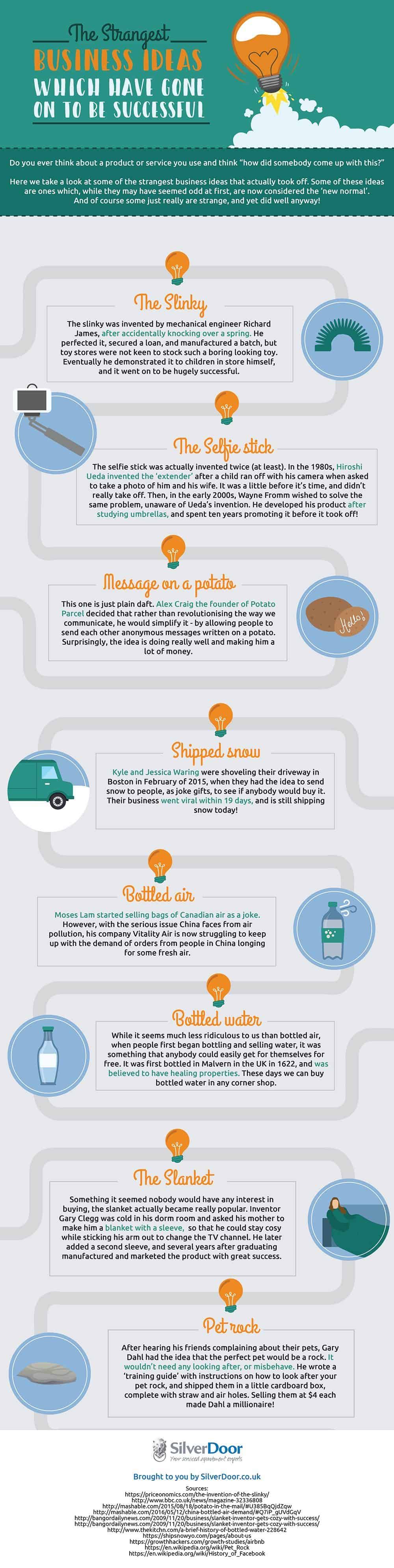
The Pet Rock Phenomenon
One of the most iconic examples of a strange business idea that struck gold is the story of the Pet Rock. In 1975, Gary Dahl, an advertising executive, came up with the brilliant notion of selling smooth rocks as pets. Each Pet Rock came in a custom-designed box complete with straw and breathing holes, making it a humorous and low-maintenance alternative to traditional pets.
While the idea seemed ludicrous, Dahl’s witty marketing campaign and keen sense of humor struck a chord with the public. People bought Pet Rocks as gag gifts and conversation starters. The craze swept the nation, with millions of Pet Rocks sold at $3.95 each. Dahl’s investment of only a few cents per rock yielded him a fortune. The Pet Rock is a prime example of how a simple, absurd idea can capture the imagination of the masses and generate substantial profits.
The Million Dollar Homepage
In 2005, Alex Tew, a 21-year-old student from England, faced the challenge of paying for his university tuition. Instead of taking out loans or seeking traditional employment, he came up with a unique idea: the Million Dollar Homepage. Tew created a website featuring a grid of one million pixels, and he offered to sell each pixel for $1 to advertisers. The catch? The pixels couldn’t be resized and had to remain on the website for at least five years.
This seemingly bizarre concept intrigued advertisers looking for creative ways to promote their businesses. The novelty and curiosity surrounding the Million Dollar Homepage led to a rush of advertisers buying pixels. Tew reached his goal of selling one million pixels within a few months, and he even auctioned off the last 1,000 pixels on eBay for over $38,000. This ingenious idea not only paid for Tew’s education but also turned a profit, demonstrating how unconventional thinking can lead to unexpected success.
Santa Mail
For many children around the world, writing a letter to Santa Claus is a cherished holiday tradition. But what if you could receive a personalized reply from Santa himself? That’s precisely the business idea that John T. Maloney pursued in 1912 when he founded “Santa Mail.”
Maloney, a postal worker from New York, noticed that many letters addressed to Santa Claus ended up undelivered. Instead of letting them go to waste, he decided to answer each one personally as Santa Claus. He even went as far as using North Pole postmarks and red ink to make the letters seem genuine. Word spread about Santa Mail, and parents began paying Maloney to send replies to their children’s letters.
Over time, Santa Mail grew into a thriving business, making Maloney a successful Santa impersonator and ensuring that countless children received personalized responses from St. Nick. The heartwarming story of Santa Mail shows that turning a simple act of kindness into a business can lead to both financial success and joy for others.
The Smiley Face
The iconic smiley face, a simple yellow circle with two black dots for eyes and a curved line for a mouth, has become one of the most recognized symbols worldwide. But did you know that this ubiquitous symbol was the result of a business venture?
In 1963, Harvey Ball, a commercial artist from Worcester, Massachusetts, was hired by a local insurance company to create a morale-boosting image for its employees. Ball came up with the design of the smiley face in under ten minutes and was paid just $45 for his work. Little did he know that this design would become a cultural phenomenon.
The smiley face quickly gained popularity and was used in various forms of merchandise, from T-shirts to coffee mugs. Ball never trademarked the design, allowing it to enter the public domain. Despite not profiting directly from the symbol’s widespread use, he expressed satisfaction that his creation brought happiness to people worldwide.
The smiley face’s success story demonstrates that sometimes, a simple idea born out of kindness and positivity can leave a lasting impact on the world.
Rent-a-Chicken
In the realm of peculiar business ideas, Rent-a-Chicken is truly eggstraordinary. Founded by Phil and Jenn Tompkins in Traverse City, Michigan, this business offers people the opportunity to rent chickens for a season. Customers receive a coop, two to four egg-laying hens, and all the supplies needed to care for them, including feed and bedding.
Rent-a-Chicken appeals to urban dwellers and suburbanites who are interested in experiencing the joys of raising chickens without the long-term commitment. The business provides an educational experience, teaching renters about the care and feeding of chickens, as well as the benefits of having fresh, organic eggs. At the end of the rental season, customers can choose to adopt the chickens or return them to Rent-a-Chicken.
This quirky business idea not only capitalizes on the urban farming trend but also addresses people’s desire for a sustainable and hands-on food source. Rent-a-Chicken has expanded to multiple locations across the United States, demonstrating how a unique and niche concept can thrive in the modern world.
The Museum of Bad Art (MOBA)
Art is subjective, and what one person considers “bad” art may be another’s masterpiece. The Museum of Bad Art, founded in 1994 by Scott Wilson and Jerry Reilly in Dedham, Massachusetts, celebrates the so-bad-it’s-good genre of artwork. MOBA’s collection includes paintings and sculptures that were discarded, ridiculed, or overlooked by traditional art institutions.
The founders believe that “bad art” can be just as thought-provoking and entertaining as conventional art. The museum’s tongue-in-cheek approach to curating and displaying these unusual pieces has garnered a dedicated following and media attention.
What started as a small basement exhibition has grown into a cultural phenomenon, with MOBA’s collection displayed in multiple locations and a loyal fan base. The Museum of Bad Art reminds us that creativity knows no bounds and that even unconventional expressions of art can find appreciation.
The Potato Parcel
If you’ve ever wanted to send a personalized message on a potato, then the Potato Parcel is the business for you. Launched in 2015 by Alex Craig, this quirky startup allows customers to have a custom message or image printed on a potato and sent to a recipient as a unique and unexpected gift.
The idea for Potato Parcel came to Craig in a dream, and he decided to turn it into a reality. Initially, he faced skepticism and challenges in finding a way to print on potatoes, but his determination paid off. The novelty and humor of receiving a potato with a message struck a chord with customers, and Potato Parcel gained media attention and viral success.
Today, Potato Parcel offers a range of potato-related products, from potato postcards to potato-themed merchandise. It serves as a testament to the power of creativity and the ability to turn even the most absurd idea into a profitable venture.
The Tokyo Snake Café
The concept of sharing a meal with a snake might send shivers down the spines of many, but in Tokyo, Japan, the Tokyo Snake Café has become a popular destination for snake enthusiasts and curious tourists alike. Opened by Hisamitsu Kaneko in 2015, this café allows visitors to enjoy coffee and snacks while interacting with a variety of non-venomous snakes.
Kaneko, a snake lover, saw an opportunity to create a unique and educational experience by bringing people closer to these often misunderstood creatures. Visitors can handle and hold the snakes under the supervision of trained staff. The café’s success demonstrates that unconventional ideas can thrive when they tap into niche markets and provide experiences that can’t be found elsewhere.
The Icelandic Elf School
Iceland is known for its stunning natural landscapes, including volcanoes, waterfalls, and glaciers. It’s also known for its folklore and belief in mythical creatures, such as elves and hidden people. In Reykjavik, Iceland, the Icelandic Elf School offers courses and guided tours focused on elves, trolls, and other supernatural beings.
Founded by Magnus Skarphedinsson, the school provides an immersive experience into Iceland’s rich folklore and belief in the existence of elves and hidden people. Participants learn about the history, stories, and legends surrounding these creatures and even visit locations where elves are believed to reside.
While the idea may seem whimsical, the Icelandic Elf School has attracted tourists and curious travelers from around the world, showcasing the power of embracing a unique cultural perspective and turning it into a thriving business.
Conclusion
These strange and offbeat business ideas prove that entrepreneurship knows no bounds when it comes to creativity and innovation. From Pet Rocks to Potato Parcels, these success stories remind us that sometimes, the most unusual concepts can capture the public’s imagination and become profitable ventures. Whether born out of humor, kindness, or a passion for the unusual, these businesses have carved out their niches in the market, demonstrating that with determination and a touch of eccentricity, you can turn even the quirkiest idea into a thriving enterprise. So, the next time you have a seemingly outlandish business idea, don’t be too quick to dismiss it—after all, it might just be the next big thing.

Author:
Mark Ford

The Four Dimensions of Market Opportunity (And How to Use Them to Grow Your Business)
Are you trying to identify new ways to grow your business by spotting untapped market opportunities? Want to learn how to recognise and leverage the four key dimensions of opportunity that drive lasting success? […]