Are you looking for ways to make your business website more effective? Want to better serve your target visitor and become more profitable?
Kayak Online Marketing share their tips for success in this infographic.
Here’s a quick summary:
- Identify your target market
- Don’t sacrifice structure for design
- Educate your visitors
- Get your team involved
- Run a blog
- Utilise SEO
- Be active on social media
- Create relevant offers
- Don’t set it and forget it
- Keep an eye on analytics
Check out the infographic for more detail.
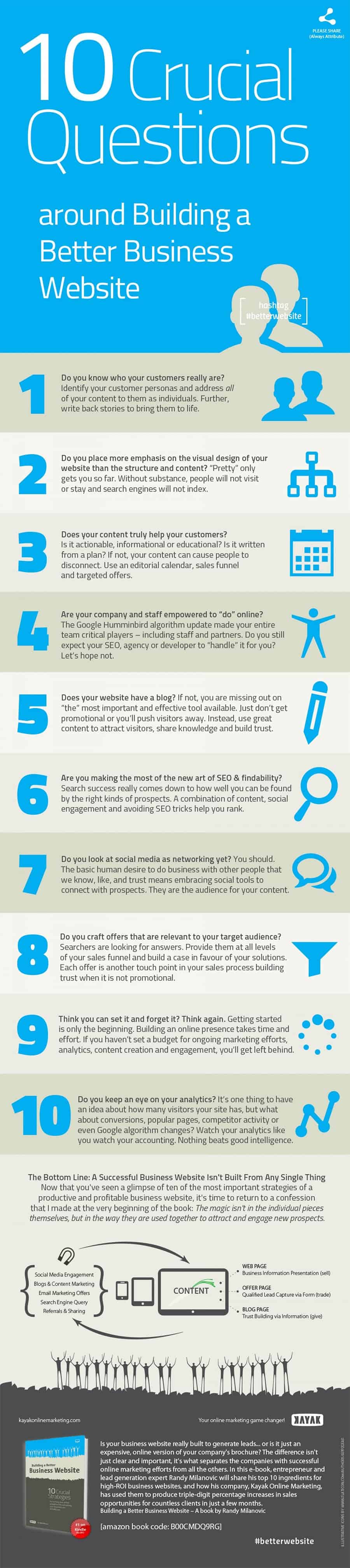
Creating an effective business website requires more than just a good-looking design. It must serve as a dynamic tool for communication, marketing, and sales. Here are ten crucial strategies to help you build a business website that not only looks great but also delivers results.
Identify Your Target Market
Understanding your target market is the cornerstone of any successful business strategy, particularly for small businesses that must make every marketing dollar count. Identifying your target market involves detailed research and analysis to pinpoint who your ideal customers are and what they need. Here’s a more in-depth look at how to effectively identify your target market:
- Conduct Market Research
- Surveys and Questionnaires
One of the most direct ways to gather information about your target market is to ask them directly. Use online tools like SurveyMonkey or Google Forms to create surveys and questionnaires that capture valuable data. Ask questions about demographics (age, gender, location), interests, buying habits, and pain points. Offer incentives such as discounts or free products to encourage participation.
- Interviews and Focus Groups
Interviews and focus groups allow for more in-depth conversations with potential customers. These methods can uncover insights that might not surface in written surveys. Conducting one-on-one interviews or gathering small groups for discussions can provide qualitative data that enriches your understanding of your audience.
- Competitor Analysis
Study your competitors to see who they are targeting and how. Analyze their websites, social media, and marketing campaigns to identify gaps and opportunities in the market. Look at their customer reviews and feedback to understand what their customers like or dislike about their products or services.
- Define Your Buyer Personas
A buyer persona is a semi-fictional representation of your ideal customer based on data and research. Creating detailed personas helps you tailor your marketing efforts to specific segments of your audience. Here’s how to develop effective buyer personas:
- Demographic Information
Start with basic demographic information such as age, gender, income level, education, occupation, and marital status. This data provides a foundation for understanding who your customers are on a surface level.
- Psychographic Information
Dive deeper by exploring psychographic information, which includes your customers’ interests, hobbies, values, attitudes, and lifestyles. Psychographics help you understand why customers make purchasing decisions and how they interact with brands.
- Behavioral Data
Analyze how your customers behave online and offline. Look at their buying patterns, brand loyalty, product usage, and preferred communication channels. Behavioral data can reveal trends that inform your marketing strategies.
- Customer Pain Points
Identify the problems and challenges your customers face that your product or service can solve. Understanding these pain points allows you to position your offerings as solutions, making your marketing messages more compelling.
- Segment Your Market
Once you have a clear picture of your target audience, segment it into smaller, more manageable groups based on shared characteristics. Market segmentation allows you to create more personalized and effective marketing campaigns. Common segmentation criteria include:
- Demographic Segmentation
Group customers based on demographic factors such as age, gender, income, and education. This is one of the simplest forms of segmentation and can be highly effective for broad targeting.
- Geographic Segmentation
Segment your market by location, such as country, region, city, or neighborhood. This is particularly useful for businesses with physical locations or those targeting specific areas.
- Psychographic Segmentation
Divide your audience based on their lifestyles, values, interests, and attitudes. This helps create more emotionally resonant marketing messages that align with your customers’ beliefs and values.
- Behavioral Segmentation
Group customers based on their behaviors, such as purchasing habits, brand interactions, and product usage. Behavioral segmentation helps tailor marketing efforts to different stages of the buyer’s journey.
- Use Analytics Tools
- Google Analytics
Google Analytics is a powerful tool for understanding your website visitors. It provides detailed insights into who is visiting your site, where they are coming from, and how they interact with your content. Use this data to refine your target market and adjust your marketing strategies accordingly.
- Social Media Analytics
Social media platforms like Facebook, Instagram, and Twitter offer built-in analytics tools that provide valuable data about your followers. Analyze metrics such as engagement rates, demographics, and interests to better understand your social media audience.
- CRM Systems
Customer Relationship Management (CRM) systems like Salesforce or HubSpot track interactions with your customers and prospects. CRM data can reveal patterns and trends that help you identify your most valuable customer segments.
- Validate Your Findings
Before fully committing to your identified target market, it’s important to validate your findings to ensure accuracy and effectiveness.
- Test Marketing
Launch small-scale marketing campaigns targeting different segments of your audience to see which groups respond best. Use A/B testing to compare the performance of different messages, offers, and channels.
- Customer Feedback
Regularly solicit feedback from your customers to ensure you’re meeting their needs and expectations. Use this feedback to make adjustments to your personas and marketing strategies.
- Stay Flexible and Adapt
The market is always evolving, and so are the needs and preferences of your customers. Continuously monitor changes in your target market and be prepared to adapt your strategies accordingly. Regularly update your buyer personas and segmentation criteria based on new data and insights.
- Leverage Industry Trends
Stay informed about trends and shifts in your industry that could impact your target market. Subscribe to industry publications, join professional associations, and attend conferences and webinars. Understanding the broader landscape helps you anticipate changes and stay ahead of the competition.
- Engage with Your Audience
Direct engagement with your audience can provide real-time insights and foster a stronger connection with your brand. Utilize social media, live chats, and community forums to interact with customers, answer their questions, and gather valuable feedback. Engaging with your audience not only enhances your understanding of their needs but also builds trust and loyalty.
Conclusion
Identifying your target market is a continuous process that requires diligent research, analysis, and adaptation. By thoroughly understanding who your customers are and what they need, you can create more effective marketing strategies that resonate with your audience and drive business success. For small businesses, a clear and accurate target market identification can lead to more efficient use of resources, better customer engagement, and ultimately, higher profitability.
Don’t Sacrifice Structure for Design
Creating a visually appealing website is important, but it’s crucial not to compromise the structure and usability for aesthetics. A well-structured website ensures a positive user experience, which can lead to higher engagement, better conversion rates, and improved SEO performance. Here’s an in-depth guide for small businesses on maintaining the right balance between design and structure.
- Prioritize User Experience (UX)
- Intuitive Navigation
Your website’s navigation should be intuitive and easy to use. Implement a clear and straightforward menu structure that allows users to find what they’re looking for with minimal effort. Avoid overloading the navigation bar with too many options. Instead, use dropdown menus or mega menus to organize content logically.
- Consistent Layout
A consistent layout across all pages helps users familiarize themselves with your site. Use a uniform header, footer, and sidebar structure to maintain consistency. Consistency in layout builds trust and makes it easier for visitors to navigate and find information.
- Mobile Optimization
With a significant portion of web traffic coming from mobile devices, ensuring your website is mobile-friendly is essential. Use responsive design techniques to make sure your site adjusts seamlessly to different screen sizes. Test your website on various devices to ensure it looks and functions well on all of them.
- Focus on Page Speed
- Optimize Images
Large, unoptimized images can significantly slow down your website. Use image compression tools to reduce file sizes without compromising quality. Also, implement the correct image formats (e.g., JPEG for photos, PNG for graphics with transparent backgrounds) to optimize loading times.
- Minimize HTTP Requests
Each element on a webpage (images, scripts, stylesheets) requires an HTTP request. Reduce the number of requests by combining files, using CSS sprites, and minimizing the use of plugins and external scripts. Simplifying your design can also help in reducing these requests.
- Enable Caching
Browser caching stores copies of your website’s files on visitors’ devices, reducing load times for subsequent visits. Configure your server to enable caching and set appropriate expiration dates for different types of files.
- Optimize Content for Readability
- Clear Typography
Choose a font that is easy to read and appropriate for your brand. Use a sufficient font size (at least 16px for body text) and ensure there is adequate contrast between the text and background. Stick to a maximum of two or three font styles to maintain a clean and professional appearance.
- Effective Use of White Space
White space, or negative space, refers to the empty areas around elements on your page. Proper use of white space improves readability and helps users focus on the most important content. Avoid cluttering your pages with too much text or too many images.
- Bullet Points and Headings
Break up long paragraphs with bullet points, subheadings, and numbered lists. These elements make it easier for users to scan and digest information. Use descriptive headings and subheadings to guide visitors through your content and highlight key points.
- Ensure Accessibility
- Alt Text for Images
Alt text is used by screen readers to describe images to visually impaired users. Always include descriptive alt text for all images on your site. This not only improves accessibility but also provides SEO benefits.
- Keyboard Navigation
Ensure your website can be navigated using a keyboard alone. This includes being able to access all interactive elements, such as links, buttons, and forms, without the use of a mouse. Implement skip navigation links to help users quickly move to the main content.
- Contrast and Color Choices
Use high contrast between text and background colors to ensure readability for all users, including those with visual impairments. Avoid relying solely on color to convey important information; use text labels and icons as well.
- Streamline User Journeys
- Clear Calls to Action (CTAs)
Your CTAs should be prominently displayed and clearly communicated. Use action-oriented language that tells users exactly what to do (e.g., “Buy Now,” “Sign Up,” “Learn More”). Place CTAs strategically throughout your site to guide users toward desired actions.
- Simplify Forms
Lengthy forms can deter users from completing them. Only ask for essential information and break long forms into smaller, manageable steps if necessary. Use clear labels and provide helpful error messages to guide users through the process.
- Logical Content Flow
Organize your content in a logical sequence that aligns with the user’s journey. Start with general information and gradually provide more detailed content. Use internal links to guide users to related content and keep them engaged on your site.
- Regularly Test and Iterate
- User Testing
Conduct regular user testing to gather feedback on your website’s structure and design. Use tools like heatmaps and session recordings to observe how users interact with your site. Identify pain points and areas for improvement based on real user behavior.
- A/B Testing
A/B testing involves comparing two versions of a webpage to see which performs better. Test different design elements, layouts, and content to determine what works best for your audience. Use the insights gained to make data-driven decisions and continuously improve your site.
- Performance Monitoring
Regularly monitor your website’s performance using tools like Google PageSpeed Insights, GTmetrix, or Pingdom. These tools provide detailed reports on your site’s speed, performance, and areas for improvement. Address any issues promptly to maintain optimal performance.
- Balance Aesthetics with Functionality
- Purposeful Design Elements
Ensure that every design element serves a purpose. Avoid unnecessary animations, graphics, or complex layouts that do not add value to the user experience. Focus on clean, simple designs that enhance usability.
- Consistent Branding
While it’s important to maintain a visually appealing design, consistency in branding is equally crucial. Use your brand’s colors, fonts, and imagery consistently across your site to create a cohesive and professional look. This helps build brand recognition and trust.
- Responsive Design
Responsive design ensures that your website adapts to different screen sizes and devices. This flexibility is key to providing a seamless experience for all users, whether they’re accessing your site from a desktop, tablet, or smartphone. Test your design across multiple devices to ensure it looks and functions well everywhere.
Conclusion
Balancing design and structure is essential for creating a successful business website. Prioritize user experience by focusing on intuitive navigation, fast loading times, readability, and accessibility. Streamline user journeys with clear CTAs and logical content flow, and regularly test and iterate to ensure continuous improvement. By maintaining a balance between aesthetics and functionality, you can create a website that not only looks good but also delivers a superior user experience and achieves your business goals.
Educate Your Visitors
Educating your visitors is one of the most effective strategies to build trust, demonstrate expertise, and foster long-term relationships with your audience. By providing valuable and informative content, you position your business as a credible resource and authority in your industry. Here’s an in-depth guide for small businesses on how to effectively educate your visitors through various content strategies.
- Create Comprehensive Blog Posts
- Identify Common Questions and Pain Points
Start by identifying the common questions and pain points of your target audience. Use tools like AnswerThePublic, Google Trends, and social media platforms to discover what topics are trending and what questions people are asking. Address these issues in your blog posts to provide immediate value.
- In-Depth Guides and Tutorials
Write detailed guides and tutorials that walk visitors through complex processes or concepts related to your industry. Break down information into manageable steps and use visuals like images, infographics, and videos to enhance understanding. Comprehensive guides establish your expertise and keep visitors engaged longer.
- Regular Updates
Ensure your blog content stays current and relevant by regularly updating older posts with new information. This practice not only improves the value of your content but also signals to search engines that your site is active and maintained, boosting your SEO efforts.
- Develop Informative Videos
- Explainer Videos
Create short, engaging explainer videos that break down complex topics or demonstrate how your products and services work. Use clear, concise language and appealing visuals to make the content easy to digest. Explainer videos are particularly effective for reaching audiences who prefer visual learning.
- Webinars and Live Streams
Host webinars and live streams to provide in-depth knowledge on specific topics and interact with your audience in real time. These formats allow for more detailed presentations and direct engagement through Q&A sessions. Record these sessions and make them available on your website for those who couldn’t attend live.
- Video Tutorials
Produce video tutorials that provide step-by-step instructions for using your products or services. Ensure the videos are high-quality and easy to follow. Video tutorials can significantly enhance the user experience by helping customers get the most out of your offerings.
- Offer Downloadable Resources
- Ebooks and Whitepapers
Create ebooks and whitepapers that offer in-depth insights into industry trends, research findings, or comprehensive guides on relevant topics. These long-form pieces of content can be used as lead magnets, encouraging visitors to provide their contact information in exchange for the download.
- Checklists and Templates
Develop practical tools like checklists, templates, and worksheets that your audience can use to implement the information you provide. These resources offer immediate, actionable value and help reinforce your expertise and credibility.
- Case Studies
Showcase detailed case studies that highlight how your products or services have successfully addressed specific challenges for your clients. Case studies provide real-world examples of your solutions in action, demonstrating their effectiveness and building trust with potential customers.
- Implement Interactive Content
- Quizzes and Assessments
Create interactive quizzes and assessments that help visitors evaluate their knowledge or identify their needs. These tools can be both engaging and informative, providing personalized recommendations based on the user’s responses. Interactive content also increases user engagement and time spent on your site.
- Calculators and Tools
Offer calculators and tools that allow visitors to input their data and receive customized results. For example, a financial advisor might provide a retirement savings calculator, while a marketing agency could offer an ROI calculator. These tools provide immediate value and demonstrate your expertise.
- Build a Resource Center
- Centralized Information Hub
Create a dedicated resource center on your website where visitors can easily access all your educational content. Organize the hub into categories such as blog posts, videos, ebooks, and case studies to make navigation straightforward. A well-organized resource center enhances the user experience and encourages repeat visits.
- Search Functionality
Include a robust search functionality within your resource center to help visitors quickly find the information they need. Implement filters and tags to further refine search results and improve the discoverability of your content.
- Leverage Social Proof and Testimonials
- Customer Testimonials
Feature testimonials from satisfied customers that highlight how your business has helped them overcome challenges or achieve their goals. Testimonials provide social proof and reinforce the credibility of your educational content.
- Expert Endorsements
Collaborate with industry experts and influencers to create content or endorse your educational materials. Endorsements from recognized figures can lend additional credibility to your content and attract a wider audience.
- Encourage Community Engagement
- Forums and Discussion Boards
Create forums or discussion boards on your website where visitors can ask questions, share insights, and engage with your content. Active community engagement fosters a sense of belonging and encourages users to return to your site regularly.
- User-Generated Content
Encourage your audience to contribute content such as blog posts, videos, or case studies. User-generated content adds diversity to your resource pool and provides different perspectives that can be valuable to other visitors.
- Utilize Email Marketing
- Educational Newsletters
Send regular newsletters that provide valuable insights, tips, and updates on industry trends. Segment your email list to ensure the content is relevant to different audience groups. Educational newsletters keep your audience informed and engaged with your brand.
- Drip Campaigns
Implement drip campaigns that deliver a series of educational emails over time. Drip campaigns can guide subscribers through a learning journey, gradually building their knowledge and trust in your business.
- Optimize for SEO
- Keyword Research
Conduct thorough keyword research to identify the terms and phrases your target audience is searching for. Incorporate these keywords naturally into your content to improve its visibility in search engine results.
- On-Page SEO
Optimize your educational content with on-page SEO best practices, including using descriptive meta tags, incorporating internal and external links, and ensuring fast page load times. A well-optimized page ranks higher in search results, increasing its reach and impact.
- Measure and Improve
- Track Engagement Metrics
Use analytics tools to track engagement metrics such as page views, time on page, bounce rates, and conversion rates. Analyzing these metrics helps you understand how visitors interact with your content and identify areas for improvement.
- Gather Feedback
Regularly solicit feedback from your audience to gauge the effectiveness of your educational content. Use surveys, polls, and direct interactions to gather insights on what works well and what could be improved.
- Continuous Improvement
Based on the data and feedback you collect, continuously refine and improve your educational content. Stay up-to-date with industry trends and evolving audience needs to ensure your content remains relevant and valuable.
Conclusion
Educating your visitors is a powerful strategy for building trust, demonstrating expertise, and fostering long-term relationships with your audience. By creating a diverse range of high-quality educational content and making it easily accessible, small businesses can establish themselves as authoritative resources in their industry. Implement these tips and strategies to effectively educate your visitors and drive meaningful engagement with your brand.
Get Your Team Involved
Involving your team in the creation and maintenance of your business website can significantly enhance its quality, credibility, and effectiveness. Your team’s diverse skills, perspectives, and expertise can contribute to a richer, more engaging online presence. Here’s an in-depth guide for small businesses on how to effectively get your team involved in your website strategy.
- Highlight Team Expertise
- Team Member Profiles
Create detailed profiles for each team member, including their roles, backgrounds, and areas of expertise. This not only humanizes your brand but also builds trust with visitors who can see the real people behind your business. Use professional photos and personal anecdotes to make these profiles engaging and relatable.
- Employee-Authored Content
Encourage team members to contribute blog posts, articles, or videos on topics related to their expertise. For example, a technical expert might write about industry trends or new technologies, while a customer service representative could share tips on enhancing customer experiences. This diverse content adds depth to your site and showcases your team’s knowledge.
- Foster a Collaborative Culture
- Content Brainstorming Sessions
Regularly hold brainstorming sessions where team members can pitch ideas for website content. This collaborative approach ensures a steady flow of fresh, diverse content and fosters a sense of ownership and pride in the website. Encourage all departments to participate, as different perspectives can lead to innovative ideas.
- Cross-Departmental Projects
Initiate cross-departmental projects where team members from different functions work together on website content. For example, pairing marketing with customer service can produce content that is both promotional and user-centric. This collaboration can also strengthen inter-departmental relationships and improve overall team cohesion.
- Leverage Internal Knowledge and Skills
- Internal Workshops and Training
Conduct workshops and training sessions to equip your team with the skills needed to contribute effectively to the website. Topics could include content writing, SEO best practices, social media engagement, and basic web design principles. Investing in your team’s development pays off in the quality of content they produce.
- Utilize Diverse Skills
Identify and utilize the unique skills and talents within your team. For instance, if you have a talented graphic designer, involve them in creating visually appealing infographics and images for your site. If someone excels in video production, have them create engaging video content.
- Feature Team Achievements and Stories
- Success Stories and Case Studies
Highlight team achievements and success stories on your website. This could include case studies of successful projects, client testimonials that praise team efforts, or stories of individual team members’ accomplishments. These narratives not only build credibility but also motivate your team by recognizing their contributions.
- Behind-the-Scenes Content
Share behind-the-scenes content that gives visitors a glimpse into your company culture and day-to-day operations. This could include photo galleries, videos, or blog posts about team events, office life, or company milestones. Such content humanizes your brand and can enhance visitor engagement.
- Encourage Ongoing Participation
- Regular Content Contributions
Establish a schedule for regular content contributions from team members. This could be a monthly blog post, a weekly social media update, or a quarterly video. Regular contributions keep your website dynamic and ensure a continuous flow of fresh content.
- Recognition and Rewards
Implement a system to recognize and reward team members who actively contribute to the website. This could be through shout-outs in team meetings, awards for the best-performing content, or small incentives like gift cards. Recognition and rewards can motivate your team to stay engaged and contribute consistently.
- Involve Your Team in Feedback and Improvement
- Regular Feedback Sessions
Hold regular feedback sessions where team members can review website performance metrics and discuss what’s working and what’s not. Encourage open dialogue and brainstorming on how to improve the site. This collaborative approach ensures that the website evolves with input from those who are closely connected to its content.
- User Testing with Team Members
Involve team members in user testing sessions to gather their insights on the website’s usability and functionality. Their unique perspectives can provide valuable feedback that external testers might overlook. Use their input to make necessary adjustments and improvements.
- Promote Team Content on Social Media
- Social Media Highlights
Promote content created by your team on your business’s social media channels. Highlighting team-authored content not only boosts its visibility but also gives recognition to the contributors. Tag team members in posts to increase engagement and reach.
- Employee Advocacy
Encourage team members to share company content on their personal social media profiles. Employee advocacy can significantly extend the reach of your content and bring in new audiences. Provide guidelines and support to help team members share content effectively.
- Create a Knowledge Sharing Platform
- Internal Knowledge Base
Develop an internal knowledge base where team members can share insights, resources, and best practices related to website content creation. This platform can serve as a valuable resource for ongoing learning and improvement.
- Content Calendar
Implement a shared content calendar that outlines all planned content contributions, deadlines, and publication dates. This helps keep everyone on the same page, ensures a consistent flow of content, and facilitates coordination among team members.
- Involve Team Members in Customer Interaction
- Customer Feedback Integration
Encourage team members who interact directly with customers to contribute insights and feedback for website content. This frontline information can help create content that addresses real customer needs and questions.
- Interactive Features
Involve team members in creating interactive features such as live chats, Q&A sessions, and webinars. These interactions provide valuable real-time insights and allow team members to directly engage with website visitors.
- Monitor and Celebrate Impact
- Track Content Performance
Use analytics tools to track the performance of content created by your team. Share these metrics with your team to show the impact of their contributions. Celebrating successes reinforces the value of their involvement and motivates continued participation.
- Celebrate Milestones
Celebrate milestones such as hitting traffic goals, receiving positive feedback, or completing significant projects. Recognizing these achievements fosters a positive team environment and encourages ongoing contributions.
Conclusion
Getting your team involved in your website strategy not only enhances the quality and diversity of your content but also builds a stronger, more engaged team. By leveraging your team’s expertise, fostering a collaborative culture, and recognizing their contributions, you can create a dynamic and effective business website that truly reflects the collective strengths of your business. Implement these tips to involve your team effectively and drive the success of your website.
Run a Blog
Running a blog is one of the most effective ways for small businesses to engage with their audience, improve their SEO, and establish themselves as industry thought leaders. A well-maintained blog can drive traffic, generate leads, and build a community around your brand. Here’s an in-depth guide for small businesses on how to successfully run a blog.
- Define Your Blog’s Purpose and Goals
- Establish Clear Objectives
Before starting a blog, define what you aim to achieve. Common objectives include increasing website traffic, generating leads, building brand awareness, and providing customer education. Having clear goals helps guide your content strategy and measure success.
- Identify Your Target Audience
Understand who your target audience is and what they are interested in. Create detailed buyer personas that include demographic information, interests, pain points, and preferred content types. Tailor your blog content to meet the needs and preferences of these personas.
- Develop a Content Strategy
- Content Planning
Create a content calendar to plan your blog posts in advance. This helps ensure a consistent publishing schedule and allows you to align your content with key dates, industry events, and marketing campaigns. Include deadlines, responsible team members, and publication dates.
- Topic Generation
Generate a list of blog topics that resonate with your audience and align with your business objectives. Use tools like Google Trends, BuzzSumo, and AnswerThePublic to discover popular topics and questions in your industry. Regularly update this list to keep your content fresh and relevant.
- Content Types
Diversify your content by including various types of blog posts such as how-to guides, listicles, case studies, opinion pieces, interviews, and industry news. Different content types cater to different audience preferences and keep your blog interesting.
- Create High-Quality Content
- Engaging Headlines
Craft compelling headlines that grab attention and entice readers to click through. Use numbers, questions, and power words to make your headlines more attractive. Ensure your headlines accurately reflect the content of the post to avoid misleading your readers.
- In-Depth and Informative Posts
Focus on creating in-depth, informative content that provides real value to your readers. Aim for a word count that allows you to cover the topic comprehensively—typically 1,000 to 2,000 words. Use clear, concise language and support your points with data, examples, and visuals.
- Visual Elements
Incorporate visuals such as images, infographics, charts, and videos to make your posts more engaging and easier to digest. Visual elements break up text and help illustrate your points more effectively. Use high-quality, relevant visuals and ensure they are optimized for fast loading.
- SEO Best Practices
Optimize your blog posts for search engines to increase visibility and attract organic traffic. Conduct keyword research to identify relevant terms and phrases. Use these keywords naturally in your headlines, subheadings, and body text. Also, optimize meta descriptions, alt text for images, and internal linking.
- Maintain a Consistent Posting Schedule
- Regular Updates
Consistency is key to maintaining reader interest and improving your blog’s SEO. Determine a realistic posting schedule—whether it’s weekly, bi-weekly, or monthly—and stick to it. Regular updates signal to search engines that your site is active and can improve your rankings.
- Batch Content Creation
Consider batching content creation to maintain consistency. Dedicate specific times for brainstorming, writing, editing, and scheduling posts. Having a few posts ready in advance ensures you can maintain your schedule even during busy periods.
- Promote Your Blog
- Social Media
Promote your blog posts on social media platforms to reach a wider audience. Share snippets, quotes, or key takeaways from your posts with links back to your blog. Use relevant hashtags to increase visibility and encourage social sharing.
- Email Marketing
Include your latest blog posts in your email newsletters to keep your subscribers informed and engaged. You can also create a dedicated email series that highlights your best-performing posts or addresses specific topics of interest.
- Collaboration and Guest Posting
Collaborate with industry influencers, experts, and other bloggers to expand your reach. Guest posting on reputable sites can drive traffic back to your blog and improve your SEO through backlinks. Invite guest bloggers to contribute to your blog, providing fresh perspectives and content.
- Engage with Your Audience
- Enable Comments
Allow comments on your blog posts to encourage reader interaction. Respond to comments promptly and thoughtfully to foster a sense of community and show that you value your readers’ input.
- Encourage Sharing
Add social sharing buttons to your blog posts to make it easy for readers to share your content on their social networks. Encourage readers to share your posts by including calls to action within your content.
- Feedback and Surveys
Ask for feedback through comments, surveys, or direct outreach. Understanding what your readers like and what they want to see more of helps you tailor your content and improve engagement.
- Monitor and Analyze Performance
- Analytics Tools
Use analytics tools like Google Analytics to track key metrics such as page views, time on page, bounce rates, and conversion rates. These insights help you understand how your blog is performing and identify areas for improvement.
- Track Engagement
Monitor engagement metrics such as social shares, comments, and inbound links. High engagement indicates that your content resonates with your audience and can guide your future content strategy.
- Adjust and Optimize
Regularly review your blog’s performance data to make informed adjustments to your content strategy. Identify which topics and content types perform best and focus on creating more of that content. Optimize underperforming posts by updating content, improving SEO, and adding new visuals.
- Stay Updated and Adapt
- Industry Trends
Stay informed about the latest trends and developments in your industry to keep your blog content relevant and timely. Subscribe to industry newsletters, follow thought leaders, and participate in online forums and groups.
- Continuous Learning
Invest in continuous learning to improve your blogging skills and stay updated on best practices. Attend webinars, take online courses, and read books and articles on content marketing and blogging.
- Adapt to Feedback
Be open to feedback from your readers and adapt your content strategy accordingly. Regularly soliciting and incorporating feedback helps you meet your audience’s needs and maintain their interest over time.
Conclusion
Running a successful blog requires careful planning, consistent effort, and a commitment to providing value to your audience. By defining clear goals, developing a comprehensive content strategy, creating high-quality content, and actively promoting and engaging with your readers, small businesses can leverage their blog to build brand authority, drive traffic, and generate leads. Implement these tips and strategies to create a thriving blog that supports your business objectives and connects with your target audience.
Utilize SEO
Search Engine Optimization (SEO) is a crucial strategy for increasing your website’s visibility, driving organic traffic, and ultimately growing your business. For small businesses, a well-executed SEO strategy can be a cost-effective way to compete with larger competitors. Here’s an in-depth guide on how to effectively utilize SEO to enhance your business website.
- Understand SEO Basics
- What is SEO?
SEO involves optimizing your website to rank higher in search engine results pages (SERPs). It encompasses various techniques and best practices to improve your site’s visibility and attract more visitors.
- Why SEO Matters?
Higher visibility in search engines translates to more traffic, which can lead to increased brand awareness, leads, and sales. Organic search is often the primary source of website traffic, making SEO a critical component of your digital marketing strategy.
- Conduct Keyword Research
- Identify Relevant Keywords
Keyword research is the foundation of any SEO strategy. Use tools like Google Keyword Planner, SEMrush, or Ahrefs to identify keywords and phrases that your target audience is searching for. Focus on finding keywords that are relevant to your business, have a reasonable search volume, and aren’t overly competitive.
- Long-Tail Keywords
In addition to broad keywords, target long-tail keywords—phrases that are longer and more specific. Long-tail keywords typically have lower search volumes but higher conversion rates because they capture users with specific search intent. For example, instead of targeting “coffee shop,” consider “best organic coffee shop in downtown.”
- Competitor Analysis
Analyze the keywords your competitors are ranking for using tools like SpyFu or SEMrush. This can provide insights into potential keyword opportunities and gaps in your own strategy.
- Optimize On-Page SEO
- Title Tags and Meta Descriptions
Craft compelling and keyword-rich title tags and meta descriptions for each page on your website. Title tags should be under 60 characters and include your primary keyword. Meta descriptions should be under 160 characters, providing a brief summary of the page content and encouraging users to click through.
- Header Tags
Use header tags (H1, H2, H3, etc.) to structure your content and highlight key points. The H1 tag should include your primary keyword and reflect the main topic of the page. Subheadings (H2, H3) help break up content, making it easier to read and understand.
- Keyword Placement
Incorporate your target keywords naturally throughout your content, including in the first 100 words, in subheadings, and scattered throughout the text. Avoid keyword stuffing, which can harm your rankings and readability.
- URL Structure
Create clean, descriptive URLs that include your primary keyword and accurately reflect the page’s content. For example, use “yourwebsite.com/organic-coffee-shop-downtown” instead of “yourwebsite.com/page1.”
- Create High-Quality Content
- Content Relevance and Value
Focus on creating content that is relevant, valuable, and engaging for your target audience. Address their pain points, answer their questions, and provide solutions. High-quality content keeps visitors on your site longer and encourages them to explore further.
- Content Length
Longer content tends to perform better in search rankings. Aim for comprehensive articles of 1,000-2,000 words that cover topics in-depth. However, ensure that the content remains valuable and doesn’t become repetitive or filler.
- Multimedia Elements
Enhance your content with multimedia elements such as images, infographics, videos, and charts. These elements make your content more engaging and can help explain complex topics more effectively. Use descriptive alt text for images to improve accessibility and SEO.
- Optimize for Mobile
- Responsive Design
Ensure your website is mobile-friendly by using responsive design. A responsive website automatically adjusts to fit different screen sizes and devices, providing a seamless user experience for mobile users.
- Mobile Page Speed
Optimize your site for fast loading on mobile devices. Use tools like Google PageSpeed Insights to identify issues and implement improvements such as compressing images, leveraging browser caching, and reducing server response time.
- Improve Site Speed
- Page Load Time
Site speed is a critical ranking factor. Improve your page load times by optimizing images, minifying CSS and JavaScript, and enabling compression. Faster load times enhance user experience and reduce bounce rates.
- Content Delivery Network (CDN)
Use a Content Delivery Network (CDN) to distribute your site’s content across multiple servers around the world. CDNs improve load times by serving content from the server closest to the user.
- Implement Technical SEO
- XML Sitemap
Create and submit an XML sitemap to search engines like Google. A sitemap helps search engines understand your site structure and index your pages more effectively.
- Robots.txt
Use a robots.txt file to control which pages search engines can crawl. This can help prevent indexing of duplicate or low-value content and ensure that search engines focus on your most important pages.
- Fix Broken Links
Regularly check for and fix broken links on your site. Broken links can harm user experience and SEO. Use tools like Screaming Frog or Ahrefs to identify and resolve broken links.
- Build Quality Backlinks
- Guest Blogging
Contribute guest posts to reputable websites in your industry. Guest blogging allows you to reach new audiences and earn high-quality backlinks to your site.
- Influencer Outreach
Collaborate with industry influencers and ask them to share your content or link to your site. Influencer endorsements can drive traffic and improve your site’s authority.
- Create Link-Worthy Content
Produce high-quality, shareable content that naturally attracts backlinks. This could include in-depth guides, research reports, infographics, and original studies.
- Leverage Local SEO
- Google My Business
Claim and optimize your Google My Business listing. Ensure your business information is accurate, complete, and up-to-date. Encourage satisfied customers to leave positive reviews.
- Local Keywords
Incorporate local keywords into your content, meta tags, and listings. For example, use “best coffee shop in [city]” to target local searchers.
- Citations and NAP Consistency
Ensure your business name, address, and phone number (NAP) are consistent across all online listings and directories. Inconsistent NAP information can harm your local SEO efforts.
- Monitor and Analyze SEO Performance
- SEO Tools
Use SEO tools like Google Analytics, Google Search Console, SEMrush, and Ahrefs to monitor your site’s performance. These tools provide valuable insights into traffic, rankings, backlinks, and more.
- Track Key Metrics
Track key SEO metrics such as organic traffic, keyword rankings, bounce rate, and conversion rate. Regularly reviewing these metrics helps you understand what’s working and where improvements are needed.
- Adjust and Optimize
Based on your performance data, continuously adjust and optimize your SEO strategy. Experiment with different keywords, content types, and link-building techniques to see what delivers the best results.
Conclusion
Utilizing SEO effectively requires a combination of strategic planning, high-quality content creation, technical optimization, and continuous monitoring. By implementing these in-depth tips and guidance, small businesses can improve their website’s visibility, attract more organic traffic, and achieve long-term success in the competitive online landscape. Investing in SEO is an ongoing process, but the rewards of increased traffic, better user engagement, and higher conversion rates make it a worthwhile endeavor.
Be Active on Social Media
Social media is a powerful tool for small businesses to build brand awareness, engage with customers, and drive traffic to their websites. However, to be effective, it requires a well-thought-out strategy and consistent effort. Here’s an in-depth guide on how small businesses can effectively be active on social media.
- Choose the Right Platforms
- Identify Your Audience
Research where your target audience spends their time online. Different demographics favor different platforms; for example, younger audiences are more active on Instagram and TikTok, while older professionals might prefer LinkedIn and Facebook.
- Platform Strengths
Understand the strengths of each platform. Instagram and Pinterest are visually driven, making them ideal for businesses with strong visual content. Twitter is great for real-time updates and customer service, while LinkedIn is perfect for B2B marketing and professional networking.
- Develop a Social Media Strategy
- Set Clear Goals
Define what you want to achieve with your social media efforts. Common goals include increasing brand awareness, driving traffic to your website, generating leads, improving customer engagement, and boosting sales.
- Content Calendar
Create a content calendar to plan and schedule your posts in advance. This ensures consistency and helps you align your social media activities with your overall marketing strategy. Include a mix of content types to keep your feed varied and interesting.
- Content Themes
Develop content themes that resonate with your audience and reflect your brand values. These could include educational posts, behind-the-scenes content, customer testimonials, product showcases, and industry news.
- Create Engaging Content
- High-Quality Visuals
Invest in high-quality visuals, including images, videos, and graphics. Eye-catching visuals are more likely to capture attention and drive engagement. Use tools like Canva for creating professional-looking graphics and Adobe Spark for video content.
- Storytelling
Use storytelling to make your posts more relatable and engaging. Share the story behind your brand, the people who make it run, and the impact your products or services have on customers. Authentic stories can create a strong emotional connection with your audience.
- User-Generated Content
Encourage your customers to create and share content featuring your products or services. User-generated content (UGC) not only provides authentic testimonials but also builds community and trust. Repost UGC on your own channels to show appreciation and recognition.
- Engage with Your Audience
- Respond to Comments and Messages
Engage with your followers by promptly responding to comments and messages. This shows that you value their input and are attentive to their needs. Positive interactions can enhance customer loyalty and satisfaction.
- Ask Questions and Encourage Interaction
Encourage interaction by asking questions, running polls, and creating interactive content. This not only boosts engagement but also provides valuable insights into your audience’s preferences and opinions.
- Monitor Mentions
Use social listening tools like Hootsuite, Mention, or Sprout Social to monitor mentions of your brand across social media. Respond to mentions, whether positive or negative, to show that you’re paying attention and care about customer feedback.
- Use Hashtags Strategically
- Relevant Hashtags
Use relevant hashtags to increase the visibility of your posts. Research popular hashtags in your industry and incorporate them into your content. Tools like Hashtagify and RiteTag can help identify effective hashtags.
- Branded Hashtags
Create and promote branded hashtags to encourage UGC and foster a sense of community. A branded hashtag can also help track conversations and content related to your business.
- Trending Hashtags
Participate in trending hashtags and social media challenges that align with your brand. This can help increase your reach and visibility, but ensure that your participation is relevant and adds value to the conversation.
- Leverage Paid Advertising
- Targeted Ads
Use social media advertising to reach a broader and more targeted audience. Platforms like Facebook, Instagram, LinkedIn, and Twitter offer sophisticated targeting options based on demographics, interests, behaviors, and more.
- Ad Formats
Experiment with different ad formats, such as photo ads, video ads, carousel ads, and sponsored posts. Each format has its strengths and can be used to achieve different objectives.
- Budget and ROI
Set a budget for your social media advertising and track the ROI. Use analytics tools provided by the platforms to measure the performance of your ads and adjust your strategy accordingly.
- Collaborate with Influencers
- Identify Relevant Influencers
Partner with influencers who align with your brand values and have a genuine connection with your target audience. Micro-influencers (with smaller but highly engaged followings) can often be more effective and affordable than major celebrities.
- Collaborative Content
Work with influencers to create collaborative content that showcases your products or services in an authentic way. Influencers can help amplify your message and reach new audiences.
- Track Performance
Monitor the performance of your influencer campaigns by tracking metrics such as engagement rates, follower growth, and sales conversions. Use this data to refine future collaborations.
- Analyze and Adjust Your Strategy
- Social Media Analytics
Regularly review your social media analytics to understand what’s working and what’s not. Key metrics to track include engagement rates, follower growth, reach, impressions, and conversion rates.
- A/B Testing
Conduct A/B testing to compare different types of content, posting times, and ad formats. Use the insights gained to optimize your strategy and improve performance.
- Continuous Improvement
Stay flexible and open to change. Social media trends and algorithms are constantly evolving, so it’s important to continuously test, learn, and adapt your strategy.
- Integrate Social Media with Other Marketing Efforts
- Cross-Promotion
Promote your social media channels on your website, email newsletters, and other marketing materials. Encourage your existing customers and website visitors to follow you on social media.
- Content Repurposing
Repurpose your social media content for other platforms. For example, turn a popular blog post into a series of social media posts, or create an infographic based on your latest video.
- Unified Branding
Ensure that your branding is consistent across all marketing channels. Your social media profiles should reflect your brand’s voice, values, and visual identity, creating a cohesive experience for your audience.
- Stay Updated on Trends and Best Practices
- Industry News
Stay informed about the latest social media trends and updates. Follow industry news sites, subscribe to relevant newsletters, and participate in online forums and communities.
- Training and Education
Invest in training and education to keep your skills and knowledge up to date. Attend webinars, take online courses, and read books and articles about social media marketing.
- Experimentation
Don’t be afraid to experiment with new features and formats. Social media platforms frequently introduce new tools and capabilities, so be proactive in testing them to see how they can benefit your business.
Conclusion
Being active on social media is essential for small businesses looking to build brand awareness, engage with customers, and drive growth. By choosing the right platforms, developing a solid strategy, creating engaging content, and actively engaging with your audience, you can harness the power of social media to achieve your business goals. Stay flexible, continuously analyze your performance, and adapt your strategy to stay ahead in the ever-evolving social media landscape. Implement these tips and guidance to maximize your social media efforts and build a strong, vibrant online presence for your small business.
Create Relevant Offers
Creating relevant offers is a key strategy for converting website visitors into leads and customers. By tailoring your offers to meet the specific needs and interests of your audience, you can increase engagement, drive conversions, and build stronger customer relationships. Here’s an in-depth guide for small businesses on how to create effective and relevant offers.
- Understand Your Audience
- Market Research
Conduct thorough market research to understand your audience’s preferences, pain points, and purchasing behavior. Use surveys, interviews, and focus groups to gather insights. Tools like Google Analytics, social media analytics, and customer feedback can also provide valuable data.
- Customer Segmentation
Segment your audience based on demographics, psychographics, behavior, and purchasing patterns. This allows you to create more personalized offers that resonate with different segments of your audience. For example, you might create different offers for new visitors, returning customers, and high-value clients.
- Types of Offers
- Discounts and Coupons
Offer discounts and coupons to encourage purchases. These can be percentage-based (e.g., 10% off), fixed-amount discounts (e.g., $10 off), or free shipping offers. Discounts are especially effective for first-time customers or to re-engage inactive customers.
- Free Trials and Samples
Provide free trials or samples to let potential customers experience your product or service without risk. This is particularly effective for subscription-based services, software products, and consumables. Free trials can help build trust and demonstrate value, making it easier to convert users into paying customers.
- Buy One, Get One Free (BOGO)
BOGO offers are a popular way to increase sales and encourage customers to purchase more. This type of offer works well for products with high margins or those that customers frequently buy in multiples.
- Limited-Time Offers
Create a sense of urgency with limited-time offers. These can be flash sales, seasonal discounts, or exclusive deals for a specific period. Limited-time offers encourage quick decision-making and can boost short-term sales.
- Bundle Deals
Offer product bundles at a discounted price to increase the average order value. Bundles can include complementary products or services that provide additional value to the customer. For example, a skincare brand might bundle a cleanser, toner, and moisturizer at a reduced price.
- Loyalty Programs
Develop loyalty programs that reward repeat customers with points, discounts, or exclusive offers. Loyalty programs help retain customers and encourage repeat business. Offer different tiers of rewards to incentivize higher spending.
- Personalize Your Offers
- Behavioral Targeting
Use behavioral targeting to create personalized offers based on user actions on your website. For example, if a visitor frequently views a specific product, you can offer them a discount on that product or similar items. Behavioral targeting increases the relevance of your offers and improves conversion rates.
- Email Segmentation
Segment your email list to send personalized offers to different groups. Use data such as past purchases, browsing behavior, and customer preferences to tailor your email campaigns. Personalized emails with relevant offers can significantly increase open and click-through rates.
- Dynamic Content
Incorporate dynamic content on your website to display personalized offers in real-time. For example, you can show different offers to visitors based on their location, browsing history, or referral source. Dynamic content ensures that each visitor sees offers that are most relevant to them.
- Design Effective Call-to-Actions (CTAs)
- Clear and Compelling CTAs
Create clear and compelling CTAs that encourage visitors to take action. Use action-oriented language that conveys urgency and benefits, such as “Get Your Discount Now,” “Start Your Free Trial,” or “Claim Your Offer Today.” Ensure your CTAs stand out with contrasting colors and prominent placement.
- A/B Testing
Conduct A/B testing to determine which CTAs are most effective. Test different wording, colors, sizes, and placements to see what drives the highest conversions. Use the insights gained from testing to optimize your CTAs for better performance.
- Promote Your Offers
- Website Pop-Ups and Banners
Use website pop-ups and banners to highlight your offers. These can be triggered by user actions, such as when a visitor lands on your site, scrolls a certain percentage down a page, or attempts to leave the site. Ensure pop-ups are well-designed and not intrusive to avoid frustrating visitors.
- Email Marketing
Promote your offers through email marketing campaigns. Highlight the benefits of the offer and include a clear CTA. Use personalized subject lines and segment your email list to ensure the right offers reach the right audience.
- Social Media
Leverage social media platforms to promote your offers. Create engaging posts, stories, and ads that showcase your offers and encourage followers to take advantage of them. Use relevant hashtags and collaborate with influencers to expand your reach.
- Retargeting Ads
Use retargeting ads to promote your offers to visitors who have previously interacted with your website but didn’t convert. Retargeting keeps your brand and offers top of mind and can help re-engage potential customers.
- Measure and Optimize
- Track Performance
Use analytics tools to track the performance of your offers. Monitor key metrics such as conversion rates, click-through rates, and average order value. Analyze the data to understand which offers are most effective and why.
- Customer Feedback
Gather feedback from customers about your offers. Use surveys, reviews, and direct communication to understand what they liked or didn’t like. Customer feedback provides valuable insights for refining your offers and improving their relevance.
- Continuous Improvement
Continuously optimize your offers based on performance data and customer feedback. Experiment with different types of offers, personalization techniques, and promotional strategies. Stay flexible and adapt your approach to meet changing customer needs and market conditions.
- Ensure a Seamless Experience
- Easy Redemption
Make it easy for customers to redeem your offers. Provide clear instructions and ensure the process is straightforward. Avoid complicated terms and conditions that can deter customers from taking advantage of your offers.
- Consistent Messaging
Ensure consistent messaging across all channels. The information about your offers should be clear and uniform on your website, emails, social media, and ads. Consistency helps build trust and reduces confusion.
- Customer Support
Offer excellent customer support to assist with any issues related to your offers. Provide multiple contact options, such as live chat, email, and phone support. Responsive and helpful customer service enhances the overall experience and increases the likelihood of conversions.
Conclusion
Creating relevant offers is a powerful strategy for engaging your audience, driving conversions, and building customer loyalty. By understanding your audience, personalizing your offers, designing effective CTAs, promoting your offers through various channels, and continuously optimizing based on performance data, small businesses can maximize the impact of their offers. Implement these tips and guidance to create compelling offers that resonate with your audience and drive your business forward.
Don’t Set It and Forget It
Creating a business website is not a one-time project but an ongoing commitment. Maintaining and optimizing your website regularly ensures it remains relevant, secure, and effective in achieving your business goals. Here’s an in-depth guide for small businesses on why and how to continually improve and update their websites.
- Regular Content Updates
- Fresh Content
Regularly updating your website with fresh content keeps visitors engaged and improves your SEO rankings. Search engines favor sites that frequently update their content. Add new blog posts, case studies, product updates, and company news to keep your content current and relevant.
- Content Audit
Conduct regular content audits to assess the quality and relevance of your existing content. Identify outdated or underperforming content and update, repurpose, or remove it. Ensure all information is accurate and reflects your current offerings and business values.
- Seasonal Updates
Adjust your content to reflect seasonal trends, holidays, and events. This keeps your website timely and engaging. For example, update your homepage and promotional content for major holidays, industry events, or seasonal sales.
- Technical Maintenance
- Software Updates
Regularly update your website’s software, including your content management system (CMS), plugins, and themes. Keeping your software up to date ensures you have the latest features, security patches, and performance improvements.
- Security Checks
Conduct regular security checks to protect your website from cyber threats. Implement security best practices such as using strong passwords, enabling SSL certificates, and installing security plugins. Regularly back up your website data to prevent data loss.
- Fix Broken Links
Broken links can frustrate users and harm your SEO. Use tools like Google Search Console or Screaming Frog to identify and fix broken links on your website. Regularly check and update your links to ensure they direct users to the correct pages.
- Performance Optimization
- Page Speed
Optimize your website for fast loading times. Use tools like Google PageSpeed Insights to analyze your site’s performance and identify areas for improvement. Optimize images, enable browser caching, and minimize code to improve load times.
- Mobile Optimization
Ensure your website is fully optimized for mobile devices. A significant portion of web traffic comes from mobile users, and search engines prioritize mobile-friendly sites. Use responsive design to ensure your site looks and functions well on all devices.
- Usability Testing
Regularly conduct usability testing to identify and fix any issues that may hinder the user experience. Test your site’s navigation, forms, and interactive elements to ensure they are intuitive and user-friendly. Gather feedback from real users to identify areas for improvement.
- SEO Optimization
- Keyword Research
SEO is an ongoing process. Conduct regular keyword research to identify new opportunities and trends. Update your content to include relevant keywords and optimize meta tags, headings, and alt text for images.
- Backlink Strategy
Build and maintain a strong backlink profile. Regularly seek out opportunities for guest blogging, partnerships, and collaborations to earn high-quality backlinks. Monitor your existing backlinks and disavow any harmful links that may negatively impact your SEO.
- Analytics Monitoring
Use analytics tools like Google Analytics and Google Search Console to monitor your website’s performance. Track key metrics such as organic traffic, bounce rates, and conversion rates. Analyze the data to understand what’s working and what needs improvement.
- Engage with Your Audience
- Feedback Collection
Regularly solicit feedback from your website visitors and customers. Use surveys, feedback forms, and direct outreach to gather insights on their experience and suggestions for improvement. Act on this feedback to enhance your website’s functionality and content.
- Community Building
Engage with your audience through comments, social media, and forums. Foster a sense of community by responding to comments, addressing concerns, and participating in discussions. Active engagement builds trust and loyalty among your visitors.
- Email Marketing
Use email marketing to keep your audience informed about updates, new content, and special offers. Regularly send newsletters and promotional emails to stay connected with your customers and drive traffic to your website.
- Adapt to Industry Changes
- Stay Informed
Keep up to date with industry trends, changes in search engine algorithms, and advancements in technology. Subscribe to industry newsletters, follow thought leaders, and participate in webinars and conferences.
- Competitor Analysis
Regularly analyze your competitors’ websites to identify new strategies, features, or content that you can implement. Understanding what works for your competitors can provide valuable insights for improving your own site.
- Innovate and Experiment
Don’t be afraid to innovate and experiment with new features and content formats. Test different approaches to see what resonates with your audience. Use A/B testing to compare variations and make data-driven decisions.
- Measure and Adjust
- Set Benchmarks
Establish benchmarks for your website’s performance based on key metrics such as traffic, conversion rates, and engagement. Regularly compare your current performance against these benchmarks to gauge progress.
- Continuous Improvement
Adopt a mindset of continuous improvement. Regularly review your website’s analytics, gather feedback, and make incremental adjustments to enhance your site’s performance and user experience.
- Reporting and Analysis
Create regular reports to track your website’s performance over time. Analyze the data to identify trends, successes, and areas for improvement. Use these insights to inform your ongoing strategy and decision-making.
- Keep Content Relevant and Engaging
- Regular Blog Updates
Maintain a consistent blogging schedule to keep your content fresh and relevant. Share insights, industry news, and valuable information that addresses your audience’s interests and needs. Regularly updated blogs improve SEO and keep visitors coming back.
- Interactive Content
Incorporate interactive content such as quizzes, polls, and calculators to engage your audience. Interactive elements make your website more engaging and can provide valuable insights into your visitors’ preferences and behaviors.
- Multimedia Content
Use a variety of content formats, including videos, infographics, podcasts, and webinars, to cater to different audience preferences. Multimedia content can enhance user engagement and provide a richer experience.
- Enhance the User Experience
- Personalization
Personalize the user experience by tailoring content and offers based on visitor behavior and preferences. Use data and analytics to deliver personalized recommendations, product suggestions, and targeted promotions.
- Customer Support
Provide excellent customer support through multiple channels, including live chat, email, and phone. Ensure your support team is responsive and knowledgeable to address customer queries and issues promptly.
- Simplified Navigation
Continuously review and refine your site’s navigation to ensure it is intuitive and user-friendly. Simplified navigation helps visitors find what they are looking for quickly and reduces bounce rates.
Conclusion
Maintaining a business website is an ongoing process that requires regular updates, optimization, and engagement. By following these in-depth tips and guidance, small businesses can ensure their websites remain relevant, secure, and effective in achieving their goals. A well-maintained website not only enhances user experience but also drives traffic, improves SEO, and fosters customer loyalty. Embrace a mindset of continuous improvement and stay proactive in keeping your website at its best.
Keep an Eye on Analytics
Monitoring and analyzing your website’s analytics is crucial for understanding its performance and making informed decisions to enhance user experience, drive traffic, and achieve business goals. Here’s an in-depth guide for small businesses on how to effectively keep an eye on analytics and leverage the insights for continuous improvement.
- Set Up Analytics Tools
- Google Analytics
Google Analytics is a powerful and free tool that provides comprehensive insights into your website’s performance. Set up Google Analytics by creating an account and adding the tracking code to your website. This tool helps you track various metrics, including traffic sources, user behavior, and conversions.
- Google Search Console
Google Search Console helps you monitor your website’s presence in Google search results. It provides insights into search queries, click-through rates (CTR), and indexing status. Set up Google Search Console to identify and fix SEO issues and improve your site’s visibility.
- Additional Tools
Consider using additional analytics tools such as SEMrush, Ahrefs, or Moz for more detailed SEO insights, keyword tracking, and competitive analysis. These tools can provide a deeper understanding of your SEO performance and opportunities for improvement.
- Identify Key Metrics
- Traffic Metrics
Monitor traffic metrics to understand how many visitors are coming to your site and where they are coming from. Key traffic metrics include:
- Sessions: The total number of visits to your site.
- Users: The number of unique visitors.
- Pageviews: The total number of pages viewed.
- Traffic Sources: The origin of your traffic (e.g., organic search, direct, referral, social media).
- Engagement Metrics
Engagement metrics help you gauge how visitors interact with your content. Key engagement metrics include:
- Bounce Rate: The percentage of visitors who leave your site after viewing only one page.
- Average Session Duration: The average time visitors spend on your site.
- Pages Per Session: The average number of pages viewed per visit.
- Conversion Metrics
Conversion metrics track the effectiveness of your website in achieving its goals. Key conversion metrics include:
- Conversion Rate: The percentage of visitors who complete a desired action (e.g., making a purchase, filling out a form).
- Goal Completions: The total number of conversions.
- E-commerce Metrics: For online stores, track metrics such as average order value, total revenue, and cart abandonment rate.
- Analyze User Behavior
- Behavior Flow
Use the Behavior Flow report in Google Analytics to visualize the paths visitors take through your site. Identify the most common entry and exit pages and see where users drop off. This helps you understand user journeys and optimize your site’s navigation.
- Heatmaps and Session Recordings
Tools like Hotjar or Crazy Egg provide heatmaps and session recordings that show how users interact with your site. Heatmaps highlight where users click, scroll, and spend the most time, while session recordings allow you to watch individual user sessions. Use these insights to identify usability issues and optimize page layouts.
- User Demographics and Interests
Analyze demographic data (age, gender, location) and interests to better understand your audience. This information helps tailor your content and marketing strategies to better meet the needs and preferences of your visitors.
- Monitor SEO Performance
- Organic Search Traffic
Track the amount of traffic coming from organic search. Analyze which keywords are driving traffic and identify opportunities to optimize for high-performing keywords. Use Google Search Console to see which queries lead to clicks and impressions.
- Backlink Profile
Monitor your backlink profile to understand the quality and quantity of links pointing to your site. Tools like Ahrefs or Moz can help you track backlinks and identify opportunities for earning more high-quality links. A strong backlink profile improves your site’s authority and search rankings.
- Technical SEO
Regularly check for technical SEO issues such as broken links, duplicate content, and crawl errors. Use tools like Screaming Frog to conduct technical audits and ensure your site is optimized for search engines.
- Set Up Goals and Funnels
- Define Goals
Set up goals in Google Analytics to track specific actions you want visitors to take on your site, such as form submissions, newsletter sign-ups, or purchases. Clearly define what constitutes a conversion and configure your goals accordingly.
- Conversion Funnels
Create conversion funnels to visualize the steps visitors take before completing a goal. Identify where users drop off in the funnel and optimize those steps to improve conversion rates. Understanding the conversion path helps you make data-driven decisions to enhance the user experience.
- Regular Reporting and Analysis
- Custom Reports
Create custom reports in Google Analytics to focus on the metrics that matter most to your business. Customize your reports to include key performance indicators (KPIs) and schedule regular email updates to stay informed about your site’s performance.
- Dashboards
Set up dashboards to get a real-time overview of your website’s performance. Google Analytics allows you to create custom dashboards that display your most important metrics at a glance. Use dashboards to quickly identify trends and make informed decisions.
- Periodic Reviews
Conduct regular reviews of your analytics data to track progress and identify areas for improvement. Monthly or quarterly reviews help you stay on top of trends, assess the effectiveness of your strategies, and adjust your plans accordingly.
- Use Data to Drive Decisions
- Data-Driven Insights
Use the insights gained from your analytics to make informed decisions about your website and marketing strategies. Identify what’s working well and replicate those successes. Similarly, pinpoint areas of underperformance and take corrective actions.
- A/B Testing
Implement A/B testing to compare different versions of your web pages or elements (such as headlines, CTAs, or layouts). Use the results to determine which variations perform better and optimize your site for improved conversions and user experience.
- Continuous Improvement
Adopt a mindset of continuous improvement based on data insights. Regularly experiment with new ideas, measure their impact, and refine your strategies to achieve better results. Continuous optimization ensures your website remains effective and competitive.
- Benchmark Against Competitors
- Competitive Analysis
Compare your website’s performance with that of your competitors. Use tools like SEMrush or SimilarWeb to analyze competitor traffic, keywords, and engagement metrics. Understanding where you stand relative to your competitors helps you identify opportunities and set realistic goals.
- Industry Benchmarks
Benchmark your performance against industry standards to gauge how well you are doing. Industry reports and studies provide insights into average performance metrics, helping you set targets and identify areas for improvement.
- Engage with Your Analytics Team
- Collaboration
If you have a dedicated analytics team or work with external analysts, collaborate closely with them to leverage their expertise. Regular meetings and discussions help ensure that everyone is aligned on goals and strategies.
- Training and Education
Invest in training and education to improve your team’s analytics skills. Attend workshops, take online courses, and stay updated with the latest trends and best practices in analytics. A knowledgeable team can better interpret data and make informed decisions.
Conclusion
Keeping an eye on analytics is essential for small businesses to understand their website’s performance, identify opportunities for improvement, and make data-driven decisions. By setting up the right tools, tracking key metrics, analyzing user behavior, monitoring SEO performance, and using data to drive continuous improvement, you can ensure your website remains effective and competitive. Regular reporting, benchmarking, and collaboration with your analytics team further enhance your ability to optimize your site and achieve your business goals. Implement these tips and guidance to harness the full potential of analytics and drive your business forward.
Conclusion
Building and maintaining an effective business website involves a multifaceted approach that combines understanding your audience, prioritizing usability, providing valuable content, and leveraging digital marketing strategies. By following these ten crucial strategies, you can create a website that not only attracts visitors but also converts them into loyal customers, driving the long-term success of your business.

Author:
Mark Ford