
In the digital age, social media and blogs have become essential tools for individuals and businesses alike to connect with their audience, share content, and build a brand presence.
Whether you’re a seasoned social media manager or just starting to explore the world of blogging, one question that frequently arises is, “How often should I post?” Finding the ideal posting frequency can be a challenging task, as it often varies depending on the platform and your specific goals.
In this blog post, we will explore the ideal posting frequency for Twitter, Facebook, and your blog, helping you strike the right balance to engage your audience effectively.
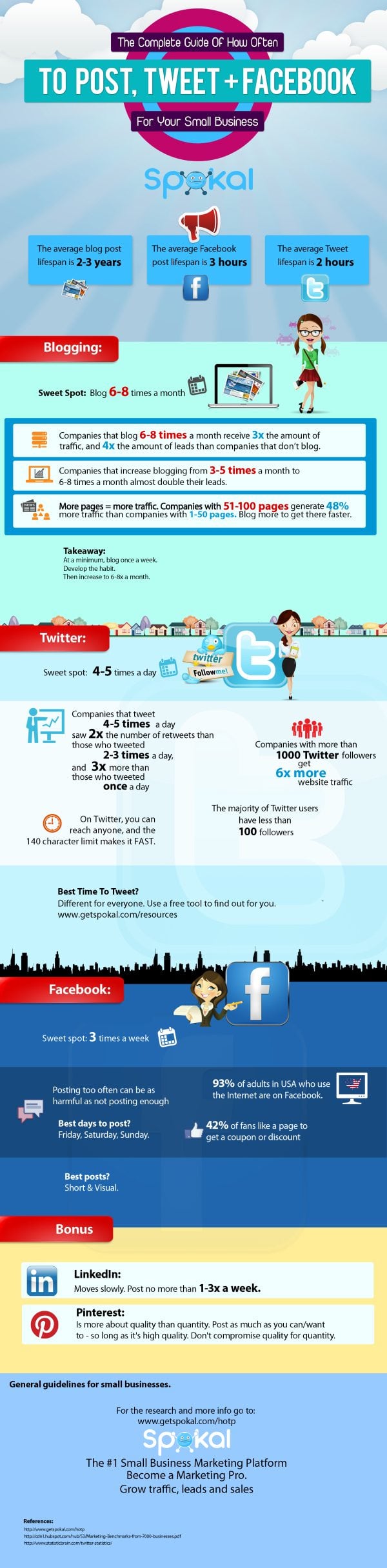
Infographic by Spokal.
The Importance of Posting Frequency
Before diving into platform-specific recommendations, it’s essential to understand why posting frequency matters. The frequency of your posts on social media and blogs can significantly impact your engagement levels, reach, and overall success. Here are a few key reasons why it’s important to get your posting frequency right:
- Audience Engagement: Posting consistently keeps your audience engaged. It shows that you are active and invested in your online presence, which can lead to higher levels of interaction with your content.
- Algorithm Visibility: Social media platforms use complex algorithms that prioritize content based on various factors, including posting frequency. Regular posting can improve your content’s visibility in users’ feeds.
- Brand Building: Consistent posting helps build and reinforce your brand identity. It allows you to communicate your values, expertise, and personality to your audience effectively.
- Audience Expectations: Your audience may have expectations regarding your posting frequency. Meeting or exceeding these expectations can lead to increased trust and loyalty.
Now that we’ve established why posting frequency is important let’s explore the ideal posting frequency for three major online platforms: Twitter, Facebook, and your blog.
Twitter is a fast-paced platform known for its real-time updates and concise content. The ideal posting frequency on Twitter can be quite different from other platforms. Here are some guidelines to consider:
1. Tweet Frequency:
Twitter users expect a high level of activity from accounts they follow. Posting multiple times a day is generally recommended. However, you should prioritize quality over quantity. Consistently sharing valuable content is key to engaging your audience.
Recommendation:
- Daily: Tweet at least once a day to maintain an active presence.
- 5-20 Times: Depending on your content strategy and audience engagement, you can tweet between 5 to 20 times a day.
2. Retweets and Replies:
Engaging with your audience by retweeting relevant content and responding to mentions and direct messages is crucial on Twitter. This interaction can contribute to higher visibility and a more loyal following.
Recommendation:
- Regularly: Retweet and engage with others’ content daily.
- Prompt Responses: Aim to respond to mentions and direct messages within a few hours.
3. Time of Day:
Consider your audience’s time zone when scheduling tweets. Tools like Twitter Analytics can provide insights into when your followers are most active.
Recommendation:
- Schedule Strategically: Post during peak hours when your audience is most likely to be online.
Facebook is a versatile platform that caters to various content types, including text posts, images, videos, and more. The ideal posting frequency on Facebook can vary depending on your content strategy and audience engagement. Here are some guidelines:
1. Post Frequency:
Unlike Twitter, Facebook generally rewards quality over quantity. While you can post more frequently than some other platforms, avoid overposting, as it can lead to decreased reach.
Recommendation:
- 3-10 Times Per Week: Posting 3 to 10 times per week, depending on your content strategy, can be effective.
2. Content Variety:
Diversify your content to keep your audience engaged. Share a mix of text updates, images, videos, and links.
Recommendation:
- Mix It Up: Include a variety of content types in your posting schedule.
3. Facebook Groups:
If you’re a part of or manage Facebook groups related to your niche, participate regularly by posting and engaging with group members.
Recommendation:
- Active Participation: Be an active member of relevant Facebook groups to boost your brand’s visibility.
4. Insights Analysis:
Use Facebook Insights to monitor the performance of your posts. Adjust your posting schedule based on the data to maximize engagement.
Recommendation:
- Data-Driven: Let your insights guide your posting frequency and timing decisions.
Your Blog
Your blog serves as the cornerstone of your online presence, where you can provide in-depth content and establish your expertise. The ideal posting frequency for your blog depends on your goals, niche, and resources. Here are some considerations:
1. Quality vs. Quantity:
Quality content is paramount for your blog. While some blogs post daily, others publish less frequently but with more in-depth articles. Your choice should align with your content strategy and available resources.
Recommendation:
- Consistency is Key: Establish a consistent posting schedule that you can maintain.
2. Audience Expectations:
Consider what your audience expects from your blog. Some niches demand frequent updates, while others prioritize well-researched, comprehensive articles.
Recommendation:
- Set Expectations: Clearly communicate your posting schedule to your audience.
3. Evergreen vs. Trending Content:
Diversify your blog content by including both evergreen topics (timeless content) and trending topics (current events and trends).
Recommendation:
- Balanced Approach: Create a mix of evergreen and trending content to cater to different audience needs.
4. Content Promotion:
After publishing a blog post, allocate time for content promotion through social media, email marketing, and other channels to maximize its reach.
Recommendation:
- Promotion Strategy: Develop a promotion strategy alongside your posting schedule.
Conclusion
Finding the ideal posting frequency for Twitter, Facebook, and your blog is a balancing act. It requires understanding your audience, platform-specific dynamics, and your content strategy. While the recommendations provided here offer valuable guidelines, it’s essential to monitor the results and adjust your posting frequency accordingly.
Remember that consistency is key on all platforms. Whether you’re tweeting on Twitter, sharing updates on Facebook, or publishing articles on your blog, maintaining a reliable posting schedule will help you build a loyal audience and achieve your online goals. Ultimately, the ideal posting frequency is the one that aligns with your brand’s voice and resonates with your audience, leading to meaningful engagement and growth.

Author:
Mark Ford

How to Create Engaging Instagram Reels Without Ever Showing Your Face
Are you looking for creative ways to make engaging Instagram Reels without stepping in front of the camera? Want to discover proven content ideas that help your brand stand out on social media while keeping your privacy intact? […]

The Complete Content Mix: What Every Business Should Be Publishing
Are you struggling to decide what types of content your business should be publishing to attract more traffic and engagement? Want to learn how to build the perfect content mix that keeps your audience interested and your brand growing? […]