In the ever-evolving world of digital marketing, one thing remains constant: the importance of SEO (Search Engine Optimization).
If you have a website, blog, or online business, you probably already know that getting a high ranking on Google is crucial for driving organic traffic and growing your online presence. But with countless SEO strategies and techniques out there, which one should you prioritize to improve your Google ranking?
In this comprehensive guide, we will delve into the SEO technique that you absolutely must use if you want to increase your ranking on Google. We will explore the fundamentals of this technique, provide actionable tips, and explain why it’s so crucial in the current SEO landscape.
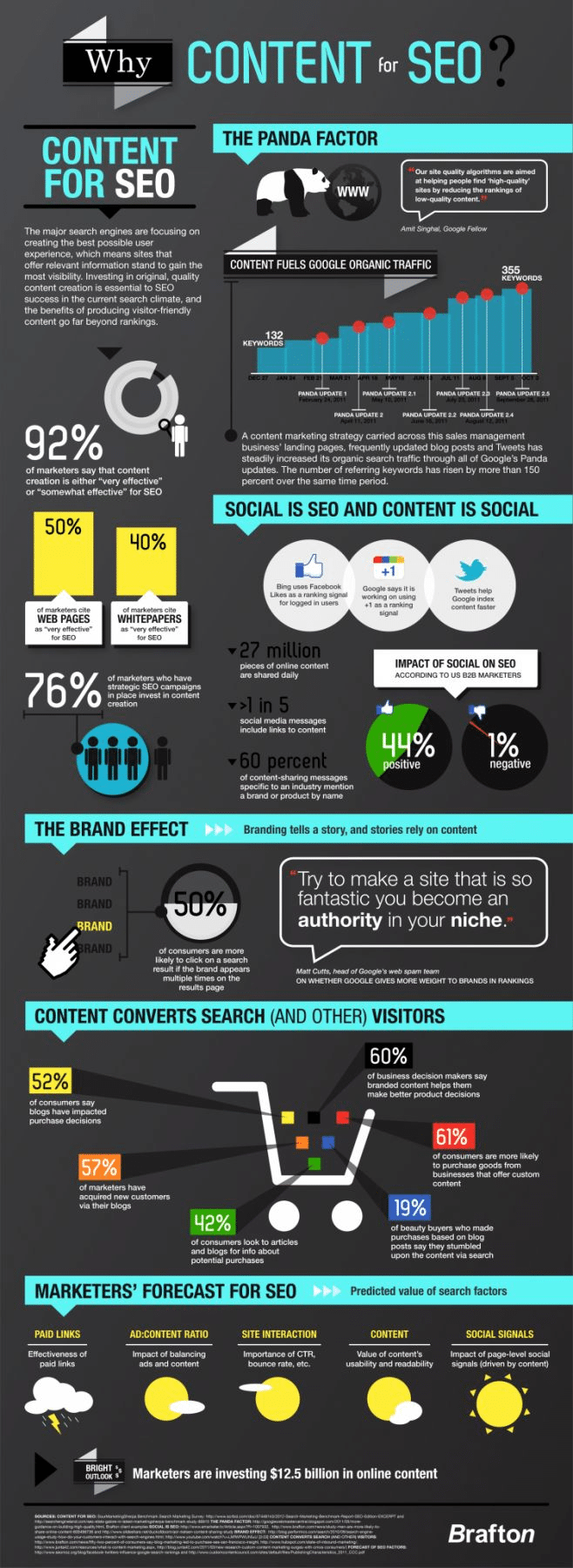
The infographic below from Brafton shows you the importance of content for SEO.
Chapter 1: The Power of On-Page SEO
Before we dive into the specific SEO technique, let’s establish the foundation by discussing the importance of on-page SEO. On-page SEO refers to the optimization of individual web pages to improve their search engine rankings and drive organic traffic. It involves various elements, including:
- Keyword Research: Identifying the right keywords is the cornerstone of on-page SEO. You need to understand what your target audience is searching for and select relevant keywords to target.
- Quality Content: Content is king in the online world. Your content should be informative, engaging, and provide value to your readers. It should also incorporate your target keywords naturally.
- Title Tags and Meta Descriptions: Crafting compelling title tags and meta descriptions can significantly impact your click-through rate (CTR) from search engine results pages (SERPs).
- Optimized Images: Properly optimizing images can improve page load times and enhance user experience. Alt text for images is also crucial for SEO.
- Internal Linking: Linking to other relevant pages on your website helps search engines understand your content’s structure and importance.
- URL Structure: A clean and user-friendly URL structure is essential for both search engines and users.
- Mobile Friendliness: With the increasing use of mobile devices, having a mobile-responsive website is crucial for SEO.
Now that we’ve covered the basics of on-page SEO, let’s move on to the specific SEO technique that can make a substantial difference in your Google ranking.
Chapter 2: The Core Technique – E-A-T
E-A-T stands for Expertise, Authoritativeness, and Trustworthiness. It’s not just a buzzword; it’s a fundamental concept introduced by Google’s Quality Raters Guidelines to assess the quality of web content. Let’s break down each component of E-A-T:
Expertise: This refers to the expertise of the content creator or the website as a whole. Google wants to see that the content is created by individuals or organizations with relevant knowledge and expertise in the subject matter. For example, if you have a medical blog, the writers should ideally be medical professionals or experts in the field.
Authoritativeness: Authoritativeness is about being recognized as a reliable source of information in your industry or niche. It involves backlinks from other authoritative websites, citations in reputable sources, and a strong online presence. Google assesses your authority by evaluating your website’s backlink profile and the quality of those backlinks.
Trustworthiness: Trustworthiness is all about building trust with your audience. This involves factors like website security (HTTPS), transparency in disclosing affiliations and sponsorships, a clear privacy policy, and maintaining a positive online reputation.
Chapter 3: Why E-A-T Matters in SEO
Now that we understand what E-A-T is let’s explore why it matters so much in the world of SEO.
- Algorithm Updates: Google continually updates its algorithms to improve search results. In recent years, there has been a growing emphasis on E-A-T. Websites with low E-A-T are more likely to be negatively affected by algorithm updates.
- Competitive Advantage: Focusing on E-A-T can give you a competitive edge. Many websites neglect these aspects, so by excelling in expertise, authoritativeness, and trustworthiness, you can stand out in your niche.
- User Trust: Users are more likely to trust and engage with content from sources they perceive as experts. Building E-A-T helps you win the trust of your audience, which can lead to higher conversion rates.
- Higher Quality Backlinks: As your website’s authority grows, you’re more likely to attract high-quality backlinks. This, in turn, boosts your SEO efforts.
Chapter 4: Practical Tips for Improving E-A-T
Now that we’ve established the importance of E-A-T, let’s dive into practical tips for improving it on your website.
- Create High-Quality Content: Content is at the heart of E-A-T. Ensure your content is accurate, up-to-date, and written by experts. Regularly update older content to keep it relevant.
- Author Bios: For websites that publish articles or blog posts, include author bios that highlight their expertise and credentials. This adds credibility to your content.
- Link to Reliable Sources: When citing statistics or facts, link to reputable sources. This demonstrates that you’ve done your research and adds credibility to your content.
- Secure Your Website: Implement HTTPS to ensure the security of your site. Users are more likely to trust and engage with secure websites.
- Earning Backlinks: Focus on earning backlinks from authoritative websites in your niche. Guest posting on reputable blogs can be a great way to achieve this.
- Transparency: Be transparent about your affiliations and sponsorships. Disclose any potential conflicts of interest to build trust with your audience.
- Online Reputation Management: Monitor your online reputation and address any negative reviews or comments promptly. Building a positive online image is crucial for trustworthiness.
Chapter 5: Case Studies
Let’s look at a few real-world case studies to see how implementing E-A-T principles can impact a website’s Google ranking:
- Health and Wellness Blog: By having medical professionals write their content and citing peer-reviewed studies, a health and wellness blog saw a significant increase in organic traffic after focusing on E-A-T.
- Finance Website: A finance website that improved its author bios, included credentials, and linked to authoritative sources in its articles experienced a boost in Google rankings and user trust.
- E-commerce Store: An e-commerce store that prioritized transparency by clearly stating its shipping and return policies, as well as customer reviews, saw an increase in conversions and higher visibility in search results.
Chapter 6: Measuring the Impact of E-A-T
To determine the impact of your E-A-T efforts, you’ll need to track various metrics:
- Organic Traffic: Monitor changes in organic traffic to your website. An increase in traffic may indicate improved Google rankings.
- Keyword Rankings: Keep an eye on your keyword rankings. A rise in rankings for target keywords is a positive sign.
- Backlinks: Track the growth of high-quality backlinks to your site. This can indicate increased authority in your niche.
- User Engagement: Analyze user engagement metrics, such as bounce rate, time on page, and conversion rates. Improved user engagement often follows higher trustworthiness.
Chapter 7: Staying Updated with E-A-T
E-A-T is not a one-and-done task; it requires ongoing attention and improvement. Here’s how to stay updated:
- Follow Google’s Guidelines: Continually review and stay up-to-date with Google’s Quality Raters Guidelines as they evolve.
- Industry News: Stay informed about changes and trends in your industry, as they can impact your E-A-T.
- Competitor Analysis: Regularly assess the E-A-T of your competitors to identify areas for improvement.
Conclusion
In conclusion, if you want to increase your ranking on Google, focusing on E-A-T is not just a recommended strategy; it’s a necessity in today’s SEO landscape. By prioritizing expertise, authoritativeness, and trustworthiness in your content and website, you can build a strong online presence, gain the trust of your audience, and ultimately achieve higher rankings on Google. Remember, SEO is a long-term investment, and improving your E-A-T is a crucial step on your journey to online success. So, start implementing these strategies today and watch your Google ranking soar.

Author:
Mark Ford