Are you trying to understand what really goes into the cost of running email marketing campaigns? Want to learn which factors impact your budget and how to manage them more effectively?
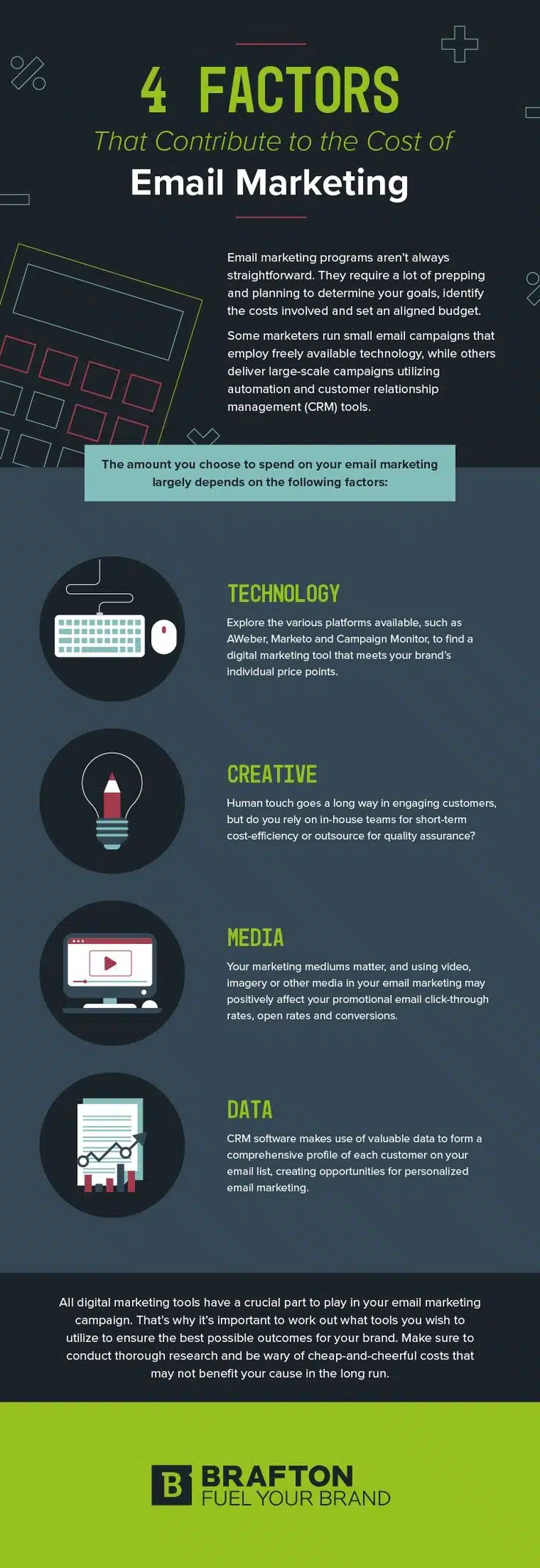
You’ll learn the true cost of email marketing in this infographic from Brafton.
Here’s what makes the list:
- Technology
- Creative
- Media
- Data
Check out the post below for more.
Email marketing remains one of the most effective digital marketing tools—when it’s done right. But behind every successful campaign is a set of costs that can vary widely depending on your choices.
Whether you’re a small business or a growing brand, understanding what contributes to these costs is crucial. In this post, we break down the four key factors that shape your email marketing budget and offer tips to manage them smartly.
Technology
The technology you choose is the backbone of your email marketing efforts. From email automation and list segmentation to performance analytics, your platform will influence both functionality and cost. With so many providers available, choosing the right one means balancing your marketing goals with your budget. Some platforms offer basic features at a low price, while others provide premium capabilities with a higher price tag.
- Compare Platforms Thoroughly
Before committing, research tools like Mailchimp, AWeber, ActiveCampaign, and Campaign Monitor to understand what each offers at various pricing levels. - Match Features to Your Needs
Don’t pay for advanced features you won’t use. Choose a platform with tools that align with your current marketing goals and team capacity. - Consider Scalability
Choose a solution that can grow with your business. It’s better to pay slightly more for a scalable platform than to migrate later and face disruption. - Watch for Hidden Costs
Some platforms charge extra for additional contacts, premium templates, or automation workflows. Always check the fine print.
Creative
The creative side of email marketing—copywriting, design, and strategy—is what makes your emails stand out. Good creative work builds engagement, drives clicks, and reinforces your brand. But producing quality content takes time, skill, and often money. Whether you rely on in-house staff or outsource to specialists, the decision will impact both cost and results.
- Decide Between In-House and Outsourced
Weigh the cost of hiring freelancers or agencies against using your internal team. Outsourcing may be more expensive, but can also deliver higher quality. - Reuse and Repurpose Content
Maximise value by repurposing creative assets across emails, social media, and your website, reducing time and design costs. - Invest in Templates
Well-designed, reusable templates can save time on future campaigns and ensure consistent branding. - Test and Refine Messaging
A/B test subject lines, calls to action, and content styles. Even small changes can significantly improve performance and ROI.
Media
Media—such as videos, GIFs, and high-quality images—can take your emails to the next level. These elements not only capture attention but also boost click-through and conversion rates. However, creating and sourcing good media often comes at a price. Whether it’s hiring a photographer, purchasing stock images, or producing branded video, the right media strategy will influence your overall cost.
- Use Free or Affordable Stock Libraries
Save money by using resources like Unsplash, Pexels, or affordable paid stock image sites rather than custom shoots for every campaign. - Optimise Media for Email
Compress images and videos to reduce load times without sacrificing quality. This helps improve deliverability and user experience. - Incorporate Branded Visuals
Create a set of branded graphics or icons to use consistently across campaigns, improving visual appeal while reducing long-term design costs. - Limit Media Overuse
More isn’t always better. Use media strategically to highlight key messages—overloading your emails can slow them down and distract from your CTA.
Data
Data is the engine behind personalisation, targeting, and analytics in email marketing. Platforms that offer deep insights into your subscribers—via CRM integration, behaviour tracking, or list segmentation—can dramatically improve campaign performance. But advanced data tools often require more investment, both in software and in the expertise to use them effectively.
- Clean and Segment Your List Regularly
A well-maintained list improves deliverability and engagement. Remove inactive users and create relevant segments for targeted messaging. - Invest in CRM Integration
Linking your email platform with a CRM gives you access to rich customer data for better targeting and lifecycle marketing. - Use Behavioural Triggers
Automate emails based on user actions like purchases, clicks, or site visits. These tailored messages tend to perform better. - Track KPIs That Matter
Focus on metrics like open rate, click-through rate, and conversions—not just vanity stats. Let data guide your future campaigns.
Bringing It All Together
Understanding the true cost of email marketing isn’t just about crunching numbers—it’s about making smart decisions. The technology you use, the creative you produce, the media you incorporate, and the way you handle data all play vital roles in campaign success. Spending wisely in each of these areas helps you balance cost with impact.
Here’s how you can think strategically:
- Start Small, Scale Smart
Begin with essential tools and features, and upgrade as your list grows or your goals expand. - Prioritise ROI Over Cost-Cutting
Saving money is good, but not if it means sacrificing results. Focus on value, not just the lowest price. - Measure Everything
Track performance and understand what works. This helps you justify your spend and refine your strategy over time. - Plan Ahead
Budget annually or quarterly for technology subscriptions, content production, and media purchases. Planning helps avoid unexpected expenses.
Final Thoughts
Email marketing is still one of the most cost-effective and high-ROI strategies available to brands today—but only when it’s managed with intention. Cheap tools and quick fixes may seem attractive, but they rarely deliver long-term success. Instead, take the time to invest in the right platforms, produce meaningful content, and use your data wisely.
By understanding the four key factors—technology, creative, media, and data—you can build a sustainable email marketing strategy that not only fits your budget but delivers real results. And remember: it’s not about how much you spend, but how smartly you spend it.

Author:
Mark Ford