
Are you looking for ways to grow your brand through smart, strategic partnerships? Want to learn the most effective co-branding strategies that actually deliver results?
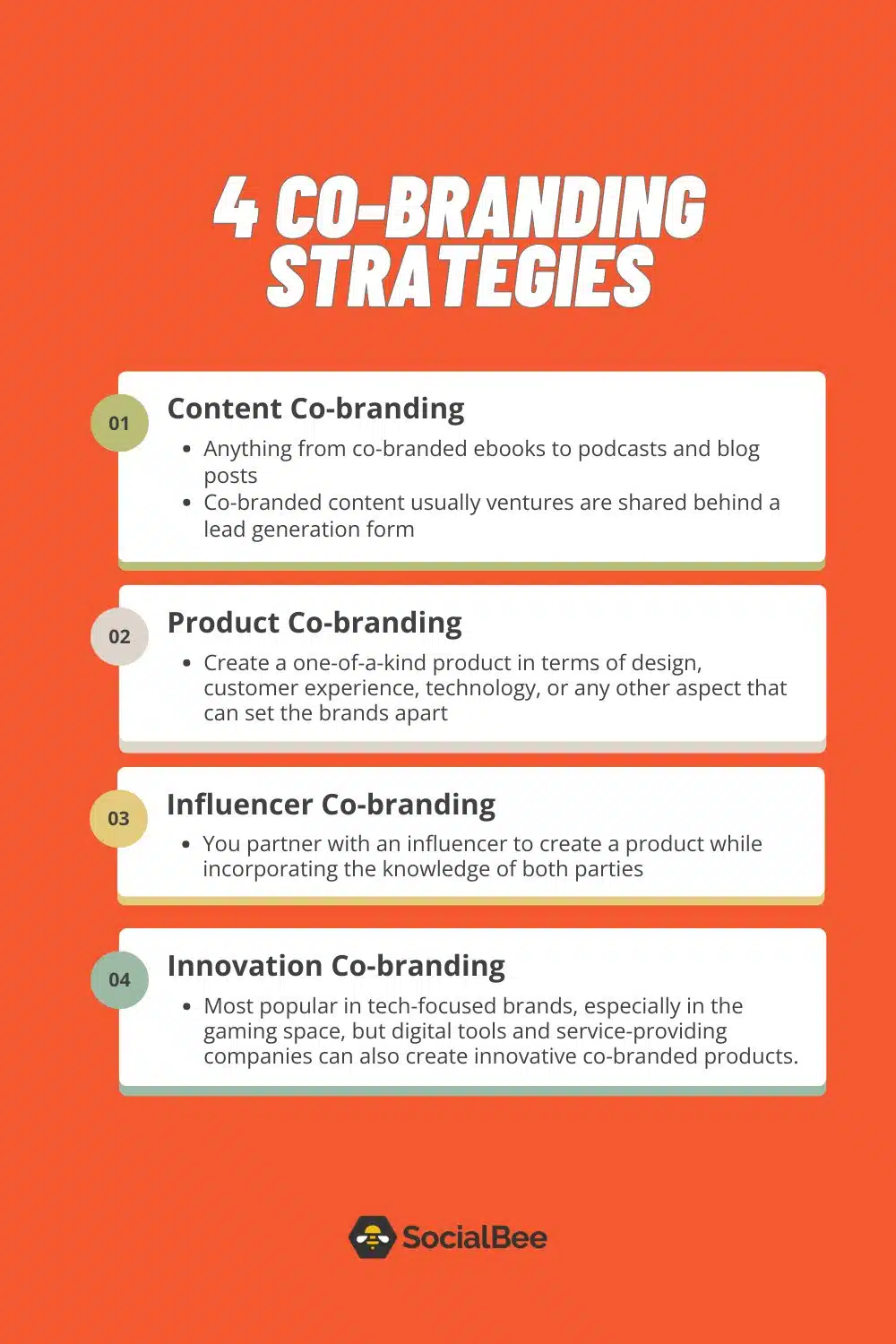
You’ll find some co-branding basics in this infographic.
Here’s a summary of what’s covered:
- Content Co-Branding
- Product Co-Branding
- Influencer Co-Branding
- Innovation Co-Branding
Check out the post below for more.
In a competitive marketplace, standing out often means teaming up. Co-branding is a strategic partnership where two brands come together to create something more powerful than either could achieve alone.
When done right, it blends strengths, broadens reach, and brings in new customers. In this guide, we explore four core co-branding strategies that can drive real, measurable results.
Content Co-Branding
Content co-branding is one of the most accessible and versatile forms of collaboration. It allows brands to share their expertise, audiences, and messaging through joint content like blogs, podcasts, or ebooks. This type of co-branding is often used to support lead generation and audience engagement. The key is aligning on purpose and tone to deliver consistent value.
- Create co-branded ebooks or whitepapers that solve a shared audience problem
- Launch a podcast series that features both brand voices and guest experts
- Write blog posts or newsletters that combine insights from both companies
- Use a joint lead magnet, like a downloadable checklist or guide, gated behind a lead form
Product Co-Branding
Product co-branding goes beyond marketing—it involves developing a tangible product that reflects the DNA of both brands. This strategy is often used to launch a limited-edition item or enhance brand credibility through association. It’s most effective when the product offers something unique that neither brand could produce alone. Execution must be flawless to protect both reputations.
- Collaborate on product design to create something that blends both brand identities
- Leverage one brand’s innovation with another’s aesthetic or packaging style
- Share development and manufacturing resources to reduce cost and increase quality
- Use joint launches or pre-orders to generate excitement and collect early feedback
Influencer Co-Branding
Influencer co-branding involves partnering with a trusted personality to create something branded together—often a product, campaign, or exclusive collection. Unlike simple influencer marketing, this is about shared ownership and creative collaboration. It brings in the influencer’s personal brand and loyal following, creating deeper engagement and social proof.
- Involve the influencer in early product ideation to reflect their authentic input
- Build campaigns around the influencer’s values and audience preferences
- Highlight behind-the-scenes content to show the development journey
- Offer limited-time or exclusive access to boost demand and urgency
Innovation Co-Branding
Innovation co-branding is all about creating something entirely new, usually in the digital or tech space. It’s especially common among startups, gaming companies, and software providers. This strategy hinges on combining technical capabilities or intellectual property to solve complex problems or launch breakthrough tools. The focus is on future-forward thinking and industry disruption.
- Join forces to create a unique app, digital tool, or service that didn’t exist before
- Use shared data or insights to build AI-driven or personalised experiences
- Co-invest in research and development to explore experimental ideas
- Test MVPs (minimum viable products) with both audiences before full-scale rollout
Conclusion
Co-branding can be a game-changing move when approached strategically. Whether you’re sharing content, launching a product, working with influencers, or driving innovation, these partnerships must be intentional, aligned, and value-driven.
Success lies in clearly defined goals, mutual benefit, and a seamless customer experience. When brands join forces with the right purpose and execution, everyone wins—especially your audience.

Author:
Mark Ford