Are you looking for ways to take your blog to the next level? Want some handy tools that will help improve your strategy?
If you need help coming up with content ideas, creating graphics or boosting your SEO (and everything in between) there will no doubt be a tool that can help. But with so many available it’s difficult knowing which are right for you.
Twelveskip have created the infographic below featuring tips from some top bloggers on the tools they use and what they use them for.
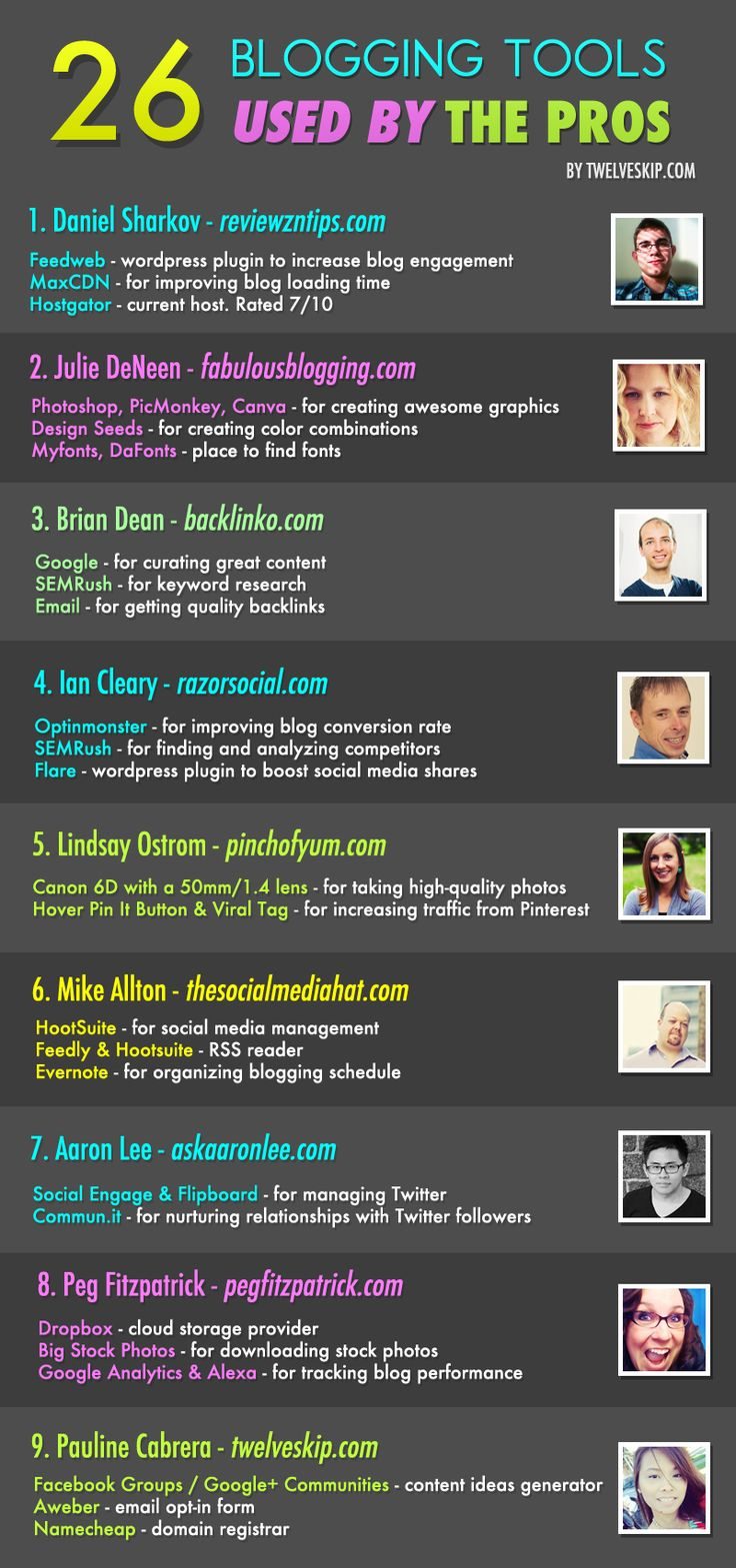
Blogging has come a long way since its inception in the early 2000s. What was once a personal online journal has evolved into a powerful platform for communication, marketing, and making a living. Whether you’re a beginner or a seasoned blogger looking to take your craft to the next level, having the right tools at your disposal can make a world of difference. In this blog post, we’ll explore 26 tools that can help you become a pro blogger and enhance your blogging experience.
1. WordPress
Starting off with the foundation of many successful blogs, WordPress is a powerful and user-friendly content management system. With countless themes and plugins available, it’s the go-to platform for bloggers looking to create a professional and customizable website.
2. Yoast SEO
To improve your blog’s search engine visibility, Yoast SEO is a must-have WordPress plugin. It provides real-time feedback and suggestions to optimize your content for search engines.
3. Grammarly
Good writing is the backbone of any successful blog. Grammarly is an indispensable tool that checks for grammar and spelling errors while also providing style suggestions.
4. Hemingway Editor
For bloggers looking to simplify their writing and make it more readable, Hemingway Editor helps identify complex sentences and offers suggestions for improvement.
5. Canva
Visual content is essential for engaging readers. Canva is an intuitive design tool that allows you to create eye-catching graphics, featured images, and social media posts.
6. Google Analytics
Understanding your audience is crucial. Google Analytics provides in-depth insights into your blog’s performance, including traffic sources, user behavior, and more.
7. SEMrush
For competitive analysis and keyword research, SEMrush is a powerful SEO tool. It helps you find the right keywords to target and track your blog’s ranking.
8. Ahrefs
Ahrefs is another comprehensive SEO tool that offers keyword research, backlink analysis, and content optimization features to boost your blog’s visibility.
9. Buffer
Managing social media is a big part of blogging. Buffer simplifies scheduling and posting to various social platforms, saving you time and ensuring consistent engagement.
10. Hootsuite
Similar to Buffer, Hootsuite is a social media management tool that helps you schedule posts, monitor conversations, and analyze your social media performance.
11. CoSchedule Headline Analyzer
Your blog post’s headline is the first thing readers see. CoSchedule’s Headline Analyzer helps you craft attention-grabbing titles that increase click-through rates.
12. Trello
Staying organized is key to blogging success. Trello is a project management tool that helps you plan your content calendar and track your progress.
13. Evernote
Ideas can strike at any time. Evernote allows you to capture and organize your thoughts, notes, and research materials, ensuring you never lose valuable insights.
14. Google Docs
For collaborative writing and editing, Google Docs is a versatile tool that enables multiple contributors to work on a document simultaneously.
15. Mailchimp
Building and nurturing your email list is crucial for audience engagement. Mailchimp is a popular email marketing platform that simplifies email campaign management.
16. ConvertKit
For more advanced email marketing needs, ConvertKit provides automation, segmentation, and customizable sign-up forms to help you grow your email list.
17. BuzzSumo
To find popular content in your niche and identify trending topics, BuzzSumo offers insights into what’s resonating with your target audience.
18. Feedly
Keeping up with industry news and trends is essential. Feedly aggregates content from your favorite websites and blogs, making it easy to stay informed.
19. Google Trends
For real-time data on search trends and topics, Google Trends is a valuable tool for identifying popular and relevant subjects to blog about.
20. Pocket
When you come across interesting articles or resources online, Pocket allows you to save them for later reading and research.
21. Click to Tweet
Encourage readers to share your content on Twitter with Click to Tweet. This tool generates preformatted tweets that readers can easily share.
22. Grammarly Business
If you collaborate with other writers or editors, Grammarly Business offers enhanced features for team communication and content quality control.
23. Google AdSense
Monetizing your blog is a common goal for many bloggers. Google AdSense is an advertising program that allows you to earn revenue from ads displayed on your site.
24. Affiliate Marketing Networks
Joining affiliate marketing networks like Amazon Associates or ShareASale can help you earn commissions by promoting products relevant to your blog’s niche.
25. Crowdfire
For growing your social media following, Crowdfire offers tools for finding and engaging with relevant users on platforms like Twitter and Instagram.
26. LastPass
Keeping your online accounts secure is crucial. LastPass is a password manager that generates and stores complex passwords, ensuring your data remains safe.
Conclusion
Becoming a pro blogger takes time, dedication, and the right set of tools. The 26 tools mentioned in this blog post cover various aspects of blogging, from content creation and SEO to social media management and monetization. By incorporating these tools into your blogging workflow, you’ll be well-equipped to take your blog to the next level and achieve pro blogger status. So, start exploring these tools, experiment with them, and watch your blog thrive. Happy blogging!

Author:
Mark Ford