If you own a website, you know how crucial organic traffic from search engines like Google can be. A sudden drop in website traffic can be alarming and, in many cases, can be attributed to a Google penalty.
Google penalties can have a significant impact on your site’s visibility and, subsequently, your business’s success.
In this blog post, we’ll explore what Google penalties are, how to identify if your website has been hit with one, and what steps you can take to recover and avoid future penalties.
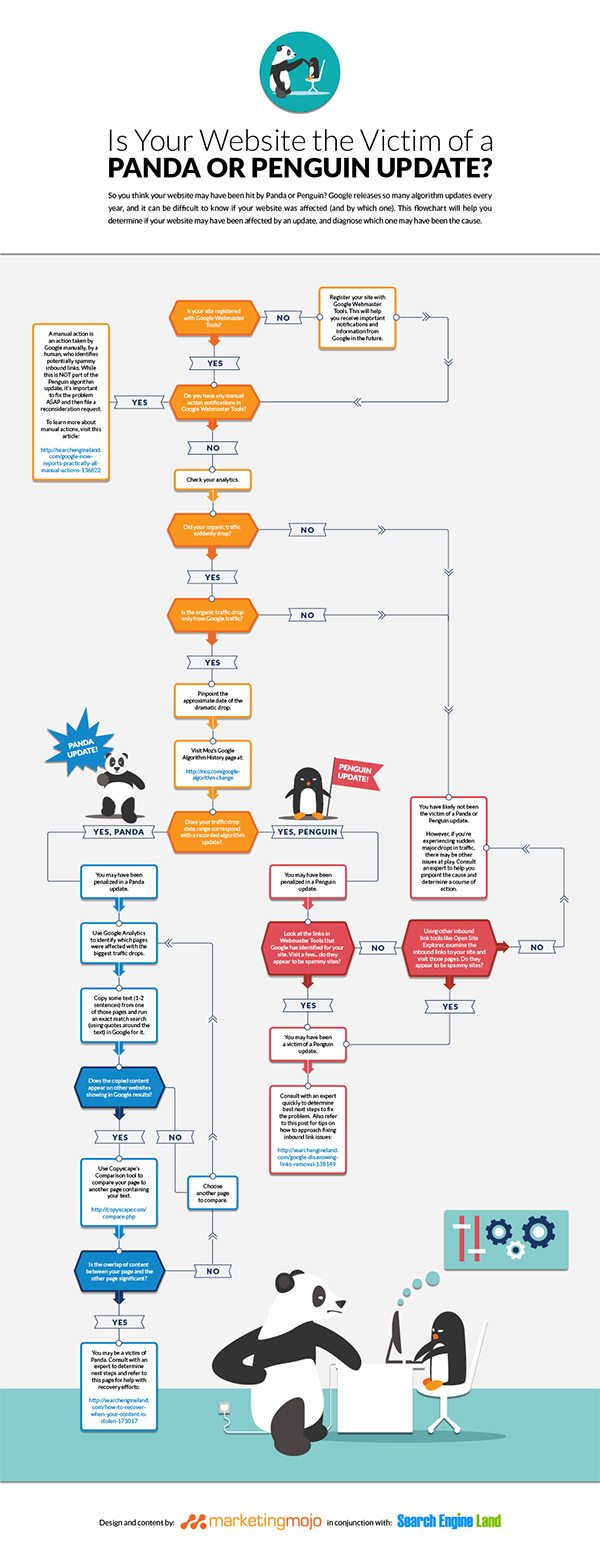
Infographic by Marketing Mojo.
Chapter 1: Understanding Google Penalties
What is a Google Penalty?
A Google penalty is a punitive action taken by the search engine giant against websites that violate its Webmaster Guidelines. These penalties are designed to maintain the quality and relevance of search results by penalizing websites that engage in manipulative or spammy practices.
Types of Google Penalties
Google imposes two main types of penalties:
- Manual Penalties: These are manually applied by Google’s team of human reviewers after a thorough review of your website. Manual penalties are often the result of severe violations of Google’s guidelines, such as using black-hat SEO techniques or participating in link schemes.
- Algorithmic Penalties: Algorithmic penalties are automatic and are triggered by updates to Google’s search algorithms. These penalties can affect a large number of websites that fail to meet the new criteria set by the updated algorithm. Examples include Google Panda, Google Penguin, and Google Hummingbird updates.
Why Google Penalizes Websites
Google’s primary goal is to provide users with the most relevant and high-quality search results. When websites engage in practices that undermine the integrity of the search results, Google takes action to protect its users. Common reasons for penalties include:
- Keyword Stuffing: Overloading webpages with excessive keywords in an attempt to manipulate search rankings.
- Unnatural Links: Building low-quality or spammy backlinks to a website to inflate its authority artificially.
- Duplicate Content: Publishing the same or substantially similar content across multiple pages or websites.
- Cloaking: Presenting different content or URLs to search engines and users to deceive search engines.
- Thin Content: Creating low-quality, shallow, or uninformative content that provides little value to users.
- User Experience Issues: Having a poorly designed website with slow page load times, intrusive ads, and other factors that harm the user experience.
Chapter 2: Recognizing the Signs of a Google Penalty
Sudden Drop in Traffic
The most obvious sign of a Google penalty is a sudden and significant drop in organic traffic. You may notice this in your website analytics tools, such as Google Analytics or Search Console. A sharp decline in traffic can often be traced back to a specific date, indicating when the penalty took effect.
Decreased Search Engine Rankings
If your website’s rankings for important keywords plummet, it’s a strong indicator of a penalty. Regularly monitoring your keyword rankings can help you detect issues early on.
Manual Action Notification
If Google detects a severe violation of its guidelines on your site, it may issue a manual penalty. You’ll receive a notification in your Google Search Console account, informing you of the penalty and the specific issues that need to be addressed.
Decline in Click-Through Rate (CTR)
A Google penalty can also lead to a decrease in your website’s click-through rate (CTR) from search engine results pages (SERPs). If your pages are no longer displayed prominently or have rich snippets removed, users may be less inclined to click on your listings.
Loss of Rich Snippets
Rich snippets, such as star ratings, product prices, and event dates, can enhance your search listings and attract more clicks. If you notice a loss of these snippets in your search results, it could be due to a penalty.
Manual Review of Your Website
Sometimes, conducting a manual review of your website in line with Google’s Webmaster Guidelines can help you identify issues that may lead to a penalty. Look for practices that may be considered spammy or manipulative, and take corrective action.
Chapter 3: Steps to Recover from a Google Penalty
Identify the Penalty Type
Before you can take action, you need to determine whether you’ve been hit with a manual or algorithmic penalty. This information is crucial because the steps to recovery differ for each type.
Address the Violations
Once you’ve identified the penalty type, it’s time to address the violations. This may involve:
- Removing Spammy Links: If you’ve been penalized for unnatural backlinks, you’ll need to identify and remove or disavow those links.
- Quality Content Creation: If your penalty is related to thin or duplicate content, focus on creating high-quality, original content that provides value to your audience.
- On-Page SEO Fixes: Correct on-page SEO issues such as keyword stuffing, hidden text, or cloaking.
- User Experience Improvement: Enhance the user experience on your site by improving page load times, mobile-friendliness, and ad placement.
Submit a Reconsideration Request
For manual penalties, after addressing the violations, you can submit a reconsideration request through Google Search Console. Be sure to document all the changes you’ve made and provide a clear explanation of how you’ve rectified the issues.
Monitor and Wait
Recovery from a Google penalty may take time. After submitting a reconsideration request, monitor your website’s performance closely. Google will review your request, and if they are satisfied with your efforts, they will lift the penalty.
Continue Best Practices
Once your penalty is lifted, it’s crucial to continue following Google’s Webmaster Guidelines and best SEO practices to prevent future penalties. Regularly monitor your site’s performance and be proactive in addressing any potential issues.
Chapter 4: Preventing Future Google Penalties
Stay Informed
The SEO landscape is constantly evolving, with Google frequently updating its algorithms and guidelines. To avoid future penalties, stay informed about industry trends and Google’s updates.
Conduct Regular SEO Audits
Regularly audit your website to identify and rectify any SEO issues. This includes checking for broken links, optimizing for mobile devices, and ensuring your content is high-quality and up-to-date.
Build High-Quality Backlinks
Focus on building high-quality, relevant backlinks from reputable sources. Avoid spammy link-building practices, as they can lead to penalties.
Prioritize User Experience
A positive user experience is essential for both users and search engines. Ensure your website is fast, easy to navigate, and free from intrusive ads.
Diversify Your Traffic Sources
Overreliance on organic traffic from Google can leave your website vulnerable to algorithm changes. Diversify your traffic sources by engaging in email marketing, social media marketing, and paid advertising.
Conclusion
A Google penalty can have a detrimental impact on your website’s visibility and traffic. However, by understanding what Google penalties are, recognizing the signs of a penalty, and taking appropriate actions to recover and prevent future penalties, you can safeguard your online presence and maintain a strong position in search engine rankings. Remember that SEO is an ongoing process, and staying compliant with Google’s guidelines is key to long-term success in the digital landscape.

Author:
Mark Ford