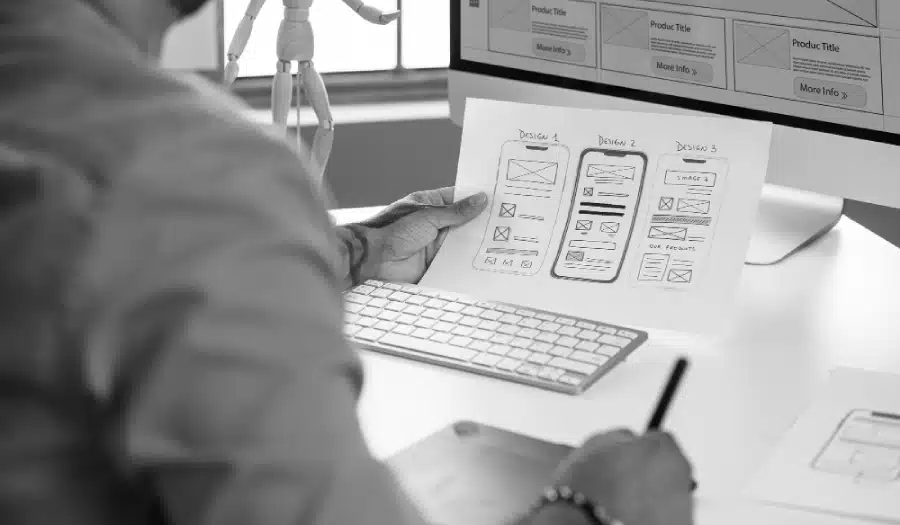
Are you putting off a website redesign because it feels like an unnecessary expense right now? Have you considered how much an outdated website could be quietly costing you in lost enquiries, credibility, and growth
You’ll find some website redesign essentials in this infographic.
Here’s a summary of what’s covered:
- The Hidden Financial Cost of Lost Enquiries and Missed Opportunities
- How Outdated Design Undermines Trust and First Impressions
- Why Slow Load Times Push Users Toward Competitors
- The Real Cost of Poor Mobile Experience
- How Falling Behind on SEO Gradually Reduces Visibility
- Why Low Conversion Rates Are Often a Website Design Problem
- The Ongoing Cost of Patch Fixes, Plugins, and Workarounds
- When an Old Website Limits Growth and Scalability
- The Security and Compliance Risks of Running an Aging Website
- How a Proper Website Redesign Delivers Long-Term ROI
Check out the post below for more.

Many businesses put off redesigning their website because it feels like an avoidable expense. If the site still loads, still shows the right services, and still technically works, it can seem sensible to leave it alone. The problem is that websites do not age quietly. They lose effectiveness a little at a time, in ways that are easy to miss day to day but expensive over months and years.
An outdated website does not usually fail in one dramatic moment. Instead, it leaks value. It converts fewer visitors, creates doubt instead of confidence, and makes simple updates harder and more costly than they should be. Over time, the money lost through inefficiency, missed opportunities, and ongoing fixes often outweighs the cost of doing a proper redesign at the right moment.
This article explores where those hidden costs come from and why investing in a well planned redesign is often the more financially sensible decision.
The Hidden Financial Cost of Lost Enquiries and Missed Opportunities
One of the biggest costs of an outdated website is also the easiest to overlook. Lost enquiries rarely announce themselves. You do not see a notification telling you how many people considered contacting you and then quietly left because something did not feel right. Those losses add up in the background.
When a website feels slow, confusing, or unconvincing, visitors hesitate. They may decide to look elsewhere, put off contacting you, or choose a competitor whose website makes the decision feel easier. Over time, even a small drop in enquiry rate can translate into a significant loss of revenue.
A redesign focuses on removing friction and guiding visitors towards clear next steps. Without that clarity, your website becomes a passive brochure rather than an active sales tool.
- Track how many visitors reach key pages compared to how many actually enquire
- Identify points where users abandon forms or exit the site
- Review whether calls to action are clear, visible, and relevant
- Compare current enquiry volume to realistic benchmarks for your traffic levels
How Outdated Design Undermines Trust and First Impressions
First impressions are formed quickly online. Visitors make judgments about credibility, professionalism, and reliability within seconds of landing on a website. An outdated design can quietly signal that a business is behind the times, even if that is not true in reality.
Design trends evolve alongside user expectations. Fonts, layouts, spacing, and imagery that felt modern years ago can now feel cluttered or amateur. This does not just affect aesthetics. It influences whether people trust what they are reading.
A proper redesign refreshes how your brand is presented and aligns it with current expectations. It helps ensure that the first impression supports your expertise rather than raising unnecessary doubts.
- Review whether your design matches the level of professionalism you offer offline
- Check if imagery feels current, relevant, and consistent
- Assess whether the layout feels clear or visually overwhelming
- Compare your site to competitors who are actively investing in their online presence
Why Slow Load Times Push Users Toward Competitors
Website speed is no longer a technical luxury. It is a basic expectation. Slow load times frustrate users and reduce patience, particularly on mobile devices where attention spans are shorter.
Outdated websites often suffer from bloated code, excessive plugins, unoptimised images, and themes that were never built with performance in mind. Each of these issues adds friction and increases the chance that a visitor leaves before engaging.
Redesigning a website gives you the opportunity to streamline performance from the ground up. Faster load times improve user experience, support SEO, and reduce the silent losses caused by impatience.
- Test current page speed across desktop and mobile devices
- Identify heavy scripts, plugins, or images slowing the site down
- Review hosting suitability for your current traffic levels
- Consider performance as a core requirement, not an afterthought
The Real Cost of Poor Mobile Experience
A large proportion of website traffic now comes from mobile devices. An outdated website often struggles to deliver a smooth mobile experience, even if it technically works on smaller screens.
Common issues include cramped layouts, hard to tap buttons, slow loading elements, and forms that are difficult to complete on a phone. Each frustration increases the likelihood that users abandon the site.
A redesign built with mobile first thinking ensures that the experience is clear, fast, and usable on all devices. Ignoring mobile usability means accepting lower engagement and conversion rates as a cost of doing nothing.
- Check whether key actions are easy to complete on a phone
- Review text size, spacing, and button placement
- Test forms for usability and completion on mobile
- Analyse mobile bounce rates compared to desktop performance
How Falling Behind on SEO Gradually Reduces Visibility
Search engines favour websites that are technically sound, fast, secure, and regularly updated. Outdated websites often fall behind on multiple SEO fundamentals without obvious warning signs.
Older site structures, missing schema, poor internal linking, and slow performance can all reduce visibility over time. Rankings may slip gradually rather than collapse suddenly, making the problem harder to notice until traffic has already declined.
A proper redesign allows SEO considerations to be built into the structure, content, and technical foundation of the site. This helps protect visibility and support long term organic growth.
- Review whether the site meets modern technical SEO standards
- Check for outdated page structures or missing metadata
- Assess internal linking and crawlability
- Monitor long term traffic trends rather than short term fluctuations
Why Low Conversion Rates Are Often a Website Design Problem
When conversion rates are low, businesses often assume the issue lies with pricing, messaging, or audience quality. While those factors matter, design and user experience frequently play a larger role than expected.
Confusing navigation, unclear value propositions, cluttered layouts, and poorly placed calls to action all reduce conversions. Visitors may understand what you offer but still struggle to take the next step.
Redesigning a website with conversion in mind focuses on clarity, flow, and intent. It removes unnecessary obstacles and makes it easier for users to act.
- Review whether visitors can quickly understand what you offer
- Check if primary actions stand out visually
- Identify distractions that pull attention away from key goals
- Use analytics to see where users drop off before converting
The Ongoing Cost of Patch Fixes, Plugins, and Workarounds
Outdated websites often rely on layers of patches and plugins to keep functioning. Each new requirement leads to another workaround rather than a clean solution. Over time, this creates a fragile system that is harder and more expensive to maintain.
Small changes take longer, updates risk breaking functionality, and technical debt increases. What seems cheaper in the short term often becomes more costly as maintenance demands grow.
A redesign resets the foundation. It reduces complexity, removes unnecessary dependencies, and makes future updates simpler and less risky.
- Track how long routine updates currently take
- Review how many plugins or extensions are essential versus redundant
- Assess how often fixes create new problems elsewhere
- Consider the long term cost of maintaining a fragile system
When an Old Website Limits Growth and Scalability
As businesses grow, their needs change. New services, new markets, new content types, and new integrations all place demands on a website. Outdated platforms often struggle to scale gracefully.
Adding new features may require custom workarounds or compromise usability. Content structures may not support expansion. Integrations with modern tools can be limited or unreliable.
Redesigning with scalability in mind ensures that the website can support future growth rather than becoming a bottleneck that holds the business back.
- Review whether the site structure supports adding new services
- Assess how easily new content types can be introduced
- Consider integration needs for marketing and operations
- Plan for growth rather than reacting to limitations
The Security and Compliance Risks of Running an Aging Website
Older websites are more vulnerable to security issues, particularly if they rely on outdated software, themes, or plugins. Security breaches can lead to downtime, data loss, reputational damage, and unexpected recovery costs.
Compliance requirements also evolve. Accessibility standards, data protection expectations, and best practices change over time. An outdated website may quietly fall out of compliance, creating risk.
A redesign provides an opportunity to update security practices and align the site with current standards, reducing exposure to avoidable problems.
- Check whether software and plugins are actively maintained
- Review security measures such as backups and monitoring
- Assess accessibility and compliance considerations
- Understand the potential cost of a security incident
How a Proper Website Redesign Delivers Long Term ROI
A well executed redesign is not just a cosmetic upgrade. It is an investment in performance, efficiency, and growth. When done properly, it reduces ongoing costs while increasing the value generated by the website.
Improved conversions, stronger SEO foundations, easier maintenance, and better scalability all contribute to long term return on investment. Rather than patching problems as they arise, a redesign addresses root causes.
The key is approaching redesign strategically rather than reactively. Clear goals, thoughtful planning, and a focus on user needs ensure that the investment pays off over time.
- Define clear objectives before starting a redesign
- Measure success based on performance, not appearance alone
- Build flexibility into the site for future changes
- View the website as a long term business asset
Conclusion
Keeping an outdated website often feels like the safer financial choice. It avoids upfront cost and disruption, and it can seem easier to delay the decision. In reality, the ongoing costs of inefficiency, lost opportunities, maintenance headaches, and reduced performance quietly erode value month after month.
A proper website redesign addresses these issues at their source. It creates a stronger foundation that supports trust, usability, visibility, and growth. While the initial investment may feel significant, it is often far less than the cumulative cost of doing nothing.
When viewed through a long term lens, redesigning at the right time is not an expense to avoid. It is a strategic decision that protects revenue, reduces waste, and positions your business for the future.

Author:
Mark Ford