In today’s digital age, email marketing remains a powerful tool for businesses to connect with their audience. It allows for direct communication, personalized messaging, and the potential for a high return on investment.
However, despite its effectiveness, many email marketers face a common challenge: subscriber churn. People unsubscribe from marketing emails for various reasons, and understanding these reasons is crucial for reducing unsubscribe rates and retaining a healthy email list.
In this blog post, we will explore why people unsubscribe from marketing emails and provide actionable strategies to prevent it.
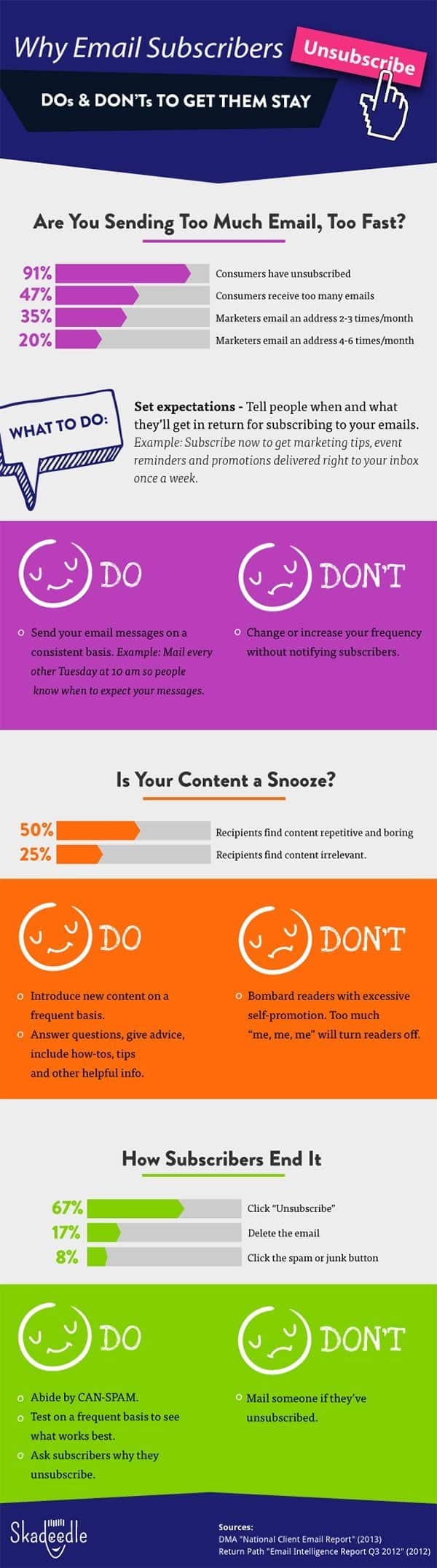
Infographic from Skadeedle.
The Importance of Email Marketing
Before diving into why people unsubscribe from marketing emails, let’s emphasize the significance of email marketing in the digital marketing landscape.
1. Direct Communication
Email marketing provides a direct line of communication between your business and your audience. Unlike social media platforms where algorithms control content visibility, emails land directly in subscribers’ inboxes.
2. Personalization
Emails can be highly personalized based on subscribers’ preferences, behavior, and demographics. Personalization leads to higher engagement and conversion rates.
3. ROI
Email marketing consistently delivers one of the highest returns on investment (ROI) among digital marketing channels. According to the Data & Marketing Association (DMA), every $1 spent on email marketing can result in an average ROI of $42.
4. Audience Building
Building an email list allows you to create a community of engaged and interested individuals who are more likely to convert into loyal customers.
Now that we’ve established the importance of email marketing, let’s delve into the reasons why subscribers hit the dreaded “unsubscribe” button and how to prevent it.
Reasons Why People Unsubscribe
1. Overwhelming Frequency
One of the primary reasons people unsubscribe from marketing emails is the overwhelming frequency of messages. Bombarding subscribers with emails on a daily basis can lead to irritation and eventually opt-outs.
How to Avoid It: Implement a well-planned email marketing schedule. Segment your list and send relevant content at a frequency that matches subscribers’ expectations and preferences. Allow subscribers to choose their email frequency during the sign-up process.
2. Irrelevant Content
Relevance is key to keeping subscribers engaged. If your emails consistently contain content that doesn’t align with subscribers’ interests or needs, they are more likely to unsubscribe.
How to Avoid It: Use segmentation to send personalized content based on subscribers’ preferences and past interactions. Analyze subscriber data to understand their interests and tailor your content accordingly.
3. Poor Email Design
Unattractive or poorly formatted emails can discourage subscribers from engaging with your content. If your emails are challenging to read or not mobile-responsive, you risk losing subscribers.
How to Avoid It: Invest in professional email design that is responsive across devices. Use a clean layout, clear typography, and eye-catching visuals to enhance the overall email experience.
4. Lack of Value
Subscribers expect value from your emails. If your messages consistently lack valuable content, whether it’s informative, entertaining, or exclusive offers, they may see no reason to stay subscribed.
How to Avoid It: Always provide value in your emails. Educate, entertain, or offer exclusive discounts to keep subscribers engaged. Ensure your email copy is engaging and that the subject lines are compelling.
5. Difficult Unsubscribe Process
Making it challenging for subscribers to unsubscribe is a surefire way to frustrate them. In some jurisdictions, it’s also against the law to have a complicated unsubscribe process.
How to Avoid It: Include a clear and easily accessible unsubscribe link in every email. It’s better to have a subscriber leave gracefully than to mark your emails as spam.
6. Security Concerns
With the increasing prevalence of phishing attacks and data breaches, subscribers are cautious about sharing personal information. If they doubt the security of your emails, they may opt out.
How to Avoid It: Implement robust security measures for your email marketing platform. Clearly communicate your commitment to subscriber data security in your privacy policy and email opt-in forms.
7. Repetitive Content
Sending the same content repeatedly or recycling old content can make subscribers feel like they’re not getting anything new from your emails.
How to Avoid It: Keep your content fresh and relevant. Plan your email campaigns carefully to ensure you’re not repeating the same information too frequently.
8. No Opt-In Confirmation
When subscribers don’t remember signing up for your emails, they may be quick to hit the unsubscribe button, thinking it’s spam.
How to Avoid It: Implement a double opt-in process. After a user subscribes, send a confirmation email that requires them to click a link to confirm their subscription. This ensures that only interested parties receive your emails.
9. Ignoring Feedback
If subscribers take the time to provide feedback or express their concerns and you don’t address them, they may decide to unsubscribe.
How to Avoid It: Actively monitor and respond to subscriber feedback. Use feedback as an opportunity to improve your email marketing strategy.
10. Loss of Interest
Over time, subscribers’ interests and needs may change. If your emails no longer align with their evolving preferences, they may choose to unsubscribe.
How to Avoid It: Regularly assess your email content and strategy to ensure they remain aligned with your target audience’s interests and needs. Use surveys and feedback to stay informed about changing preferences.
Strategies to Reduce Unsubscribes
Now that we’ve discussed the reasons behind unsubscribes, let’s explore strategies to minimize them and maintain a healthy email list.
1. Segmentation
Segmenting your email list is a powerful way to send relevant content to different groups of subscribers. By dividing your audience based on demographics, behavior, or preferences, you can tailor your emails to each segment’s specific needs.
2. Preference Center
Create a preference center that allows subscribers to choose their email frequency and the types of content they want to receive. Empowering subscribers with control over their email preferences can lead to higher satisfaction.
3. Personalization
Leverage subscriber data to personalize your emails. Address recipients by their names and recommend products or content based on their past interactions. Personalized emails are more likely to resonate with subscribers.
4. Quality Over Quantity
Focus on sending high-quality content rather than bombarding subscribers with frequent emails. Prioritize providing value and meeting subscribers’ needs with each email.
5. Mobile Optimization
Ensure your emails are mobile-responsive, as a significant portion of users check their emails on mobile devices. Test your email templates to guarantee they display correctly on various screen sizes.
6. A/B Testing
Use A/B testing to refine your email campaigns. Test different subject lines, email copy, visuals, and send times to determine what resonates best with your audience.
7. Clear Unsubscribe Process
Make unsubscribing easy and straightforward. Include an obvious unsubscribe link in each email, and respect unsubscribers’ decisions promptly.
8. Data Security
Prioritize data security to build trust with your subscribers. Clearly communicate your data protection measures and adhere to privacy regulations.
9. Feedback Loop
Establish a feedback loop with your subscribers. Encourage them to provide feedback and address their concerns promptly. Use their insights to enhance your email strategy.
10. Regularly Clean Your List
Periodically clean your email list by removing inactive or unengaged subscribers. This helps maintain a healthy list and ensures your metrics accurately reflect your engaged audience.
Conclusion
Email marketing is a valuable tool for connecting with your audience, but it’s essential to understand why people unsubscribe and take steps to prevent it. By addressing the root causes of unsubscribes and implementing the strategies mentioned in this blog post, you can maintain a healthy email list and maximize the effectiveness of your email marketing campaigns. Remember, the key is to provide value, personalize content, and respect subscribers’ preferences to keep them engaged and subscribed to your emails.

Author:
Mark Ford