
In today’s digital age, social media has become an integral part of our daily lives. Whether we’re scrolling through our Instagram feeds, catching up on the latest tweets, or browsing through Facebook updates, social media platforms have become a primary source of information and entertainment.
As a result, businesses and brands have recognized the immense potential of social media as a marketing tool. However, with the ever-increasing volume of content on these platforms, standing out and capturing the attention of your target audience has become more challenging than ever. This is where visual content shines.
Visual content, such as images, videos, infographics, and other multimedia elements, has emerged as a crucial component of a successful social media marketing strategy.
In this blog post, we will explore why visual content is essential for achieving your marketing goals on social media and how it can help you connect with your audience, increase engagement, and drive conversions.
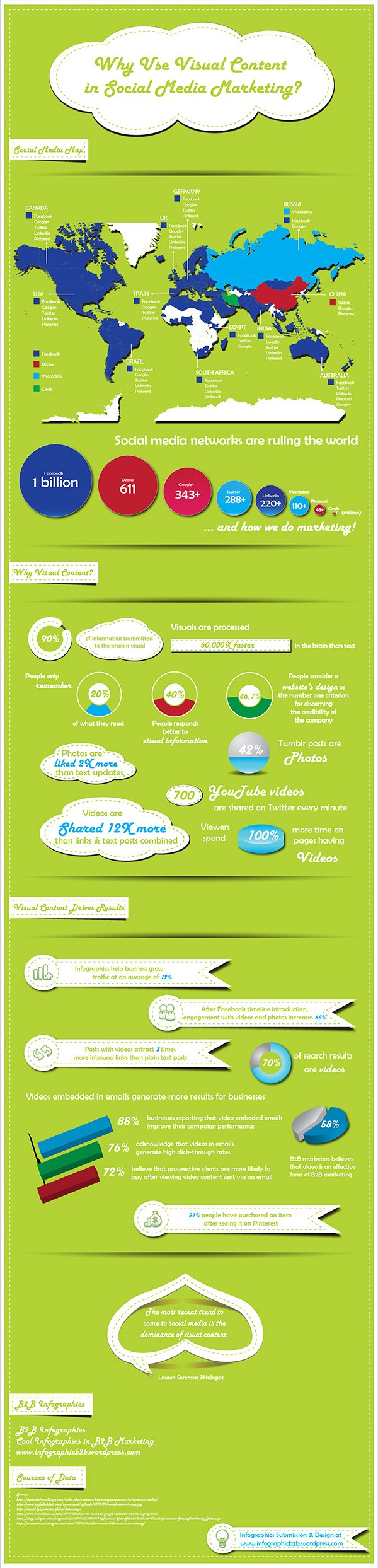
Infographic from Infographic B2B.
1. Human Brain and Visual Processing
To understand why visual content is so effective in social media marketing, it’s essential to delve into the science behind it. The human brain is wired to process visual information more quickly and effectively than text. According to research, the brain can process visual information up to 60,000 times faster than text. This means that when users scroll through their social media feeds, they are naturally drawn to images and videos, making them more likely to engage with visual content compared to plain text.
Visual content also has the power to evoke emotions, tell stories, and convey messages in a concise and compelling manner. This emotional connection is crucial for brand building and driving user engagement on social media platforms.
2. Attention-Grabbing Power
In the fast-paced world of social media, grabbing the attention of your audience is the first and most crucial step in your marketing strategy. Visual content excels in this regard. Eye-catching images, striking videos, and aesthetically pleasing graphics have a higher chance of stopping users mid-scroll and making them pause to take a closer look.
Think about your own social media habits. When scrolling through your feed, what type of content makes you stop and engage? Chances are, it’s a captivating image or an intriguing video. Visual content has the ability to break through the noise and make your brand stand out in a crowded digital landscape.
3. Increased Engagement and Shareability
One of the primary goals of any social media marketing strategy is to foster engagement with your audience. Visual content has been proven to drive higher levels of engagement compared to text-only posts. According to a study by HubSpot, tweets with images receive 150% more retweets, 89% more likes, and 18% more click-throughs than text-only tweets.
Visual content also encourages sharing. When users come across visually appealing and shareable content, they are more likely to repost or share it with their followers, extending your brand’s reach to a broader audience. This viral potential of visual content can significantly amplify the impact of your social media marketing efforts.
4. Improved Brand Recognition
Consistency in branding is key to establishing a strong online presence. Visual content helps reinforce your brand identity and makes your business more recognizable to your audience. By consistently using specific colors, fonts, and visual elements in your social media posts, you create a cohesive brand image that users can easily identify.
For example, think about the iconic red and white Coca-Cola logo or the instantly recognizable Nike swoosh. These brands have effectively used visual elements to build strong brand recognition over the years. While your business may not be on the same scale as these giants, the principle remains the same—visual content helps etch your brand into the minds of your audience.
5. Storytelling and Connection
Visual content has a unique ability to convey stories and evoke emotions. Through images and videos, you can tell the story of your brand, showcase your products or services in action, and connect with your audience on a personal level. Whether it’s sharing behind-the-scenes glimpses of your team or highlighting customer success stories, visual content humanizes your brand and fosters a deeper connection with your followers.
One powerful way to use visual content for storytelling is through user-generated content (UGC). Encouraging your customers to create and share their content related to your brand not only builds trust but also provides authentic and relatable stories that resonate with your target audience.
6. Enhanced Information Retention
Visual content not only grabs attention but also helps in information retention. People tend to remember visual information better than text. According to a study by the Social Science Research Network, individuals retain 65% of information when it’s paired with relevant visual content compared to only 10% of information when presented in text alone.
When you’re trying to convey important messages or product details, incorporating visuals can significantly improve the likelihood that your audience will remember and understand the information you’re sharing. This is particularly important for businesses in industries that require explaining complex concepts or products.
7. Versatility and Platform Compatibility
Visual content is highly versatile and can be adapted to suit various social media platforms. Whether you’re creating short videos for TikTok, eye-catching images for Instagram, or informative infographics for Pinterest, visual content can be tailored to fit the unique requirements and preferences of each platform.
Additionally, visual content is often more shareable and engaging across different social media channels. What works on Instagram may not work the same way on Twitter, but well-crafted visual content can transcend platform boundaries and reach a broader audience.
8. Search Engine Optimization (SEO) Benefits
Visual content can also have a positive impact on your website’s SEO, indirectly benefiting your social media marketing efforts. When you create and share visual content on your website and social media profiles, it can increase the time users spend on your site, reduce bounce rates, and improve overall user engagement. Search engines like Google take these factors into account when ranking websites, which can lead to better search visibility for your brand.
Additionally, when you optimize your visual content with relevant keywords, alt text, and descriptive captions, it becomes more discoverable in image and video search results. This can drive organic traffic to your website and social media profiles, further expanding your online reach.
9. Measurable Results and Analytics
The effectiveness of any marketing strategy lies in its ability to measure and analyze results. Visual content offers a clear advantage in this regard. Most social media platforms provide robust analytics tools that allow you to track the performance of your visual content in real-time. You can monitor metrics such as engagement rates, click-through rates, shares, and comments to assess the impact of your visual content on your social media campaigns.
This data-driven approach enables you to refine your social media marketing strategy over time, making it more effective and efficient. By understanding which visual content resonates most with your audience, you can allocate your resources and efforts to the content that yields the best results.
10. Competitive Advantage
In today’s competitive landscape, having a strong social media presence is not just an option; it’s a necessity. Visual content can give your business a competitive edge by helping you stand out from your competitors. When users are faced with a choice between two similar brands, the one with the more compelling and visually appealing social media presence is likely to win their attention and loyalty.
By consistently delivering high-quality visual content that aligns with your brand identity, you can position your business as a leader in your industry and attract a dedicated following that values what you offer.
Conclusion
In the world of social media marketing, visual content has evolved from being a nice-to-have to an absolute necessity. It’s no longer enough to rely solely on text-based posts to capture the attention and engagement of your target audience. Visual content offers a powerful way to connect with your audience, tell your brand story, and drive meaningful results for your business.
By understanding the science behind visual processing, leveraging the attention-grabbing power of visuals, and utilizing the various benefits that visual content brings to the table, you can craft a successful social media marketing strategy that not only increases brand awareness but also drives user engagement and conversions. So, whether you’re a small startup or a well-established brand, make visual content an integral part of your social media marketing arsenal, and watch your online presence soar to new heights.

Author:
Mark Ford