Is your content marketing strategy failing to live up to the hype? Are you looking for ways to fix it and start generating results?
If you’re new to content marketing you’ve probably read a load of articles about how great it is and just started churning out content for content’s sake, but have you taken the time to optimise for SEO and conversions?
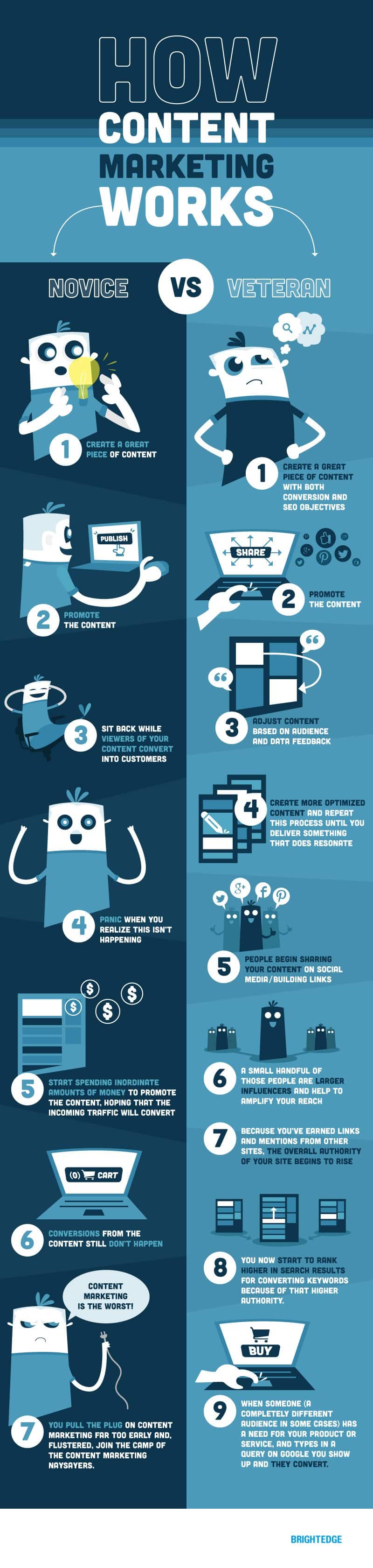
The infographic below from Brightedge shows how a content marketing novice is destined to fail, and how a seasoned pro does it instead.
In the ever-evolving landscape of digital marketing, content marketing has emerged as a cornerstone of success for businesses of all sizes. It’s a powerful tool for building brand awareness, driving organic traffic, and nurturing leads into loyal customers. However, despite its potential, many content marketing strategies fall short of their goals. In this comprehensive guide, we’ll explore the common reasons why content marketing strategies fail and provide actionable solutions to fix them.
Introduction
Content marketing is not a new concept, but its importance has grown significantly in recent years. According to the Content Marketing Institute, 91% of B2B marketers and 86% of B2C marketers use content marketing as part of their overall marketing strategy. However, not all of them are achieving the desired results.
The Power of Content Marketing
Effective content marketing can yield a wide range of benefits for your business, including:
- Increased Brand Visibility: High-quality content can help your brand stand out in a crowded digital marketplace.
- Lead Generation: Valuable content attracts potential customers and encourages them to engage with your brand.
- Thought Leadership: Consistently producing insightful content establishes your business as an industry authority.
- SEO Benefits: Search engines reward fresh, relevant, and well-structured content with higher rankings.
- Customer Retention: Engaging content keeps your existing customers informed and engaged.
Despite these advantages, many businesses struggle to achieve the desired outcomes with their content marketing efforts. Let’s dive into some common reasons for these failures and explore strategies to overcome them.
1. Lack of Clear Goals
The Problem
One of the most common reasons why content marketing strategies fail is the absence of clear and measurable goals. Without well-defined objectives, it’s challenging to gauge success, track progress, or align your team’s efforts effectively.
The Solution
To fix this issue, start by setting specific, measurable, achievable, relevant, and time-bound (SMART) goals for your content marketing efforts. Here’s a step-by-step process:
a. Define Your Objectives
Identify what you want to achieve with your content marketing strategy. It could be increasing website traffic, generating leads, boosting brand awareness, or something else entirely.
b. Establish Key Performance Indicators (KPIs)
Determine the metrics that will help you measure progress toward your goals. Examples include website traffic, conversion rates, email sign-ups, and social media engagement.
c. Create a Content Calendar
Plan your content creation schedule around your goals and KPIs. Ensure that your content aligns with the needs and interests of your target audience.
d. Monitor and Adjust
Regularly track your KPIs and adjust your strategy as needed. If you’re not making progress toward your goals, analyze what’s not working and make necessary changes.
2. Neglecting Audience Research
The Problem
Another common pitfall in content marketing is failing to understand your target audience fully. Creating content without a deep understanding of your audience’s needs, preferences, and pain points can lead to content that misses the mark.
The Solution
To fix this issue, invest time in audience research and persona development:
a. Define Your Buyer Personas
Create detailed buyer personas that represent your ideal customers. Include demographic information, interests, pain points, and buying behaviors.
b. Conduct Surveys and Interviews
Engage with your existing customers and conduct surveys or interviews to gather insights. Ask about their challenges, preferences, and what type of content they find valuable.
c. Use Analytics Tools
Leverage analytics tools to gain insights into your website visitors’ behavior. Tools like Google Analytics can provide valuable data on user demographics, interests, and browsing habits.
d. Competitor Analysis
Analyze your competitors’ content and audience engagement. This can provide valuable insights into what works in your industry.
3. Poor Content Quality
The Problem
Low-quality content can quickly turn off your audience and damage your brand’s reputation. Whether it’s poorly written, irrelevant, or lacks depth, subpar content can undermine your content marketing efforts.
The Solution
Investing in high-quality content is essential for success. Here’s how to ensure your content meets the mark:
a. Create a Style Guide
Develop a style guide that outlines your brand’s voice, tone, and writing standards. This ensures consistency in all your content.
b. Conduct Thorough Research
Back your content with credible sources and thorough research. Provide valuable insights and solutions to your audience’s problems.
c. Proofread and Edit
Never publish content without proper proofreading and editing. Mistakes and typos can erode your audience’s trust.
d. Use Visuals
Incorporate visuals like images, infographics, and videos to enhance the visual appeal and comprehensibility of your content.
4. Ineffective Distribution
The Problem
Creating great content is only half the battle. If you’re not effectively distributing your content, it won’t reach your target audience, and all your efforts will go to waste.
The Solution
To fix this issue, develop a robust content distribution strategy:
a. Choose the Right Channels
Identify the channels where your target audience is most active. This could include social media, email marketing, guest posting, or content syndication.
b. Consistency is Key
Maintain a consistent posting schedule to keep your audience engaged. Use scheduling tools to plan ahead and ensure regular content updates.
c. Promote Across Multiple Platforms
Share your content across various platforms to reach a broader audience. Utilize email newsletters, social media, and industry forums.
d. Leverage Influencers
Partner with industry influencers to amplify your content’s reach. Influencers can help you tap into their follower base and increase your content’s visibility.
5. Lack of Patience and Persistence
The Problem
Content marketing is a long-term strategy that requires patience and persistence. Many businesses abandon their efforts prematurely when they don’t see immediate results.
The Solution
To overcome this issue, cultivate a mindset of patience and persistence:
a. Set Realistic Expectations
Understand that content marketing is not a quick fix. It takes time to see significant results. Set realistic expectations and be prepared for the long haul.
b. Consistent Effort
Stay committed to consistently creating and promoting high-quality content. Consistency is key to building trust and authority over time.
c. Measure Progress
Regularly review your KPIs to measure progress. Celebrate small wins along the way to stay motivated.
6. Failure to Adapt
The Problem
The digital landscape is constantly evolving, and what works today may not work tomorrow. Failing to adapt to changing trends and technologies can lead to content marketing failure.
The Solution
Stay agile and adaptable in your content marketing strategy:
a. Stay Informed
Keep up with industry news and trends. Subscribe to marketing newsletters, attend webinars, and follow thought leaders in your niche.
b. Experiment and Test
Don’t be afraid to experiment with new content formats, channels, and strategies. A/B testing can help you identify what works best for your audience.
c. Review and Revise
Regularly review your content marketing strategy and make necessary adjustments. Update your content to keep it relevant and evergreen.
Conclusion
Content marketing is a powerful tool for businesses looking to build their online presence, engage with their audience, and drive conversions. However, achieving success in content marketing requires a well-thought-out strategy, a deep understanding of your audience, high-quality content, effective distribution, and the patience to see results over time.
By addressing the common pitfalls outlined in this guide and implementing the suggested solutions, you can breathe new life into your content marketing efforts and propel your business to new heights of success. Remember, content marketing is an ongoing process of learning and improvement, so stay committed to refining your strategy and adapting to the ever-changing digital landscape.

Author:
Mark Ford