So, you want your website to rank higher on Google, you’re trying to learn SEO, but there are so many factors that influence your site you don’t know where to start?
Search Engine Optimization (SEO) is a constantly evolving field, with search engines like Google continually updating their algorithms to deliver the best possible results to users. As a result, SEO strategies that worked in the past may not be as effective today.
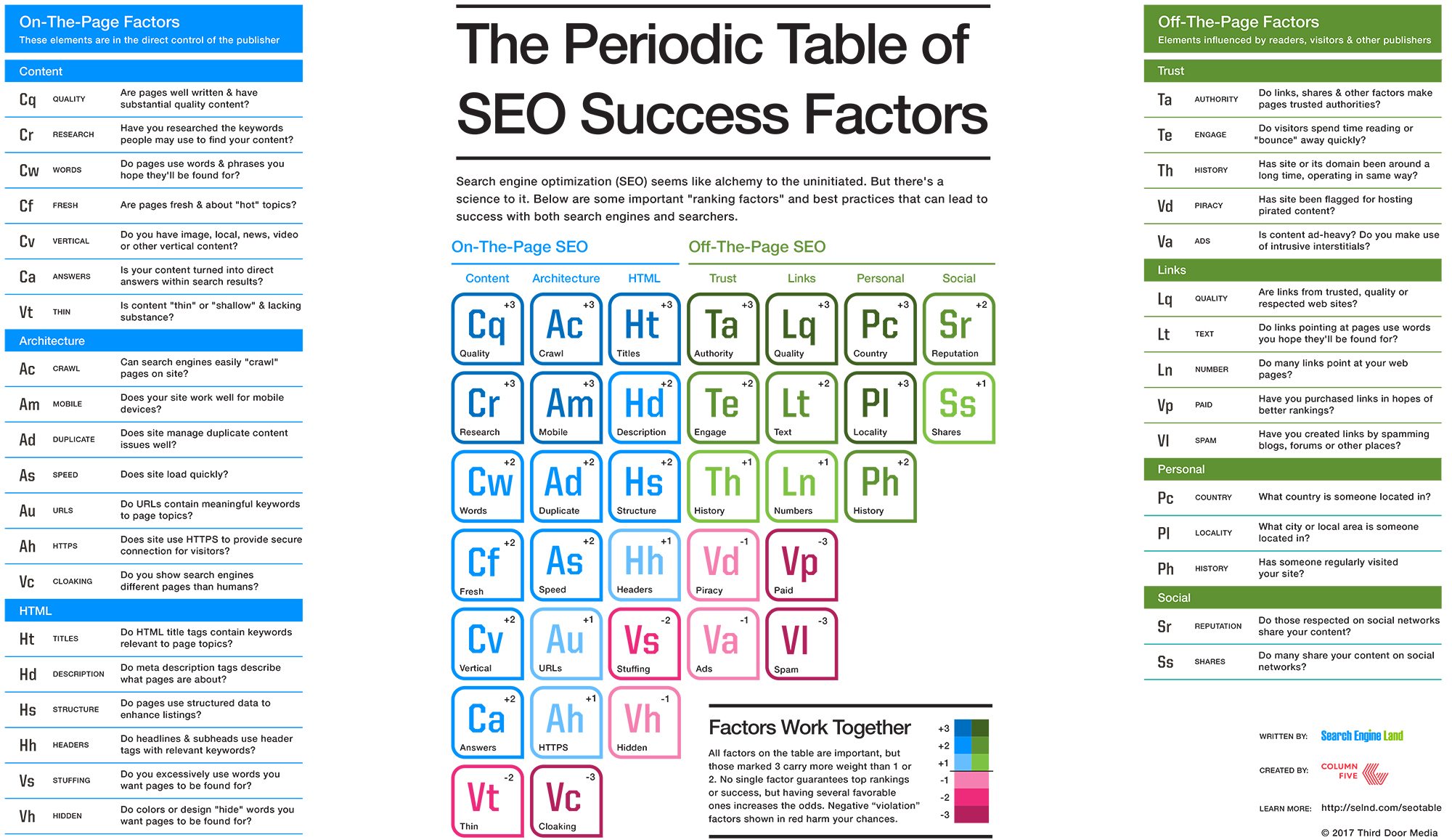
In this blog post, we will delve into the world of SEO in 2017 and explore the Periodic Table of Ranking Factors. This comprehensive guide will help you understand the key elements that influence your website’s search engine rankings and provide actionable tips to improve your SEO strategy.
Search Engine Land share the factors you should concentrate on in this infographic.
Chapter 1: The Foundation of SEO
Before we dive into the specifics of the Periodic Table of Ranking Factors, it’s essential to establish a solid foundation for understanding SEO. In this chapter, we will cover the basics of SEO, including:
1.1. What is SEO?
- Definition of SEO
- Why SEO is important
1.2. How Search Engines Work
- Crawling and indexing
- Ranking algorithms
1.3. White Hat vs. Black Hat SEO
- Ethical SEO practices
- Avoiding penalties
1.4. SEO Keyword Research
- Identifying target keywords
- Long-tail keywords
Chapter 2: The Periodic Table of Ranking Factors
In this chapter, we will introduce the Periodic Table of Ranking Factors, a conceptual framework that categorizes the various elements that influence your website’s search engine rankings. We will discuss:
2.1. The Elements of SEO
- On-page factors
- Off-page factors
- Technical factors
- User experience factors
2.2. The Importance of Balance
- Balancing different elements
- Avoiding over-optimization
2.3. The Periodic Table in Practice
- Visual representation
- How to interpret the table
Chapter 3: On-Page Factors
This chapter will focus on the on-page factors of the Periodic Table. On-page SEO elements are the aspects of your website and its content that you can control directly. We will cover:
3.1. Content Quality
- Creating valuable content
- Optimizing for user intent
3.2. Keyword Optimization
- Keyword placement
- Avoiding keyword stuffing
3.3. Meta Tags
- Title tags
- Meta descriptions
3.4. Header Tags
- Importance of H1, H2, and H3 tags
- Organizing content with headers
3.5. URL Structure
- Creating SEO-friendly URLs
- Canonicalization
Chapter 4: Off-Page Factors
Off-page SEO factors involve external signals and actions that affect your website’s rankings. In this chapter, we will explore these crucial factors, including:
4.1. Backlinks
- The importance of backlinks
- Building high-quality backlinks
- Avoiding toxic backlinks
4.2. Social Signals
- Social media’s impact on SEO
- Leveraging social signals
4.3. Brand Mentions
- Building brand authority
- Monitoring online mentions
Chapter 5: Technical Factors
The technical aspects of your website play a significant role in SEO. In this chapter, we will delve into the technical factors of the Periodic Table, including:
5.1. Website Speed
- The importance of fast loading times
- Optimization techniques
5.2. Mobile Optimization
- Mobile-friendly design
- Mobile-first indexing
5.3. Site Architecture
- Creating a clear hierarchy
- XML sitemaps
5.4. HTTPS and Security
- Importance of secure websites
- SSL certificates
Chapter 6: User Experience Factors
User experience is increasingly important for SEO. In this chapter, we will discuss the user experience factors that contribute to higher search engine rankings, including:
6.1. Page Layout and Design
- User-friendly layouts
- Avoiding intrusive ads
6.2. Mobile Friendliness
- Responsive design
- Mobile user experience
6.3. Dwell Time
- Importance of user engagement
- Reducing bounce rate
6.4. Site Usability
- Easy navigation
- Clear calls to action
Chapter 7: SEO Best Practices for 2017
With a solid understanding of the Periodic Table of Ranking Factors, this chapter will provide you with actionable SEO best practices specifically tailored to the year 2017, including:
7.1. Voice Search Optimization
- Adapting to voice search trends
- Using conversational keywords
7.2. Featured Snippets
- How to target featured snippet positions
- Structured data markup
7.3. Local SEO
- Optimizing for local search
- Google My Business optimization
7.4. Content Marketing
- Content strategies for SEO
- Evergreen content
Chapter 8: Tracking and Analytics
In this chapter, we will cover the importance of tracking and analytics in SEO. Topics include:
8.1. Setting up Google Analytics
- Monitoring website traffic
- Tracking user behavior
8.2. Google Search Console
- Submitting sitemaps
- Monitoring search performance
8.3. SEO Tools
- Recommended SEO tools
- Analyzing competitors
Chapter 9: Staying Up-to-Date
SEO is an ever-changing field, and staying current is crucial. In this final chapter, we will discuss strategies for staying up-to-date with SEO trends, including:
9.1. Following Industry Blogs and News
- Trustworthy sources for SEO updates
- Blogs and websites to follow
9.2. Joining SEO Communities
- Engaging with the SEO community
- Online forums and groups
9.3. Continuous Learning
- Online courses and certifications
- Experimenting and adapting
Conclusion
In 2017, mastering SEO requires a comprehensive understanding of the Periodic Table of Ranking Factors and a commitment to implementing best practices. By balancing on-page, off-page, technical, and user experience factors, you can improve your website’s search engine rankings and drive more organic traffic. As SEO continues to evolve, staying informed and adapting to new trends will be key to long-term success in the digital landscape.

Author:
Mark Ford