Email marketing remains one of the most effective digital marketing strategies for businesses of all sizes. When done right, it can help you build and nurture customer relationships, drive sales, and boost brand loyalty.
However, email marketing success is not guaranteed. To make the most of this powerful tool, you need to follow best practices and avoid common pitfalls.
In this comprehensive guide, we’ll explore 31 dos and don’ts for a successful email marketing campaign.
Infographic from Skadeedle.
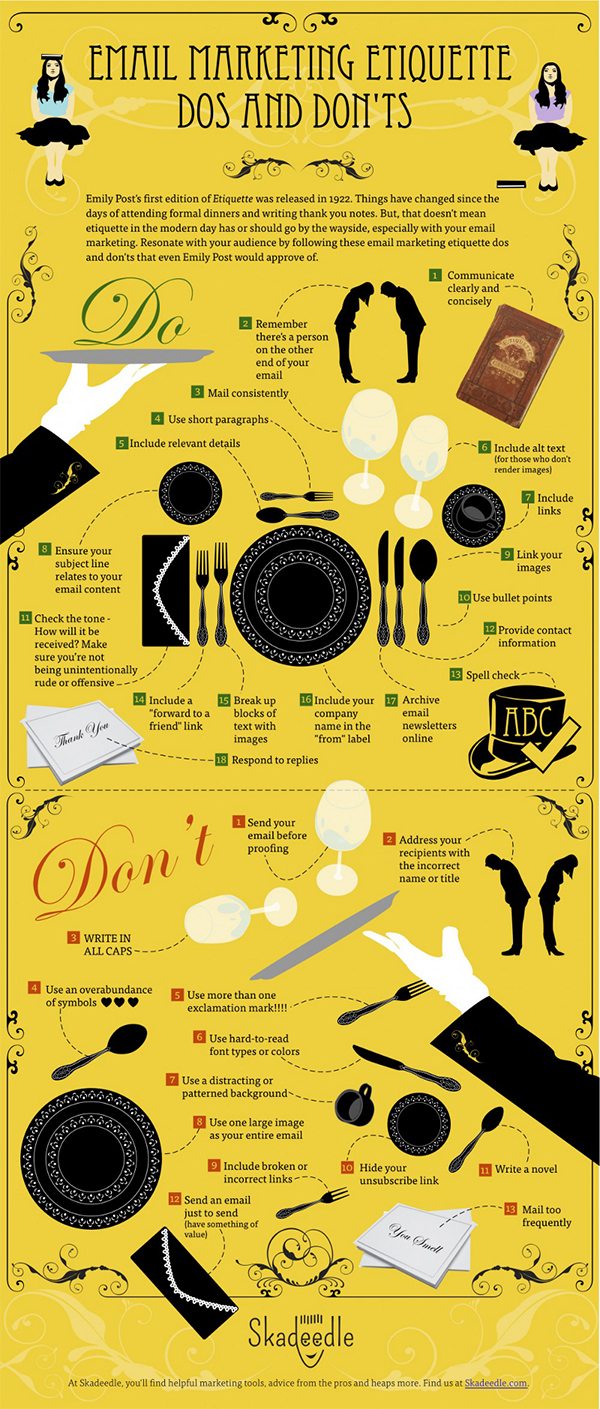
The Dos
- Build a Quality Email List: Start with a clean, opt-in email list. Ensure that your subscribers have consented to receive emails from you. Purchased or scraped lists can lead to spam complaints and damage your sender reputation.
- Segment Your List: Segment your email list based on demographics, behavior, and preferences. This allows you to send targeted, relevant content to specific groups, increasing engagement and conversion rates.
- Personalize Your Emails: Use recipients’ names and other relevant information to personalize your emails. Personalization can significantly improve open and click-through rates.
- Create Compelling Subject Lines: Craft attention-grabbing subject lines that are concise and relevant to the email’s content. Avoid using all caps or excessive punctuation, as these can trigger spam filters.
- Optimize for Mobile: Most people check their email on mobile devices. Ensure your emails are mobile-responsive, with a clean layout and easy-to-tap buttons.
- A/B Test Your Campaigns: Experiment with different elements of your emails, such as subject lines, content, and call-to-action buttons. A/B testing helps you determine what resonates best with your audience.
- Provide Value: Every email you send should offer something valuable to your subscribers. Whether it’s informative content, exclusive discounts, or helpful resources, provide a reason for them to open and engage with your emails.
- Clear Call-to-Action (CTA): Make your CTAs clear and compelling. Use action-oriented language and place them prominently in your emails.
- Use a Consistent Sending Schedule: Establish a consistent sending schedule to keep your audience engaged and informed. Be mindful of different time zones and optimal send times for your target audience.
- Monitor and Analyze Metrics: Keep a close eye on key email marketing metrics such as open rates, click-through rates, and conversion rates. Use this data to refine your strategies over time.
- Respect Unsubscribers: Make it easy for subscribers to opt out of your emails, and honor their requests promptly. Failing to do so can lead to negative feedback and damage your sender reputation.
- Implement Email Authentication: Use SPF, DKIM, and DMARC authentication to protect your emails from spoofing and phishing attempts. This also helps improve deliverability.
- Leverage Automation: Use email marketing automation to send personalized, timely emails based on subscriber behavior. Automated workflows can save you time and improve engagement.
- Create Engaging Content: Craft compelling and relevant content that resonates with your audience. Include a mix of text, images, and videos to keep emails visually appealing.
- Optimize Landing Pages: Ensure that the landing pages you link to from your emails are relevant and optimized for conversions. A seamless transition from email to landing page can improve user experience.
- Test Across Email Clients: Email clients can render emails differently. Test your emails across various clients to ensure consistent display and functionality.
- Stay Compliant with Regulations: Familiarize yourself with email marketing regulations like the CAN-SPAM Act (for the U.S.) and GDPR (for the EU). Ensure your campaigns are compliant to avoid legal issues.
- Engage with Subscribers: Encourage feedback and interaction from your subscribers. Respond to inquiries and comments promptly to build trust.
- Keep Emails Short and Scannable: People tend to skim emails. Use short paragraphs, bullet points, and clear headings to make your content easy to read.
- Include Social Sharing Buttons: Encourage subscribers to share your content by including social sharing buttons in your emails. This can expand your reach and increase brand visibility.
- Build Relationships, Not Just Sales: Focus on building long-term relationships with your subscribers. Avoid the temptation to send constant sales pitches; instead, provide value and nurture trust.
- Regularly Clean Your List: Remove inactive or bounced email addresses from your list to maintain list quality and deliverability rates.
- Use Double Opt-In: Implement a double opt-in process to confirm subscribers’ intentions and reduce the likelihood of fake or mistyped email addresses on your list.
- Educate Yourself: Stay up-to-date with email marketing trends and best practices by reading industry blogs, attending webinars, and participating in email marketing communities.
- Test Email Rendering: Before sending, preview your emails in different email clients to ensure they render correctly and look good on all devices.
- Monitor Spam Folders: Regularly check if your emails are landing in subscribers’ spam folders. If they are, investigate and resolve the issue promptly.
- Build a Welcome Series: Create a series of welcome emails for new subscribers. Use these emails to introduce your brand, set expectations, and nurture the relationship from the start.
- Use a Professional Email Service: Invest in a reputable email service provider (ESP) that offers features like deliverability monitoring, analytics, and list management.
- Test Different Senders: Experiment with different sender names and email addresses to see which ones yield the best results. Sometimes, a personal touch can improve open rates.
- Celebrate Milestones: Send personalized emails to subscribers on their birthdays, anniversaries, or other important milestones. This shows you value their loyalty.
- Plan for Continual Improvement: Email marketing is an evolving field. Continuously analyze your results and adjust your strategies to stay ahead of the curve.
The Don’ts
- Don’t Buy Email Lists: Avoid purchasing or using lists of email addresses that you didn’t collect through opt-in methods. This can lead to spam complaints and damage your sender reputation.
- Don’t Overwhelm Subscribers: Sending too many emails too frequently can lead to subscriber fatigue and higher unsubscribe rates. Respect their inbox and send relevant content at a reasonable frequency.
- Don’t Neglect Mobile Optimization: Ignoring mobile optimization can result in poor user experiences and reduced engagement. Always test your emails on mobile devices.
- Don’t Use Misleading Subject Lines: Deceptive subject lines can lead to distrust and high spam complaint rates. Be honest and relevant in your subject lines.
- Don’t Neglect Testing: Skipping A/B testing means missing out on valuable insights. Regularly test and refine your email campaigns for better results.
- Don’t Ignore Analytics: Failing to analyze email marketing metrics means missing opportunities for improvement. Use data to make informed decisions.
- Don’t Ignore Unsubscribers: Failing to honor unsubscribe requests can damage your sender reputation and lead to legal issues.
- Don’t Send Unsegmented Emails: Mass emails to your entire list may not be relevant to everyone. Segment your list for more personalized and effective campaigns.
- Don’t Overload Emails with Images: Too many images can trigger spam filters and slow down email load times. Use images judiciously and include alt text for accessibility.
- Don’t Send Irrelevant Content: Emails that lack value or relevance to subscribers are likely to be ignored or marked as spam.
- Don’t Neglect Permission: Always obtain proper permission to send emails. Failing to do so can result in spam complaints and legal issues.
- Don’t Use Misleading Links: Ensure that the links in your emails go to the destinations you promise. Misleading links can damage trust.
- Don’t Ignore List Hygiene: A bloated, outdated email list can harm your deliverability rates. Regularly clean your list to remove invalid or inactive addresses.
- Don’t Neglect the Preheader: The preheader text is valuable real estate. Use it wisely to provide a preview of your email content.
- Don’t Rely Solely on Images: Some email clients may block images by default. Include relevant text and alt text to convey your message even if images are disabled.
- Don’t Forget Mobile-Friendly Design: A non-responsive design can lead to a frustrating experience for mobile users. Test your emails on various devices.
- Don’t Use Excessive Emojis: While emojis can add personality, overusing them can make your emails appear unprofessional. Use them sparingly.
- Don’t Ignore Accessibility: Ensure your emails are accessible to all subscribers, including those with disabilities. Use accessible design practices and provide alt text for images.
- Don’t Ignore Legal Requirements: Familiarize yourself with and adhere to email marketing laws and regulations, such as GDPR and CAN-SPAM, to avoid legal consequences.
- Don’t Neglect Email Preview Text: The preview text is the first thing recipients see after the subject line. Make it compelling to encourage opens.
- Don’t Send Unverified Emails: Before sending a campaign to your entire list, send a test email to yourself or a colleague to check for errors and rendering issues.
- Don’t Neglect the Unengaged: Keep an eye on subscribers who haven’t engaged with your emails for an extended period. Consider re-engagement campaigns or list segmentation.
- Don’t Use Misleading From Names: Your “From” name should accurately reflect your brand or the sender. Misleading sender names can lead to distrust.
- Don’t Neglect Design Consistency: Maintain a consistent brand design in your emails to reinforce brand recognition and trust.
- Don’t Ignore Feedback: Act on subscriber feedback and complaints promptly. Addressing issues can help prevent further problems.
- Don’t Forget About Deliverability: Focusing solely on open and click rates can lead to overlooking deliverability issues. Ensure your emails reach the inbox.
- Don’t Neglect Testing for Different Email Clients: Not all email clients display emails the same way. Test your emails on various platforms to ensure compatibility.
- Don’t Disregard Security: Implement security measures to protect your emails and subscribers from phishing and spoofing attempts.
- Don’t Neglect the Opt-In Confirmation: Make sure new subscribers confirm their opt-ins. This helps ensure a clean and engaged email list.
- Don’t Ignore the Competition: Keep an eye on your competitors’ email marketing efforts. Analyze what works for them and adapt strategies to suit your audience.
- Don’t Settle for Mediocrity: Continually strive for improvement in your email marketing campaigns. Complacency can lead to stagnation and missed opportunities.
In conclusion, a successful email marketing campaign requires a combination of strategic planning, thoughtful execution, and ongoing refinement. By following these 31 dos and don’ts, you can maximize the effectiveness of your email marketing efforts, build stronger customer relationships, and achieve your business goals. Remember that email marketing is not a one-size-fits-all approach, so be prepared to adapt and evolve your strategies based on your audience’s preferences and behavior.

Author:
Mark Ford