Are you looking for ways to increase traffic to your blog? Want to get more people reading your blog posts?
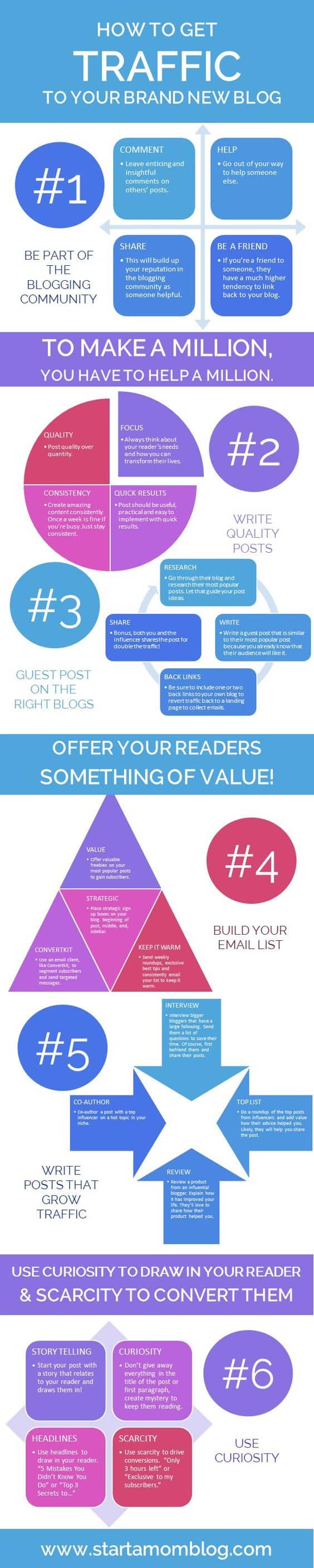
Start a Mom Blog share 6 ways to increase blog traffic in this infographic.
Here’s a quick summary:
- Be part of the blogging community
- Write quality posts
- Guest post on the right blogs
- Build your email list
- Write posts that grow traffic
- Use curiosity
Check out the infographic for more detail.
In the digital world, establishing a successful blog can be a rewarding yet challenging endeavor. While many bloggers invest in paid advertising to increase their visibility and traffic, there are effective strategies that don’t require any financial investment. Below, we explore six ways to boost your blog traffic without spending a dime.
Be Part of the Blogging Community
For small businesses, becoming an active member of the blogging community can be a game-changer. It not only helps to increase visibility and drive traffic to your blog but also fosters relationships that can lead to partnerships, collaborations, and new opportunities. Here’s how small businesses can effectively engage with the blogging community:
- Identify Relevant Communities
Find Niche-Specific Forums and Groups
Start by identifying online forums, Facebook groups, and Reddit communities that align with your business niche. For example, if you run a handmade jewelry business, look for groups focused on handmade crafts, jewelry design, or e-commerce.
Utilize Social Media Platforms
Social media platforms like Twitter and LinkedIn have numerous communities where bloggers and small businesses congregate. Follow hashtags related to your niche (e.g., #BloggingTips, #SmallBusiness) and engage with users posting relevant content.
- Actively Engage with Other Bloggers
Comment Thoughtfully on Posts
When you come across a blog post that resonates with you, leave a thoughtful comment. Share your insights, ask questions, or provide additional value. This shows the author that you appreciate their work and can lead to reciprocal engagement.
Share Others’ Content
Sharing content from other bloggers not only helps them gain exposure but also positions you as a supportive member of the community. Tag the author when you share their posts on social media, and express what you found valuable about their content. This can create goodwill and encourage them to reciprocate.
- Collaborate with Other Bloggers
Offer to Co-Author Posts
Reach out to bloggers in your niche and propose co-authoring posts. This collaborative approach can introduce both of your audiences to new perspectives and drive traffic to both blogs. Ensure that the topic is mutually beneficial and relevant to both audiences.
Create Resource Lists
Consider compiling a list of valuable resources in your niche, including blog posts, tools, or services. Invite other bloggers to contribute their favorite resources. This not only helps position you as a thought leader but also encourages those bloggers to share the final list with their audience.
- Attend Blogging Events and Workshops
Participate in Webinars and Conferences
Engaging in webinars and conferences relevant to your industry can significantly broaden your network. Attend sessions that resonate with your blogging goals and connect with speakers and attendees afterward to establish relationships.
Join Local Meetups
Look for local meetups or networking events focused on blogging or your industry. These gatherings provide an opportunity to meet other bloggers face-to-face, share ideas, and learn from each other.
- Utilize Blogging Networks
Join Blogging Networks
Consider joining blogging networks such as BlogHer, The SITS Girls, or Bloglovin’. These platforms often offer opportunities for guest posting, collaboration, and networking with other bloggers, helping you expand your reach.
Participate in Link Parties
Link parties are gatherings where bloggers share links to their recent posts. Participate in link parties that relate to your niche. This can increase exposure for your content and help you discover other bloggers in your field.
- Offer Support and Assistance
Provide Value to Others
Take the initiative to help other bloggers by sharing your expertise. Whether it’s offering feedback on a post, helping them brainstorm ideas, or providing tips for improving their blog, being supportive can strengthen your relationships within the community.
Be Open to Collaboration
Express your willingness to collaborate on projects or promotions. This could be anything from joint webinars to social media takeovers. Collaborations can increase both your audiences, making it a win-win situation.
- Create a Blog Directory
Build a Directory of Blogs in Your Niche
Consider creating a directory on your blog where you feature other bloggers in your niche. This not only supports your peers but also encourages them to link back to your blog, driving additional traffic. Promote this directory through social media and newsletters.
- Monitor Trends and Discussions
Stay Updated with Industry News
Regularly read blogs and articles related to your niche to stay informed about industry trends. Engaging in discussions on these topics helps establish your authority and keeps your audience engaged.
Join Industry-Specific Online Communities
Participate in industry-specific online communities, such as LinkedIn groups or niche forums. Share your insights, ask questions, and engage in conversations that matter to your target audience.
Conclusion
Being part of the blogging community is a powerful strategy for small businesses looking to enhance their online presence. By actively engaging with others, collaborating, and providing value, you can build a network that not only drives traffic to your blog but also establishes your brand as a trusted authority in your niche. Remember, the key is to be genuine and supportive; relationships built on authenticity tend to yield the best results. By investing time and effort in the blogging community, you can unlock new opportunities for growth and success for your small business.
This expanded section offers a comprehensive guide on how small businesses can effectively engage with the blogging community to increase their blog traffic. If you need any further assistance or specific details, feel free to ask!
Write Quality Posts
Writing quality posts is crucial for small businesses looking to increase blog traffic, engage readers, and establish authority in their niche. High-quality content not only attracts visitors but also encourages sharing and returning readers. Here’s how small businesses can craft exceptional blog posts:
- Understand Your Audience
Conduct Audience Research
Before you start writing, it’s essential to understand who your target audience is. Conduct surveys, analyze demographics, and gather insights on their preferences and pain points. Tools like Google Analytics and social media insights can help you gather valuable data about your audience’s behavior.
Create Audience Personas
Develop detailed audience personas that outline your ideal readers’ characteristics, interests, and challenges. This can guide your content creation, ensuring that your posts resonate with your audience and address their specific needs.
- Focus on Relevance and Value
Choose Topics Wisely
Select topics that are relevant to your audience and industry. Use keyword research tools like Google Keyword Planner or Ubersuggest to identify trending topics and popular search queries related to your niche.
Provide Solutions
Aim to create content that solves problems or answers questions your audience may have. This could be how-to guides, tutorials, tips, or even insights on industry trends. The more value you provide, the more likely readers will share and engage with your content.
- Create Compelling Headlines
Use Attention-Grabbing Headlines
Your headline is the first impression readers have of your post, so make it count. Use power words, numbers, and clear language to pique curiosity. For instance, instead of a generic title like “Tips for Small Business Marketing,” try “10 Proven Marketing Strategies to Skyrocket Your Small Business Success.”
Incorporate Keywords
Include relevant keywords in your headlines to improve search engine optimization (SEO). This helps your posts rank higher in search results, increasing visibility and potential traffic.
- Structure Your Content Effectively
Use Subheadings
Break your content into digestible sections using subheadings. This not only improves readability but also allows readers to scan the post easily. Subheadings also help with SEO by signaling to search engines the structure of your content.
Incorporate Bullet Points and Lists
When presenting information, use bullet points or numbered lists to highlight key takeaways. This format makes it easier for readers to absorb the information quickly.
- Prioritize Readability
Keep Paragraphs Short
Long blocks of text can overwhelm readers. Aim for short paragraphs (2-4 sentences) to maintain reader interest. This is especially important for online content, where readers tend to skim rather than read every word.
Use Clear and Simple Language
Avoid jargon and overly complex language. Write in a conversational tone that resonates with your audience. Aim for clarity and simplicity to ensure your message is easily understood.
- Include Visual Elements
Utilize Images and Graphics
Incorporate relevant images, infographics, and charts to complement your text. Visuals not only break up the content but also help illustrate your points and make your posts more engaging.
Optimize for SEO
Ensure your images are optimized for SEO by using descriptive file names and alt text. This helps search engines understand your images and can drive additional traffic through image searches.
- Edit and Proofread Thoroughly
Revise for Clarity and Coherence
After writing your post, take the time to revise it. Ensure that your ideas flow logically and that you’ve effectively communicated your message. Check for redundancy and unnecessary filler content.
Proofread for Errors
Spelling and grammatical errors can undermine your credibility. Use tools like Grammarly or Hemingway to help catch mistakes and improve sentence structure. If possible, have someone else review your post for additional feedback.
- Incorporate Call-to-Actions (CTAs)
Guide Reader Behavior
Include clear and compelling calls-to-action at the end of your posts. Whether it’s encouraging readers to subscribe to your newsletter, follow you on social media, or leave a comment, CTAs guide readers on what to do next and help foster engagement.
Experiment with Different CTAs
Try varying your CTAs to see which ones resonate best with your audience. This could include questions, invitations to share their experiences, or prompts to check out related posts.
- Promote Your Posts
Utilize Social Media Platforms
After publishing your blog post, promote it across your social media channels. Create engaging snippets or visuals that highlight key points and encourage followers to read the full post.
Leverage Email Marketing
Share your new blog posts with your email list. Craft compelling email content that entices subscribers to click through and read your latest posts. Personalize your emails to increase engagement.
- Monitor Performance and Gather Feedback
Use Analytics Tools
After publishing, track the performance of your blog posts using tools like Google Analytics. Pay attention to metrics such as page views, time on page, and bounce rates to assess engagement.
Encourage Reader Feedback
Invite readers to leave comments or feedback on your posts. Their insights can provide valuable information on what resonates with your audience and help inform your future content strategy.
Conclusion
Writing quality posts is a fundamental aspect of growing your blog traffic and establishing a strong online presence for your small business. By understanding your audience, focusing on relevance and value, crafting compelling headlines, structuring your content effectively, and continually refining your writing, you can create posts that not only attract readers but also encourage them to engage and share your content. Remember, quality content is an investment in your business’s future; the more effort you put into your writing, the greater the returns in terms of traffic, engagement, and brand authority.
This expanded section provides detailed tips and guidance for small businesses on how to write quality posts that can effectively drive traffic and engagement. If you need any more information or specific examples, feel free to ask!
Guest Post on the Right Blogs
Guest posting is a powerful strategy for small businesses looking to increase their visibility, reach new audiences, and enhance their credibility within their industry. By contributing valuable content to established blogs, you can tap into their existing readership and drive traffic back to your own site. However, the key to successful guest posting lies in choosing the right blogs and executing your strategy effectively. Here’s how small businesses can navigate this process:
- Identify the Right Blogs for Guest Posting
Define Your Goals
Before you start looking for blogs to guest post on, clearly define your goals. Are you aiming to increase brand awareness, drive traffic to your website, or establish yourself as an authority in your niche? Understanding your objectives will guide your search for the right blogs.
Research Relevant Blogs
Use tools like Google search, BuzzSumo, and social media to identify blogs within your niche. Look for blogs that align with your business values and target audience. Search for terms like “write for us” or “guest post guidelines” along with your niche to find opportunities.
Evaluate Blog Metrics
When assessing potential blogs, consider their traffic, domain authority, and engagement metrics. Tools like Moz’s Link Explorer or Ahrefs can provide insights into a blog’s authority and popularity. Aim for blogs that have a solid readership and engagement, as they’ll likely provide better exposure for your guest posts.
- Analyze Audience Compatibility
Understand Their Audience
Once you identify potential blogs, take the time to understand their audience. Read previous posts to gauge the tone, style, and topics covered. This will help you tailor your content to fit their audience’s preferences.
Check Engagement Levels
Look at the comments section of the blog posts. High engagement indicates an active readership that may be more receptive to your content. This can also provide insight into the types of topics that resonate with their audience.
- Develop High-Quality Content Ideas
Pitch Unique and Relevant Topics
When reaching out to blogs, propose topics that are unique and relevant to their audience. Conduct research to identify trending issues in your niche and suggest angles that haven’t been widely covered. This increases your chances of being accepted.
Focus on Value-Driven Content
Ensure that your content ideas provide value to the readers. This could include how-to guides, case studies, industry insights, or actionable tips. The more value you offer, the more likely the blog will accept your guest post.
- Craft a Compelling Pitch
Personalize Your Outreach
When reaching out to blog owners or editors, personalize your pitch. Mention specific posts that you enjoyed or how your proposed topic aligns with their content. This shows that you’ve done your homework and are genuinely interested in contributing.
Keep It Concise
Your pitch should be brief and to the point. Include a brief introduction about yourself, why you’re reaching out, and your proposed topic. If possible, include links to your previous work to showcase your writing style and expertise.
- Follow Guest Posting Guidelines
Adhere to Submission Guidelines
Most blogs have specific guest posting guidelines. These may include word count, formatting, linking policies, and submission processes. Follow these guidelines meticulously to increase your chances of acceptance.
Respect Deadlines
If a blog accepts your pitch, be sure to meet any deadlines for submission. Late submissions can damage your reputation and make it less likely that the blog will work with you in the future.
- Create Quality Content
Focus on Quality Over Quantity
Once your topic is approved, prioritize quality in your writing. Craft a well-researched, engaging, and informative post that meets the blog’s standards. Ensure your writing is free of grammatical errors and flows well.
Include Relevant Links
Incorporate relevant internal and external links within your post. Internal links can lead readers to your blog, while external links can enhance your credibility by referencing authoritative sources. However, be mindful not to overdo it; too many links can distract from your content.
- Promote Your Guest Post
Share on Your Social Media Channels
Once your guest post is published, share it across your social media channels. Tag the blog and encourage your followers to read and engage with the post. This not only increases visibility but also shows appreciation for the blog that hosted you.
Engage with Readers
Monitor the comments section of your guest post and engage with readers. Respond to comments and questions, fostering a connection with the audience. This interaction can lead to increased traffic to your blog as readers become more interested in your work.
- Build Relationships for Future Opportunities
Stay Connected with Blog Owners
After your guest post is published, continue to build relationships with the blog owners or editors. Follow them on social media, engage with their content, and express your gratitude for the opportunity. Building a rapport can lead to more guest posting opportunities in the future.
Network with Other Contributors
If other bloggers contribute to the same blog, take the opportunity to connect with them as well. Networking with fellow guest contributors can lead to collaboration opportunities and expand your reach even further.
- Measure Your Results
Track Traffic and Engagement
After your guest post goes live, use analytics tools to track traffic coming from that post. Monitor engagement metrics such as shares, comments, and click-through rates to assess the effectiveness of your guest post.
Evaluate Against Your Goals
Compare the results against the goals you set before reaching out for guest posting. If your objectives were to drive traffic, increase brand awareness, or build authority, evaluate how well the guest post met those targets.
- Iterate and Improve
Refine Your Approach
Based on your experiences and the results of your guest posts, refine your approach for future submissions. Analyze which topics resonated most with audiences, which blogs provided the best exposure, and adjust your strategies accordingly.
Stay Persistent
Guest posting is a long-term strategy that requires persistence. Not every pitch will be accepted, and not every post will yield immediate results. Stay committed to the process, continue building relationships, and refining your content strategy.
Conclusion
Guest posting on the right blogs is a powerful method for small businesses to boost their visibility, engage with new audiences, and enhance their credibility. By carefully selecting the right blogs, crafting quality content, and building relationships within the blogging community, small businesses can leverage guest posting to drive traffic and achieve their marketing goals. Remember, the key is to offer value and foster genuine connections, as these will yield the best long-term results.
Build Your Email List
Building an email list is one of the most effective strategies for small businesses to engage with their audience, nurture leads, and drive traffic to their blogs. Unlike social media, where algorithms can limit your reach, email marketing allows you direct access to your audience’s inbox. Here are key strategies for small businesses to build and grow their email list effectively:
- Create Compelling Lead Magnets
Offer Valuable Incentives
A lead magnet is an incentive that encourages users to provide their email addresses. Create high-value resources such as eBooks, whitepapers, checklists, templates, or exclusive discounts. Ensure that your lead magnet directly addresses a pain point or interest of your target audience.
Examples of Lead Magnets:
- eBooks: In-depth guides on topics relevant to your business.
- Checklists: Simple, actionable steps that readers can follow.
- Webinars: Free educational sessions that provide value and establish your authority.
- Optimize Your Sign-Up Forms
Use Clear and Prominent CTAs
Make your email sign-up forms easily accessible on your website. Place them in prominent locations, such as the homepage, blog sidebar, and at the end of blog posts. Use compelling calls-to-action (CTAs) that clearly state the benefits of signing up, such as “Join our community for exclusive tips” or “Get your free guide to [topic].”
Minimize Fields in Your Forms
Keep your sign-up forms simple by asking only for essential information, such as name and email address. The more fields you have, the higher the chance visitors will abandon the sign-up process. Consider asking for more information later, once you’ve established trust.
- Leverage Your Website and Blog
Incorporate Sign-Up Forms on Your Blog
Include email sign-up forms within your blog posts. You can create pop-ups, inline forms, or banners that appear as readers scroll down. Ensure that these forms are relevant to the content of the post to increase conversion rates.
Add an Email Newsletter Option
Encourage readers to subscribe to your email newsletter at the end of each blog post. Highlight the value they will receive, such as updates on new blog posts, industry news, or exclusive content. Make this option clear and enticing.
- Utilize Social Media Channels
Promote Your Email List on Social Media
Use your social media platforms to promote your email list. Share posts highlighting the benefits of subscribing, tease upcoming content, or showcase testimonials from current subscribers. Include links to your sign-up forms in your bios or posts to drive traffic.
Run Contests and Giveaways
Create contests or giveaways on social media that require participants to sign up for your email list. Ensure that the prizes are relevant to your audience to attract the right subscribers. This can rapidly grow your email list while also increasing engagement on your social channels.
- Implement Exit-Intent Pop-Ups
Capture Leaving Visitors
Exit-intent pop-ups are triggered when a user is about to leave your website. These can be an effective way to capture email addresses before visitors exit. Offer a compelling reason to stay connected, such as a discount code, free resource, or exclusive content.
Keep It Simple and Non-Intrusive
Ensure that the pop-up does not disrupt the user experience. Keep the message concise and focus on the value of signing up. You can also provide an option to close the pop-up easily.
- Segment Your Email List
Tailor Your Messaging
As your email list grows, consider segmenting it based on various criteria, such as interests, demographics, or behavior. Segmentation allows you to send targeted and personalized content, which can significantly increase engagement and conversion rates.
Use Tags and Custom Fields
Utilize tags and custom fields in your email marketing platform to categorize subscribers. For example, if someone signs up for a webinar, tag them as “Webinar Attendee” to send them related content or offers in the future.
- Maintain Consistent Communication
Regularly Send Valuable Content
Once you have subscribers on your email list, it’s crucial to maintain regular communication. Send newsletters, updates, or promotional emails consistently, but ensure that the content is valuable and relevant to your audience.
Create a Content Calendar
Plan your email content in advance by creating a content calendar. This helps you maintain consistency, ensures diverse content types, and allows you to align your emails with marketing campaigns or seasonal promotions.
- Monitor Performance and Optimize
Track Key Metrics
Use analytics tools provided by your email marketing platform to monitor key metrics such as open rates, click-through rates, and conversion rates. Analyzing these metrics can help you understand what resonates with your audience and inform future email campaigns.
A/B Testing
Conduct A/B testing on different elements of your emails, such as subject lines, content, and CTAs. This experimentation can provide insights into what strategies work best for your audience and improve your overall email performance.
- Ensure Compliance with Regulations
Adhere to GDPR and CAN-SPAM Regulations
Ensure that your email marketing practices comply with regulations such as the General Data Protection Regulation (GDPR) and the CAN-SPAM Act. This includes obtaining explicit consent before sending emails, providing an easy opt-out option, and being transparent about how you use subscribers’ information.
- Provide an Easy Opt-Out Option
Respect Subscriber Preferences
Always include an easy and clear option for subscribers to unsubscribe from your emails. This not only maintains trust but also helps you keep your list clean by removing uninterested subscribers.
Use Feedback to Improve
When subscribers opt-out, consider sending a brief survey to understand their reasons. Use this feedback to improve your content and overall email strategy.
Conclusion
Building an email list is a fundamental strategy for small businesses looking to enhance engagement, nurture leads, and drive traffic to their blogs. By offering valuable lead magnets, optimizing sign-up forms, leveraging social media, and maintaining consistent communication, small businesses can effectively grow their email lists. Remember, the goal is not just to accumulate email addresses but to cultivate meaningful relationships with your audience, ultimately leading to increased traffic, customer loyalty, and business growth.
Write Posts That Grow Traffic
Creating blog posts that effectively attract and retain traffic is essential for small businesses looking to enhance their online presence. By understanding your audience, optimizing for search engines, and delivering valuable content, you can create posts that not only draw in visitors but also encourage them to return. Here are key strategies to consider:
- Understand Your Target Audience
Identify Audience Needs and Interests
Before writing, conduct thorough research to understand the needs, interests, and pain points of your target audience. Use surveys, social media interactions, and keyword research tools to gather insights. Create reader personas to visualize who you’re writing for and tailor your content accordingly.
Utilize Audience Feedback
Encourage your audience to provide feedback through comments or social media. Use this feedback to identify topics they care about and address any questions or concerns they have. Engaging with your audience creates a sense of community and encourages them to return for more content.
- Conduct Keyword Research
Find Relevant Keywords
Incorporate keyword research into your writing process to identify what terms your audience is searching for. Tools like Google Keyword Planner, SEMrush, or Ubersuggest can help you discover relevant keywords with high search volume and low competition. Focus on long-tail keywords, which are often more specific and easier to rank for.
Use Keywords Strategically
Once you’ve identified relevant keywords, integrate them naturally into your blog posts. Focus on including the primary keyword in the title, headers, and throughout the content, but avoid keyword stuffing, as it can hurt readability and SEO.
- Craft Compelling Titles and Headlines
Create Attention-Grabbing Titles
Your title is the first impression readers have of your post, so make it count. Use numbers, strong adjectives, or questions to pique curiosity. For example, “7 Proven Strategies to Boost Your Social Media Engagement” is more engaging than “Social Media Strategies.”
Use Headings to Enhance Readability
Break your content into sections using headings and subheadings. This improves readability and allows readers to skim the post easily. Use H1 for your title and H2 or H3 for subheadings, incorporating relevant keywords when appropriate.
- Write Valuable, In-Depth Content
Focus on Quality Over Quantity
Aim to provide in-depth, valuable content that genuinely helps your audience. Posts that offer actionable insights, detailed explanations, or unique perspectives tend to perform better. Aim for a minimum of 1,000 words to ensure you cover the topic comprehensively, but prioritize quality over hitting a specific word count.
Incorporate Examples and Case Studies
Use real-life examples or case studies to illustrate your points. This not only adds credibility but also makes your content more relatable and engaging. Showcasing your own experiences or client success stories can further enhance your authority on the subject.
- Optimize for SEO
On-Page SEO Techniques
In addition to keyword placement, optimize your posts for on-page SEO. This includes:
- Meta Descriptions: Write compelling meta descriptions (155-160 characters) that summarize the post and include the primary keyword.
- Image Alt Text: Use descriptive alt text for images that include relevant keywords. This helps with SEO and improves accessibility.
- Internal Linking: Link to other relevant posts on your blog to keep readers engaged and improve site structure.
Utilize Schema Markup
Consider using schema markup to provide search engines with additional context about your content. This can help improve visibility in search results and enhance rich snippets, making your posts more appealing to users.
- Promote Your Posts Effectively
Leverage Social Media
Share your blog posts across your social media channels to reach a broader audience. Create engaging visuals, catchy captions, and use relevant hashtags to increase visibility. Encourage followers to share your posts to expand your reach even further.
Participate in Online Communities
Engage with online communities related to your niche, such as forums or social media groups. Share your expertise, answer questions, and include links to your blog posts when relevant. Be mindful not to spam; focus on providing value to the community.
- Update and Repurpose Existing Content
Refresh Old Posts
Regularly review your existing blog posts and update them with fresh information, new statistics, or updated keywords. This can improve their relevance and ranking potential, helping to draw in new traffic over time.
Repurpose Content for Different Formats
Consider repurposing your blog content into other formats, such as infographics, videos, or podcasts. This allows you to reach different audiences and channels while driving traffic back to your blog.
- Encourage Engagement and Interaction
Ask Questions and Solicit Feedback
At the end of your blog posts, invite readers to share their thoughts, questions, or experiences in the comments. This not only encourages engagement but also provides valuable insights into what your audience is thinking and what they want to see more of.
Incorporate Calls to Action (CTAs)
Include clear CTAs in your posts to guide readers on the next steps. This could be signing up for a newsletter, downloading a lead magnet, or exploring related content on your site. Effective CTAs help maintain engagement and can lead to increased conversions.
- Analyze and Adjust
Monitor Traffic and Engagement Metrics
Utilize analytics tools (like Google Analytics) to track the performance of your blog posts. Pay attention to metrics such as page views, average time on page, bounce rate, and social shares. This data provides insights into what types of content resonate with your audience.
Adapt Your Strategy
Based on your analytics, adjust your content strategy as needed. Focus on creating more of the content that drives traffic and engagement, and consider revisiting topics that may need a new approach or fresh perspective.
- Be Consistent
Establish a Regular Posting Schedule
Consistency is key to building an audience. Create a content calendar to plan your posts in advance and establish a regular posting schedule. Whether you choose to post weekly, bi-weekly, or monthly, ensure that you stick to it to maintain engagement.
Stay Informed on Industry Trends
Regularly update your knowledge of industry trends and audience preferences. This enables you to create timely, relevant content that addresses current topics of interest, helping to drive traffic and engagement.
Conclusion
Writing blog posts that effectively grow traffic is crucial for small businesses seeking to establish a strong online presence. By understanding your audience, conducting thorough keyword research, creating high-quality content, and optimizing for SEO, you can create posts that attract and retain visitors. Regularly promote your content, engage with your audience, and monitor performance to refine your strategy over time. With dedication and consistency, your blog can become a powerful tool for driving traffic and supporting your business growth.
Use Curiosity
Curiosity is a powerful psychological trigger that can significantly increase engagement and drive traffic to your blog. When people are curious, they are more likely to click, read, and share content. By strategically crafting your content to evoke curiosity, you can draw in readers and encourage them to explore more of what your blog has to offer. Here are key strategies to effectively leverage curiosity in your blogging efforts:
- Craft Intriguing Headlines
Create Attention-Grabbing Titles
The title of your blog post is often the first thing potential readers will see. Craft titles that spark curiosity and compel them to click. Use techniques like:
- Questions: Pose a question that your post answers, such as “What Are the Secrets Behind Successful Entrepreneurs?”
- Numbers and Lists: Headlines that promise a list (e.g., “5 Surprising Facts About Social Media Marketing”) tend to attract clicks.
- Strong Adjectives: Use adjectives that evoke emotion or intrigue, such as “Unbelievable,” “Essential,” or “Little-Known.”
Test Different Headline Formulas
Experiment with various headline styles and formats to see what resonates most with your audience. Use A/B testing with email campaigns or social media posts to gauge which titles drive the most clicks.
- Use Teasers and Hooks
Start with a Compelling Hook
The opening lines of your blog post should grab readers’ attention and make them want to keep reading. Use storytelling, surprising facts, or relatable anecdotes to create an emotional connection and intrigue.
Incorporate Teasers
Provide hints about the valuable information or insights readers will gain by reading the post without giving everything away. For instance, you might say, “Stay tuned to discover the hidden strategies that top brands use to engage their audiences.”
- Pose Engaging Questions
Incorporate Questions Throughout Your Content
Questions encourage readers to think and engage with your content. Pose rhetorical questions that relate to your topic and prompt readers to reflect on their experiences or beliefs. For example, in a post about productivity, ask, “Have you ever wondered why some people seem to get so much more done than others?”
Encourage Reader Interaction
At the end of your post, invite readers to share their answers or thoughts in the comments. This not only boosts engagement but also fosters a sense of community on your blog.
- Use Cliffhangers
Leave Readers Wanting More
In longer posts or series, consider using cliffhangers to create suspense. This technique keeps readers eager to learn more and encourages them to return for future installments. For example, you might end a section with a teaser about what’s coming next, such as, “In the next part of this series, we’ll reveal the ultimate tools that can revolutionize your workflow.”
Build Anticipation for Future Posts
If you plan to cover a topic in multiple posts, let your audience know in advance. This creates a sense of anticipation and encourages them to return for subsequent articles.
- Share Uncommon Insights and Secrets
Offer Unique Perspectives
Present your audience with insights they may not find elsewhere. This could involve sharing industry secrets, lesser-known facts, or unique case studies. By providing valuable information that’s not commonly discussed, you pique curiosity and establish yourself as an authority in your niche.
Highlight Surprising Statistics
Incorporate surprising or counterintuitive statistics that challenge common beliefs. For example, if you’re writing about email marketing, you might share a statistic showing that personalized emails have a significantly higher open rate. This not only engages readers but also encourages them to rethink their strategies.
- Use Visuals to Enhance Curiosity
Incorporate Intriguing Images or Videos
Visual elements can evoke curiosity just as effectively as text. Use captivating images, infographics, or videos that relate to your content. For instance, an infographic with a surprising statistic can entice readers to learn more about the topic.
Create Mysterious Thumbnails
When sharing content on social media or video platforms, use eye-catching thumbnails that spark curiosity. A thumbnail that hints at a secret or an interesting fact can encourage clicks and engagement.
- Build Curiosity with Storytelling
Incorporate Personal Stories
Sharing personal anecdotes or stories can create an emotional connection and spark curiosity about your experiences. This approach humanizes your content and makes it relatable, prompting readers to want to learn more.
Use Narrative Techniques
Craft your posts using narrative techniques to create suspense and intrigue. Start with a problem or challenge, build tension, and then lead readers to the resolution or insight. This storytelling method keeps readers engaged and invested in your content.
- Create Compelling Calls to Action (CTAs)
Encourage Further Exploration
Your CTAs should evoke curiosity about what’s next. Instead of a generic “Read More,” use phrases that pique interest, such as “Discover the next big thing in marketing” or “Uncover the secrets to boosting your engagement.” This encourages readers to continue interacting with your content.
Promote Related Content
At the end of your posts, suggest related articles or resources that expand on the topic. Use enticing descriptions that create curiosity, like “If you found this helpful, wait until you see how this strategy transformed one business’s growth!”
- Leverage Social Media for Curiosity
Create Teaser Posts
When sharing your blog content on social media, use teaser posts that hint at what readers will learn without revealing everything. Posing questions, sharing intriguing snippets, or using compelling visuals can draw attention and encourage clicks.
Engage with Your Audience
Ask your social media followers about their experiences related to your content. This can spark discussions and curiosity among your audience, leading them to your blog for more insights.
- Analyze and Adapt
Monitor Engagement Metrics
Keep track of which posts evoke the most curiosity and engagement. Use analytics tools to measure click-through rates, time spent on page, and social shares. This data can guide your content strategy moving forward.
Adjust Your Approach Based on Feedback
Pay attention to audience feedback and comments to understand what captures their curiosity. Use this information to refine your content strategy, focusing on the topics and styles that resonate most with your audience.
Conclusion
Using curiosity effectively in your blogging strategy can significantly boost engagement and drive traffic to your site. By crafting intriguing headlines, posing engaging questions, and sharing unique insights, you can create compelling content that draws readers in. Leverage storytelling, visuals, and social media to enhance curiosity, and consistently analyze your performance to refine your approach. With these strategies, you can capture your audience’s attention and encourage them to explore your blog further, ultimately contributing to your small business’s growth.
Conclusion
Increasing blog traffic doesn’t have to be an expensive endeavor. By actively engaging with the blogging community, producing high-quality content, guest posting strategically, building an email list, creating traffic-generating posts, and utilizing curiosity, you can effectively grow your audience without spending a penny.
Implement these strategies consistently, and watch your blog traffic soar. Remember, it’s not just about the numbers; it’s about building a community of engaged readers who value your content. Happy blogging!

Author:
Mark Ford