Are you considering investing in an email marketing strategy? Want to better understand the benefits it could provide for your business?
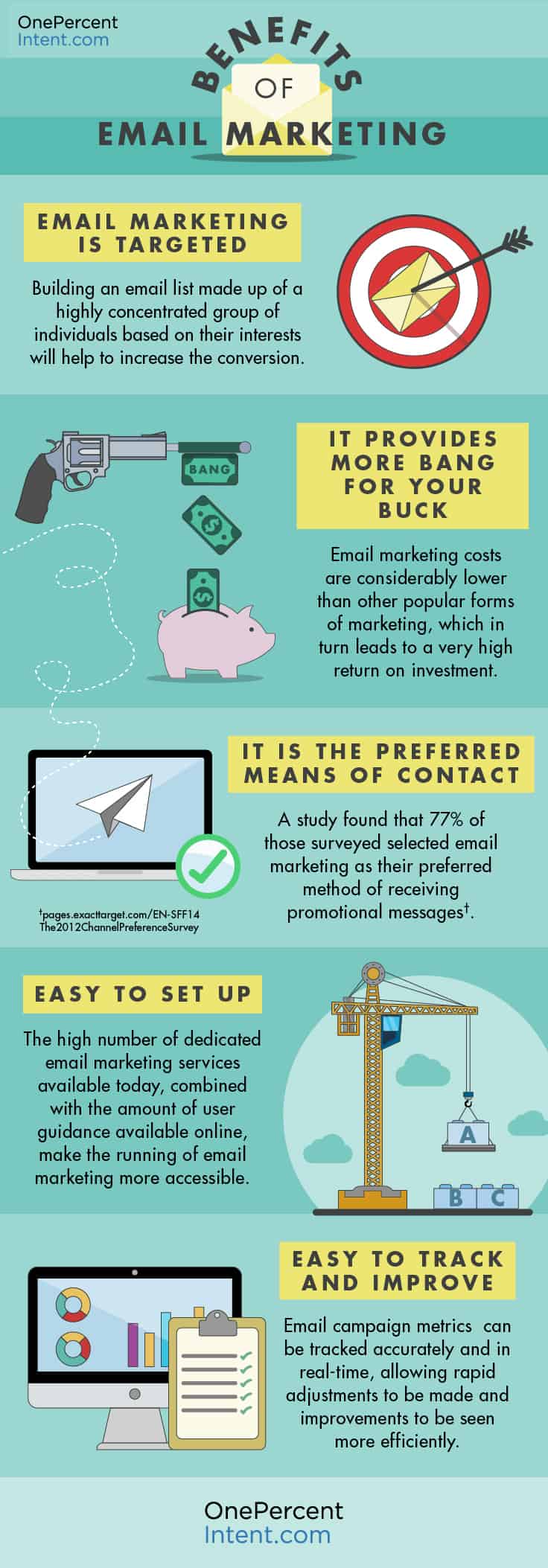
One Percent Intent share their email marketing benefits in this infographic.
Here’s a quick summary:
- Email marketing is targeted
- It provides more bang for your buck
- It is the preferred means of contact
- Easy to set up
- Easy to track and improve
Check out their infographic for more detail.
In the digital age, marketing strategies evolve rapidly, but email marketing has proven to be a steadfast and highly effective tool. Despite the rise of social media and other digital communication channels, email marketing remains a cornerstone of successful marketing campaigns. Here are five benefits of email marketing that you simply can’t ignore.
Email Marketing is Targeted
One of the standout advantages of email marketing is its ability to deliver targeted messages to specific audiences. Unlike traditional marketing methods that often cast a wide net hoping to catch some interested parties, email marketing allows businesses to segment their audience and tailor messages to individual preferences and behaviors. This targeted approach not only enhances the relevance of your messages but also increases engagement rates and conversion rates. Here’s a deeper dive into how small businesses can effectively target their email marketing campaigns.
Understanding Your Audience
Before you can effectively target your emails, you need to understand your audience. This involves collecting and analyzing data about your customers. Here are some steps to get started:
- Data Collection: Gather data from various sources such as website analytics, social media, customer surveys, and purchase history. This data will help you understand who your customers are and what they are interested in.
- Create Buyer Personas: Develop detailed buyer personas that represent different segments of your audience. Include demographic information, buying behavior, preferences, and pain points. These personas will guide your segmentation and content creation.
- Use Sign-Up Forms: Customize your sign-up forms to collect specific information from subscribers. For example, if you run an online clothing store, you might ask for gender, age, and style preferences. This information will help you send more relevant emails.
Segmentation Strategies
Segmentation is the process of dividing your email list into smaller groups based on specific criteria. Here are some effective segmentation strategies for small businesses:
- Demographic Segmentation: Segment your audience based on demographic factors such as age, gender, location, and income. This is particularly useful for businesses that offer products or services catering to specific demographics.
- Behavioral Segmentation: Segment your audience based on their behavior, such as past purchases, website activity, and email engagement. For example, you can create segments for repeat customers, first-time buyers, and cart abandoners.
- Lifecycle Stage Segmentation: Segment your audience based on where they are in the customer lifecycle. For instance, you might have segments for new subscribers, active customers, and lapsed customers. Each group can receive tailored messages that encourage further engagement or re-engagement.
- Interest-Based Segmentation: Segment your audience based on their interests and preferences. This can be determined through data collected from sign-up forms, surveys, and past interactions. For example, a bookstore might segment its audience based on preferred genres.
- Engagement Level Segmentation: Segment your audience based on their level of engagement with your emails. This can include highly engaged subscribers who frequently open and click your emails, as well as inactive subscribers who haven’t engaged in a while. Tailor your content to re-engage inactive subscribers and reward your loyal readers.
Personalization Techniques
Personalization goes beyond just addressing the recipient by name. Here are some advanced personalization techniques:
- Dynamic Content: Use dynamic content to display different content blocks within the same email based on the recipient’s preferences or behavior. For example, an online store can show different product recommendations to different segments of their audience.
- Product Recommendations: Use data from past purchases and browsing behavior to recommend products that are relevant to each subscriber. Personalized product recommendations can significantly increase conversion rates.
- Personalized Offers: Send personalized offers and discounts based on the recipient’s purchase history and preferences. For example, you might offer a discount on a product category that the subscriber has shown interest in.
- Behavioral Triggers: Set up automated emails triggered by specific actions taken by the subscriber, such as signing up for your newsletter, making a purchase, or abandoning a cart. These triggered emails are highly relevant and timely, making them more likely to convert.
Creating Relevant Content
The content of your emails should be relevant to the interests and needs of your targeted segments. Here are some tips for creating relevant content:
- Tailored Messaging: Write messages that speak directly to the interests and needs of each segment. For example, a travel agency might send different destination recommendations to families, solo travelers, and adventure seekers.
- Value-Driven Content: Provide value to your subscribers through informative and engaging content. This could include how-to guides, industry news, and tips that are relevant to their interests.
- Seasonal and Event-Based Content: Create content that is relevant to specific seasons, holidays, or events. For instance, a fitness brand might send workout tips and product recommendations for New Year’s fitness resolutions.
- Exclusive Content: Offer exclusive content or early access to new products to your email subscribers. This makes them feel valued and appreciated, encouraging loyalty.
Implementing Automation
Automation can help you deliver targeted messages at scale. Here are some ways to use automation for targeted email marketing:
- Welcome Series: Set up an automated welcome series for new subscribers. This series can introduce your brand, highlight your best products, and encourage the subscriber to make their first purchase.
- Drip Campaigns: Create drip campaigns that send a series of emails over a period of time based on the subscriber’s actions. For example, a software company might send a series of educational emails to users who sign up for a free trial.
- Re-Engagement Campaigns: Set up automated campaigns to re-engage inactive subscribers. These emails can offer incentives, ask for feedback, or remind them of the benefits of your products or services.
- Abandoned Cart Emails: Use automation to send emails to customers who have abandoned their shopping carts. These emails can remind them of the items left in their cart and offer incentives to complete the purchase.
Analyzing and Optimizing
To ensure your targeted email campaigns are effective, it’s crucial to analyze and optimize your efforts. Here are some tips:
- Track Key Metrics: Monitor key metrics such as open rates, click-through rates, conversion rates, and unsubscribe rates for each segment. This will help you understand what’s working and what needs improvement.
- A/B Testing: Conduct A/B tests to compare different versions of your emails. Test variables such as subject lines, images, copy, and call-to-action buttons. Use the results to optimize your emails for better performance.
- Gather Feedback: Ask for feedback from your subscribers to understand their preferences and improve your email content. This can be done through surveys or by encouraging replies to your emails.
- Refine Segments: Regularly review and refine your segments based on new data and insights. This will help you keep your emails relevant and engaging.
Legal Considerations
Finally, it’s important to comply with email marketing regulations to avoid legal issues and maintain the trust of your subscribers. Here are some key considerations:
- Obtain Consent: Ensure that you have obtained explicit consent from your subscribers before sending them emails. This can be done through opt-in forms where subscribers voluntarily provide their email addresses.
- Provide Opt-Out Options: Include a clear and easy way for subscribers to opt-out or unsubscribe from your emails. This is not only a legal requirement but also helps maintain a positive relationship with your audience.
- Protect Data: Handle your subscribers’ data responsibly and ensure it is protected. This includes using secure systems and processes to store and manage email addresses and other personal information.
In conclusion, targeted email marketing allows small businesses to deliver personalized and relevant messages to their audience, leading to higher engagement and conversion rates. By understanding your audience, segmenting your email list, personalizing content, leveraging automation, analyzing performance, and complying with legal requirements, you can create effective email marketing campaigns that drive results.
It Provides More Bang for Your Buck
Email marketing is renowned for its cost-effectiveness. Compared to traditional marketing channels like print, TV, or radio, email marketing requires significantly lower investment. There are no printing or postage costs, and with the availability of various email marketing tools, creating and sending emails has become more affordable than ever. Here’s a deeper dive into how small businesses can maximize their budget with email marketing and achieve impressive returns on investment (ROI).
Affordable Setup and Operation
One of the primary reasons email marketing provides more bang for your buck is its affordability. Here’s how small businesses can make the most of this aspect:
- Utilize Free or Low-Cost Email Marketing Platforms: Many email marketing platforms offer free tiers or low-cost plans that are perfect for small businesses. Platforms like Mailchimp, SendinBlue, and MailerLite provide robust features at affordable prices. Start with a free plan to test the waters and upgrade as your needs grow.
- DIY Design and Content Creation: With user-friendly templates and drag-and-drop editors, you can create professional-looking emails without the need for graphic designers or developers. This reduces the cost associated with creating marketing materials.
- Leverage Free Resources: Utilize free resources like stock photos, free email templates, and online design tools such as Canva. These resources help you maintain a high-quality appearance without the need for expensive software or professional services.
High ROI Through Effective Campaigns
Email marketing’s impressive ROI can be attributed to several factors, including the ability to run effective campaigns that convert. Here are some tips for small businesses:
- Focus on List Building: A high-quality email list is crucial for maximizing ROI. Use lead magnets such as free e-books, discount codes, or exclusive access to webinars to attract subscribers. Ensure that your sign-up forms are visible and easy to complete on your website and social media profiles.
- Segment Your Audience: Segmentation allows you to send more relevant and personalized emails, which can significantly increase engagement and conversion rates. Use the data you collect from subscribers to create targeted segments, such as new subscribers, repeat customers, or those who have shown interest in specific products.
- Create Compelling Content: The content of your emails should be engaging and provide value to your subscribers. Use a mix of promotional content, educational articles, and personalized recommendations to keep your audience interested. The more value you provide, the more likely your subscribers are to take action.
- Optimize for Mobile: Ensure that your emails are mobile-friendly, as a significant portion of email opens occur on mobile devices. Use responsive design templates and test your emails on various devices to ensure they look great on screens of all sizes.
Automation Saves Time and Money
Automation is a powerful tool that can help small businesses save time and money while maximizing the effectiveness of their email marketing efforts. Here’s how to make the most of automation:
- Automated Welcome Series: Set up an automated welcome series to greet new subscribers. This series can introduce your brand, highlight key products or services, and encourage initial engagement. Automated emails ensure that every new subscriber receives a consistent and timely welcome.
- Behavioral Triggers: Use behavioral triggers to send automated emails based on specific actions taken by your subscribers. For example, send a follow-up email to customers who have abandoned their shopping carts, or a thank-you email after a purchase. These triggered emails are highly relevant and can significantly boost conversion rates.
- Regular Newsletters: Schedule regular newsletters to keep your audience informed and engaged. Automation allows you to plan and schedule these newsletters in advance, ensuring consistent communication without the need for manual intervention.
- Re-engagement Campaigns: Automate re-engagement campaigns to win back inactive subscribers. Offer special discounts, highlight new products, or ask for feedback to rekindle their interest in your brand.
Measurable Results and Continuous Improvement
Email marketing provides detailed analytics that allow you to measure the performance of your campaigns and make data-driven decisions. Here’s how to use these insights to improve your ROI:
- Track Key Metrics: Monitor important metrics such as open rates, click-through rates, conversion rates, and unsubscribe rates. These metrics provide insights into how your emails are performing and where there’s room for improvement.
- A/B Testing: Conduct A/B tests to compare different versions of your emails. Test variables such as subject lines, images, call-to-action buttons, and content. Use the results to optimize your emails for better performance. For example, if you find that emails with shorter subject lines have higher open rates, you can adjust your future subject lines accordingly.
- Analyze Customer Feedback: Pay attention to the feedback you receive from your subscribers. This can come in the form of direct replies to your emails or through surveys. Use this feedback to improve your email content and strategy.
- Refine Your Strategy: Based on the data and feedback you collect, continually refine your email marketing strategy. This might involve tweaking your segmentation, experimenting with new content formats, or adjusting the frequency of your emails.
Leveraging Integrations
Integrating your email marketing platform with other tools can enhance its effectiveness and provide more value for your money. Here are some ways to leverage integrations:
- CRM Integration: Integrate your email marketing platform with your customer relationship management (CRM) system. This allows for seamless data sharing, ensuring that your email campaigns are informed by the most up-to-date customer information. Personalized emails based on CRM data can significantly improve engagement and conversions.
- E-commerce Integration: If you run an e-commerce business, integrate your email marketing platform with your e-commerce platform (such as Shopify, WooCommerce, or Magento). This enables you to send targeted emails based on purchase history, browse behavior, and other customer actions.
- Social Media Integration: Connect your email marketing with your social media accounts to create cohesive and multi-channel campaigns. For example, you can use social media ads to grow your email list or share your email content on social platforms to increase its reach.
- Analytics Tools: Integrate with analytics tools like Google Analytics to gain deeper insights into how your email campaigns are driving traffic and conversions on your website. This helps you understand the full impact of your email marketing efforts and identify areas for improvement.
Maximizing Content Reuse
Email marketing allows you to repurpose and maximize the value of your content. Here’s how to make the most of your content creation efforts:
- Repurpose Blog Content: Use your existing blog posts to create email newsletters. Summarize the key points of a blog post and include a link to the full article. This not only drives traffic to your website but also provides valuable content to your subscribers.
- Use User-Generated Content: Incorporate user-generated content such as customer reviews, testimonials, and photos into your emails. This content is highly trusted by other consumers and can enhance the credibility of your emails.
- Leverage Social Proof: Share social proof, such as customer success stories or case studies, in your emails. Highlighting real-life examples of how your product or service has benefited others can increase trust and encourage conversions.
- Content Series: Create a series of emails around a specific theme or topic. For example, if you offer financial services, you could create a series of emails that provide tips on saving money, investing, and managing debt. This keeps your audience engaged over an extended period and positions you as an authority in your field.
Conclusion
Email marketing offers small businesses an unparalleled opportunity to achieve impressive returns on investment through cost-effective strategies. By utilizing affordable tools, creating compelling and relevant content, leveraging automation, and continually analyzing and optimizing their efforts, small businesses can maximize the value of their email marketing campaigns. Integrating email marketing with other tools and repurposing content further enhances its cost-effectiveness, ensuring that every dollar spent delivers maximum impact. Embracing these tips and strategies will help small businesses harness the full potential of email marketing, driving growth and success in a competitive digital landscape.
It Is the Preferred Means of Contact
Despite the proliferation of various communication channels, email remains the preferred method of contact for many consumers. A survey by MarketingSherpa found that 72% of consumers prefer to receive promotional content through email compared to 17% who prefer social media. This preference highlights the importance of email marketing in reaching and engaging with customers. Here’s an in-depth look at why email is the preferred means of contact and how small businesses can leverage this preference effectively.
Understanding Consumer Preferences
Consumers prefer email for several reasons:
- Control: Email gives recipients control over the content they receive. They can opt-in to communications they find relevant and unsubscribe from those they don’t. This control is less prevalent in other forms of marketing, making email a more attractive option for consumers.
- Privacy: Email offers a level of privacy that other channels, like social media, may not. Business communications, in particular, are often seen as more appropriate when conducted through email.
- Professionalism: Email is perceived as a professional and formal mode of communication. For business-related content, announcements, and detailed information, email is often the go-to medium for consumers.
- Convenience: With the widespread use of smartphones, checking email has become a routine activity. Consumers can easily access their emails anytime and anywhere, making it a convenient channel for receiving updates and offers.
Building and Growing Your Email List
To capitalize on email being the preferred means of contact, small businesses need to focus on building and growing their email lists. Here are some tips to get started:
- Offer Incentives: Encourage sign-ups by offering incentives such as discounts, freebies, or exclusive content. For example, an online clothing store might offer a 10% discount on the first purchase for new subscribers.
- Easy Sign-Up Process: Make the sign-up process as simple and quick as possible. Place sign-up forms prominently on your website, social media pages, and at the checkout process in your online store.
- Quality Over Quantity: Aim to attract subscribers who are genuinely interested in your products or services. A smaller, engaged list is far more valuable than a large, disengaged one.
- Leverage Social Media: Promote your email newsletter on your social media channels. Use call-to-actions like “Join our mailing list” or “Subscribe for exclusive offers” to drive sign-ups.
- Host Contests and Giveaways: Use contests and giveaways to encourage email sign-ups. For instance, ask participants to enter their email addresses for a chance to win a prize.
Crafting Engaging and Relevant Emails
Once you have built a robust email list, the next step is to craft engaging and relevant emails that cater to your audience’s preferences. Here’s how:
- Personalize Your Emails: Personalization goes beyond addressing the recipient by name. Use data such as past purchases, browsing behavior, and preferences to tailor the content of your emails. For instance, recommend products based on previous purchases or send birthday greetings with a special offer.
- Create Compelling Subject Lines: The subject line is the first thing recipients see, so make it compelling. Use clear, concise language that entices the reader to open the email. Avoid using all caps or excessive punctuation, which can trigger spam filters.
- Provide Value: Ensure that every email you send provides value to the recipient. This could be in the form of informative content, exclusive discounts, or early access to new products. The more value you provide, the more likely recipients are to engage with your emails.
- Use a Clear Call-to-Action (CTA): Every email should have a clear CTA that tells the recipient what action to take next. Whether it’s “Shop Now,” “Learn More,” or “Sign Up,” make sure the CTA stands out and is easy to follow.
- Mobile Optimization: Ensure that your emails are optimized for mobile devices. Use responsive design templates that adjust to different screen sizes, and test your emails on various devices to ensure they look great everywhere.
Maintaining and Improving Engagement
Maintaining and improving engagement with your email subscribers is crucial for long-term success. Here are some strategies:
- Consistent Schedule: Send emails on a consistent schedule so that your subscribers know when to expect them. Whether it’s weekly, bi-weekly, or monthly, consistency helps build anticipation and engagement.
- Segment Your List: Segment your email list based on different criteria such as purchase history, engagement level, and preferences. This allows you to send more targeted and relevant emails, which can increase engagement.
- Interactive Content: Incorporate interactive content such as polls, surveys, and quizzes into your emails. This not only makes your emails more engaging but also provides valuable insights into your audience’s preferences and behaviors.
- Monitor Engagement Metrics: Keep an eye on key engagement metrics such as open rates, click-through rates, and conversion rates. Use this data to identify what’s working and what’s not, and adjust your strategy accordingly.
- Re-Engagement Campaigns: For subscribers who have become inactive, set up re-engagement campaigns to win them back. Offer special incentives, ask for feedback, or simply remind them of the benefits of staying subscribed.
Ensuring Compliance and Building Trust
Maintaining compliance with email marketing regulations is essential for building trust with your audience. Here’s how to ensure compliance and foster trust:
- Obtain Consent: Make sure you have explicit consent from subscribers before sending them emails. This can be done through opt-in forms where subscribers voluntarily provide their email addresses.
- Provide Easy Unsubscribe Options: Include a clear and easy way for subscribers to unsubscribe from your emails. This not only helps maintain compliance but also builds trust by showing that you respect your subscribers’ preferences.
- Respect Privacy: Handle your subscribers’ data responsibly and ensure it is protected. Use secure systems and processes to store and manage email addresses and other personal information.
- Transparency: Be transparent about what subscribers can expect from your emails. Clearly communicate the type of content you will send and how often. This sets the right expectations and helps build trust.
- Respond to Feedback: Encourage subscribers to provide feedback and respond promptly to their queries or concerns. This shows that you value their input and are committed to improving their experience.
Leveraging Email as Part of a Multi-Channel Strategy
While email is a powerful tool, it should be integrated into a broader multi-channel marketing strategy to maximize its effectiveness. Here’s how to leverage email as part of your overall strategy:
- Cross-Promote Channels: Use your emails to promote your social media channels, website, and other communication platforms. Encourage subscribers to follow you on social media for more updates and exclusive content.
- Coordinate Campaigns: Align your email campaigns with other marketing efforts such as social media ads, content marketing, and in-store promotions. A coordinated approach ensures a consistent message across all channels.
- Use Email to Drive Traffic: Use your email campaigns to drive traffic to your website, blog, or online store. Include links to relevant pages and use enticing CTAs to encourage clicks.
- Gather Insights: Use the data and insights from your email campaigns to inform your overall marketing strategy. For example, if a particular type of content performs well in your emails, consider incorporating similar content into your social media posts or blog articles.
Conclusion
Email marketing remains the preferred means of contact for consumers due to its control, privacy, professionalism, and convenience. For small businesses, leveraging this preference effectively can lead to increased engagement, conversions, and customer loyalty. By building and growing your email list, crafting engaging and relevant emails, maintaining and improving engagement, ensuring compliance, and integrating email into a multi-channel strategy, small businesses can harness the full potential of email marketing. This approach not only meets consumer preferences but also drives long-term success in the competitive digital landscape.
Easy to Set Up
Setting up an email marketing campaign is straightforward, thanks to the plethora of tools and platforms available today. Whether you are a small business or a large corporation, there are solutions that cater to various needs and budgets. These tools come with user-friendly interfaces and templates that make the creation process quick and easy, even for those with little to no design or technical skills. Here’s an in-depth guide on how small businesses can set up and optimize their email marketing campaigns.
Choosing the Right Email Marketing Platform
The first step in setting up an email marketing campaign is choosing the right platform. There are numerous email marketing platforms available, each with its own set of features and pricing plans. Here’s how to select the best one for your small business:
- Identify Your Needs: Determine what features are essential for your business. This might include email templates, automation capabilities, segmentation options, analytics, and integrations with other tools.
- Compare Platforms: Research and compare different platforms such as Mailchimp, SendinBlue, MailerLite, and Constant Contact. Consider factors such as ease of use, customer support, scalability, and cost.
- Start with a Free Trial: Most email marketing platforms offer free trials or free plans with limited features. Take advantage of these offers to test the platform and see if it meets your needs before committing to a paid plan.
- Read Reviews and Testimonials: Look for reviews and testimonials from other small businesses to get an idea of the platform’s reliability and effectiveness.
Building and Managing Your Email List
Once you’ve chosen an email marketing platform, the next step is to build and manage your email list. Here’s how to do it effectively:
- Create Sign-Up Forms: Use your email marketing platform to create sign-up forms. These forms should be simple and easy to fill out, asking for only the most essential information (e.g., name and email address). Place these forms prominently on your website, blog, and social media pages.
- Use Pop-Ups and Slide-Ins: Implement pop-ups or slide-ins on your website to capture visitors’ email addresses. These can be triggered by specific actions, such as scrolling down a page or spending a certain amount of time on the site.
- Leverage Landing Pages: Create dedicated landing pages for your email sign-ups. These pages can be used in conjunction with paid advertising campaigns or as part of your social media strategy.
- Offer Incentives: Encourage sign-ups by offering incentives such as discounts, free resources, or exclusive content. For example, an e-commerce store might offer a 10% discount on the first purchase for new subscribers.
- Import Existing Contacts: If you already have a list of customer contacts, import them into your email marketing platform. Ensure you have obtained consent to send them emails to comply with regulations.
Designing Your Emails
Designing professional and engaging emails is made easy with the tools provided by email marketing platforms. Here’s how to create effective email designs:
- Use Templates: Most email marketing platforms offer a variety of templates that can be customized to suit your brand. Choose a template that aligns with your brand’s aesthetic and customize it with your logo, colors, and fonts.
- Drag-and-Drop Editors: Utilize the drag-and-drop editors provided by the platform to easily add and arrange elements such as text blocks, images, buttons, and social media links. This allows you to create visually appealing emails without any design skills.
- Responsive Design: Ensure that your emails are mobile-friendly by using responsive design templates. This means that the email layout will automatically adjust to fit different screen sizes, providing a seamless experience for mobile users.
- High-Quality Images: Use high-quality images that are relevant to your content. Avoid using large image files that can slow down loading times. Many platforms offer free stock photos that you can use in your emails.
- Clear and Compelling CTAs: Include clear and compelling call-to-action (CTA) buttons that stand out. Use actionable language such as “Shop Now,” “Learn More,” or “Get Started.”
Setting Up Automation
Automation is a key feature of email marketing platforms that can save time and increase the effectiveness of your campaigns. Here’s how to set up automation:
- Welcome Emails: Set up an automated welcome email to be sent to new subscribers. This email can introduce your brand, highlight key products or services, and provide a special offer to encourage the first purchase.
- Drip Campaigns: Create automated drip campaigns that send a series of emails over a period of time based on specific triggers, such as signing up for a newsletter or making a purchase. Drip campaigns can nurture leads and guide them through the sales funnel.
- Behavioral Triggers: Use behavioral triggers to send automated emails based on specific actions taken by your subscribers. For example, send a follow-up email to customers who have abandoned their shopping carts or a thank-you email after a purchase.
- Re-Engagement Campaigns: Set up automated re-engagement campaigns to win back inactive subscribers. Offer special incentives, highlight new products, or ask for feedback to rekindle their interest.
Testing and Optimizing Your Campaigns
To ensure the success of your email marketing campaigns, it’s important to test and optimize them regularly. Here’s how to do it:
- A/B Testing: Conduct A/B tests to compare different versions of your emails. Test variables such as subject lines, images, content, and CTAs to determine what resonates best with your audience. Use the results to refine your emails for better performance.
- Analyze Metrics: Monitor key metrics such as open rates, click-through rates, conversion rates, and unsubscribe rates. These metrics provide insights into how your emails are performing and where there’s room for improvement.
- Use Analytics Tools: Take advantage of the analytics tools provided by your email marketing platform to gain deeper insights into your campaigns. These tools can help you track subscriber behavior, measure engagement, and identify trends.
- Gather Feedback: Encourage your subscribers to provide feedback on your emails. This can be done through surveys or by asking them to reply to your emails with their thoughts. Use this feedback to improve your content and strategy.
- Refine Your Strategy: Based on the data and feedback you collect, continually refine your email marketing strategy. This might involve adjusting your segmentation, experimenting with new content formats, or changing the frequency of your emails.
Ensuring Compliance with Regulations
Compliance with email marketing regulations is crucial to avoid legal issues and maintain the trust of your subscribers. Here’s how to ensure compliance:
- Obtain Consent: Ensure that you have obtained explicit consent from your subscribers before sending them emails. This can be done through opt-in forms where subscribers voluntarily provide their email addresses.
- Provide Unsubscribe Options: Include a clear and easy way for subscribers to unsubscribe from your emails. This is not only a legal requirement but also helps maintain a positive relationship with your audience.
- Respect Privacy: Handle your subscribers’ data responsibly and ensure it is protected. Use secure systems and processes to store and manage email addresses and other personal information.
- Follow GDPR and CAN-SPAM: Familiarize yourself with regulations such as the General Data Protection Regulation (GDPR) and the CAN-SPAM Act. Ensure that your email practices comply with these regulations to avoid penalties.
Conclusion
Setting up an email marketing campaign is a straightforward process, thanks to the user-friendly tools and platforms available today. By choosing the right email marketing platform, building and managing your email list, designing engaging emails, leveraging automation, testing and optimizing your campaigns, and ensuring compliance with regulations, small businesses can create effective email marketing strategies that drive results. The ease of setup combined with the powerful features of modern email marketing platforms makes it accessible for businesses of all sizes to reach and engage with their audience successfully.
Easy to Track and Improve
One of the greatest strengths of email marketing is the ability to track and measure its performance. Unlike traditional marketing methods, where it can be difficult to determine the impact of a campaign, email marketing provides detailed analytics that allow businesses to see exactly how their emails are performing. This transparency not only helps in evaluating the effectiveness of your campaigns but also provides insights that can be used to continuously improve your email marketing strategy. Here’s an in-depth guide on how small businesses can track and improve their email marketing campaigns.
Key Metrics to Track
To effectively track the performance of your email marketing campaigns, it’s essential to monitor key metrics. Here are the most important ones:
- Open Rate: This is the percentage of recipients who open your email. A high open rate indicates that your subject lines are compelling and that your emails are reaching the right audience.
- Click-Through Rate (CTR): This metric measures the percentage of recipients who clicked on one or more links in your email. A high CTR indicates that your email content is engaging and that your calls-to-action are effective.
- Conversion Rate: This is the percentage of recipients who completed a desired action after clicking on a link in your email, such as making a purchase or filling out a form. This metric is crucial for measuring the ROI of your email campaigns.
- Bounce Rate: This measures the percentage of emails that were not delivered to the recipient’s inbox. There are two types of bounces: hard bounces (permanent delivery failures) and soft bounces (temporary delivery issues). A high bounce rate can indicate problems with your email list quality.
- Unsubscribe Rate: This is the percentage of recipients who unsubscribe from your email list after receiving an email. Monitoring this metric helps you understand if your content is relevant and if you are emailing too frequently.
- List Growth Rate: This measures the rate at which your email list is growing. A healthy list growth rate indicates that your efforts to attract new subscribers are successful.
- Email Sharing/Forwarding Rate: This is the percentage of recipients who share your email with others or forward it to a friend. A high sharing rate can indicate that your content is valuable and worth sharing.
- Spam Complaint Rate: This measures the percentage of recipients who mark your email as spam. Keeping this rate low is essential for maintaining a good sender reputation and ensuring deliverability.
Tools for Tracking and Analytics
There are numerous tools available that can help you track these metrics and gain deeper insights into your email marketing performance. Here are some popular ones:
- Email Marketing Platforms: Most email marketing platforms, such as Mailchimp, SendinBlue, and MailerLite, provide built-in analytics tools that track key metrics and provide detailed reports on your campaigns.
- Google Analytics: By integrating your email marketing platform with Google Analytics, you can track the behavior of recipients after they click through to your website. This allows you to measure conversions and other on-site actions.
- CRM Systems: Customer Relationship Management (CRM) systems like HubSpot and Salesforce can be integrated with your email marketing platform to provide a more comprehensive view of your customer interactions and email campaign performance.
- Heatmaps: Tools like Crazy Egg and Hotjar can create heatmaps of your emails, showing you where recipients are clicking and how they are interacting with your content.
Tips for Improving Your Email Campaigns
Based on the data and insights you gather, you can continuously improve your email marketing campaigns. Here are some tips and strategies:
- Optimize Subject Lines: Since the subject line is the first thing recipients see, it’s crucial to make it compelling. Use A/B testing to compare different subject lines and see which ones generate higher open rates. Experiment with personalization, urgency, and curiosity to find what works best for your audience.
- Improve Email Content: Analyze the performance of different types of content within your emails. Are recipients engaging more with videos, images, or text? Use these insights to create content that resonates with your audience. Ensure your emails are valuable, relevant, and engaging.
- Enhance CTAs: Your call-to-action (CTA) should be clear, compelling, and easy to find. Test different CTAs to see which ones generate higher click-through rates. Experiment with the wording, design, and placement of your CTAs.
- Segment Your Audience: Use segmentation to send more targeted and relevant emails. Segment your list based on demographics, past purchase behavior, engagement level, and other criteria. Tailored emails are more likely to resonate with recipients and drive conversions.
- Personalize Your Emails: Personalization can significantly improve engagement. Use the data you have about your subscribers to personalize your emails. This can include using their name, recommending products based on past purchases, or sending content relevant to their interests.
- Test Sending Times: The timing of your emails can impact open and click-through rates. Test different sending times and days of the week to see when your audience is most responsive. Many email platforms offer optimal send time features based on past engagement data.
- Monitor Deliverability: Ensure your emails are reaching the inbox and not being marked as spam. Use tools to check your sender reputation and follow best practices for email deliverability. Keep your email list clean by regularly removing inactive subscribers and invalid email addresses.
- Automate Workflows: Set up automated email workflows to nurture leads and engage customers without constant manual effort. This can include welcome emails, abandoned cart reminders, and post-purchase follow-ups. Automated emails can be highly effective because they are timely and relevant.
- Gather Feedback: Ask your subscribers for feedback on your emails. This can be done through surveys or by encouraging them to reply to your emails with their thoughts. Use this feedback to make improvements and better meet your audience’s needs.
A/B Testing for Continuous Improvement
A/B testing, also known as split testing, is a powerful technique for optimizing your email marketing campaigns. Here’s how to effectively conduct A/B tests:
- Define Your Hypothesis: Before running an A/B test, define what you want to test and why. This could be testing different subject lines to improve open rates or different CTAs to increase click-through rates.
- Create Variations: Create two or more variations of the element you want to test. For example, if you are testing subject lines, write two different subject lines for the same email.
- Split Your Audience: Randomly split your email list into equal segments. Each segment should receive a different variation of the email. This ensures that the test results are not biased by differences in the audience.
- Measure Results: After sending the emails, measure the performance of each variation using your key metrics. Determine which variation performed better based on the metric you are testing.
- Implement the Winning Variation: Once you have identified the winning variation, implement it in your future emails. Use the insights from the test to inform your overall email marketing strategy.
- Test One Element at a Time: To get clear and actionable results, test only one element at a time. If you test multiple elements simultaneously, it will be difficult to determine which change led to the improvement.
Using Analytics to Inform Your Strategy
The data and insights you gather from tracking and testing your email campaigns should be used to inform and refine your overall email marketing strategy. Here’s how to leverage analytics for strategic planning:
- Identify Trends: Look for trends in your email performance over time. Are there certain types of content or subject lines that consistently perform well? Use these trends to guide your content creation and campaign planning.
- Set Benchmarks: Establish benchmarks for your key metrics based on historical data and industry standards. Use these benchmarks to set goals and measure the success of your campaigns.
- Segment Analysis: Analyze the performance of different audience segments to identify opportunities for improvement. For example, if a particular segment has a low open rate, you may need to adjust your subject lines or sending times for that segment.
- Customer Journey Mapping: Use your email analytics to map out the customer journey and identify touchpoints where email can play a role. This can help you create more effective email workflows and nurture campaigns.
- Refine Content Strategy: Use the insights from your email analytics to refine your content strategy. For example, if educational content performs well, consider incorporating more how-to guides and tips into your emails.
- Adjust Frequency: Based on engagement metrics and feedback, adjust the frequency of your emails. Sending too many emails can lead to higher unsubscribe rates, while too few emails can result in low engagement.
Conclusion
Email marketing’s ability to provide detailed tracking and analytics makes it a powerful tool for small businesses. By monitoring key metrics, using the right tools, and continuously testing and optimizing your campaigns, you can improve your email marketing performance and achieve better results. The insights gained from tracking and analyzing your campaigns should inform your overall strategy, helping you to create more engaging, relevant, and effective emails. Embracing a data-driven approach to email marketing will enable small businesses to maximize their ROI and build stronger relationships with their audience.
Conclusion
In conclusion, the benefits of email marketing are numerous and compelling. Its targeted nature allows for personalized and relevant communication with customers, which can lead to increased engagement and loyalty. The cost-effectiveness of email marketing provides a high ROI, making it an attractive option for businesses of all sizes. Its status as the preferred means of contact ensures that emails are welcomed and valued by recipients. The ease of setting up email campaigns, combined with the ability to track and improve their performance, makes email marketing a powerful tool in any marketer’s arsenal. As the digital landscape continues to evolve, email marketing remains a reliable and effective way to reach and engage with customers.

Author:
Mark Ford