
Are you struggling to grow your Facebook page following? Are you losing fans just as fast as you’re gaining them?
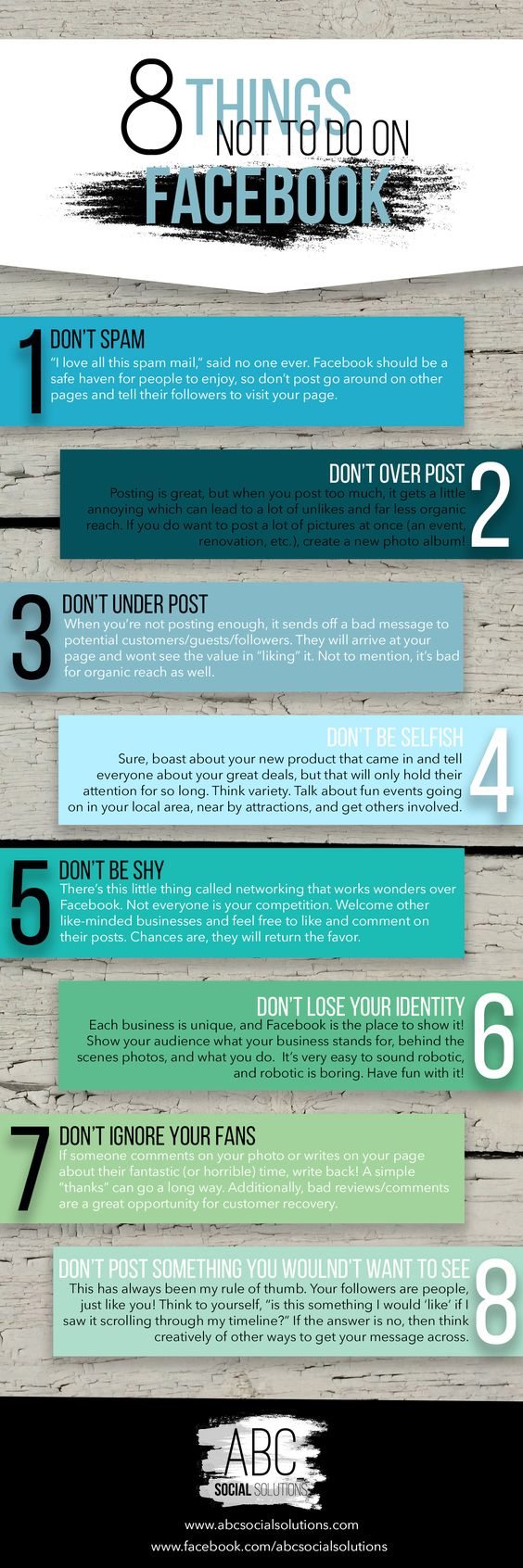
ABC Social Solutions share 8 things you shouldn’t do on Facebook in this infographic.
I’ve summarised the key points below:
- Don’t spam
- Don’t over post
- Don’t under post
- Don’t be selfish
- Don’t be shy
- Don’t lose your identity
- Don’t ignore your fans
- Don’t post something you wouldn’t want to see
Hope the infographic helps!
Facebook has evolved into a significant platform for social interaction, marketing, and networking. However, the vast opportunities it offers also come with a set of unwritten rules. Missteps can tarnish your online presence, alienate your audience, or even lead to account suspension. To navigate Facebook effectively, here are eight things you shouldn’t do on Facebook.
Don’t Spam
Spamming on Facebook is a surefire way to alienate your audience and potentially harm your business’s reputation. For small businesses, maintaining a positive presence on social media is crucial for building trust and fostering relationships with current and potential customers. Here’s a more in-depth look at what constitutes spam and how small businesses can avoid it, ensuring their Facebook activity remains effective and appreciated by their audience.
Understanding Spam and Its Impact
Spam on Facebook includes any unsolicited, irrelevant, or repetitive content that clutters users’ news feeds and inboxes. This can manifest in various ways, such as:
- Excessive Posting: Posting too frequently, especially with similar content, can overwhelm your followers.
- Unsolicited Messages: Sending messages to people who haven’t opted in to receive them.
- Irrelevant Tagging: Tagging users in posts that have no relevance to them.
- Over-Promotion: Constantly promoting products or services without providing valuable or engaging content.
- Comment Spam: Posting promotional comments on other people’s posts or in groups.
Tips for Small Businesses to Avoid Spamming
- Develop a Content Strategy:
-
- Plan Your Posts: Create a content calendar to schedule posts in advance. This helps ensure a balanced mix of content and prevents over-posting.
- Variety is Key: Mix promotional content with informational, entertaining, and engaging posts. Share industry news, tips, behind-the-scenes looks, and user-generated content.
- Quality Over Quantity:
-
- Focus on Value: Ensure each post provides value to your audience. This could be in the form of useful information, insights, or entertainment.
- Be Selective: Only post when you have something meaningful to share. Avoid posting just for the sake of staying active.
- Engage, Don’t Just Broadcast:
-
- Interact with Your Audience: Respond to comments, messages, and reviews promptly and thoughtfully. Engagement shows you value your customers’ opinions and feedback.
- Ask Questions: Encourage interaction by asking questions or prompting discussions. This can increase engagement and make your page more dynamic.
- Use Targeted Ads Wisely:
-
- Segment Your Audience: Use Facebook’s targeting tools to ensure your ads reach the right people. Avoid broad, untargeted campaigns that might be seen as intrusive.
- Frequency Control: Adjust ad settings to control how often your ads are shown to the same users. This prevents ad fatigue and reduces the risk of being perceived as spammy.
- Respect Privacy:
-
- Opt-In Methods: Collect email addresses or phone numbers through opt-in methods for direct marketing campaigns. Ensure people have explicitly agreed to receive communications from you.
- Honour Unsubscribes: Promptly remove anyone who opts out of your communications from your mailing lists. Respecting users’ choices builds trust and reduces complaints.
- Be Transparent:
-
- Clear Messaging: Be clear about what your followers can expect in terms of content and frequency of posts. Transparency helps manage expectations and reduces negative reactions.
- Honest Promotions: Ensure all promotional content is truthful and not misleading. Misleading posts can quickly damage your credibility.
- Monitor and Adjust:
-
- Track Engagement: Use Facebook Insights to monitor how your posts are performing. High engagement rates indicate your audience appreciates your content, while low engagement may suggest you need to adjust your approach.
- Listen to Feedback: Pay attention to feedback from your audience. If they mention feeling overwhelmed by your posts, take it seriously and adjust your posting frequency accordingly.
- Join Relevant Groups:
-
- Be Relevant: Participate in groups related to your industry or niche. Share your expertise and engage in meaningful discussions without pushing your products or services.
- Build Relationships: Focus on building relationships and establishing your credibility within the community. This approach can naturally lead to business opportunities without the need for aggressive self-promotion.
Examples of Effective Posting
To illustrate, consider a small bakery that wants to maintain a vibrant Facebook presence:
- Content Strategy: The bakery posts three times a week—one post showcasing a new product, one sharing a baking tip or recipe, and one highlighting a customer story or review.
- Engagement: The bakery responds to comments and messages daily, thanking customers for their feedback and addressing any concerns.
- Quality: Each post includes high-quality photos and engaging captions that reflect the bakery’s brand personality.
- Ads: Targeted ads are used sparingly, focusing on new product launches or special promotions, with frequency controls in place to avoid overexposure.
By following these guidelines, small businesses can ensure their Facebook presence is engaging, respectful, and effective. Avoiding spam and focusing on providing value helps build a loyal and engaged community, which is essential for long-term success on social media.
Don’t Over Post
Over-posting on Facebook can be just as harmful as spamming, particularly for small businesses trying to maintain a strong and positive presence on the platform. Posting too frequently can overwhelm your audience, lead to decreased engagement, and even cause your followers to unfollow or mute your updates. Here’s a detailed guide to help small businesses avoid over-posting while maintaining an effective and engaging Facebook presence.
Understanding Over-Posting and Its Impact
Over-posting occurs when a business shares content too frequently, causing their audience to feel bombarded. This can lead to:
- Audience Fatigue: Followers may feel overwhelmed by the volume of posts and start ignoring your updates.
- Decreased Engagement: When followers are inundated with content, they are less likely to interact with individual posts.
- Unfollows and Mutes: Too many posts can prompt followers to unfollow your page or mute your updates, reducing your overall reach.
- Algorithm Penalties: Facebook’s algorithm may deprioritize your content if it detects that users are frequently ignoring or hiding your posts.
Tips for Small Businesses to Avoid Over-Posting
- Create a Posting Schedule:
-
- Plan Ahead: Use a content calendar to plan your posts in advance. This ensures a balanced posting schedule and prevents the temptation to post excessively.
- Consistency Over Frequency: Aim for consistency rather than high frequency. Posting 2-3 times a week is generally sufficient for maintaining visibility without overwhelming your audience.
- Prioritize Quality Content:
-
- Focus on Value: Ensure each post provides value, whether it’s through information, entertainment, or engagement. High-quality content is more likely to be appreciated and shared by your audience.
- Avoid Filler Content: Don’t post just for the sake of posting. If you don’t have something meaningful to share, it’s better to skip a day than to post content that doesn’t resonate with your audience.
- Understand Your Audience:
-
- Monitor Engagement: Pay attention to when your audience is most active and engaged. Use Facebook Insights to track the performance of your posts and adjust your schedule accordingly.
- Test Different Times: Experiment with posting at different times of the day to see when your audience is most responsive. This can help you optimize your posting schedule.
- Leverage Scheduled Posts:
-
- Use Facebook’s Scheduling Tools: Take advantage of Facebook’s built-in scheduling tools to plan and space out your posts. This ensures a steady flow of content without overwhelming your followers.
- Maintain Flexibility: While scheduling is important, remain flexible enough to respond to real-time events and interactions. Engage with your audience in the moment when appropriate.
- Diversify Your Content:
-
- Mix It Up: Vary the types of content you post. Include a mix of promotional content, educational posts, behind-the-scenes glimpses, customer stories, and user-generated content.
- Interactive Posts: Encourage engagement with polls, questions, and interactive content that invite your audience to participate without feeling overwhelmed.
- Monitor and Adjust:
-
- Track Performance: Regularly review the performance of your posts using Facebook Insights. Identify patterns in engagement and adjust your posting frequency based on what works best for your audience.
- Feedback Loop: Listen to feedback from your audience. If followers express that they’re seeing too much content, consider scaling back your posting frequency.
- Engage Outside of Posting:
-
- Comment and Interact: Engage with your audience by commenting on their posts, responding to messages, and participating in relevant group discussions. This helps maintain visibility without overloading your own page with posts.
- Share User-Generated Content: Encourage your customers to create and share content about your business. Reposting user-generated content can fill gaps in your schedule without increasing your own posting frequency.
- Use Analytics to Guide Strategy:
-
- Identify High-Performing Content: Use analytics to identify which types of content perform best. Focus on creating more of what your audience enjoys and engages with.
- Reduce Low-Performing Posts: Cut back on types of content that don’t perform well. This helps you maintain a high standard of quality and relevance in your posts.
Examples of Effective Posting Schedules
To illustrate, let’s consider a small fitness studio that wants to maintain a vibrant Facebook presence without over-posting:
- Content Calendar: The fitness studio creates a content calendar that includes:
-
- Monday: Motivational quote and success stories from clients.
- Wednesday: Workout tips or a short exercise video.
- Friday: Promotional post about upcoming classes or events.
- Quality Over Quantity: Each post is carefully crafted to provide value, with high-quality images or videos and engaging captions.
- Audience Engagement: The studio actively engages with comments on their posts and shares user-generated content, such as photos or testimonials from clients.
- Interactive Content: Once a month, they host a live Q&A session where followers can ask fitness-related questions and get real-time responses.
By following these strategies, small businesses can ensure they remain active on Facebook without overwhelming their audience. A well-balanced posting schedule that prioritizes quality and engagement over sheer quantity helps maintain a positive and effective presence on the platform. This approach not only keeps your audience interested and engaged but also enhances your business’s reputation and reach on social media.
Don’t Under Post
Under-posting on Facebook can be a missed opportunity for small businesses looking to maintain an active and engaging presence. Posting too infrequently can lead to reduced visibility, decreased engagement, and a loss of connection with your audience. Here’s an in-depth guide to help small businesses avoid under-posting and maximize their Facebook presence.
Understanding Under-Posting and Its Impact
Under-posting occurs when a business shares content too rarely, leading to:
- Reduced Visibility: Facebook’s algorithm favors active pages. Infrequent posting can result in your content being shown less often in your followers’ news feeds.
- Decreased Engagement: Without regular updates, your audience has fewer opportunities to engage with your content.
- Loss of Relevance: Infrequent posts can make your business seem inactive or out of touch, causing followers to lose interest.
- Missed Opportunities: Sporadic posting means missing out on chances to connect with your audience, promote your products or services, and drive traffic to your website.
Tips for Small Businesses to Avoid Under-Posting
- Develop a Consistent Posting Schedule:
-
- Plan Ahead: Use a content calendar to plan your posts in advance. This ensures a steady flow of content and helps you stay organized.
- Set Realistic Goals: Aim for a posting frequency that you can maintain consistently. For most small businesses, posting 2-3 times a week is a good starting point.
- Leverage Content Creation Tools:
-
- Batch Content Creation: Set aside time each week or month to create multiple posts at once. This helps ensure you always have content ready to go.
- Use Scheduling Tools: Utilize tools like Facebook’s native scheduler or third-party apps to schedule posts in advance. This helps maintain consistency even during busy periods.
- Repurpose Existing Content:
-
- Re-share Popular Posts: Identify high-performing posts from the past and re-share them. This can re-engage your audience and bring new followers up to speed.
- Cross-Platform Sharing: Share content from other social media platforms or your website on Facebook. This not only keeps your feed active but also drives traffic between your platforms.
- Create a Mix of Content Types:
-
- Diversify Your Content: Include a variety of content types such as images, videos, articles, and live streams. This keeps your feed interesting and caters to different audience preferences.
- User-Generated Content: Encourage your customers to share their experiences with your products or services and repost their content. This fosters community and provides you with additional content.
- Engage with Your Audience:
-
- Respond to Comments and Messages: Regularly interact with your audience by responding to their comments and messages. This not only keeps your page active but also shows that you value their engagement.
- Ask Questions: Post questions or polls to encourage interaction. This not only engages your audience but also provides you with insights into their preferences and interests.
- Monitor and Analyze Performance:
-
- Track Engagement Metrics: Use Facebook Insights to monitor the performance of your posts. Identify which types of content generate the most engagement and adjust your strategy accordingly.
- Adjust Posting Frequency: Based on your analysis, determine if you need to increase your posting frequency to maintain or boost engagement.
- Share Relevant Industry News:
-
- Curate Content: Share news articles, blog posts, or updates relevant to your industry. This positions your business as a thought leader and keeps your audience informed.
- Add Your Insights: When sharing industry news, include your own commentary or insights. This adds value and showcases your expertise.
- Promote Events and Offers:
-
- Regular Updates: Post regular updates about upcoming events, promotions, or new product launches. This keeps your audience informed and engaged with your business activities.
- Create a Countdown: Build anticipation by creating a countdown to special events or launches. This encourages your audience to stay tuned for updates.
Examples of Effective Posting Strategies
To illustrate, let’s consider a small boutique that wants to maintain a consistent and engaging Facebook presence:
- Content Calendar: The boutique plans their posts a month in advance, scheduling:
-
- Mondays: New arrivals or product highlights.
- Wednesdays: Style tips or fashion trends.
- Fridays: Customer testimonials or user-generated content.
- Batch Content Creation: They set aside one day each month to create and schedule all their posts for the upcoming weeks. This ensures a steady stream of content without daily effort.
- Diverse Content Types: Their posts include a mix of high-quality photos, short videos, and links to their blog for in-depth fashion advice.
- Audience Engagement: They actively respond to comments, host live Q&A sessions once a month, and share behind-the-scenes content from their store.
- Performance Monitoring: They use Facebook Insights to track which posts perform best and adjust their content strategy based on these insights.
By following these strategies, small businesses can avoid under-posting and maintain a vibrant and engaging presence on Facebook. Regular, thoughtful posting not only keeps your audience interested but also enhances your business’s visibility and relevance on the platform. Consistency and quality are key to building and sustaining a strong Facebook presence that effectively supports your business goals.
Don’t Be Selfish
Being selfish on Facebook, particularly for small businesses, means focusing solely on your own interests without considering the needs and interests of your audience. This behavior can lead to disengagement, loss of followers, and a negative perception of your brand. To foster a loyal and engaged community, it’s crucial to strike a balance between promoting your business and engaging with your audience. Here’s a detailed guide on how small businesses can avoid being selfish on Facebook.
Understanding Selfish Behavior and Its Impact
Selfish behavior on Facebook includes:
- Constant Self-Promotion: Posting only about your products or services without providing value to your audience.
- Ignoring Audience Interaction: Not responding to comments, messages, or feedback from your followers.
- Lack of Community Engagement: Failing to engage with content from other users or participate in group discussions.
- Overlooking Audience Needs: Not considering the interests and needs of your audience when creating content.
Tips for Small Businesses to Avoid Being Selfish
- Prioritize Audience Engagement:
-
- Respond Promptly: Make it a priority to respond to comments, messages, and reviews in a timely manner. This shows your audience that you value their input and are attentive to their needs.
- Show Appreciation: Regularly thank your followers for their support. A simple thank you can go a long way in building a loyal community.
- Share Valuable Content:
-
- Educational Posts: Share tips, how-tos, and educational content related to your industry. This positions your business as a helpful resource and adds value for your audience.
- Entertaining Content: Include entertaining posts such as behind-the-scenes looks, fun facts, or humor related to your industry. This keeps your audience engaged and entertained.
- Highlight Your Customers:
-
- User-Generated Content: Encourage your customers to share their experiences with your products or services and feature their posts on your page. This not only provides authentic content but also shows that you value your customers.
- Customer Spotlights: Regularly highlight your customers by sharing their stories, testimonials, or photos. This fosters a sense of community and appreciation.
- Engage with Others:
-
- Like and Comment: Actively engage with posts from your followers and other businesses. Like, comment, and share content that is relevant and interesting.
- Join Groups: Participate in Facebook groups related to your industry. Share your expertise, answer questions, and engage in discussions without pushing your products or services.
- Collaborate with Others:
-
- Partner with Influencers: Collaborate with influencers or other businesses to create content that benefits both parties. This can help you reach new audiences and build relationships within your industry.
- Host Joint Events: Organize joint events or webinars with other businesses or industry experts. This adds value to your audience and demonstrates a collaborative spirit.
- Provide Exclusive Offers:
-
- Special Deals for Followers: Offer exclusive discounts or promotions to your Facebook followers. This shows appreciation and encourages loyalty.
- Early Access: Give your followers early access to new products or services. This makes them feel valued and part of an exclusive community.
- Share Stories and Experiences:
-
- Authentic Content: Share personal stories, experiences, and challenges related to your business. Authenticity resonates with audiences and builds deeper connections.
- Behind-the-Scenes: Provide behind-the-scenes looks at your business operations, product development, or team activities. This humanizes your brand and builds trust.
- Conduct Surveys and Polls:
-
- Gather Feedback: Use surveys and polls to gather feedback from your audience. This shows that you value their opinions and are committed to improving based on their input.
- Engage Participation: Encourage participation in decision-making processes, such as choosing new product features or event themes. This makes your audience feel involved and valued.
Examples of Community-Focused Strategies
To illustrate, let’s consider a small bakery that wants to avoid being selfish on Facebook:
- Audience Engagement: The bakery responds to all comments and messages within 24 hours, thanking customers for their feedback and addressing any concerns.
- Valuable Content: Their posts include baking tips, recipes, and videos showing how their products are made. They also share fun baking facts and holiday-themed content.
- Customer Highlights: Every week, they feature a “Customer of the Week” post, sharing a photo and a short story about a loyal customer. They also encourage customers to share their own photos and tag the bakery for a chance to be featured.
- Engagement with Others: The bakery likes and comments on posts from other local businesses, community events, and their customers. They actively participate in local Facebook groups related to food and community activities.
- Collaborations: They partner with local influencers to create collaborative content, such as recipe videos or live baking sessions. They also organize joint events with nearby businesses, like a farmers market or a holiday fair.
- Exclusive Offers: Followers receive exclusive discount codes and early access to new seasonal products. They also host occasional giveaways where followers can win free products.
- Authentic Stories: The bakery shares stories about their journey, the challenges they’ve faced, and milestones they’ve achieved. They post behind-the-scenes content showing their team at work, product development processes, and preparations for special events.
- Feedback and Participation: They conduct polls asking followers to vote on new flavors or products they’d like to see. They also run surveys to gather feedback on customer satisfaction and ideas for improvement.
By following these strategies, small businesses can ensure they are not perceived as selfish on Facebook. Focusing on community engagement, providing valuable content, and showing appreciation for their audience helps build a loyal and engaged following. This approach not only enhances the business’s reputation but also fosters strong relationships and drives long-term success on social media.
Don’t Be Shy
Being shy on Facebook can mean missing out on valuable opportunities to connect with your audience, build brand awareness, and grow your business. For small businesses, it’s crucial to actively participate and engage with your followers to create a dynamic and interactive presence. Here’s a detailed guide on how small businesses can avoid being shy on Facebook and make the most of the platform’s potential.
Understanding Shyness and Its Impact
Being shy on Facebook typically involves:
- Minimal Posting: Rarely sharing updates or new content.
- Limited Interaction: Not engaging with followers’ comments, messages, or other content.
- Avoiding Conversations: Hesitating to participate in discussions or groups.
- Lack of Promotion: Being reluctant to promote your products, services, or achievements.
Tips for Small Businesses to Overcome Shyness
- Develop a Content Plan:
-
- Set Clear Goals: Define what you want to achieve with your Facebook presence, such as increasing brand awareness, driving traffic to your website, or engaging with your community.
- Create a Content Calendar: Plan your posts in advance to ensure a consistent flow of content. Include a mix of promotional, educational, and entertaining posts.
- Be Authentic and Personal:
-
- Share Your Story: Tell the story of your business, including its origins, mission, and the people behind it. Authenticity helps build a connection with your audience.
- Showcase Behind-the-Scenes: Share behind-the-scenes looks at your operations, product development, or daily activities. This humanizes your brand and makes it more relatable.
- Engage with Your Audience:
-
- Respond to Comments and Messages: Make it a priority to respond to all comments and messages. Acknowledge your followers’ input and engage in conversations.
- Ask for Feedback: Encourage your audience to share their thoughts and opinions. Use polls, questions, and surveys to gather feedback and show that you value their input.
- Join and Participate in Groups:
-
- Find Relevant Groups: Join Facebook groups related to your industry, local community, or interests. Participating in these groups can help you connect with potential customers and industry peers.
- Contribute Meaningfully: Share your expertise, answer questions, and engage in discussions without overtly promoting your business. Being a valuable group member can enhance your reputation and attract new followers.
- Utilize Facebook Live:
-
- Host Live Sessions: Use Facebook Live to host Q&A sessions, product demonstrations, or behind-the-scenes tours. Live videos are a great way to engage with your audience in real-time and create a sense of immediacy.
- Promote Your Live Events: Announce your live sessions in advance to build anticipation and ensure a good turnout. Encourage your followers to participate and ask questions during the live event.
- Collaborate with Others:
-
- Partner with Influencers: Collaborate with influencers or other businesses to create joint content. This can help you reach a broader audience and lend credibility to your brand.
- Feature Guest Posts: Invite industry experts or satisfied customers to contribute guest posts or testimonials. This adds variety to your content and provides different perspectives.
- Share User-Generated Content:
-
- Encourage Customers to Share: Ask your customers to share photos, reviews, or stories about their experiences with your products or services. Repost this user-generated content to show appreciation and build community.
- Create Hashtags: Develop branded hashtags that your customers can use when posting about your business. This makes it easier to find and share user-generated content.
- Promote Your Achievements:
-
- Celebrate Milestones: Share your business’s milestones, such as anniversaries, awards, or major achievements. This not only promotes your success but also engages your audience by making them feel part of your journey.
- Showcase Positive Reviews: Share positive reviews and testimonials from your customers. Highlighting customer satisfaction can build trust and encourage others to engage with your business.
- Use Engaging Visuals:
-
- High-Quality Photos and Videos: Invest in high-quality visuals that capture attention. Engaging photos and videos can significantly enhance the appeal of your posts.
- Create Infographics: Use infographics to present information in a visually appealing and easily digestible format. Infographics are particularly effective for sharing data, tips, or step-by-step guides.
Examples of Overcoming Shyness on Facebook
To illustrate, let’s consider a small artisanal coffee shop that wants to overcome shyness on Facebook:
- Content Calendar: The coffee shop plans to post three times a week, including:
-
- Monday: A behind-the-scenes look at the roasting process.
- Wednesday: A post asking customers for their favorite coffee blends or flavors.
- Friday: A live Q&A session with the head barista.
- Authentic Storytelling: They share the story of how the coffee shop was founded, the passion behind their craft, and introduce their team members with personal anecdotes.
- Audience Engagement: The shop responds to all comments and messages promptly, asking follow-up questions to engage their audience further. They also run polls asking for customer input on new menu items.
- Group Participation: The coffee shop joins local community groups and coffee enthusiast groups, sharing their expertise, answering questions, and participating in discussions.
- Facebook Live: They host live sessions every Friday, where the head barista demonstrates how to brew the perfect cup of coffee and answers viewer questions in real-time.
- Collaborations: They partner with local bakeries to create joint posts and promotions, such as coffee and pastry pairings. They also invite local food bloggers to guest post on their page.
- User-Generated Content: The shop encourages customers to share photos of their coffee experiences using a branded hashtag. They regularly repost these photos, showcasing their community.
- Promoting Achievements: They celebrate their anniversary with a special post thanking their customers for their support and sharing photos from the past year. They also highlight positive reviews and testimonials.
- Engaging Visuals: They use high-quality photos of their coffee beans, brewing equipment, and cozy shop interior. They also create infographics explaining different brewing techniques and coffee types.
By following these strategies, small businesses can overcome shyness on Facebook and create a vibrant, engaging presence. Actively participating, sharing authentic content, and engaging with the community helps build a strong and loyal following, driving growth and success on the platform.
Don’t Lose Your Identity
Maintaining a consistent and authentic brand identity on Facebook is crucial for small businesses. Your brand identity is what sets you apart from competitors and helps build a loyal customer base. Losing your identity on social media can confuse your audience and weaken your brand’s impact. Here’s a detailed guide on how small businesses can avoid losing their identity and ensure their Facebook presence is strong and consistent.
Understanding Brand Identity and Its Importance
Your brand identity encompasses the visual elements, messaging, and values that define your business. It includes your logo, color scheme, tone of voice, and overall personality. A strong, consistent brand identity helps:
- Build Trust: Consistency in branding builds credibility and trust with your audience.
- Enhance Recognition: A distinct identity makes your brand easily recognizable.
- Create Emotional Connections: Authentic branding fosters emotional connections with your audience, driving loyalty and engagement.
- Differentiate Your Business: A unique identity sets you apart from competitors.
Tips for Maintaining Your Brand Identity on Facebook
- Define Your Brand Identity:
-
- Mission and Values: Clearly define your mission, values, and what your brand stands for. Ensure these are reflected in all your communications.
- Visual Elements: Establish your visual brand elements, including your logo, color palette, fonts, and imagery style. Consistently use these elements across all your posts.
- Consistent Messaging:
-
- Tone of Voice: Determine the tone of voice that aligns with your brand personality, whether it’s professional, friendly, humorous, or inspirational. Maintain this tone in all your posts, comments, and messages.
- Key Messages: Identify key messages that you want to communicate consistently. These should align with your brand’s mission and values.
- Create a Style Guide:
-
- Documentation: Develop a brand style guide that outlines your visual and verbal guidelines. This ensures consistency, especially if multiple people manage your social media.
- Training: Train your team on the brand style guide to ensure everyone understands and adheres to the brand standards.
- Stay True to Your Roots:
-
- Authenticity: Be genuine and authentic in your posts. Share the story behind your business, the passion that drives you, and the people who make it happen.
- Consistency Over Trends: While it’s important to stay current, don’t sacrifice your brand identity to follow every trend. Adapt trends to fit your brand, not the other way around.
- Engage with Your Audience:
-
- Two-Way Communication: Engage with your audience in a way that reflects your brand’s personality. Respond to comments and messages in your established tone of voice.
- Customer Stories: Share user-generated content and customer stories that align with your brand’s values and messaging.
- Regularly Review and Update:
-
- Audit Your Content: Regularly review your posts to ensure they align with your brand identity. Remove or update content that doesn’t fit your brand.
- Stay Flexible: While consistency is key, be open to evolving your brand identity as your business grows. Make updates thoughtfully to maintain alignment with your core values.
- Leverage Visual Consistency:
-
- Branded Templates: Use branded templates for your posts, stories, and ads. This ensures visual consistency and makes your content instantly recognizable.
- Professional Photography: Invest in high-quality photography that reflects your brand’s style. Consistent visual quality enhances your overall brand image.
- Storytelling:
-
- Narrative Approach: Use storytelling to communicate your brand’s mission, values, and unique selling points. Stories are memorable and help create a deeper connection with your audience.
- Behind-the-Scenes: Share behind-the-scenes content that gives your audience a glimpse into your business operations and culture. This transparency builds trust and loyalty.
Examples of Maintaining Brand Identity
To illustrate, let’s consider a small eco-friendly skincare brand that wants to maintain a consistent and authentic brand identity on Facebook:
- Mission and Values: The brand’s mission is to provide sustainable, natural skincare products while promoting environmental consciousness. Their values include sustainability, transparency, and quality.
- Visual Elements: They use a consistent color palette of green and earth tones, a clean and modern logo, and natural imagery featuring plants and eco-friendly packaging.
- Tone of Voice: Their tone of voice is friendly, informative, and passionate about sustainability. They avoid overly technical language, opting for approachable and relatable messaging.
- Brand Style Guide: They create a style guide that includes visual guidelines, tone of voice, key messages, and content types. This guide is shared with their social media team.
- Authenticity: They share the story of their founders, the inspiration behind their products, and the sustainable practices they follow. They avoid jumping on every social media trend, choosing instead to focus on what aligns with their brand.
- Audience Engagement: They engage with their audience by responding to comments and messages with personalized, friendly responses. They encourage customers to share their experiences and repost user-generated content that fits their brand’s aesthetic.
- Regular Reviews: They conduct quarterly content audits to ensure all posts align with their brand identity. They update their style guide as needed to reflect any brand evolutions.
- Visual Consistency: They use branded templates for promotional posts, ensuring every piece of content has a consistent look and feel. Their photography showcases their products in natural settings, reinforcing their eco-friendly message.
- Storytelling: They use storytelling to highlight their commitment to sustainability, sharing stories about their sourcing practices, eco-friendly initiatives, and the positive impact their products have on customers’ lives. They post behind-the-scenes videos of their production process and team activities.
By following these strategies, small businesses can maintain a strong and consistent brand identity on Facebook. Staying true to your brand’s mission, values, and personality helps build trust, recognition, and loyalty among your audience. A well-defined and consistently applied brand identity enhances your overall presence and effectiveness on social media, driving long-term success for your business.
Don’t Ignore Your Fans
For small businesses, engaging with your audience on Facebook is crucial. Ignoring your fans can lead to decreased loyalty, lower engagement, and missed opportunities for growth. Your fans are your biggest advocates and can significantly influence the success of your business. Here’s a detailed guide on how small businesses can avoid ignoring their fans and build strong, lasting relationships with their audience on Facebook.
Understanding the Importance of Engaging with Fans
Engaging with your fans is important because:
- Builds Loyalty: Regular interaction with your audience fosters a sense of community and loyalty.
- Encourages Engagement: Engaged fans are more likely to interact with your content, increasing its reach and visibility.
- Provides Feedback: Fans can offer valuable insights and feedback that can help improve your products or services.
- Enhances Reputation: Responsive and interactive brands are perceived more positively, enhancing your business’s reputation.
Tips for Small Businesses to Engage with Their Fans
- Respond to Comments and Messages:
-
- Timely Responses: Aim to respond to comments and messages within 24 hours. Prompt responses show that you value your fans’ input and are attentive to their needs.
- Personalized Replies: Address fans by their names and provide thoughtful, personalized responses. Avoid generic replies, as they can make fans feel undervalued.
- Show Appreciation:
-
- Thank Your Fans: Regularly thank your fans for their support, likes, shares, and comments. Publicly acknowledging their support fosters a positive community atmosphere.
- Feature Fan Content: Highlight user-generated content, such as photos, reviews, or testimonials from your fans. This not only shows appreciation but also encourages others to share their experiences.
- Encourage Interaction:
-
- Ask Questions: Post questions or prompts that encourage fans to share their opinions and experiences. This can spark conversations and increase engagement.
- Run Polls and Surveys: Use Facebook’s polling feature to gather opinions and feedback from your audience. This can provide valuable insights and make fans feel involved.
- Create Interactive Content:
-
- Live Videos: Host Facebook Live sessions where you can interact with your audience in real-time. This can include Q&A sessions, product demonstrations, or behind-the-scenes tours.
- Contests and Giveaways: Organize contests or giveaways that encourage fans to participate and engage with your content. Ensure the rules are clear and the prizes are appealing to your audience.
- Celebrate Milestones with Your Fans:
-
- Share Milestones: Celebrate business milestones, such as anniversaries, product launches, or reaching follower milestones, with your audience. Express gratitude for their support in achieving these milestones.
- Fan Spotlights: Regularly spotlight individual fans or loyal customers, sharing their stories and experiences. This personal touch strengthens community bonds.
- Provide Value:
-
- Educational Content: Share tips, tutorials, and valuable information related to your industry. Providing value helps establish your business as a trusted resource.
- Exclusive Offers: Reward your fans with exclusive discounts, early access to new products, or special offers. This makes them feel valued and appreciated.
- Engage in Conversations:
-
- Join Discussions: Participate in relevant discussions on your page and in related groups. Engaging in conversations shows that you are active and interested in your community.
- Follow-Up Interactions: After responding to a comment or message, follow up if necessary. Continuing the conversation demonstrates genuine interest and builds stronger relationships.
- Monitor and Analyze Engagement:
-
- Track Interactions: Use Facebook Insights to monitor engagement metrics, such as comments, likes, shares, and messages. Identify patterns and adjust your strategy to enhance engagement.
- Gather Feedback: Regularly ask for feedback on how you can improve your interactions. This shows that you are committed to continuous improvement and value your fans’ input.
Examples of Effective Fan Engagement
To illustrate, let’s consider a small artisanal chocolate company that wants to actively engage with its fans on Facebook:
- Timely Responses: The company responds to all comments and messages within 24 hours, using personalized replies to address each fan’s query or comment.
- Show Appreciation: They regularly thank their fans for their support and share user-generated content, such as photos of customers enjoying their chocolates. They also feature “Fan of the Month” posts to highlight loyal customers.
- Encourage Interaction: They post questions like, “What’s your favorite chocolate flavor and why?” and run polls asking fans to vote on new product ideas. They also create surveys to gather feedback on existing products.
- Interactive Content: The company hosts monthly Facebook Live sessions where the chocolatier demonstrates how to make different types of chocolate and answers fans’ questions in real-time. They also organize seasonal contests with prizes like a box of their finest chocolates.
- Celebrate Milestones: They share posts celebrating milestones, such as their business anniversary or reaching 10,000 followers, thanking their fans for their support. They also share fan stories, such as how their chocolates were part of special occasions like weddings or birthdays.
- Provide Value: The company shares educational content, such as the health benefits of dark chocolate, recipes using their products, and tips for chocolate storage. They also offer exclusive discounts to their Facebook followers.
- Engage in Conversations: They actively participate in discussions in chocolate lover groups, sharing their expertise and answering questions. They follow up on interactions by asking fans for updates or additional feedback.
- Monitor and Analyze: They use Facebook Insights to track engagement metrics and identify which types of posts resonate most with their audience. Based on this data, they adjust their content strategy to focus more on popular topics.
By following these strategies, small businesses can ensure they are not ignoring their fans and instead actively building a loyal and engaged community on Facebook. Engaging with your audience, showing appreciation, and providing value helps foster strong relationships, enhances your business’s reputation, and drives long-term success on the platform.
Don’t Post Something You Wouldn’t Want to See
For small businesses, maintaining a professional and engaging presence on Facebook is crucial. Posting content that you wouldn’t want to see can damage your brand’s reputation, alienate your audience, and reduce engagement. It’s essential to be mindful of the quality, relevance, and appropriateness of your posts. Here’s a detailed guide on how small businesses can ensure they are posting content that is valuable and appealing to their audience.
Understanding the Importance of Appropriate Content
Posting inappropriate, irrelevant, or low-quality content can have several negative impacts:
- Damaged Reputation: Unprofessional or offensive content can harm your business’s reputation.
- Audience Alienation: Irrelevant or spammy posts can lead to disengagement and loss of followers.
- Decreased Engagement: Low-quality content is less likely to engage your audience and can reduce overall interaction with your page.
- Algorithm Penalties: Facebook’s algorithm may deprioritize your content if it consistently receives low engagement.
Tips for Small Businesses to Post Appealing Content
- Know Your Audience:
-
- Understand Their Interests: Research and understand what your audience is interested in. Use Facebook Insights to gather data on your followers’ demographics and preferences.
- Tailor Your Content: Create content that aligns with your audience’s interests, needs, and values. Tailored content is more likely to resonate and engage.
- Maintain Professionalism:
-
- Avoid Controversial Topics: Steer clear of posting about sensitive or controversial topics unless they are directly relevant to your business and you can handle them with care.
- Proofread Your Posts: Ensure all your posts are free from grammatical errors and typos. Professionalism in your writing reflects well on your business.
- Focus on Quality:
-
- High-Quality Visuals: Use high-quality images and videos that are visually appealing. Poor-quality visuals can detract from your message and make your business look unprofessional.
- Well-Written Content: Craft well-written posts that are clear, concise, and engaging. Avoid overly promotional language and focus on providing value.
- Be Relevant and Timely:
-
- Current Trends: Stay updated on current trends and events relevant to your industry. Timely content that taps into what’s happening now can engage your audience more effectively.
- Seasonal Posts: Create content that aligns with seasons, holidays, and special events. Seasonal posts are often more relatable and engaging.
- Provide Value:
-
- Educational Content: Share tips, tutorials, and valuable information related to your industry. Educational content positions your business as an expert and provides value to your audience.
- Entertaining Content: Include entertaining posts that align with your brand’s personality. This could be fun facts, behind-the-scenes looks, or light-hearted content that entertains your audience.
- Engage with Your Audience:
-
- Ask for Feedback: Encourage your audience to share their thoughts and feedback on your posts. This not only engages them but also provides you with valuable insights.
- Respond to Comments: Actively respond to comments on your posts. Engaging with your audience shows that you value their input and fosters a sense of community.
- Be Authentic:
-
- Share Your Story: Share authentic stories about your business, including successes, challenges, and behind-the-scenes moments. Authenticity builds trust and connection with your audience.
- Show Personality: Let your brand’s personality shine through in your posts. Whether your tone is professional, friendly, or humorous, consistency in your brand voice helps build a recognizable identity.
- Test and Analyze:
-
- Experiment with Content: Test different types of content to see what resonates best with your audience. This could include videos, infographics, polls, or user-generated content.
- Analyze Performance: Use Facebook Insights to analyze the performance of your posts. Identify what works well and adjust your content strategy accordingly.
Examples of Appealing Content Strategies
To illustrate, let’s consider a small fitness studio that wants to maintain a professional and engaging presence on Facebook:
- Know Your Audience: The fitness studio researches their audience and finds that most followers are interested in workout tips, healthy recipes, and motivational content. They tailor their posts to these interests.
- Maintain Professionalism: They avoid posting about controversial topics and ensure all their posts are well-written and free from errors. They also maintain a positive and encouraging tone.
- Focus on Quality: They use high-quality photos and videos for all their posts, showing professional workout demonstrations and healthy meal preparations. They also write engaging and informative captions.
- Be Relevant and Timely: They create posts that align with current fitness trends, such as HIIT workouts or mindfulness practices. They also post seasonal content, like holiday workout challenges or summer fitness tips.
- Provide Value: They regularly share educational content, such as workout routines, fitness tips, and nutritional advice. They also include entertaining posts, like behind-the-scenes looks at their classes and fun fitness challenges.
- Engage with Your Audience: They ask their audience for feedback on their classes and what new workouts they’d like to see. They respond to comments and messages promptly, fostering a sense of community.
- Be Authentic: They share stories about their trainers, the studio’s journey, and customer success stories. They let their brand’s personality shine through with a friendly and motivational tone.
- Test and Analyze: They experiment with different content types, like live workout sessions, infographics on nutrition, and client testimonials. They use Facebook Insights to analyze which posts perform best and adjust their strategy accordingly.
By following these strategies, small businesses can ensure they are posting content that is valuable, engaging, and appropriate for their audience. Maintaining professionalism, focusing on quality, and being authentic helps build a strong and positive presence on Facebook. This approach not only enhances your brand’s reputation but also fosters loyalty and engagement among your audience, driving long-term success for your business.
Conclusion
Facebook is a powerful tool for connecting with others and sharing your life, but it requires careful management to use effectively. By avoiding these eight pitfalls—spamming, over-posting, under-posting, being selfish, being shy, losing your identity, ignoring your fans, and posting inappropriate content—you can maintain a positive and engaging presence on the platform. Remember, Facebook is about building relationships and communities, so approach it with thoughtfulness and authenticity to make the most of your online interactions.

Author:
Mark Ford

How to Create Engaging Instagram Reels Without Ever Showing Your Face
Are you looking for creative ways to make engaging Instagram Reels without stepping in front of the camera? Want to discover proven content ideas that help your brand stand out on social media while keeping your privacy intact? […]