Have you heard of the Google Pigeon algorithm? Do you know how it could affect your local SEO?
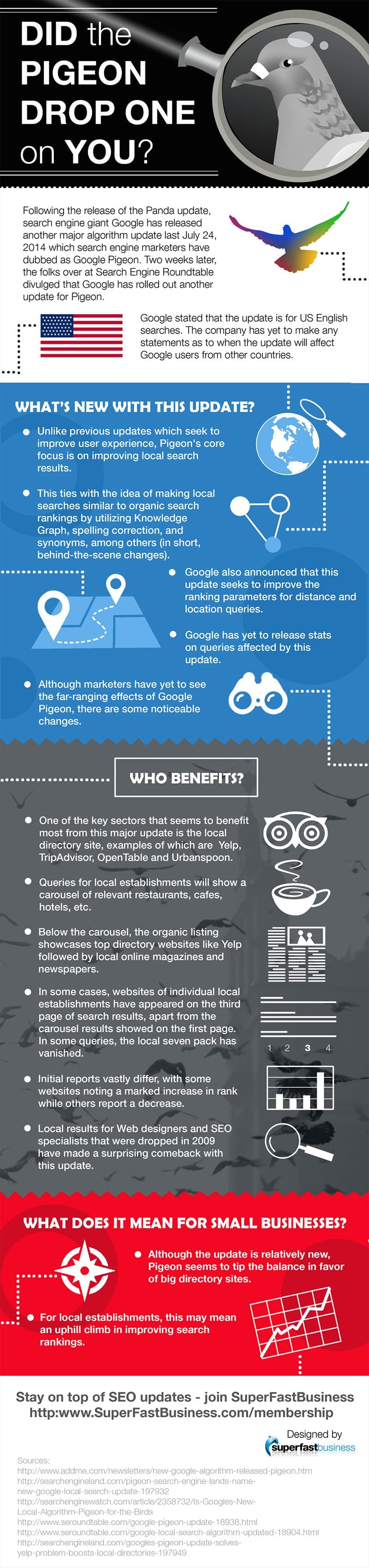
Google knows people generally prefer to purchase products and services locally and using an IP address it’s pretty easy for Google to know where internet searchers are located. The pigeon algorithm helps them serve search results based on a user’s location, helping them find what they need quicker.
To help get a better understanding of how this works and why it’s important to your business Superfastbusiness have come up with this handy infographic.
In the ever-evolving landscape of search engine optimization (SEO), staying up-to-date with the latest algorithm changes is crucial for businesses aiming to boost their online visibility. One of the most impactful updates in recent years, particularly for local businesses, is the Google Pigeon update. This update, which was first rolled out in 2014, has had a significant impact on how businesses appear in local search results. In this blog post, we will explore the Google Pigeon update, understand its implications, and provide actionable tips to help you leverage it to improve your local SEO efforts.
Understanding the Google Pigeon Update
Before diving into how the Google Pigeon update can improve your local SEO, let’s first understand what this update is all about. Google Pigeon is an algorithm update that aims to provide more relevant and accurate local search results to users. It primarily affects the way local businesses are ranked in Google’s search results and Google Maps.
The key goals of the Google Pigeon update include:
- Improving Local Search Accuracy: Google Pigeon focuses on enhancing the accuracy of local search results by considering various factors like location, distance, and relevance. This means that when users search for businesses or services in their vicinity, they are more likely to receive results that closely match their intent.
- Boosting Local Directory Sites: The update gives more prominence to local directory websites and authoritative business listings, such as Yelp, TripAdvisor, and Yellow Pages. Businesses listed on these platforms saw an increase in visibility in local search results.
- Aligning Desktop and Mobile Results: Google Pigeon aimed to align the ranking factors for both desktop and mobile search, ensuring that users receive consistent local search results regardless of the device they use.
- Prioritizing Quality Content: As with many other Google updates, high-quality and relevant content became even more crucial. Businesses with informative and engaging content related to their products or services gained an edge in local search rankings.
Now that we have a better understanding of what the Google Pigeon update is all about, let’s explore how it can significantly improve your local SEO efforts.
Leveraging Google Pigeon for Your Local SEO
1. Optimize Your Google My Business (GMB) Profile
Your Google My Business (GMB) profile is a critical component of local SEO, and Google Pigeon gives it even more importance. To make the most of this update, follow these tips:
- Complete Your GMB Profile: Fill out every section of your GMB profile, including your business name, address, phone number, website, business hours, and categories. Ensure that all information is accurate and up-to-date.
- Add High-Quality Images: Visual content matters. Upload high-resolution photos of your business, products, and services to make your GMB profile more appealing and informative.
- Collect and Showcase Reviews: Encourage satisfied customers to leave reviews on your GMB listing. Positive reviews not only boost your credibility but also improve your local search rankings.
2. Focus on On-Page SEO
Google Pigeon takes into account the on-page SEO factors of your website when determining local search rankings. Here’s how you can optimize your website for local SEO:
- Optimize Title Tags and Meta Descriptions: Include your location and relevant keywords in your title tags and meta descriptions. For example, if you’re a bakery in New York, use titles like “New York’s Best Artisan Bakery – [Your Business Name].”
- Create Location-Specific Content: Develop blog posts, articles, or landing pages that cater to local audiences. This not only helps in SEO but also engages your community.
- Mobile Optimization: With the emphasis on mobile-friendliness, ensure that your website is responsive and loads quickly on mobile devices.
3. Build High-Quality Backlinks
Backlinks, or links from other websites to your site, are a critical ranking factor in local SEO. Here’s how to build high-quality backlinks:
- Local Directories: Ensure your business is listed on reputable local directories and citation sites, such as Yelp, Yellow Pages, and TripAdvisor. These authoritative backlinks are highly regarded by Google Pigeon.
- Guest Blogging: Contribute guest posts to local blogs or websites in your industry. In your author bio, include a link to your website. This can help establish you as a local authority and boost your backlink profile.
- Partner with Local Businesses: Collaborate with other local businesses and offer to feature each other on your websites. These reciprocal links can be valuable for local SEO.
4. Optimize for Voice Search
Voice search is on the rise, and Google Pigeon considers it when determining local search rankings. Here’s how you can optimize for voice search:
- Use Natural Language: Optimize your content with long-tail keywords and natural language. Voice search queries are often conversational, so your content should reflect that.
- Provide Concise Answers: Create content that answers common questions related to your business or industry. Voice search users often seek quick and concise answers.
- Structured Data Markup: Implement structured data markup (Schema.org) on your website to provide search engines with structured information about your business, which can be used for voice search results.
5. Monitor and Manage Online Reviews
Online reviews play a vital role in local SEO, and Google Pigeon considers them when ranking businesses. Here’s how you can manage online reviews effectively:
- Respond to Reviews: Engage with customers by responding to both positive and negative reviews. Addressing concerns and expressing gratitude for positive feedback demonstrates your commitment to customer satisfaction.
- Encourage Reviews: Encourage satisfied customers to leave reviews on your GMB listing and other relevant platforms. You can do this by providing exceptional service and sending follow-up emails with review requests.
- Flag Inappropriate Reviews: If you come across fake or inappropriate reviews, don’t hesitate to flag them. Google takes these reports seriously and may remove such reviews.
6. Embrace Local Link Building
Local link building involves acquiring backlinks from websites and sources within your local area. Here’s how you can make the most of local link building for Google Pigeon:
- Local Events and Sponsorships: Sponsor local events or charities and request that your business be mentioned on their websites or promotional materials.
- Local News and Blogs: Reach out to local news outlets and blogs for potential coverage or guest posting opportunities.
- Networking: Attend local business networking events and conferences to establish connections with other businesses and potential link-building opportunities.
7. Stay Informed and Adapt
SEO is an ever-changing field, and staying informed about the latest updates and best practices is crucial. To adapt to the dynamic world of SEO and Google Pigeon, consider the following:
- Follow Industry Blogs and News: Regularly read industry blogs and news websites to stay updated on SEO trends and algorithm changes.
- Analytics and Monitoring: Use tools like Google Analytics and Google Search Console to monitor your website’s performance and track changes in your local search rankings.
- SEO Audits: Conduct regular SEO audits of your website to identify areas for improvement and ensure your SEO strategy aligns with Google’s latest guidelines.
Conclusion
The Google Pigeon update has brought significant changes to local SEO, making it essential for businesses to adapt their strategies to stay competitive. By optimizing your Google My Business profile, focusing on on-page SEO, building high-quality backlinks, optimizing for voice search, managing online reviews, embracing local link building, and staying informed, you can leverage Google Pigeon to massively improve your local SEO efforts. Remember that local SEO is an ongoing process, and consistent efforts are key to maintaining and improving your local search rankings.

Author:
Mark Ford