What techniques do you use to market your small business? Are you using marketing tactics that date back hundreds of years?
Peak Inbound Marketing share the history of marketing in this infographic.
They feature the following techniques:
- Word of mouth
- Newspaper
- Magazine
- Billboard
- Direct mail
- Radio
- TV
- Website
- Pay per click
Check out the infographic for more detail.
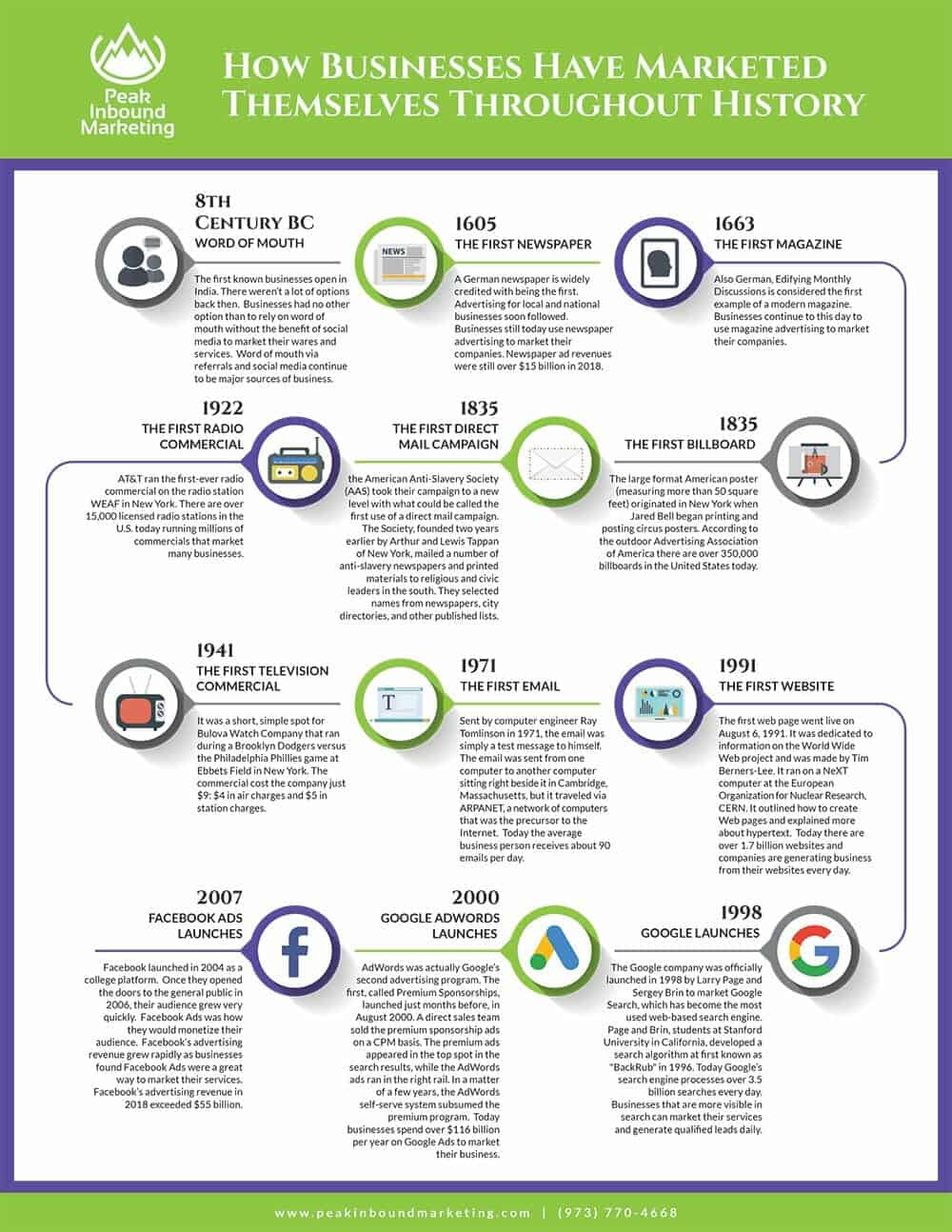
Marketing is as old as trade itself. From ancient societies where merchants would promote their wares by shouting in public squares to today’s highly targeted digital ads, marketing has evolved alongside technology, society, and commerce. This blog post will take you through the major milestones in marketing history, covering its evolution from word-of-mouth in 1605 to today’s digital era, touching on each significant advancement along the way.
Word of Mouth
Word of mouth (WOM) marketing has long been recognized as one of the most powerful forms of advertising, especially for small businesses. Unlike traditional marketing methods, which can be costly and less personal, WOM relies on organic conversations and personal recommendations, making it an authentic way to build trust and credibility. In today’s interconnected world, where social media and online reviews can amplify voices, harnessing the power of word of mouth is more crucial than ever. Here’s how small businesses can effectively leverage WOM marketing.
- Deliver Exceptional Customer Service
Providing outstanding customer service is the cornerstone of effective word-of-mouth marketing. When customers have a positive experience, they are more likely to share it with friends and family. Here are some strategies to ensure exceptional service:
- Train Your Team: Equip your staff with the skills and knowledge needed to provide top-notch service. Regular training sessions can help reinforce your customer service standards.
- Be Responsive: Address customer inquiries and complaints promptly. Showing that you care about customer feedback can turn a potentially negative experience into a positive one.
- Exceed Expectations: Surprise and delight customers with unexpected perks, such as small freebies, personalized notes, or follow-up messages asking about their experience.
- Encourage and Facilitate Customer Reviews
Online reviews have a significant impact on potential customers’ perceptions of your business. Here’s how to encourage customers to leave positive reviews:
- Ask for Feedback: After a purchase or service, send a follow-up email thanking customers and asking them to leave a review. Make it easy by providing direct links to your review profiles.
- Showcase Testimonials: Display positive reviews prominently on your website and social media. This not only builds credibility but also encourages others to share their experiences.
- Respond to Reviews: Engage with customers who leave reviews, whether positive or negative. Thank them for their feedback, and address any issues raised to demonstrate your commitment to customer satisfaction.
- Leverage Social Media
Social media is a modern platform for word-of-mouth marketing, where customers can easily share their experiences with their networks. To maximize your presence:
- Create Shareable Content: Produce engaging and relevant content that customers would want to share. This could include how-to videos, behind-the-scenes looks, or user-generated content showcasing your products or services.
- Encourage User-Generated Content: Run campaigns encouraging customers to share photos or stories of their experiences with your brand. Consider creating a unique hashtag to track submissions and increase visibility.
- Engage with Your Audience: Respond to comments and messages promptly. Engage in conversations and show appreciation for customers sharing their experiences.
- Implement Referral Programs
Referral programs incentivize customers to recommend your business to others, creating a win-win situation. Here’s how to set one up:
- Define Rewards: Offer appealing incentives for referrals, such as discounts, free products, or exclusive access to events. Make sure the rewards are valuable enough to motivate customers to participate.
- Make It Easy: Simplify the referral process. Provide customers with unique referral codes or links they can easily share with their friends and family.
- Promote Your Program: Actively market your referral program through email newsletters, social media, and in-store signage to ensure customers are aware of the opportunity.
- Engage in Community Involvement
Being active in your local community can significantly enhance your word-of-mouth marketing efforts. When customers see your business supporting local causes, they are more likely to talk about you positively. Here’s how to get involved:
- Sponsor Local Events: Consider sponsoring or participating in community events, such as fairs, charity runs, or school functions. This can increase visibility and show that you care about the community.
- Collaborate with Other Local Businesses: Partner with other small businesses to cross-promote each other. Joint events, giveaways, or promotional campaigns can leverage each other’s customer base.
- Volunteer: Encourage your employees to volunteer for local charities and organizations. Sharing these experiences on social media can inspire customers to engage and talk about your business.
- Utilize Influencer Marketing
While traditional influencers may require significant investment, many small businesses can collaborate with micro-influencers—individuals with smaller, yet highly engaged audiences. Here’s how to leverage this strategy:
- Identify Relevant Influencers: Look for local influencers or industry experts whose audience aligns with your target market. Their personal endorsements can carry more weight than traditional ads.
- Offer Value: Provide influencers with products or services to review or use. Consider inviting them to experience your business firsthand, creating authentic content they can share with their followers.
- Build Relationships: Foster long-term relationships with influencers rather than one-off promotions. Engaging with them consistently can lead to ongoing positive word-of-mouth marketing.
- Create Memorable Experiences
Creating memorable experiences for your customers will give them something to talk about. Here’s how to ensure your offerings stand out:
- Host Unique Events: Organize workshops, tastings, or themed events that encourage community participation and engagement with your brand.
- Personalize Interactions: Tailor your customer interactions to make them feel special. Use their names, remember previous purchases, and make recommendations based on their preferences.
- Incorporate Storytelling: Share your brand story and values. People are more likely to remember and talk about a brand with a compelling narrative that resonates with them.
- Track and Analyze Word of Mouth
To understand the effectiveness of your word-of-mouth marketing efforts, track and analyze the results:
- Monitor Mentions: Use social media listening tools to track mentions of your brand across platforms. This can help you gauge the sentiment and identify opportunities for engagement.
- Analyze Referral Sources: If you have a referral program, monitor which customers are referring the most business. Understanding who your brand advocates are can help you tailor your strategies.
- Gather Feedback: Conduct surveys or interviews to gather insights about how customers heard about your business. This information can guide your WOM marketing strategies in the future.
Conclusion
Word of mouth is a powerful marketing tool for small businesses looking to grow their customer base and build a loyal community. By focusing on exceptional customer service, encouraging reviews, leveraging social media, implementing referral programs, engaging with the community, utilizing influencers, creating memorable experiences, and tracking results, small businesses can effectively harness the power of WOM marketing. In a world where trust is paramount, authentic recommendations from satisfied customers can make all the difference in attracting new business and cultivating long-term relationships.
Newspaper
Newspaper advertising has been a cornerstone of marketing for decades, providing businesses with a platform to reach local audiences effectively. Despite the rise of digital marketing, newspapers continue to hold value, especially for small businesses aiming to establish a local presence. In this section, we’ll explore how small businesses can effectively utilize newspaper advertising to enhance visibility, attract customers, and drive sales.
- Understand Your Audience
Before diving into newspaper advertising, it’s crucial to understand your target audience. This knowledge will help you choose the right publication and craft compelling ads. Here’s how to get started:
- Identify Demographics: Determine the age, gender, income level, and interests of your target customers. This data can inform your advertising strategy and help you select the most suitable newspaper.
- Analyze Readership: Research the readership of various newspapers in your area. Consider factors like circulation numbers, audience demographics, and local reach. Local newspapers often have loyal readers who prefer community-oriented content.
- Tailor Your Messaging: Craft your ad content to resonate with your audience. Use language and visuals that reflect their interests and preferences, making the message more relatable and compelling.
- Choose the Right Publication
Selecting the right newspaper is vital for the success of your advertising campaign. Consider the following factors:
- Local vs. National: Focus on local newspapers that cater to your immediate community. While national newspapers have a wider reach, local publications can provide targeted exposure and a stronger connection with potential customers.
- Daily vs. Weekly: Determine whether daily or weekly publications align better with your marketing goals. Daily newspapers may offer more frequent exposure, while weekly papers can allow for more in-depth content and promotions.
- Niche Publications: Explore niche or specialty newspapers that focus on specific industries or interests. These can be ideal for businesses with unique offerings that cater to particular audiences.
- Design an Eye-Catching Ad
The design of your newspaper ad plays a critical role in attracting attention and driving engagement. Here are some design tips to consider:
- Use Bold Headlines: A captivating headline can draw readers in and encourage them to read further. Use powerful, action-oriented language that highlights the benefit of your product or service.
- Incorporate Visuals: Include high-quality images or graphics that complement your message. Visual elements can enhance the overall appeal of your ad and make it more memorable.
- Keep It Simple: Avoid cluttering your ad with excessive text or images. A clean, focused design makes it easier for readers to grasp your message quickly.
- Include a Call to Action: Encourage readers to take action by including a clear call to action (CTA). Whether it’s visiting your website, calling for more information, or visiting your store, make the next steps obvious.
- Utilize Promotions and Offers
Incorporating promotions and special offers into your newspaper ads can significantly enhance their effectiveness. Here’s how to create compelling offers:
- Limited-Time Promotions: Create a sense of urgency with limited-time offers. Phrases like “while supplies last” or “this week only” can motivate readers to act quickly.
- Discount Coupons: Consider including a coupon that readers can cut out and redeem at your store. This tangible incentive can encourage more people to visit and make a purchase.
- Exclusive Offers: Promote deals that are exclusive to newspaper readers. This tactic can help track the effectiveness of your ad and reward loyal customers who engage through the publication.
- Leverage Classified Ads
Classified ads can be a cost-effective way for small businesses to reach a targeted audience. Here’s how to maximize the impact of classified advertising:
- Keep It Concise: Classified ads often have character limits, so be concise and get straight to the point. Focus on the essential details, such as what you offer, where you are located, and how to contact you.
- Highlight Key Information: Use bullet points to break down important information, making it easier for readers to scan the ad quickly. Consider including a unique selling proposition (USP) to differentiate your business.
- Update Regularly: Rotate your classified ads to keep your messaging fresh. Regular updates can maintain reader interest and showcase new offerings or promotions.
- Engage with Editorial Opportunities
In addition to traditional advertising, consider engaging with newspapers through editorial opportunities. This approach can provide additional exposure and credibility for your business. Here’s how:
- Submit Press Releases: Share newsworthy events, product launches, or community initiatives with local newspapers. A well-crafted press release can lead to coverage that enhances your brand visibility.
- Contribute Articles: Offer to write articles or columns related to your industry. This positions you as an expert and builds trust with readers while subtly promoting your business.
- Participate in Interviews: Reach out to journalists to share your story or insights. Media coverage can enhance your reputation and reach a wider audience without direct advertising costs.
- Track Your Advertising Success
To ensure your newspaper advertising efforts are effective, it’s important to track and analyze your results. Here are some methods to measure success:
- Unique Codes: Use unique promotional codes in your newspaper ads to track conversions. This allows you to determine how many customers were generated specifically from the ad.
- Monitor Sales and Traffic: Keep an eye on sales figures and foot traffic during and after your advertising period. Look for spikes in customer activity correlating with your ad placements.
- Conduct Surveys: Consider conducting customer surveys to understand how they heard about your business. This feedback can provide valuable insights into the effectiveness of your advertising efforts.
- Consider the Digital Shift
While traditional newspaper advertising remains valuable, consider how it can integrate with digital marketing strategies. Here’s how to make the most of both worlds:
- Explore Digital Editions: Many newspapers now offer digital editions and websites where your ads can reach a broader audience. This can be an effective way to combine print and online advertising.
- Link to Your Online Presence: If you have a digital presence, include links to your website or social media in your ads. This can help drive traffic and encourage further engagement with your brand.
- Utilize Social Media: Promote your newspaper ads on social media platforms. Share images or snippets of your ad to reach a wider audience and create buzz around your offerings.
Conclusion
Newspaper advertising can be an effective marketing tool for small businesses seeking to establish a local presence and connect with their target audience. By understanding your audience, choosing the right publication, designing compelling ads, leveraging promotions, utilizing classified ads, engaging with editorial opportunities, tracking success, and considering digital integration, small businesses can make the most of their newspaper advertising efforts. While the landscape of marketing continues to evolve, newspaper ads remain a reliable way to reach potential customers and build lasting relationships within the community.
Magazine
Magazine advertising offers a unique platform for small businesses to showcase their products or services in a visually appealing way. With a targeted readership and longer shelf life compared to other forms of advertising, magazines can be an effective tool for building brand awareness and engaging with potential customers. In this section, we will explore how small businesses can effectively utilize magazine advertising to maximize their reach and impact.
- Identify Your Target Audience
Understanding your target audience is crucial for successful magazine advertising. This knowledge will help you choose the right magazine and craft messages that resonate with readers. Here’s how to identify your audience:
- Demographic Analysis: Analyze your ideal customer’s age, gender, income level, education, and lifestyle. This information will guide your choice of magazine and ad content.
- Reader Profiles: Many magazines provide reader demographics, including interests and purchasing habits. Review this data to determine whether a publication aligns with your target audience.
- Engagement Patterns: Consider how your audience interacts with magazines. Do they prefer glossy publications, niche specialty magazines, or local community magazines? Tailoring your approach based on these preferences is key.
- Choose the Right Publication
Selecting the right magazine is essential to ensure your ad reaches the right audience. Here are some tips for making an informed decision:
- Local vs. National: Decide whether to advertise in local, regional, or national magazines. Local publications can provide immediate community engagement, while national magazines can expand your reach significantly.
- Niche Publications: Consider niche magazines that cater to specific interests or industries relevant to your business. These publications often attract dedicated readers who are more likely to be interested in your offerings.
- Frequency and Circulation: Research the frequency of the magazine (monthly, bi-monthly, etc.) and its circulation numbers. Higher circulation can increase visibility, but also ensure that the magazine aligns with your target market.
- Design an Eye-Catching Advertisement
The visual appeal of your magazine ad is crucial for capturing readers’ attention. Here are some design tips to create an effective ad:
- Focus on High-Quality Images: Use high-resolution images that represent your brand and products effectively. Visuals are often the first thing readers notice, so make them compelling.
- Craft a Strong Headline: Create a headline that draws readers in and communicates the essence of your message. Make it engaging and relevant to your audience’s interests.
- Tell a Story: Consider using storytelling techniques to connect with readers emotionally. Highlight customer experiences or showcase the benefits of your product in a relatable way.
- Include Clear Branding: Ensure your brand name, logo, and contact information are prominently displayed. Consistent branding helps reinforce brand recognition.
- Leverage Special Editions and Themes
Magazines often have themed issues or special editions that can align well with your business. Consider these opportunities:
- Seasonal Promotions: Advertise in special holiday editions or seasonal guides relevant to your products or services. This approach can help you capitalize on consumer spending during peak seasons.
- Industry-Specific Issues: Participate in industry-focused editions that cater to your business niche. For example, if you’re a restaurant, consider advertising in a culinary magazine’s special issue on dining.
- Event Tie-Ins: If your business is hosting or participating in an event, promote it in the magazine leading up to the event. This can help drive attendance and increase brand awareness.
- Incorporate Promotions and Offers
Including promotions or special offers in your magazine ads can incentivize readers to take action. Here’s how to create compelling offers:
- Discount Coupons: Consider incorporating a cut-out coupon that readers can redeem at your business. This can create a tangible incentive for them to visit or make a purchase.
- Limited-Time Offers: Use phrases like “limited time only” to create urgency. This encourages readers to act quickly to take advantage of the deal.
- Exclusive Offers: Promote offers that are exclusive to magazine readers. This tactic not only tracks the effectiveness of your ads but also rewards loyal customers engaging through the publication.
- Utilize Advertorials
Advertorials combine editorial content with advertising, providing valuable information while promoting your products or services. Here’s how to effectively use advertorials:
- Engaging Content: Write engaging and informative content that addresses your audience’s pain points or interests. This helps build credibility and trust with readers.
- Seamless Integration: Ensure the advertorial blends well with the magazine’s overall content. It should feel like an extension of the magazine rather than a hard sell.
- Clear Call to Action: At the end of the advertorial, include a clear call to action directing readers to your website, social media, or physical store for more information or to make a purchase.
- Consider the Digital Angle
With the increasing popularity of digital magazines, consider how to leverage online advertising opportunities:
- Digital Editions: Many print magazines also offer digital versions. Ensure your ads are designed for both print and digital formats to maximize exposure.
- Link to Online Presence: If advertising in a digital magazine, include links to your website or social media. This can help drive traffic and encourage further engagement with your brand.
- Social Media Promotion: Share your magazine ads on social media platforms to extend their reach. Consider creating teaser content that highlights your ad and encourages followers to check out the magazine.
- Track Advertising Performance
To assess the effectiveness of your magazine advertising efforts, tracking performance is essential. Here are some strategies:
- Unique Promo Codes: Use unique promotional codes in your ads to track conversions. This will allow you to gauge how many customers were generated through the magazine.
- Monitor Sales Data: Keep an eye on sales figures during and after the ad run. Look for trends or spikes that correlate with your magazine placement.
- Customer Surveys: Conduct customer surveys to ask how they heard about your business. This feedback can provide valuable insights into the effectiveness of your magazine ads.
- Build Relationships with Publishers
Building relationships with magazine publishers can enhance your advertising strategy and open up new opportunities:
- Network with Editors: Establish connections with magazine editors or advertising sales representatives. This can lead to better ad placements, insights into reader preferences, and potential collaborations.
- Participate in Events: Attend magazine-hosted events, trade shows, or networking functions. This can help you build relationships and increase brand visibility in your industry.
- Consider Sponsorship Opportunities: Explore sponsorship opportunities within magazines, such as sponsoring events or features. This can enhance your credibility and reach within the publication’s audience.
Conclusion
Magazine advertising can be a powerful tool for small businesses looking to enhance brand visibility and connect with targeted audiences. By identifying your audience, choosing the right publication, designing compelling ads, leveraging special editions, incorporating promotions, utilizing advertorials, considering digital angles, tracking performance, and building relationships with publishers, small businesses can make the most of their magazine advertising efforts. As the marketing landscape continues to evolve, magazines remain a valuable avenue for reaching potential customers and building lasting relationships within the community.
Billboard
Billboard advertising is a powerful medium that allows small businesses to reach a broad audience through large, visually impactful displays. With their high visibility and ability to convey messages quickly, billboards can be an effective part of a comprehensive marketing strategy. This section will provide in-depth tips and guidance for small businesses looking to utilize billboard advertising successfully.
- Understand Your Target Audience
Before embarking on a billboard advertising campaign, it’s essential to understand your target audience. This understanding will guide your messaging, location, and overall strategy. Here’s how to define your audience effectively:
- Demographic Profiling: Analyze the demographics of your ideal customers, including age, gender, income level, and interests. Knowing who you’re targeting will help tailor your message to resonate with them.
- Behavioral Insights: Consider your audience’s habits and behaviors. For example, are they commuters, tourists, or residents in a specific area? Understanding where and when they are likely to see your billboard is critical.
- Market Research: Conduct market research to identify your audience’s preferences and pain points. This information can help you create a message that speaks directly to them.
- Choose the Right Location
Location is crucial in billboard advertising. The right placement can significantly impact your ad’s visibility and effectiveness. Here are some tips for selecting an ideal location:
- Traffic Patterns: Identify high-traffic areas where your target audience is likely to see your billboard. Locations near major highways, busy intersections, or popular shopping districts can maximize exposure.
- Visibility: Ensure the billboard is easily visible and not obstructed by trees, buildings, or other structures. A clear line of sight is essential for catching drivers’ and pedestrians’ attention.
- Proximity to Competitors: Consider placing your billboard near competitors to attract their customers. This tactic can effectively capture market share and draw attention away from their offerings.
- Design an Attention-Grabbing Billboard
The design of your billboard is critical to its success. With limited time to capture attention, your ad must be visually compelling and easy to understand. Here are key design elements to consider:
- Keep It Simple: Billboards should convey a message quickly. Use concise language, clear fonts, and minimal text. Aim for a message that can be read in just a few seconds.
- High-Quality Imagery: Incorporate striking visuals that are relevant to your brand or product. High-resolution images and bold colors can draw attention and create a memorable impression.
- Strong Call to Action (CTA): Include a clear and compelling CTA that encourages viewers to take action, whether visiting your website, calling a phone number, or stopping by your location. Make the CTA prominent and straightforward.
- Utilize Branding Elements
Incorporating branding elements into your billboard design can reinforce brand recognition and recall. Consider these branding strategies:
- Consistent Branding: Use colors, fonts, and logos consistent with your other marketing materials. This cohesion helps create a unified brand identity and makes your business easily recognizable.
- Brand Story: If space allows, briefly convey your brand story or value proposition. This can help establish a connection with viewers and differentiate your brand from competitors.
- Leverage Digital Billboards
Digital billboards offer dynamic advertising options that can enhance your marketing strategy. Here are some advantages of using digital billboards:
- Dynamic Content: Digital billboards allow you to change your message frequently, enabling you to promote different products, services, or offers throughout the day.
- Timeliness: Use real-time data to display relevant messages based on events or current trends. For example, promoting special offers during local events can capture the attention of attendees.
- Interactivity: Some digital billboards incorporate interactive elements, such as QR codes or social media integration, allowing viewers to engage with your brand more deeply.
- Consider Seasonal and Event-Based Advertising
Billboard advertising can be highly effective when aligned with seasonal events or promotions. Consider these strategies:
- Seasonal Promotions: Plan billboard campaigns around holidays or seasonal events. For example, promote special offers during the holiday shopping season to attract customers looking for gifts.
- Local Events: Capitalize on local events, festivals, or sporting events by promoting your products or services in conjunction with these activities. This approach can drive foot traffic and increase brand awareness.
- Monitor and Measure Campaign Effectiveness
Tracking the performance of your billboard campaign is essential to assess its impact and effectiveness. Here are some strategies for monitoring results:
- Unique URLs or Promo Codes: Use unique URLs or promo codes in your billboard ads to track conversions. This method allows you to determine how many customers were driven to your business by the billboard.
- Sales Data: Monitor sales figures during and after the campaign to identify any trends or increases that may be attributable to the billboard advertising.
- Surveys and Feedback: Consider conducting customer surveys to ask how they heard about your business. This feedback can provide valuable insights into the effectiveness of your billboard campaign.
- Budgeting for Billboard Advertising
Understanding the costs associated with billboard advertising is crucial for small businesses. Here’s how to create a realistic budget:
- Consider Placement Costs: Research the costs associated with different billboard locations. Premium locations may have higher fees, but they can also provide greater exposure.
- Design and Production: Factor in costs for designing and producing your billboard. If you’re not a designer, consider hiring a professional to create a visually appealing ad.
- Duration of Campaign: Determine how long you want your billboard to be displayed. Longer campaigns may provide better ROI, but ensure that the duration aligns with your marketing goals.
- Collaborate with Local Businesses
Consider collaborating with other local businesses for shared billboard advertising. This approach can help reduce costs and increase visibility for all parties involved:
- Cross-Promotion: Partner with complementary businesses to promote each other’s services. For instance, a coffee shop and a bakery could share a billboard, highlighting their offerings together.
- Community Engagement: Collaborating with other local businesses can strengthen community ties and attract a shared audience, ultimately benefiting all brands involved.
Conclusion
Billboard advertising can be an impactful tool for small businesses aiming to enhance their brand visibility and connect with a wide audience. By understanding your target audience, choosing the right location, designing attention-grabbing ads, leveraging digital options, monitoring effectiveness, and budgeting wisely, small businesses can effectively utilize billboard advertising as part of their marketing strategy. As a visually dynamic medium, billboards offer the potential to create lasting impressions and drive traffic to your business, making them a valuable addition to your overall marketing efforts.
Direct Mail
Direct mail advertising remains a powerful marketing tool that allows small businesses to reach potential customers in a personal and tangible way. Unlike digital marketing, direct mail provides a physical piece that recipients can hold onto, making it memorable and engaging. This section will provide in-depth tips and guidance for small businesses looking to effectively implement direct mail strategies.
- Define Your Objectives
Before launching a direct mail campaign, it’s crucial to define clear objectives. Knowing what you want to achieve will help guide your strategy and messaging. Here are some common objectives for direct mail campaigns:
- Brand Awareness: Use direct mail to introduce your brand to new customers or remind existing customers of your offerings.
- Lead Generation: Aim to acquire new leads by providing valuable information or a special offer to entice recipients.
- Customer Retention: Foster loyalty among existing customers by sending them exclusive offers, updates, or thank-you notes.
- Event Promotion: Use direct mail to promote upcoming events, sales, or product launches to drive attendance and participation.
- Know Your Target Audience
Understanding your target audience is key to the success of your direct mail campaign. This knowledge will help you craft personalized messages that resonate with your recipients. Here are steps to define your audience effectively:
- Segment Your List: Break down your audience into specific segments based on demographics, purchasing behavior, or interests. Tailoring your message to each segment can increase engagement.
- Utilize Data: Leverage customer data to identify potential leads. Analyze past purchasing patterns to inform your messaging and offers.
- Conduct Surveys: Use surveys to gather insights about your audience’s preferences and pain points. This information can help you create more relevant content.
- Design an Eye-Catching Mailpiece
The design of your direct mail piece is critical for grabbing attention and conveying your message effectively. Here are some design tips to consider:
- Bold Visuals: Use high-quality images and bold colors to make your mailpiece stand out. Visual appeal is essential for catching the recipient’s eye.
- Clear Messaging: Keep your message concise and easy to read. Use a clear font and limit the amount of text to avoid overwhelming the reader.
- Strong Call to Action (CTA): Include a compelling CTA that encourages recipients to take immediate action, such as visiting your website, calling a phone number, or redeeming a special offer.
- Personalization: Personalize your mailpiece with the recipient’s name or specific offers based on their previous interactions with your business. Personalized content can significantly increase engagement rates.
- Choose the Right Format
Selecting the right format for your direct mail campaign can enhance its effectiveness. Consider these common formats:
- Postcards: Simple and cost-effective, postcards are great for delivering quick messages, offers, or event promotions without additional envelopes.
- Letters: Letters allow for more detailed messaging and can include additional inserts, such as brochures or flyers. This format is often perceived as more personal.
- Catalogs: For businesses with a wide range of products, catalogs can showcase your offerings effectively, allowing customers to browse at their convenience.
- Self-Mailers: These are folded mailpieces that don’t require envelopes and can be designed in various shapes and sizes, making them unique and attention-grabbing.
- Timing and Frequency
The timing and frequency of your direct mail campaigns can significantly impact their effectiveness. Here are some considerations:
- Seasonal Timing: Align your campaigns with seasonal trends, holidays, or events relevant to your business. For example, send out holiday promotions well in advance of the shopping season.
- Frequency: Consider how often you want to reach out to your audience. Regular communication can keep your brand top-of-mind, but be careful not to overwhelm recipients with too much mail.
- A/B Testing: Experiment with different timings and frequencies to determine what works best for your audience. Track responses to adjust your strategy accordingly.
- Incorporate an Omnichannel Approach
Integrating your direct mail efforts with other marketing channels can enhance your overall strategy. Here’s how to create a cohesive omnichannel approach:
- Cross-Promotion: Mention your social media accounts or website in your direct mail pieces, encouraging recipients to engage with your brand online.
- Follow-Up: Use email or SMS follow-ups after sending direct mail to reinforce your message. For instance, send a reminder about a special offer featured in your mailpiece.
- Integrate Campaigns: Design direct mail campaigns that complement your digital marketing efforts. For example, promote a specific product in your mail while highlighting the same product in your online ads.
- Track and Measure Results
Tracking the performance of your direct mail campaigns is essential to assess their effectiveness and ROI. Consider these strategies for measurement:
- Unique Codes: Include unique promo codes or QR codes in your direct mail pieces to track responses. This allows you to measure how many recipients took action as a result of receiving your mail.
- Surveys: Conduct surveys to gather feedback from customers about how they heard about your promotions. This can provide valuable insights into the effectiveness of your direct mail efforts.
- Sales Data: Monitor sales data during and after the campaign to identify any trends or increases in customer engagement that can be attributed to direct mail.
- Budgeting for Direct Mail
Creating a realistic budget is crucial for your direct mail campaign’s success. Here’s how to plan your budget effectively:
- Cost of Printing: Factor in the costs associated with designing and printing your mailpieces. Consider bulk printing discounts to reduce expenses.
- Postage Costs: Research postal rates and factor in the costs of mailing your pieces. Using bulk mailing options can often reduce postage costs.
- List Acquisition: If you’re purchasing a mailing list, factor in the costs associated with obtaining a quality list that aligns with your target audience.
- Campaign Duration: Determine how long your campaign will run and adjust your budget accordingly. A longer campaign may require more resources but can lead to greater returns.
- Test and Optimize
Direct mail offers unique opportunities for testing and optimization. Regularly assess your campaigns and make adjustments based on the data you gather. Here are some ways to optimize your efforts:
- A/B Testing: Experiment with different designs, messages, and formats to identify what resonates best with your audience. A/B testing can help you refine your approach over time.
- Feedback Loops: Encourage customers to provide feedback on your mailpieces, allowing you to gain insights into their preferences and interests.
Conclusion
Direct mail advertising can be an effective marketing strategy for small businesses looking to engage with their audience in a personal and impactful way. By defining clear objectives, understanding your target audience, designing eye-catching mailpieces, choosing the right formats, and tracking results, you can create a successful direct mail campaign that drives brand awareness and customer engagement. With thoughtful planning and execution, direct mail can serve as a powerful tool to help small businesses stand out in a crowded marketplace.
Radio
Radio advertising has been a staple of marketing for decades, providing businesses with a powerful medium to reach their target audience through engaging audio content. Despite the rise of digital platforms, radio remains a relevant and effective way to connect with consumers, especially in local markets. This section offers in-depth tips and guidance for small businesses looking to leverage radio advertising effectively.
- Understand Your Objectives
Before diving into radio advertising, it’s essential to clarify your objectives. Knowing what you want to achieve will guide your strategy, messaging, and budget. Common objectives include:
- Brand Awareness: Introduce your business to new audiences or remind existing customers of your offerings.
- Event Promotion: Advertise upcoming events, sales, or special promotions to drive attendance and participation.
- Product Launches: Create buzz around new products or services, encouraging immediate customer interest and engagement.
- Customer Engagement: Foster a deeper connection with your audience through engaging storytelling or community-focused messaging.
- Know Your Target Audience
Understanding your target audience is crucial for crafting effective radio ads. Consider the following steps:
- Demographics: Analyze your existing customer base to determine key demographic information such as age, gender, income level, and location. This data will help you choose the right radio stations and time slots for your ads.
- Psychographics: Go beyond demographics to understand the values, interests, and lifestyles of your audience. Tailoring your message to resonate with your audience’s preferences will enhance engagement.
- Listening Habits: Research the radio stations and programs your target audience is most likely to listen to. This knowledge will help you select the right platform for your advertising efforts.
- Choose the Right Radio Station
Selecting the right radio station is crucial to the success of your campaign. Here are tips for making the right choice:
- Local vs. National Stations: For small businesses, local radio stations often provide the best return on investment. They tend to have a loyal listener base and can effectively reach your target audience within your geographic area.
- Station Format: Different stations cater to various formats, such as talk radio, country, pop, rock, or news. Choose a station that aligns with your brand and appeals to your target demographic.
- Audience Reach: Evaluate the station’s reach, listener demographics, and overall reputation. Request audience ratings and data to ensure you are selecting a station that effectively targets your desired customers.
- Craft a Compelling Message
The success of your radio ad depends largely on your message. Here are key elements to consider when crafting your content:
- Keep It Concise: Radio ads are typically short, ranging from 15 to 60 seconds. Focus on delivering a clear and concise message that quickly communicates your key points.
- Engaging Hook: Start with a catchy hook to grab the listener’s attention. Use an intriguing question, an interesting fact, or a memorable sound effect to draw them in.
- Strong Call to Action (CTA): Include a clear CTA that encourages listeners to take action, such as visiting your website, calling your business, or attending an event. Make it easy for them to remember and follow through.
- Use a Conversational Tone: Radio is an intimate medium, and listeners respond well to a friendly, conversational tone. Write your script as if you are speaking directly to a friend.
- Consider Production Quality
High production quality can significantly impact how your radio ad is perceived. Consider the following tips:
- Professional Production: If your budget allows, hire a professional audio production team to create your ad. They can help ensure your message is delivered clearly and effectively.
- Voice Talent: Choose a voice that resonates with your brand and audience. The tone and delivery of the voice can make a significant difference in how your message is received.
- Sound Effects and Music: Incorporate sound effects and background music to enhance your message and keep listeners engaged. Ensure any music you use is royalty-free or licensed properly.
- Timing and Frequency
The timing and frequency of your radio ads are crucial to their effectiveness. Here’s how to optimize these factors:
- Time Slots: Identify the best time slots for your target audience. Morning and evening drive times tend to have higher listener numbers, but also consider mid-day programming that may attract your audience.
- Ad Frequency: To maximize impact, aim for a frequency of at least 3-4 times per week. Consistent exposure helps reinforce your message and increases brand recall.
- Campaign Duration: Plan the duration of your campaign carefully. A longer campaign allows for greater brand visibility but may require a larger budget.
- Integrate with Other Marketing Channels
Integrating radio advertising with other marketing efforts can enhance your overall strategy. Here are ways to create a cohesive approach:
- Cross-Promotion: Mention your social media profiles, website, or other marketing channels in your radio ads to encourage multi-channel engagement.
- Event Tie-Ins: If you’re promoting an event, consider coordinating with your social media and email marketing efforts to maximize reach and engagement.
- Feedback and Interaction: Encourage listeners to engage with your brand through social media or your website. Consider running contests or promotions that drive interaction.
- Measure and Analyze Results
Tracking the performance of your radio ads is essential for evaluating their effectiveness and ROI. Consider these strategies for measurement:
- Unique Codes or URLs: Include a unique promo code or URL in your radio ad to track responses. This allows you to measure how many listeners took action as a result of the ad.
- Surveys: Conduct surveys to gather feedback from customers on how they heard about your promotions. This can provide valuable insights into the effectiveness of your radio campaigns.
- Sales Data: Monitor sales data during and after the campaign to identify any trends or increases in customer engagement that can be attributed to your radio advertising efforts.
- Budgeting for Radio Advertising
Creating a realistic budget is crucial for the success of your radio advertising campaigns. Here’s how to plan effectively:
- Ad Costs: Understand the costs associated with purchasing ad slots on your chosen radio station. Costs can vary significantly based on the time slot, station popularity, and ad length.
- Production Costs: Factor in the expenses related to producing your radio ad, including professional voice talent and production services, if applicable.
- Frequency and Duration: Consider how frequently you want to run your ads and how long your campaign will last. Longer campaigns may require more resources but can yield greater returns.
- Test and Optimize
Finally, regular testing and optimization can enhance your radio advertising efforts. Here are ways to refine your approach:
- A/B Testing: Experiment with different messages, tones, or formats to identify what resonates best with your audience. A/B testing can help you refine your strategy over time.
- Feedback Loops: Encourage listeners to provide feedback on your ads, allowing you to gain insights into their preferences and interests.
Conclusion
Radio advertising remains a valuable marketing tool for small businesses, offering a unique opportunity to engage with audiences in a personal and memorable way. By defining clear objectives, understanding your target audience, crafting compelling messages, and measuring results, you can create effective radio advertising campaigns that drive brand awareness and customer engagement. With thoughtful planning and execution, radio can play a significant role in helping small businesses connect with their audience and achieve their marketing goals.
TV
Television advertising has long been a cornerstone of marketing strategies, providing businesses with a powerful platform to reach wide audiences through engaging visuals and storytelling. Although the landscape of television has changed with the rise of streaming services and digital platforms, traditional TV advertising remains effective for small businesses looking to enhance their brand visibility and reach. Here’s an in-depth look at how small businesses can leverage television advertising effectively.
- Define Your Objectives
Before embarking on a television advertising campaign, it’s crucial to define clear objectives. Knowing what you want to achieve will guide your messaging and overall strategy. Common objectives include:
- Brand Awareness: Introduce your business to potential customers or reinforce your brand identity among existing customers.
- Product Promotion: Highlight specific products or services, encouraging viewers to make a purchase.
- Event Advertising: Promote upcoming events, sales, or community engagements to drive attendance.
- Customer Engagement: Create a deeper emotional connection with your audience through storytelling and relatable content.
- Understand Your Target Audience
A well-defined target audience is key to successful television advertising. Consider the following steps to identify your audience:
- Demographics: Analyze your current customer base to determine demographic information such as age, gender, income level, and location. This data will help you choose the right channels and time slots for your ads.
- Viewing Habits: Research the television programs and channels that resonate with your target audience. Understanding their viewing habits can help you determine where and when to place your ads.
- Psychographics: Go beyond demographics by considering the values, interests, and lifestyles of your audience. Tailor your messaging to resonate with their preferences and needs.
- Select the Right Television Channels
Choosing the right television channels is critical for reaching your target audience effectively. Here are some tips:
- Local vs. National Channels: For small businesses, local channels often provide the best return on investment. They typically have loyal viewer bases and can effectively reach your community.
- Network vs. Cable: Decide whether to advertise on major networks (ABC, NBC, CBS) or cable channels that may cater to specific audiences. Cable networks often have lower costs and can target niche markets.
- Programming: Identify shows or time slots that align with your target audience’s interests. Ads during popular programs tend to have higher viewership but may also come with higher costs.
- Craft an Engaging Message
The success of your television ad largely depends on your message. Consider the following elements when crafting your content:
- Compelling Storytelling: Use storytelling techniques to create a narrative that resonates with viewers. Engaging stories can evoke emotions and foster connections with your brand.
- Clear Call to Action (CTA): Include a clear CTA that encourages viewers to take action, such as visiting your website, calling your business, or attending an event. Ensure it is memorable and easy to follow.
- Keep It Concise: Most television ads range from 15 to 60 seconds. Focus on delivering your message clearly and succinctly, making sure key points are highlighted.
- Visual Appeal: Utilize visuals, colors, and graphics to make your ad visually appealing. Good production quality enhances the overall impression of your brand.
- Invest in Quality Production
High production quality can significantly impact how your television ad is perceived. Consider these tips:
- Professional Production Team: If your budget allows, hire a professional production team to create your ad. They can provide expertise in scripting, filming, and editing.
- Casting Talent: Choose actors or presenters who resonate with your audience and reflect your brand identity. The right talent can enhance relatability and credibility.
- Sound and Music: Use sound effects and background music to enhance the emotional impact of your ad. Ensure any music you use is licensed or royalty-free.
- Determine Timing and Frequency
Timing and frequency are essential to the effectiveness of your television ads. Here’s how to optimize these factors:
- Peak Viewing Times: Identify peak viewing times for your target audience. Ads during primetime (usually between 8 PM and 11 PM) can reach larger audiences but may come with higher costs.
- Ad Frequency: Plan for consistent exposure by airing your ads multiple times per week. Regular repetition helps reinforce your message and increases brand recall.
- Campaign Duration: Develop a clear timeline for your campaign. Longer campaigns allow for more significant brand visibility but may require a larger budget.
- Leverage Digital Integration
Integrating your television advertising with digital marketing efforts can amplify your reach and effectiveness. Here are some strategies:
- Cross-Promotion: Mention your website, social media profiles, or other marketing channels in your television ads to encourage multi-channel engagement.
- Social Media Engagement: Use your social media platforms to promote your television ads, encouraging viewers to engage and share your content.
- Hashtags and Challenges: Create memorable hashtags or challenges related to your ad that viewers can engage with on social media, fostering interaction and community involvement.
- Measure and Analyze Results
Tracking the performance of your television ads is essential for evaluating their effectiveness. Consider these strategies for measurement:
- Surveys: Conduct surveys or polls to gather feedback from customers on how they heard about your business or promotions. This can provide valuable insights into the effectiveness of your ads.
- Sales Data: Monitor sales data during and after your campaign to identify any trends or increases in customer engagement that can be attributed to your television advertising efforts.
- Audience Ratings: Review audience ratings and viewership data for the shows during which your ads aired. This information can help you assess the reach and impact of your campaign.
- Budgeting for Television Advertising
Creating a realistic budget is crucial for the success of your television advertising campaigns. Here’s how to plan effectively:
- Ad Costs: Understand the costs associated with purchasing ad slots on your chosen channels. Costs can vary significantly based on the time slot, channel popularity, and ad length.
- Production Costs: Factor in the expenses related to producing your television ad, including professional services and talent fees if applicable.
- Frequency and Duration: Consider how frequently you want to run your ads and how long your campaign will last. Longer campaigns may require more resources but can yield greater returns.
- Test and Optimize
Regular testing and optimization can enhance your television advertising efforts. Here are ways to refine your approach:
- A/B Testing: Experiment with different messages, visuals, or formats to identify what resonates best with your audience. A/B testing can help you refine your strategy over time.
- Feedback Loops: Encourage viewers to provide feedback on your ads, allowing you to gain insights into their preferences and interests.
Conclusion
Television advertising offers small businesses a dynamic platform to engage with audiences through captivating visuals and storytelling. By defining clear objectives, understanding your target audience, crafting compelling messages, and measuring results, you can create effective television advertising campaigns that drive brand awareness and customer engagement. With thoughtful planning and execution, television advertising can play a vital role in helping small businesses connect with their audience and achieve their marketing goals.
Email marketing remains one of the most effective channels for small businesses to connect with customers, drive engagement, and boost sales. Despite the rise of social media and other digital marketing channels, email offers unique advantages, including direct communication, personalization, and measurable results. Here’s an in-depth guide on how small businesses can leverage email marketing effectively.
- Build a Quality Email List
A successful email marketing campaign begins with a quality email list. Focus on these strategies to grow your subscriber base:
- Opt-In Forms: Create attractive opt-in forms on your website, blog, and social media platforms. Ensure that your forms are easy to find and fill out.
- Lead Magnets: Offer valuable incentives to encourage sign-ups, such as discounts, eBooks, exclusive content, or free trials. This strategy increases the perceived value of joining your email list.
- Social Media Promotion: Promote your email newsletter on your social media channels, encouraging your followers to subscribe for updates and exclusive offers.
- Networking Events: Collect email addresses at events or trade shows, making sure to ask for permission to add them to your list.
- Segment Your Audience
Segmentation allows you to send targeted messages that resonate with specific groups within your email list. Consider these segmentation strategies:
- Demographics: Segment based on age, gender, location, or job title. Tailor your content to meet the unique needs of each demographic group.
- Behavior: Use data on past purchases or email interactions to segment your audience. For instance, send targeted emails to customers who have previously purchased specific products or engaged with certain content.
- Interests: Survey your subscribers to learn about their interests. This information helps you send personalized recommendations that are more likely to drive engagement.
- Craft Compelling Subject Lines
Your subject line is the first thing subscribers see, and it plays a crucial role in whether they open your email. Here are tips for crafting effective subject lines:
- Be Clear and Concise: Use straightforward language that clearly conveys the email’s content. Aim for 6-10 words to ensure it displays well on mobile devices.
- Create Urgency: Use time-sensitive language to encourage immediate action. Phrases like “Limited Time Offer” or “Only a Few Spots Left” can prompt readers to open the email quickly.
- Personalization: Incorporate the recipient’s name or tailored content based on their preferences. Personalized subject lines can increase open rates significantly.
- A/B Testing: Experiment with different subject lines to see what resonates best with your audience. Testing helps you refine your approach over time.
- Design Mobile-Friendly Emails
With a growing number of people checking emails on mobile devices, ensure your emails are mobile-friendly. Consider the following design tips:
- Responsive Design: Use responsive email templates that automatically adjust to different screen sizes. This ensures a consistent experience for all users, regardless of their device.
- Concise Content: Keep your email content brief and to the point. Use bullet points and short paragraphs to enhance readability on smaller screens.
- Visual Elements: Incorporate images and graphics that are optimized for mobile viewing. Ensure they load quickly and do not distract from the main message.
- Personalize Content
Personalization goes beyond using the recipient’s name; it involves tailoring content to meet individual preferences and behaviors. Here are ways to personalize your emails:
- Dynamic Content: Use dynamic content blocks to show different messages or products to different segments of your audience based on their preferences or past behaviors.
- Recommendations: Include personalized product recommendations based on previous purchases or browsing behavior. This strategy can significantly enhance the chances of repeat purchases.
- Birthday or Anniversary Emails: Send personalized emails on subscribers’ birthdays or anniversaries, offering special discounts or gifts. This gesture fosters goodwill and encourages engagement.
- Create Engaging Content
Engaging content is crucial for keeping subscribers interested and encouraging them to take action. Consider these content strategies:
- Valuable Information: Provide helpful tips, insights, or industry news relevant to your audience. This positions your brand as a trusted source of information.
- Promotional Offers: Highlight special promotions, discounts, or exclusive deals. Ensure that your calls to action (CTAs) are clear and compelling.
- Visual Content: Incorporate images, videos, and infographics to make your emails visually appealing. Visual content can increase engagement and drive clicks.
- User-Generated Content: Showcase testimonials, reviews, or photos from customers using your products. This adds authenticity and builds trust with your audience.
- Utilize Call to Action (CTA)
A strong CTA encourages readers to take specific actions, whether it’s visiting your website, making a purchase, or signing up for an event. Here are tips for effective CTAs:
- Be Clear and Direct: Use action-oriented language that clearly states what you want the reader to do. Phrases like “Shop Now,” “Get Your Discount,” or “Download the Guide” are effective.
- Highlight Benefits: Emphasize the benefits of taking action. Explain what the reader will gain by clicking on your CTA.
- Make It Stand Out: Use contrasting colors and bold fonts to make your CTA visually distinct from the rest of the content. Place it strategically within the email for maximum visibility.
- Schedule and Automate Emails
Email automation can save time and improve efficiency. Consider these automation strategies:
- Welcome Series: Set up a series of welcome emails for new subscribers to introduce your brand and offerings. This helps establish a relationship and sets the tone for future communications.
- Abandoned Cart Emails: Implement automated emails that remind customers of items left in their shopping cart. This strategy can significantly reduce cart abandonment rates.
- Re-engagement Campaigns: Send automated emails to inactive subscribers to re-engage them. Offer incentives or ask for feedback to understand their preferences better.
- Monitor Performance Metrics
Tracking key performance metrics is essential for evaluating the success of your email marketing campaigns. Focus on these metrics:
- Open Rate: This metric indicates the percentage of subscribers who opened your email. Aim to improve this rate through effective subject lines and personalization.
- Click-Through Rate (CTR): The CTR measures how many people clicked on links within your email. Analyze which content resonates most with your audience and adjust your strategy accordingly.
- Conversion Rate: Track the percentage of recipients who completed the desired action (e.g., making a purchase). This metric helps you assess the overall effectiveness of your email campaigns.
- Unsubscribe Rate: Monitor the unsubscribe rate to gauge the relevance of your content. A high unsubscribe rate may indicate the need for better targeting or content optimization.
- Comply with Regulations
Adhering to email marketing regulations is crucial for maintaining your brand’s reputation and avoiding legal issues. Ensure you comply with the following regulations:
- CAN-SPAM Act: In the United States, follow the CAN-SPAM Act guidelines, which require clear opt-in processes, accurate sender information, and an easy opt-out mechanism.
- GDPR Compliance: If you have subscribers in the European Union, ensure compliance with the General Data Protection Regulation (GDPR). Obtain explicit consent and provide transparency about how their data will be used.
Conclusion
Email marketing is a powerful tool for small businesses to connect with their audience, foster relationships, and drive sales. By focusing on building a quality email list, segmenting your audience, crafting compelling content, and monitoring performance, you can create effective email campaigns that yield significant results. With careful planning and execution, email marketing can become a vital part of your overall marketing strategy, helping you achieve your business goals and grow your brand.
Website
In today’s digital landscape, a well-designed website is crucial for small businesses looking to establish a strong online presence, attract new customers, and drive sales. Your website serves as the digital storefront, and optimizing it for user experience, search engines, and conversion can significantly enhance your business’s success. Here’s an in-depth guide on how small businesses can effectively leverage their websites for marketing purposes.
- Choose the Right Domain Name
Your domain name is your online identity. Here’s how to select the right one:
- Keep It Short and Simple: Choose a domain name that is easy to remember and spell. Aim for a name that reflects your business or industry.
- Use Keywords Wisely: Incorporate relevant keywords related to your business or offerings to help with search engine optimization (SEO). For example, if you run a bakery, a domain like “BestBakeryNYC.com” could be effective.
- Avoid Special Characters: Steer clear of hyphens, numbers, and complicated spellings, as these can confuse potential visitors.
- Choose the Right Extension: While .com is the most popular, consider other extensions like .net, .biz, or local TLDs (e.g., .nyc, .london) if they fit your brand.
- Prioritize User Experience (UX)
A user-friendly website enhances visitor engagement and encourages conversions. Focus on these elements:
- Responsive Design: Ensure your website is mobile-friendly and adjusts seamlessly to different screen sizes. With an increasing number of users accessing sites via mobile devices, responsive design is crucial.
- Fast Loading Speed: Optimize your website for speed by compressing images, minimizing HTTP requests, and leveraging browser caching. Aim for a loading time of under three seconds, as slow sites can lead to high bounce rates.
- Intuitive Navigation: Use a simple and logical navigation structure. Include a clear menu that helps users find information quickly, and consider adding a search bar for easier access to content.
- Readable Content: Use legible fonts, appropriate font sizes, and contrasting colors to enhance readability. Break up long paragraphs and use bullet points or headings to make content scannable.
- Implement Search Engine Optimization (SEO)
SEO is essential for driving organic traffic to your website. Consider these strategies:
- Keyword Research: Identify relevant keywords your target audience uses when searching for products or services like yours. Tools like Google Keyword Planner or SEMrush can help you find keywords with good search volume and low competition.
- On-Page Optimization: Use targeted keywords in key areas, including titles, headings, meta descriptions, and image alt tags. Ensure your content is informative and valuable to readers.
- Quality Content: Create high-quality, engaging content that addresses your audience’s needs and questions. Regularly update your blog or resource section to improve your SEO rankings and keep visitors returning.
- Backlink Building: Earn backlinks from reputable sites in your industry. High-quality backlinks improve your website’s authority and can boost search rankings.
- Create Engaging Content
Content is the cornerstone of your website’s effectiveness. Here’s how to create engaging content:
- Define Your Audience: Understand your target audience’s interests, pain points, and preferences. Tailor your content to address their needs.
- Diverse Content Types: Use a mix of content types, including articles, videos, infographics, and podcasts. This diversity keeps visitors engaged and caters to different learning styles.
- Compelling Headlines: Write attention-grabbing headlines that entice visitors to click and read more. Use numbers, questions, or strong adjectives to create intrigue.
- Calls to Action (CTAs): Include clear and compelling CTAs throughout your content, guiding visitors to take the desired action (e.g., signing up for a newsletter, downloading a guide, or making a purchase).
- Optimize for Conversion
Your website should be designed with conversions in mind. Here are strategies to enhance your conversion rates:
- Landing Pages: Create dedicated landing pages for specific campaigns or offers. These pages should be focused on a single objective, such as collecting leads or promoting a product.
- Testimonials and Reviews: Showcase customer testimonials, reviews, or case studies to build trust and credibility. Positive feedback from existing customers can significantly influence new visitors.
- Simplify Forms: If you’re using forms to collect leads or information, keep them short and straightforward. Request only essential information to reduce friction and increase completion rates.
- A/B Testing: Regularly test different elements on your website, such as CTAs, headlines, and layouts. A/B testing helps you determine what works best for your audience and optimize your site for better performance.
- Utilize Analytics Tools
Monitoring website performance is key to understanding visitor behavior and improving your marketing efforts. Implement these tools:
- Google Analytics: Set up Google Analytics to track key metrics such as traffic sources, user behavior, and conversion rates. Use this data to identify trends and make informed decisions.
- Heatmaps: Tools like Hotjar or Crazy Egg provide heatmaps that visually show where visitors are clicking and how they navigate your site. This information can help you optimize layout and content placement.
- Goal Tracking: Set specific goals in Google Analytics (e.g., newsletter sign-ups, downloads, purchases) to measure the effectiveness of your marketing efforts and track your progress over time.
- Incorporate Social Proof
Social proof can significantly enhance your website’s credibility and encourage conversions. Consider these tactics:
- Showcase User-Generated Content: Encourage customers to share photos or testimonials of your products on social media. Feature this content on your website to create a sense of community and trust.
- Highlight Media Mentions: If your business has been featured in media outlets or received awards, prominently display these accolades on your website. This adds legitimacy and boosts confidence in your brand.
- Display Trust Badges: Incorporate trust badges (e.g., SSL certificates, payment security logos) to reassure visitors that their information is secure and that they can trust your site.
- Leverage Social Media Integration
Integrating social media with your website enhances engagement and broadens your reach. Implement these strategies:
- Social Sharing Buttons: Include social sharing buttons on your blog posts and product pages to encourage visitors to share your content with their networks.
- Follow Buttons: Add buttons that link to your social media profiles, making it easy for visitors to connect with you on different platforms.
- Embed Social Feeds: Consider embedding your social media feeds on your website to showcase real-time updates and engage visitors with dynamic content.
- Regularly Update Your Website
Keeping your website fresh and relevant is essential for retaining visitors and improving SEO. Follow these guidelines:
- Content Refresh: Regularly update existing content to ensure it remains accurate and relevant. This could involve adding new information, updating statistics, or reformatting for better readability.
- Blog Posts: Maintain a consistent blogging schedule to keep your audience informed and engaged. Fresh content signals to search engines that your site is active, which can positively impact rankings.
- Technical Maintenance: Regularly check for broken links, outdated plugins, or slow-loading pages. Technical issues can negatively affect user experience and search rankings.
- Focus on Local SEO
For small businesses, local SEO is crucial for attracting nearby customers. Consider these strategies:
- Google My Business: Set up and optimize your Google My Business profile to improve your visibility in local search results. Include accurate information about your business, such as hours, address, and contact details.
- Local Keywords: Incorporate local keywords in your website content, titles, and meta descriptions. For example, “best pizza in [Your City]” can help attract local search traffic.
- Online Directories: Ensure your business is listed in relevant online directories (e.g., Yelp, Yellow Pages). Consistent information across platforms enhances your credibility and improves local search rankings.
Conclusion
A well-optimized website is a powerful marketing tool for small businesses. By focusing on user experience, SEO, engaging content, and conversion optimization, you can create a website that effectively attracts and retains customers. Regularly monitoring performance metrics and making data-driven adjustments will ensure your website continues to support your business goals and adapt to changing market conditions. Investing time and effort into your website marketing strategy will ultimately yield significant returns, helping your small business thrive in the competitive digital landscape.
Pay Per Click
Pay Per Click (PPC) advertising is a powerful digital marketing strategy that allows small businesses to gain visibility and attract potential customers quickly. By placing ads on search engines and social media platforms, businesses can reach targeted audiences and drive traffic to their websites. Here’s an in-depth guide on how small businesses can effectively leverage PPC marketing.
- Understanding PPC Basics
Before diving into the specifics, it’s essential to understand the fundamentals of PPC:
- What is PPC? PPC is an online advertising model where advertisers pay a fee each time one of their ads is clicked. This model allows businesses to buy visits to their site rather than earning them organically through SEO.
- Platforms: The most common platforms for PPC advertising include Google Ads, Bing Ads, Facebook Ads, and Instagram Ads. Each platform has its own unique audience and advertising features.
- Bidding System: PPC operates on a bidding system where advertisers bid on keywords relevant to their business. The cost per click (CPC) varies based on competition, the quality of the ad, and the targeted audience.
- Choosing the Right Platform
Selecting the right platform for your PPC campaigns is crucial. Consider these factors:
- Target Audience: Identify where your target audience spends their time online. For example, if you’re targeting younger consumers, platforms like Instagram or TikTok may be more effective than Google Ads.
- Ad Formats: Each platform offers various ad formats. For instance, Google Ads focuses on text ads, while Facebook and Instagram offer visual content like images and videos. Choose the platform that aligns with your business goals and content strategy.
- Budget Considerations: Some platforms may be more cost-effective for your specific niche. For example, local businesses might find more success with Google Ads due to local search intent, while e-commerce brands might benefit from Facebook’s visual ad formats.
- Conducting Keyword Research
Effective keyword research is the foundation of any successful PPC campaign. Here’s how to do it:
- Use Keyword Tools: Utilize tools like Google Keyword Planner, SEMrush, or Ahrefs to identify relevant keywords for your business. Look for keywords with high search volume and low competition.
- Consider Long-Tail Keywords: Long-tail keywords (e.g., “affordable organic dog food near me”) are often less competitive and can lead to higher conversion rates since they target specific search intents.
- Analyze Competitors: Examine your competitors’ PPC campaigns to discover which keywords they are targeting. Tools like SpyFu or iSpionage can provide insights into competitor keywords and ad strategies.
- Creating Compelling Ad Copy
The effectiveness of your PPC campaigns largely depends on the quality of your ad copy. Focus on these tips:
- Clear and Concise Messaging: Write clear, concise headlines and descriptions that communicate the benefits of your product or service. Avoid jargon and ensure that the language resonates with your target audience.
- Incorporate Keywords: Include relevant keywords in your ad copy to improve ad relevance and Quality Score. A higher Quality Score can lead to lower CPC and better ad placements.
- Use Strong Calls to Action (CTAs): Encourage users to take action with strong CTAs, such as “Shop Now,” “Get a Free Quote,” or “Sign Up Today.” A compelling CTA can significantly improve click-through rates (CTR).
- Landing Page Optimization
Once users click on your ad, they should be directed to a well-optimized landing page. Here’s how to create effective landing pages:
- Consistency with Ads: Ensure that your landing page aligns with the ad copy and keywords. If your ad promotes a specific product or offer, the landing page should deliver on that promise.
- Simple Design: Create a clean, visually appealing layout that is easy to navigate. Avoid clutter and distractions that could divert attention away from the main message.
- Fast Loading Speed: Optimize your landing page for fast loading times. A slow page can lead to high bounce rates and lost opportunities.
- Clear CTAs: Include prominent, clear CTAs on your landing page to guide users toward the desired action (e.g., making a purchase, signing up for a newsletter).
- Setting a Realistic Budget
Establishing a budget for your PPC campaigns is crucial for managing costs and maximizing ROI. Consider the following:
- Determine Your Goals: Identify what you want to achieve with your PPC campaigns (e.g., brand awareness, lead generation, sales). Your goals will influence your budget allocation.
- Choose a Bidding Strategy: Most platforms offer various bidding strategies, including manual CPC, automatic bidding, and enhanced CPC. Choose a strategy that aligns with your goals and experience level.
- Monitor Spending: Keep a close eye on your spending to avoid exceeding your budget. Set daily and monthly caps to maintain control over your PPC expenses.
- Monitoring and Analyzing Performance
Regularly monitoring your PPC campaigns is essential for optimizing performance and achieving your goals. Use these techniques:
- Track Key Metrics: Monitor key performance indicators (KPIs) such as CTR, CPC, conversion rate, and return on ad spend (ROAS). These metrics provide valuable insights into your campaign’s effectiveness.
- A/B Testing: Conduct A/B tests to experiment with different ad copies, images, and landing pages. Analyze the results to determine which variations yield the best performance.
- Adjust Campaigns: Based on your analysis, make data-driven adjustments to your campaigns. This could involve refining your keyword list, modifying ad copy, or reallocating budget to high-performing ads.
- Retargeting Strategies
Retargeting allows you to reconnect with users who have previously interacted with your website or ads. Implement these strategies:
- Create Custom Audiences: Use platforms like Facebook Ads to create custom audiences based on user behavior (e.g., website visitors, cart abandoners). This helps you target users who are already familiar with your brand.
- Use Dynamic Ads: Dynamic ads show personalized product recommendations to users based on their browsing history. This approach can effectively encourage users to return and complete a purchase.
- Frequency Capping: Avoid overwhelming users with retargeting ads. Implement frequency caps to limit how often your ads are shown to the same audience.
- Leveraging Ad Extensions
Ad extensions enhance your PPC ads by providing additional information and encouraging user engagement. Here are some popular ad extensions to consider:
- Sitelink Extensions: Include additional links to specific pages on your website (e.g., product categories, promotions) to provide users with more options.
- Call Extensions: Allow users to call your business directly from the ad, which can be especially useful for mobile users.
- Location Extensions: Showcase your business address and contact details, helping local customers find you easily.
- Staying Updated with Trends
PPC advertising is constantly evolving. Stay informed about industry trends and platform updates to remain competitive:
- Follow Industry Blogs: Subscribe to reputable marketing blogs and websites (e.g., Search Engine Land, PPC Hero) to stay updated on the latest trends, tips, and best practices.
- Participate in Webinars: Attend webinars or workshops focused on PPC advertising to gain insights from industry experts and learn about new strategies.
- Experiment with New Features: Many platforms regularly introduce new ad formats and features. Experiment with these options to see how they can benefit your campaigns.
Conclusion
PPC advertising offers small businesses an opportunity to reach targeted audiences quickly and effectively. By understanding the fundamentals of PPC, conducting thorough keyword research, crafting compelling ad copy, and continuously optimizing campaigns, small businesses can leverage this powerful marketing strategy to drive traffic, increase brand awareness, and boost sales. Regularly monitoring performance metrics and staying informed about industry trends will ensure your PPC campaigns remain competitive and yield positive results in the long run. With dedication and strategic planning, small businesses can harness the full potential of PPC marketing to achieve their goals and thrive in the digital landscape.
Conclusion
From word of mouth in the 1600s to today’s sophisticated digital strategies, marketing has come a long way. Each technological advancement—from newspapers and magazines to radio, TV, and the internet—has shaped how businesses communicate with their audiences. Today’s marketers have an unprecedented number of tools at their disposal, allowing them to reach consumers more effectively and efficiently than ever before. However, the principles of marketing—building trust, creating value, and connecting with customers—remain as relevant today as they were hundreds of years ago.
As we move into the future, one thing is certain: marketing will continue to evolve as technology and society advance, creating new opportunities and challenges for businesses around the world.

Author:
Mark Ford