In today’s digital age, having a strong online presence is essential for businesses and individuals alike. The internet has become the primary source of information for many, and search engines like Google play a crucial role in connecting users with the content they seek.
As a website owner or digital marketer, understanding the factors that influence your website’s ranking on Google is vital. In recent years, one factor that has gained significant importance is social media activity.
Social media platforms have evolved into powerful tools for connecting with audiences, building brand awareness, and driving traffic to your website. But can your social media activity really impact your website’s Google ranking?
In this blog post, we’ll explore the relationship between social media and Google rankings and how you can leverage social media to improve your website’s visibility on the search engine giant.
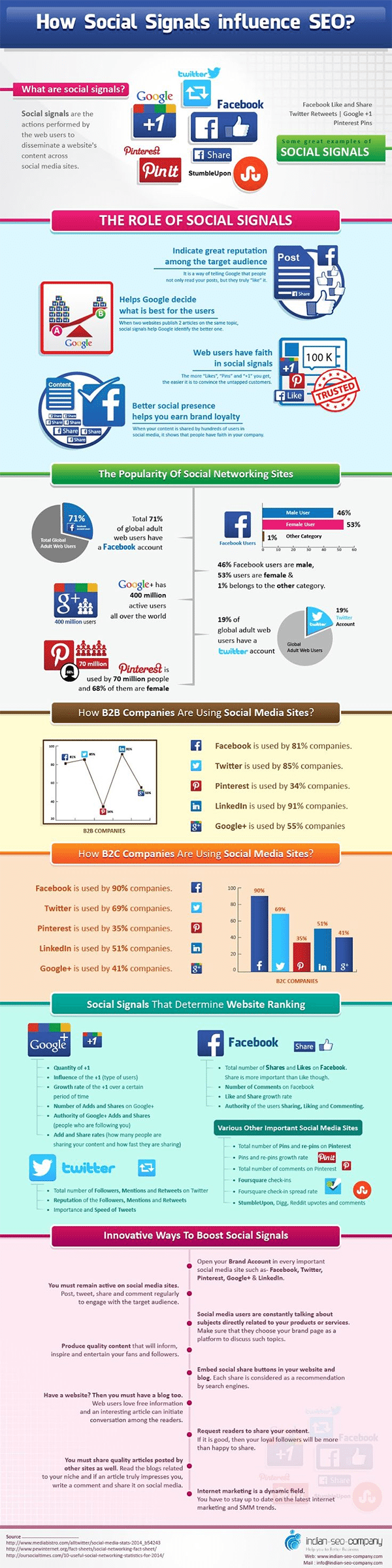
Infographic by Indian SEO Company.
Chapter 1: The Link Between Social Signals and SEO
To understand how social media affects your website’s Google ranking, we must first delve into the concept of social signals. Social signals refer to various metrics related to your social media presence and activity, such as likes, shares, comments, and followers. While Google has repeatedly stated that social signals are not direct ranking factors, there is substantial evidence suggesting that there is a connection between social media activity and SEO.
1.1. Increased Web Traffic
One of the most direct ways in which social media impacts your website’s ranking is by driving traffic. When you share your website’s content on social media platforms, it can attract a significant number of visitors. These visitors can then explore your website, potentially increasing its engagement metrics, such as time spent on site and pages per session.
1.2. Improved Click-Through Rates
Social media can also influence your website’s click-through rates (CTR) in Google’s search results. If your content is widely shared on social media, it can generate interest and curiosity among users. When they see your website listed in the search results, they are more likely to click on it. A higher CTR can send positive signals to Google, indicating that your website’s content is relevant and valuable to users.
1.3. Social Sharing as Backlinks
Backlinks, or inbound links, are crucial for SEO. They serve as a vote of confidence from other websites, indicating that your content is authoritative and valuable. While social media shares themselves are not considered traditional backlinks, they can indirectly lead to backlinks. When people share your content on social media, it increases its visibility, making it more likely to be discovered by bloggers, journalists, or website owners who may decide to link to it in their articles or posts.
Chapter 2: Building Brand Authority and Trust
Google places a significant emphasis on the authority and trustworthiness of websites when determining their rankings. Social media can play a vital role in building your brand’s authority and establishing trust among your audience, which can, in turn, positively impact your Google ranking.
2.1. Content Distribution and Amplification
Social media platforms are excellent tools for distributing and amplifying your content. When you consistently share high-quality, informative, and engaging content, it can position your brand as an industry leader. As more users engage with and share your content, it reinforces your authority in your niche.
2.2. Social Proof and Reviews
Customer reviews and social proof have become increasingly important for online businesses. Positive reviews and endorsements on social media platforms can enhance your brand’s credibility and trustworthiness. When Google sees that your brand is highly regarded on social media, it can have a positive impact on your website’s rankings.
2.3. Influencer Marketing
Collaborating with influencers in your industry can be a powerful way to boost your brand’s authority and reach a wider audience. Influencers often have a loyal following, and their endorsements can carry significant weight on social media. When influencers share your content or recommend your products or services, it can lead to increased brand authority and visibility, which can indirectly influence your Google ranking.
Chapter 3: Social Signals and User Engagement
User engagement is a critical aspect of SEO, and social media can play a significant role in enhancing user engagement with your website.
3.1. Social Sharing Metrics
Google may not consider the number of social media shares as a direct ranking factor, but it does pay attention to the engagement signals generated by those shares. When users click on a link shared on social media and spend time on your website, it signals to Google that your content is relevant and valuable. This can contribute to higher rankings.
3.2. Comment Sections and Community Building
Many websites incorporate social media comment sections or have their own community forums. Active and engaged discussions in these spaces can boost user engagement and contribute positively to your website’s SEO. Google’s algorithms may consider user-generated content like comments as a sign of a vibrant online community, which can be beneficial for rankings.
Chapter 4: Social Media’s Role in Local SEO
If your business operates in a specific geographic area, social media can be a potent tool for improving your local SEO efforts.
4.1. Local Citations and Reviews
Social media profiles often include business information, including location, contact details, and hours of operation. Consistency in this information across social platforms can contribute to better local SEO rankings. Additionally, positive reviews and ratings on social media can influence your local search rankings.
4.2. Geotagging and Location-Based Content
When you share location-specific content or use geotags in your social media posts, it signals to Google that your business is relevant to a particular geographic area. This can be especially beneficial for businesses that rely on local customers.
Chapter 5: Best Practices for Leveraging Social Media for SEO
Now that we’ve established the connection between social media and Google rankings, it’s essential to discuss best practices for harnessing the power of social media to improve your SEO efforts.
5.1. Create High-Quality, Shareable Content
The foundation of any successful social media strategy is creating content that resonates with your target audience. High-quality, informative, and visually appealing content is more likely to be shared, increasing its reach and impact.
5.2. Optimize Social Profiles
Complete and optimize your social media profiles, ensuring that they contain accurate and consistent information about your business. Use relevant keywords in your profiles, bios, and posts to improve discoverability.
5.3. Encourage Social Sharing
Make it easy for visitors to your website to share your content on social media by including social sharing buttons on your web pages and blog posts. Encourage your audience to share your content by asking questions, running contests, or hosting giveaways.
5.4. Engage with Your Audience
Engagement is a two-way street. Respond to comments, messages, and mentions promptly. Engage in meaningful conversations with your followers to build a loyal community.
5.5. Monitor Analytics
Use social media analytics tools to track the performance of your social media campaigns. Monitor metrics such as reach, engagement, and referral traffic to your website. Adjust your strategy based on the data to optimize your efforts continually.
Conclusion
In conclusion, social media activity does indeed have a significant impact on your website’s ranking on Google. While social signals themselves may not be direct ranking factors, their influence on web traffic, brand authority, user engagement, and local SEO cannot be ignored. By leveraging social media strategically and following best practices, you can enhance your website’s visibility on Google and ultimately drive more organic traffic to your site. In today’s digital landscape, the integration of social media and SEO is a winning formula for online success.

Author:
Mark Ford