

Are you looking for ways to improve your marketing efforts? Want your campaigns to convince more people to get in contact with you?
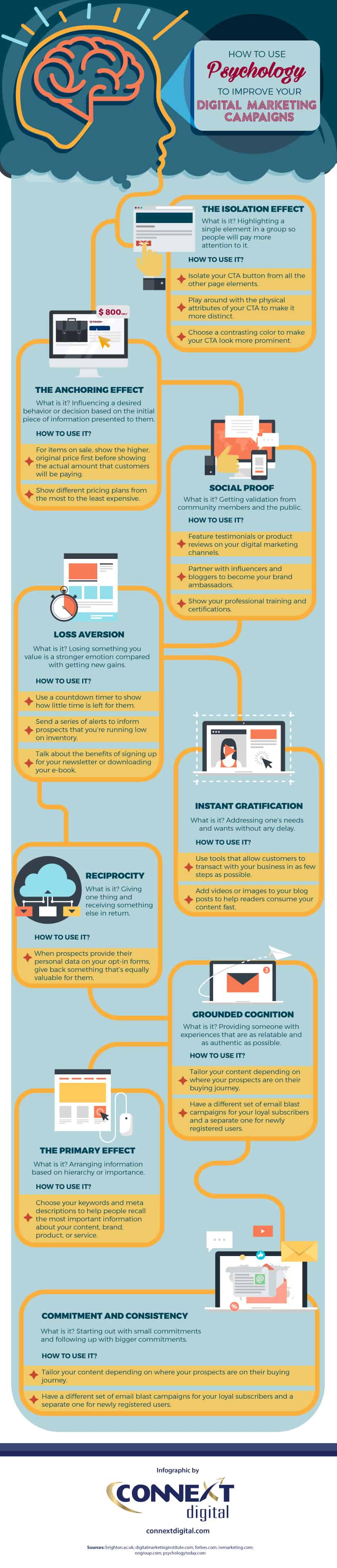
Connext Digital share their psychology tips and tricks in this infographic.
Here’s quick summary:
- The isolation effect
- The anchoring effect
- Social proof
- Loss aversion
- Instant gratification
- Reciprocity
- Grounded cognition
- The primary effect
- Commitment and consistency
Check out the infographic for more detail.
Effective marketing isn’t just about flashy ads or catchy slogans. It’s rooted in understanding human psychology and leveraging it to influence consumer behavior. Here are nine psychological tricks that can significantly enhance your marketing campaigns.
The Isolation Effect
The isolation effect, also known as the von Restorff effect, is a powerful psychological principle that can significantly enhance the visibility and memorability of your products or marketing messages. For small businesses, leveraging this effect can be a game-changer in a competitive market. Here’s how you can effectively implement the isolation effect in your marketing strategy:
- Unique Visual Identity
Creating a distinctive visual identity is the first step in applying the isolation effect. Here’s how you can achieve this:
- Brand Colors: Choose a color palette that stands out from the typical schemes used in your industry. For example, if your competitors predominantly use blue, consider a bold color like orange or purple to differentiate your brand.
- Logo Design: Invest in a memorable and unique logo. It should be simple enough to be easily recognizable but distinct enough to stand out.
- Packaging: Innovative packaging can make your product instantly recognizable. Think of how Coca-Cola’s distinctive bottle shape sets it apart. Consider unique shapes, textures, or eco-friendly materials that can make your packaging stand out on the shelf.
- Compelling Messaging
Your marketing messages should highlight what makes your product or service unique. Here are some strategies:
- Unique Selling Proposition (USP): Clearly define and communicate your USP. This could be an exclusive feature, a superior benefit, or an innovative solution that your competitors don’t offer.
- Taglines and Slogans: Develop a catchy and memorable tagline that encapsulates your brand’s essence. Think of Nike’s “Just Do It” – short, powerful, and unique.
- Storytelling: Use storytelling to create a narrative around your brand. Share the unique origin story of your business, your mission, or the impact of your product on customers’ lives.
- Innovative Product Features
Incorporating unique features or benefits in your product can make it stand out. Here’s how:
- Innovation: Regularly update your product with innovative features that address customer pain points or enhance their experience.
- Customization: Offer customization options that allow customers to tailor the product to their preferences. This not only adds value but also creates a unique product for each customer.
- Exclusive Offers: Introduce limited edition products or exclusive offers that create a sense of rarity and exclusivity.
- Distinctive Customer Experience
Creating a unique customer experience can set your business apart. Consider these tips:
- Personalization: Use customer data to personalize interactions and offers. Tailored recommendations, personalized emails, and customized loyalty programs can make customers feel valued and unique.
- Exceptional Service: Go above and beyond in customer service. Train your staff to provide attentive, knowledgeable, and friendly service that leaves a lasting impression.
- Interactive Experiences: Create interactive experiences that engage customers in unique ways. This could be through in-store events, virtual try-ons, or augmented reality experiences.
- Strategic Placement and Timing
Where and when you present your product or message can also help it stand out:
- Event Sponsorship: Sponsor local events or participate in community activities where your target audience is likely to be. This places your brand in a unique context, away from the clutter of traditional advertising channels.
- Seasonal Campaigns: Launch campaigns during off-peak times or in alignment with specific seasons or holidays to capture attention when competitors might be quieter.
- Limited-Time Offers: Create urgency with limited-time offers that encourage quick action. These should be prominently highlighted in your marketing materials.
- Leveraging Contrast
Use contrast in your marketing materials to draw attention:
- Color Contrast: Use contrasting colors in your ads, website, and packaging to make key elements stand out. For example, a bright call-to-action button on a muted background can draw the eye.
- Font and Typography: Experiment with bold and unique fonts to make headlines and important information stand out.
- Imagery: Use high-quality, eye-catching images that contrast with the typical visuals in your industry.
- Customer Involvement
Engage your customers in ways that make them feel part of something unique:
- User-Generated Content: Encourage customers to create and share content related to your brand. This not only provides social proof but also highlights the unique ways customers use your product.
- Surveys and Feedback: Regularly seek customer feedback and implement their suggestions. This involvement makes customers feel valued and can lead to unique product improvements.
- Unique Digital Presence
Your online presence should also reflect the isolation effect:
- Website Design: Design a website that is visually appealing and easy to navigate, but also different from the typical layouts seen in your industry. Use animations, interactive elements, or unconventional layouts to engage visitors.
- Content Marketing: Create unique and valuable content that sets you apart as an industry leader. This could be through in-depth blog posts, informative videos, or engaging social media content.
- SEO and Keywords: Optimize for less competitive, unique keywords that can make your content stand out in search engine results.
- Partnerships and Collaborations
Forming unique partnerships can also help your brand stand out:
- Collaborations: Partner with brands or influencers that complement your business but are not direct competitors. This can introduce your brand to new audiences in a unique way.
- Co-Branding: Co-create products with other brands to offer something unique and exclusive. This can generate buzz and attract attention from both brands’ customer bases.
Conclusion
For small businesses, standing out in a crowded market is crucial. By leveraging the isolation effect, you can create a unique identity that captures attention and remains memorable to your audience. Focus on developing a distinctive visual identity, crafting compelling messages, innovating product features, and delivering exceptional customer experiences. Use contrast strategically, engage your customers, build a unique digital presence, and form strategic partnerships. By consistently applying these strategies, you can effectively utilize the isolation effect to differentiate your brand and drive success in your marketing campaigns.
The Anchoring Effect
The anchoring effect is a cognitive bias that significantly influences decision-making processes. By presenting an initial piece of information (the “anchor”), you can sway customers’ perceptions and subsequent choices. For small businesses, understanding and utilizing the anchoring effect can lead to more effective pricing strategies, enhanced customer engagement, and ultimately, increased sales. Here are some detailed tips and guidance on leveraging the anchoring effect in your marketing efforts:
- Strategic Pricing
One of the most common ways to use the anchoring effect is in pricing strategies. Here’s how you can do it effectively:
- Decoy Pricing: Introduce a third option that is less attractive than the other two. For example, if you offer a small, medium, and large coffee, price the medium coffee close to the large one. This makes the large coffee seem like a better deal, pushing customers towards it.
- High Initial Prices: Start with a higher initial price for a new product, then offer a discount. The original high price serves as an anchor, making the discounted price seem more attractive.
- Bundling Products: Offer bundles at a higher total price compared to purchasing items individually. Present the bundled price first, then show the individual prices to make the bundle seem like a better deal.
- Highlighting Savings
Anchoring can also be used to emphasize savings and value:
- Original vs. Sale Price: Always show the original price next to the sale price. The higher original price anchors the customer’s perception, making the sale price seem like a significant bargain.
- Subscription Models: For subscription services, show the annual price first, then break it down to a lower monthly cost. This makes the monthly subscription appear more affordable.
- Volume Discounts: Highlight the savings customers get when they purchase in larger quantities. For example, show the cost per unit for single, pack of three, and pack of six options, anchoring with the single unit price to emphasize the savings on larger packs.
- Creating Value Perception
Use anchoring to enhance the perceived value of your products or services:
- Premium Options: Introduce a premium version of your product at a higher price. This makes your standard option appear more affordable and reasonable by comparison.
- Comparison Charts: Use comparison charts to show the differences between your offerings. Place the most expensive or feature-rich option at the top to anchor perceptions, making other options seem like better value.
- Testimonials and Case Studies: Present high-impact testimonials or case studies first to set a high standard of expectation and perceived value for your product or service.
- Promotional Strategies
Anchoring can make your promotions more effective:
- Limited-Time Offers: Present a high anchor price for a limited-time offer, then show the discounted price. The urgency combined with the perceived deal can drive quicker purchasing decisions.
- Early Bird Specials: Use higher prices as anchors, then offer early bird specials for customers who act quickly. This creates a sense of urgency and the perception of getting a great deal.
- First-Time Buyer Discounts: For new customers, show the regular price as an anchor, then offer a first-time buyer discount. This makes the introductory offer more compelling.
- Product Placement and Presentation
The way products are presented can utilize anchoring effectively:
- Highlight Bestsellers: Place your best-selling products prominently and present them as the anchor against which other products are compared.
- Feature Most Expensive First: On your website or in-store displays, show the most expensive items first. This sets a high anchor, making other products seem more affordable.
- Tiered Services: If you offer services at different levels (basic, standard, premium), present the premium option first. This makes the standard and basic options appear more cost-effective by comparison.
- Enhancing Customer Experience
Apply the anchoring effect to improve customer interactions and satisfaction:
- Upfront Costs: When discussing project costs or service fees, start with the highest estimate. Subsequent discussions or discounts will seem more reasonable.
- Highlighting Features: When describing product features, start with the most impressive or valuable ones. This sets a high standard for the customer’s expectations.
- Customer Loyalty Programs: Show the total value of rewards or discounts a customer can earn through your loyalty program first. This makes each individual reward or discount feel more significant.
- Marketing Communications
Incorporate anchoring into your marketing messages:
- Email Campaigns: In promotional emails, lead with the higher price or value before showing the discount. For example, “Our premium software, usually $99, now available for $49 for a limited time.”
- Social Media Promotions: Use anchoring in social media ads by presenting the higher value first. For instance, “Originally $150, now only $75!”
- Landing Pages: Design your landing pages to anchor visitors with a high price or value proposition at the top, then introduce the current offer or discount.
- Training Your Sales Team
Ensure your sales team understands and effectively uses anchoring:
- Sales Pitches: Train your sales team to start with the highest value proposition or most expensive option when presenting to customers. This can make other options seem more attractive.
- Negotiation Strategies: In negotiations, start with a higher price or less favorable terms. This makes any subsequent concessions or discounts appear more generous.
- Customer Interactions: Encourage your sales team to use anchoring when discussing product features and benefits, starting with the most impressive ones.
Conclusion
For small businesses, the anchoring effect can be a powerful tool to influence customer perceptions and drive sales. By strategically using high initial prices, emphasizing savings, creating value perceptions, and enhancing customer experiences, you can effectively leverage this cognitive bias to your advantage. Whether through pricing strategies, promotional tactics, or product presentation, anchoring can help make your offerings more appealing and increase your conversion rates.
Implementing these techniques requires understanding your customers and thoughtfully designing your marketing and sales strategies. By doing so, you can create a compelling value proposition that resonates with your target audience, ultimately leading to greater business success.
Social Proof
Social proof is a powerful psychological phenomenon where people look to the actions and behaviors of others to guide their own decisions. For small businesses, leveraging social proof can significantly enhance credibility, trust, and conversion rates. Here are detailed strategies and tips on how to effectively utilize social proof in your marketing efforts:
- Customer Reviews and Testimonials
Customer reviews and testimonials are one of the most direct and impactful forms of social proof. Here’s how to make the most of them:
- Collect Reviews: Actively encourage customers to leave reviews on platforms like Google, Yelp, and industry-specific review sites. Make it easy for them by providing direct links and clear instructions.
- Showcase Testimonials: Display positive testimonials prominently on your website, especially on your homepage, product pages, and landing pages. Include the customer’s name, photo, and a specific account of their positive experience to add authenticity.
- Respond to Reviews: Engage with reviewers by responding to their feedback, whether positive or negative. This shows that you value customer opinions and are committed to improving their experience.
- User-Generated Content
User-generated content (UGC) can be incredibly persuasive as it showcases real customers using and endorsing your product. Here are ways to encourage and utilize UGC:
- Social Media Campaigns: Create campaigns that encourage customers to share photos and videos of themselves using your products with a specific hashtag. Highlight these posts on your social media channels and website.
- Contests and Giveaways: Run contests or giveaways that require participants to create and share content related to your brand. This not only generates UGC but also increases engagement and brand visibility.
- Feature Customers: Regularly feature customer content in your marketing materials, newsletters, and social media posts. This recognition can encourage more customers to share their experiences.
- Influencer Partnerships
Influencer marketing can be a powerful form of social proof, especially when influencers have a loyal and engaged following. Here’s how to leverage influencer partnerships:
- Identify Relevant Influencers: Look for influencers who align with your brand values and have an audience that matches your target market. Micro-influencers, with smaller but highly engaged followings, can often be more effective than larger influencers.
- Collaborate Creatively: Work with influencers to create authentic and engaging content that showcases your product in use. This could include sponsored posts, product reviews, unboxing videos, or Instagram takeovers.
- Track Results: Use tracking links and discount codes to measure the effectiveness of your influencer campaigns. This helps you understand the ROI and refine your strategy.
- Case Studies and Success Stories
Detailed case studies and success stories can provide compelling evidence of your product’s effectiveness. Here’s how to create and use them:
- Identify Success Stories: Reach out to satisfied customers and ask if they’d be willing to share their story. Focus on those who have experienced significant benefits from using your product or service.
- Create Detailed Case Studies: Develop comprehensive case studies that outline the customer’s problem, your solution, and the results. Include quotes, data, and before-and-after scenarios to add credibility.
- Promote Case Studies: Feature these case studies on your website, in your marketing emails, and in sales presentations. They can be particularly persuasive in converting prospects who are considering your product.
- Social Media Proof
Your social media presence can serve as ongoing proof of your popularity and customer satisfaction. Here are ways to leverage social media as social proof:
- Display Follower Counts: Highlight your follower counts on platforms like Instagram, Facebook, and Twitter. Large follower counts can signal credibility and popularity.
- Share Engagement Metrics: Regularly share metrics such as likes, shares, and comments on your posts. High engagement rates indicate that your content resonates with your audience.
- Customer Interactions: Showcase positive interactions with customers on social media. Repost their content, respond to their comments, and highlight their stories.
- Endorsements and Certifications
Endorsements from industry experts or relevant certifications can serve as powerful social proof. Here’s how to use them:
- Expert Endorsements: Seek endorsements from industry experts, bloggers, or well-known figures within your niche. Display these endorsements prominently on your website and marketing materials.
- Industry Certifications: Obtain relevant certifications and display them on your website, packaging, and marketing materials. Certifications can reassure customers about the quality and reliability of your product.
- Awards and Recognitions: Highlight any awards or recognitions your business or products have received. These accolades serve as third-party validation of your excellence.
- Customer Counts and Milestones
Highlighting the number of customers you’ve served or significant milestones you’ve achieved can serve as social proof. Here’s how to present these:
- Customer Counts: Display statements like “Join over 10,000 satisfied customers” or “Trusted by 5,000 businesses” on your website and marketing materials.
- Milestones: Celebrate milestones such as anniversaries, the number of products sold, or significant growth achievements. Share these milestones with your audience to build credibility and trust.
- Impact Statements: Use impact statements like “Over 1 million units sold” or “Saved customers over $500,000” to highlight the tangible benefits and success of your product.
- Media Coverage
Media mentions and coverage can significantly boost your credibility. Here’s how to leverage media coverage as social proof:
- Press Releases: Regularly send out press releases about significant business updates, product launches, or achievements. Aim to get coverage in reputable publications.
- Media Logos: Display logos of media outlets that have featured your business on your website and marketing materials with a “As Seen In” or “Featured In” section.
- Share Articles: Share links to articles and media features about your business on your social media channels, newsletters, and website.
- Community Engagement
Active participation and engagement in your local or online community can serve as a powerful form of social proof. Here’s how to enhance community engagement:
- Local Events: Participate in or sponsor local events, charity activities, or community projects. This shows that your business is an active and caring member of the community.
- Online Communities: Engage in online communities relevant to your industry. Provide valuable input, answer questions, and share your expertise. This builds your reputation and visibility.
- Customer Stories: Encourage customers to share their stories and experiences with your product in community forums, on your website, or in social media groups.
Conclusion
Social proof is a multifaceted tool that can significantly enhance your marketing efforts. By strategically leveraging customer reviews, user-generated content, influencer partnerships, case studies, social media proof, endorsements, customer counts, media coverage, and community engagement, small businesses can build trust, credibility, and a strong reputation.
The key to successful implementation of social proof lies in authenticity and consistency. Ensure that your social proof is genuine and that you regularly update and promote these elements across all your marketing channels. By doing so, you can create a compelling narrative that encourages new customers to trust and engage with your brand.
Loss Aversion
Loss aversion is a concept in behavioral economics that suggests people are more motivated by the fear of losing something than by the potential of gaining something of equal value. For small businesses, leveraging loss aversion can be a powerful strategy to drive customer actions and enhance marketing effectiveness. Here’s how to effectively implement loss aversion in your marketing efforts:
- Limited-Time Offers
Creating a sense of urgency with limited-time offers can significantly motivate customers to act quickly to avoid missing out:
- Countdown Timers: Use countdown timers on your website and in your emails to highlight the remaining time for a special offer. This visual cue can heighten the sense of urgency.
- Flash Sales: Implement flash sales that last for a very short period, such as a few hours or a day. Promote these sales through your marketing channels to encourage immediate action.
- Seasonal Promotions: Tie promotions to specific seasons or holidays with a clear end date. Emphasize the limited availability to prompt quicker purchases.
- Scarcity Tactics
Highlighting the limited availability of products can trigger loss aversion and encourage customers to purchase before the item is gone:
- Stock Indicators: Show low stock indicators on product pages (e.g., “Only 3 left in stock!”). This can push hesitant buyers to complete their purchase.
- Exclusive Products: Offer limited-edition products or services that are available for a short time or in limited quantities. This exclusivity can increase perceived value and urgency.
- Pre-Order Campaigns: Allow customers to pre-order upcoming products with limited initial availability. This can create anticipation and urgency to secure the product before it sells out.
- Membership and Loyalty Programs
Using loss aversion in membership and loyalty programs can enhance customer retention and engagement:
- Expiring Points: Implement a points system where loyalty points expire after a certain period. Remind customers of their expiring points to encourage them to make a purchase.
- Tiered Membership Levels: Create tiered membership levels with escalating benefits. Notify customers when they are close to losing their current level benefits or if they can easily upgrade by making an additional purchase.
- Exclusive Access: Offer exclusive early access to sales or new products for loyalty program members, emphasizing that non-members will miss out on these benefits.
- Free Trials and Money-Back Guarantees
Offering free trials and money-back guarantees can reduce the perceived risk of trying your product and leverage loss aversion to convert customers:
- Free Trials: Provide a free trial period for your product or service. Remind customers near the end of the trial about the value they’ll lose if they don’t continue with a paid subscription.
- Money-Back Guarantees: Offer a money-back guarantee to reduce the risk of purchase. Emphasize the guarantee in your marketing to reassure customers that they have nothing to lose.
- Auto-Renewals: For subscription services, offer a free trial with an auto-renewal option. Send reminders about the trial ending soon to encourage customers to continue their subscription.
- Exit-Intent Popups
Utilize exit-intent popups to capture potential customers who are about to leave your site without making a purchase:
- Special Discounts: Offer a special discount or incentive through an exit-intent popup when a user is about to leave your website. Highlight that this offer is available for a limited time to encourage immediate action.
- Remind of Cart Items: If a user is leaving with items in their cart, use a popup to remind them of their cart contents and offer a small discount to complete the purchase.
- Limited-Time Content: Provide access to limited-time content or bonuses via an exit-intent popup, emphasizing the benefit they’ll miss out on by leaving.
- Email Marketing Strategies
Craft email marketing campaigns that leverage loss aversion to drive engagement and conversions:
- Abandoned Cart Emails: Send automated emails to customers who have abandoned their shopping carts. Highlight the products they’re about to lose and offer an incentive to complete the purchase.
- Expiring Offers: Create email campaigns around expiring offers, emphasizing the limited time left to take advantage of the deal. Use subject lines that convey urgency, such as “Only 24 hours left!” or “Don’t miss out!”
- Re-Engagement Campaigns: Target inactive customers with re-engagement emails that highlight what they’ve been missing out on and offer a special incentive to return.
- Social Proof of Popularity
Use social proof to create a sense of urgency and loss aversion by highlighting the popularity of your products:
- Best-Sellers: Promote best-selling items and emphasize their popularity. Use phrases like “Don’t miss out on our most popular product!” to create a sense of urgency.
- Customer Testimonials: Share testimonials from customers who express satisfaction with their purchase and highlight how quickly the product is selling out.
- Sold-Out Alerts: Display messages on product pages about items that have recently sold out to create a sense of scarcity and urgency for other products.
- Upsell and Cross-Sell Tactics
Incorporate loss aversion into your upsell and cross-sell strategies to increase average order value:
- Bundled Offers: Offer product bundles at a discounted rate compared to buying items individually. Emphasize the savings they’ll miss out on if they don’t purchase the bundle.
- Add-Ons: Suggest complementary products during the checkout process. Highlight limited-time offers on these add-ons to encourage additional purchases.
- Post-Purchase Offers: After a customer completes a purchase, present them with a limited-time offer on related products, emphasizing the short window to get a special deal.
- Creating Fear of Missing Out (FOMO)
Leveraging FOMO can be an effective way to utilize loss aversion in your marketing campaigns:
- Live Events and Webinars: Promote live events, webinars, or workshops with limited spots available. Emphasize the value of attending and what participants will miss if they don’t register.
- Social Media Stories: Use social media stories to share time-sensitive promotions, behind-the-scenes content, or live updates. These ephemeral formats can create a sense of urgency.
- Customer Milestones: Celebrate customer milestones (e.g., “Join our 10,000 satisfied customers!”) and highlight the benefits they enjoy, suggesting that new customers can be part of this exclusive group if they act now.
Conclusion
Loss aversion is a potent psychological trigger that can drive customer behavior by emphasizing what they stand to lose rather than what they stand to gain. For small businesses, understanding and strategically implementing loss aversion can enhance marketing effectiveness, boost sales, and improve customer retention.
By creating limited-time offers, using scarcity tactics, leveraging free trials and money-back guarantees, utilizing exit-intent popups, crafting compelling email marketing strategies, showcasing social proof, employing upsell and cross-sell tactics, and creating FOMO, small businesses can effectively harness the power of loss aversion to drive conversions and grow their customer base.
The key to success is to balance urgency and value, ensuring that customers feel motivated to act quickly without feeling pressured. By thoughtfully integrating these strategies into your marketing efforts, you can create a compelling sense of urgency that encourages customers to take action and engage more deeply with your brand.
Instant Gratification
In today’s fast-paced world, consumers crave instant gratification. They want quick solutions and immediate rewards, and businesses that can meet these needs are more likely to attract and retain customers. For small businesses, tapping into the desire for instant gratification can significantly enhance customer satisfaction and drive sales. Here’s how to effectively leverage instant gratification in your marketing strategies:
- Fast and Free Shipping
One of the most direct ways to provide instant gratification is through fast and free shipping options:
- Same-Day or Next-Day Delivery: Partner with local delivery services or use courier services that offer same-day or next-day delivery. Highlight this option prominently on your website to attract customers looking for quick solutions.
- Free Shipping Promotions: Offer free shipping on all orders or on orders above a certain amount. Promote this incentive on your homepage, product pages, and during the checkout process.
- Shipping Time Transparency: Clearly communicate estimated delivery times on your product pages. Provide tracking information as soon as the order is shipped to keep customers informed and satisfied.
- Immediate Discounts and Coupons
Offering immediate discounts or coupons can satisfy the customer’s desire for instant savings:
- Instant Discount Popups: Use exit-intent or entry popups that offer an immediate discount or coupon code in exchange for signing up for your newsletter or creating an account.
- First-Time Buyer Discounts: Offer a discount to first-time customers as an incentive to make their initial purchase. This can be highlighted on your website and in promotional emails.
- Loyalty Program Benefits: Provide instant rewards for loyalty program members, such as discounts, points for purchases, or exclusive offers that can be redeemed immediately.
- Digital Products and Services
For businesses offering digital products or services, providing instant access can be a key selling point:
- Instant Downloads: Ensure that customers can download digital products (e.g., eBooks, software, music) immediately after purchase. Highlight the instant availability on the product page.
- Immediate Access: For online courses, memberships, or subscriptions, offer immediate access upon purchase. Emphasize that customers can start benefiting from the service right away.
- Automated Onboarding: Implement automated onboarding processes for digital services to help customers get started immediately without waiting for manual setup.
- Instant Customer Support
Providing instant customer support can greatly enhance customer satisfaction and build trust:
- Live Chat: Implement live chat on your website to offer real-time assistance to customers. This can help address questions and concerns instantly, reducing cart abandonment.
- Chatbots: Use AI-powered chatbots to provide instant responses to common inquiries. Ensure that the chatbot can seamlessly transfer more complex queries to human agents.
- Social Media Responsiveness: Monitor your social media channels and respond promptly to customer messages and comments. Quick responses can turn potential issues into positive experiences.
- Streamlined Checkout Process
Simplify the checkout process to provide a seamless and instant purchasing experience:
- One-Click Checkout: Implement one-click checkout options for returning customers to make the purchasing process as quick as possible.
- Guest Checkout: Allow customers to check out as guests without creating an account. This reduces friction and speeds up the buying process.
- Mobile Optimization: Ensure your checkout process is optimized for mobile devices. A fast and easy mobile checkout can significantly improve the shopping experience for on-the-go customers.
- Real-Time Updates and Notifications
Keeping customers informed with real-time updates and notifications can enhance their sense of instant gratification:
- Order Confirmations: Send immediate order confirmations via email or SMS. Include detailed information about the order and next steps.
- Shipping Notifications: Provide real-time updates on shipping status and delivery times. Customers appreciate knowing exactly when their order will arrive.
- Stock Alerts: Offer real-time alerts for when out-of-stock items become available. Allow customers to sign up for notifications and inform them instantly when they can make a purchase.
- Personalized Recommendations
Offering personalized recommendations can create a more engaging and instantly gratifying shopping experience:
- Dynamic Product Recommendations: Use AI to analyze customer behavior and provide personalized product recommendations in real-time. Display these recommendations on product pages, in the shopping cart, and in follow-up emails.
- Tailored Promotions: Personalize promotions based on customer preferences and past purchases. Send targeted offers that provide immediate value to individual customers.
- Customized Content: Offer personalized content, such as blog posts, guides, or videos, based on customer interests. Tailored content can provide instant value and enhance the overall customer experience.
- Quick and Easy Returns
A hassle-free returns process can provide customers with the confidence to make quick purchasing decisions:
- Easy Return Policies: Clearly communicate a simple and straightforward return policy. Offer free returns or exchanges to remove barriers to purchase.
- Instant Refunds: Process refunds quickly to provide immediate financial gratification. Consider offering instant store credit for returns to encourage future purchases.
- Return Labels: Include pre-paid return labels with orders to make the return process as easy as possible for customers.
- Instant Gratification Through Mobile Apps
Developing a mobile app can enhance the instant gratification experience for your customers:
- App-Exclusive Offers: Provide exclusive discounts and promotions for app users. Highlight these offers to encourage downloads and app engagement.
- Push Notifications: Use push notifications to deliver instant updates, reminders, and personalized offers directly to customers’ devices.
- In-App Purchases: Enable quick and easy in-app purchases with saved payment information and streamlined checkout processes.
- Gamification and Instant Rewards
Incorporating gamification elements can provide instant rewards and create a more engaging experience:
- Points and Badges: Implement a points system where customers earn points for various actions (e.g., purchases, referrals, social media shares) and receive instant rewards.
- Spin-to-Win Wheels: Use gamified elements like spin-to-win wheels that offer instant discounts, free products, or other rewards. Promote these games through your website and email campaigns.
- Challenges and Quests: Create challenges or quests that customers can complete to earn immediate rewards. This can increase engagement and encourage repeat visits.
Conclusion
Instant gratification is a powerful motivator for today’s consumers. By providing fast and free shipping, immediate discounts, instant access to digital products, real-time updates, and personalized recommendations, small businesses can meet the expectations of modern customers and enhance their overall experience.
Streamlining the checkout process, offering instant customer support, simplifying returns, leveraging mobile apps, and incorporating gamification can further amplify the sense of instant gratification. By thoughtfully implementing these strategies, small businesses can create a more satisfying and engaging shopping experience that drives customer loyalty and boosts sales.
Reciprocity
Reciprocity is a powerful principle in psychology that can significantly influence customer behavior and loyalty. The idea is simple: when you give something of value to someone, they feel an obligation to return the favor. For small businesses, leveraging reciprocity can create strong customer relationships, enhance brand loyalty, and drive sales. Here’s how you can effectively use reciprocity in your marketing strategies:
- Free Samples and Trials
Offering free samples or trials is one of the most effective ways to trigger the reciprocity effect:
- Product Samples: Distribute free samples of your products to potential customers. This can be done in-store, at events, or through direct mail. Ensure that the samples are high-quality and representative of your best offerings.
- Free Trials: Provide free trials of your services, especially if you offer software, subscriptions, or membership-based products. Highlight the benefits and features during the trial period to encourage customers to continue with a paid plan.
- Gift with Purchase: Offer a small free gift with every purchase. This not only enhances the perceived value but also encourages future purchases due to the positive experience.
- Valuable Content
Creating and sharing valuable content can establish your business as a trusted resource and invoke reciprocity:
- Educational Resources: Develop high-quality, informative content such as eBooks, whitepapers, webinars, and tutorials that address your customers’ pain points and interests. Offer these resources for free in exchange for an email sign-up.
- Blog Posts and Articles: Regularly update your blog with insightful and helpful articles related to your industry. Sharing valuable knowledge builds trust and encourages readers to reciprocate by engaging with your brand.
- How-To Guides and Tips: Create practical guides and tips that help your audience solve specific problems. This type of content can be shared on your website, social media, and email newsletters.
- Exclusive Discounts and Offers
Providing exclusive discounts and offers can make customers feel valued and more likely to reciprocate with a purchase:
- Loyalty Discounts: Offer special discounts to repeat customers or members of your loyalty program. Personalize these offers based on their past purchases to make them feel appreciated.
- First-Time Customer Offers: Provide a welcome discount to first-time customers to encourage their initial purchase and build a foundation for a long-term relationship.
- Referral Rewards: Implement a referral program where both the referrer and the new customer receive a discount or reward. This not only incentivizes referrals but also builds a sense of community around your brand.
- Personalized Gifts
Personalizing gifts for your customers can enhance the reciprocity effect by making the gesture feel more genuine and thoughtful:
- Birthday Gifts: Send personalized birthday emails with a special discount or gift. This small gesture shows that you care about your customers on an individual level.
- Holiday Gifts: Offer exclusive holiday discounts or gifts. This can be tied to major holidays or unique dates relevant to your industry.
- Thank You Notes: Send handwritten thank you notes with orders, especially for high-value customers. Including a small gift or discount code in the note can further enhance the effect.
- Superior Customer Service
Providing exceptional customer service can foster a sense of gratitude and loyalty in your customers:
- Responsive Support: Ensure that your customer support team is responsive, friendly, and helpful. Quick and effective resolution of issues can make customers feel valued and more likely to continue doing business with you.
- Follow-Up Calls and Emails: After resolving an issue or completing a purchase, follow up with a call or email to ensure customer satisfaction. This extra step shows that you care about their experience.
- Surprise Upgrades: Occasionally, surprise your customers with free upgrades or additional services. This unexpected gesture can significantly enhance their perception of your brand.
- Community Engagement
Engaging with your community can create a positive image and build strong, reciprocal relationships:
- Local Sponsorships: Sponsor local events, sports teams, or community projects. Your involvement shows that you care about the community, encouraging community members to support your business in return.
- Charitable Contributions: Partner with local charities or run your own charitable initiatives. Donating a portion of sales to a good cause can encourage customers to support your business.
- Volunteer Efforts: Organize volunteer activities for your team and invite customers to join. This fosters a sense of community and shared purpose.
- Interactive Social Media
Using social media to engage with your audience can also leverage the principle of reciprocity:
- Engage with Followers: Respond to comments, messages, and mentions promptly. Engaging with your audience on social media makes them feel heard and valued.
- User-Generated Content: Encourage customers to share their experiences with your products on social media. Feature their posts on your profiles to show appreciation and build a community.
- Social Media Contests: Run contests that require participants to engage with your brand. Offer meaningful prizes and acknowledge participants to foster a sense of community and reciprocity.
- Events and Experiences
Hosting events and providing unique experiences can create memorable interactions that encourage reciprocity:
- Customer Appreciation Events: Host events to thank your customers for their loyalty. Offer exclusive deals, free samples, and entertainment to create a positive and memorable experience.
- Workshops and Classes: Offer free workshops or classes related to your products or industry. This not only provides value but also positions your brand as an expert in the field.
- VIP Experiences: Create VIP experiences for your top customers. This could include early access to new products, special discounts, or exclusive event invitations.
- Transparency and Honesty
Being transparent and honest with your customers can build trust and encourage reciprocal loyalty:
- Clear Communication: Communicate clearly and honestly about your products, services, and policies. Avoid hidden fees or misleading information.
- Admit Mistakes: If your business makes a mistake, own up to it and take immediate steps to rectify the situation. This builds trust and shows that you value your customers.
- Customer Feedback: Actively seek and act on customer feedback. Show customers that their opinions matter and that you are committed to continuous improvement.
Conclusion
Reciprocity is a powerful tool that can help small businesses build strong, lasting relationships with their customers. By offering free samples, valuable content, exclusive discounts, personalized gifts, superior customer service, community engagement, interactive social media, unique experiences, and maintaining transparency and honesty, you can create a positive cycle of giving and receiving.
The key to successfully leveraging reciprocity is to ensure that your gestures of goodwill are genuine and meaningful. When customers feel genuinely valued and appreciated, they are more likely to reciprocate with their loyalty and support, ultimately driving your business’s growth and success.
Grounded Cognition
Grounded cognition is a theory in cognitive science that suggests our thoughts and knowledge are deeply rooted in physical experiences. This means that our sensory experiences and bodily interactions significantly shape our cognitive processes. For small businesses, leveraging grounded cognition can create more engaging and memorable customer experiences, leading to stronger brand connections and increased sales. Here’s how to effectively incorporate grounded cognition into your marketing strategies:
- Sensory Marketing
Engage your customers’ senses to create powerful and memorable experiences:
- Visual Appeal: Invest in high-quality visuals for your products, packaging, and marketing materials. Use vibrant colors, appealing designs, and professional photography to capture attention.
- Tactile Experiences: If possible, let customers touch and feel your products. Use materials and textures that are pleasant to the touch. In physical stores, create interactive displays that encourage customers to engage with the products.
- Olfactory Marketing: Scents can evoke strong emotions and memories. Use pleasant fragrances in your store or in product packaging to create a positive association with your brand.
- Auditory Branding: Use sound to create a specific atmosphere. This could include background music in your store or unique sounds associated with your brand (like the Intel chime). Ensure the sounds align with your brand identity and enhance the customer experience.
- Taste Experiences: If applicable, offer samples of your food or beverage products. This can be a powerful way to engage customers and encourage purchases.
- Interactive and Immersive Experiences
Create interactive and immersive experiences that fully engage your customers:
- Virtual Reality (VR) and Augmented Reality (AR): Use VR and AR to provide immersive experiences. For example, AR apps can let customers see how furniture would look in their home, or how clothes would fit them. VR can be used for virtual tours of your store or product demonstrations.
- In-Store Demonstrations: Host live demonstrations in your store where customers can see, touch, and try products. This hands-on experience can significantly influence purchasing decisions.
- Experiential Marketing Events: Organize events that allow customers to experience your brand in a unique and engaging way. This could include pop-up shops, themed parties, or interactive workshops.
- Storytelling and Emotional Engagement
Use storytelling to create emotional connections with your customers, making your brand more memorable:
- Brand Story: Share your brand’s story in a way that connects with your audience emotionally. Highlight your values, mission, and the journey behind your products. Use personal anecdotes and relatable narratives to make your story compelling.
- Customer Stories: Feature stories from your customers that highlight their experiences with your products. This not only provides social proof but also helps other customers relate to your brand on a personal level.
- Emotional Advertising: Create advertisements that evoke emotions. Whether it’s joy, nostalgia, or inspiration, emotional ads are more likely to be remembered and shared. Use visuals, music, and narratives that resonate with your target audience’s emotions.
- Personalized and Contextual Marketing
Tailor your marketing efforts to the specific needs and contexts of your customers:
- Personalized Recommendations: Use data analytics to provide personalized product recommendations based on customers’ past purchases and browsing behavior. Personalized suggestions feel more relevant and engaging.
- Contextual Messaging: Send targeted messages based on the customer’s current context. For example, use location-based marketing to send offers when customers are near your store, or time-based offers for special occasions like birthdays or holidays.
- Adaptive Content: Create dynamic content that adapts to the user’s behavior. This could include personalized emails, website content that changes based on user preferences, or tailored social media ads.
- Creating Meaningful Connections
Foster deeper connections by aligning your brand with the values and identities of your customers:
- Community Building: Create a community around your brand. This could be through social media groups, forums, or customer clubs. Encourage interaction and engagement within this community.
- Shared Values: Align your brand with values that are important to your customers. This could include sustainability, social justice, or health and wellness. Show your commitment to these values through your business practices and marketing messages.
- Interactive Campaigns: Involve your customers in your marketing campaigns. This could be through user-generated content contests, surveys, or feedback sessions. When customers feel involved, they develop a stronger connection to your brand.
- Enhancing Physical Spaces
Optimize your physical space to create an immersive and engaging customer experience:
- Store Layout: Design your store layout to encourage exploration and interaction. Use signage, lighting, and displays strategically to guide customers through your space.
- Interactive Displays: Create interactive displays that invite customers to touch, test, and explore products. This could include digital kiosks, product samples, or demo stations.
- Comfort and Ambience: Ensure your store environment is comfortable and inviting. Consider factors like lighting, seating, and overall ambience. A positive physical experience can enhance customers’ perceptions of your brand.
- Leveraging Technology
Use technology to enhance grounded cognition and create seamless experiences:
- Mobile Apps: Develop mobile apps that provide additional value to customers. This could include features like AR product visualization, loyalty programs, or personalized recommendations.
- Beacon Technology: Use beacon technology in your store to send contextual messages and offers to customers’ smartphones. This can enhance the in-store experience and provide instant value.
- Interactive Websites: Create an engaging website with interactive elements. This could include 360-degree product views, virtual try-ons, or interactive quizzes to help customers find the right products.
- Consistent Multi-Sensory Branding
Ensure that your brand is consistently represented across all sensory channels:
- Brand Identity: Develop a strong brand identity that encompasses visual, auditory, tactile, and olfactory elements. Ensure consistency across all touchpoints, from your website to your physical store.
- Multi-Sensory Marketing: Use multi-sensory marketing campaigns that engage multiple senses. For example, a campaign might combine visually appealing ads, engaging audio elements, and tactile experiences.
- Consistent Experience: Ensure that the customer experience is consistent across all channels. Whether customers are interacting with your brand online or in-store, the sensory experience should reinforce your brand identity.
Conclusion
Grounded cognition emphasizes the importance of physical and sensory experiences in shaping consumer behavior. For small businesses, leveraging this concept can lead to more engaging and memorable customer interactions. By focusing on sensory marketing, creating interactive and immersive experiences, using storytelling and emotional engagement, personalizing marketing efforts, fostering meaningful connections, optimizing physical spaces, leveraging technology, and maintaining consistent multi-sensory branding, you can enhance customer satisfaction and build stronger brand loyalty.
Implementing these strategies requires a deep understanding of your customers and a commitment to creating meaningful, multi-sensory experiences. By doing so, you can differentiate your brand, create lasting impressions, and drive long-term success.
The Primacy Effect
The primacy effect is a cognitive bias where people tend to remember the first piece of information they encounter better than information presented later. For small businesses, leveraging the primacy effect can be a powerful tool to make a strong first impression and ensure that key messages are remembered. Here’s how to effectively use the primacy effect in your marketing and customer interactions:
- Crafting Powerful Headlines and Openers
The first thing people read or hear sets the tone for their overall experience. Here’s how to make it impactful:
- Engaging Headlines: Ensure that your headlines are clear, compelling, and relevant. Use action words and emotional triggers to draw readers in. For example, instead of “Our Product Features,” try “Discover How Our Product Transforms Your Life.”
- Strong Openers: The first sentence or paragraph of your content should be engaging and informative. Start with a question, a surprising fact, or a bold statement that captures attention and encourages further reading.
- Consistent Messaging: Maintain a consistent tone and message throughout your content. The initial impression should align with the rest of the message to reinforce the key points.
- Designing Impactful Website Homepages
Your website’s homepage is often the first interaction potential customers have with your brand. Make it memorable:
- Clear Value Proposition: Clearly communicate what your business offers and why it’s unique. Your value proposition should be prominently displayed and easy to understand.
- Eye-Catching Visuals: Use high-quality images and videos that reflect your brand’s personality and appeal to your target audience. Visual elements should support and enhance your value proposition.
- Simple Navigation: Ensure that your website is easy to navigate with intuitive menus and a clear layout. Visitors should immediately understand how to find the information they need.
- Creating Memorable First Impressions in Emails
Email marketing can benefit significantly from the primacy effect. Here’s how to make your emails stand out:
- Compelling Subject Lines: Your subject line is the first thing recipients see, so make it count. Use personalization, urgency, and curiosity to increase open rates. For example, “John, Unlock Your Exclusive Discount Today!” is more engaging than “Exclusive Discount Inside.”
- Strong Opening Lines: The first sentence of your email should grab attention and encourage the reader to continue. Start with a question, a bold statement, or a brief overview of the email’s value.
- Concise Content: Get to the point quickly. Highlight the main message early in the email to ensure it’s noticed and remembered.
- Designing Effective Landing Pages
Landing pages are crucial for converting visitors into leads or customers. Here’s how to optimize them for the primacy effect:
- Clear and Compelling Headline: The headline should immediately convey the benefit of the offer. It should be concise and aligned with the ad or link that brought the visitor to the page.
- Strong Visual Hierarchy: Use design elements to guide the visitor’s eye to the most important information first. High-contrast colors, large fonts, and strategic placement can help prioritize key messages.
- Early Call to Action (CTA): Place your primary CTA above the fold so it’s one of the first things visitors see. Use action-oriented language that clearly communicates what you want the visitor to do.
- Structuring Sales Pitches and Presentations
When presenting your business or products, the first few minutes are critical. Here’s how to make a strong start:
- Opening Statement: Begin with a powerful opening statement that grabs attention and sets the stage for the rest of the presentation. This could be a surprising statistic, a compelling story, or a bold claim.
- Outline the Benefits: Quickly outline the main benefits of your product or service. Focus on how it solves a problem or fulfills a need for your audience.
- Engaging Visuals: Use visually appealing slides that support your message. The first few slides should be particularly engaging to maintain interest and reinforce key points.
- Enhancing Product Descriptions
Product descriptions play a crucial role in influencing purchase decisions. Here’s how to make the first lines count:
- Highlight Key Features Early: Start with the most important features and benefits. Customers are more likely to remember the first few points they read.
- Use Bullet Points: Bullet points make information easy to scan and ensure that key details stand out. Place the most critical points at the top of the list.
- Compelling First Sentence: The first sentence should be engaging and informative. It should quickly convey why the product is valuable and worth considering.
- Optimizing Customer Interactions
Every interaction with a customer is an opportunity to make a positive impression. Here’s how to optimize the first moments:
- Warm Greetings: Train your staff to greet customers warmly and professionally, whether in person, over the phone, or online. The initial greeting sets the tone for the entire interaction.
- Clear Introductions: When introducing products, services, or solutions, start with the most compelling benefits. Make it clear how your offering can meet the customer’s needs.
- Professional Appearance: Ensure that your physical space, website, and any customer-facing materials are clean, organized, and visually appealing. First impressions of your environment can impact overall perceptions of your brand.
- Utilizing Social Media
Social media is often the first point of contact between potential customers and your brand. Here’s how to make a strong first impression:
- Compelling Profiles: Ensure that your social media profiles are complete, professional, and reflect your brand identity. Use high-quality profile and cover images.
- Engaging Content: The first few posts a visitor sees should be engaging and representative of your brand. Pin important posts to the top of your profile to highlight key messages or offers.
- Consistent Branding: Maintain consistent branding across all social media platforms. This includes using the same logo, color scheme, and tone of voice.
- Leveraging Reviews and Testimonials
First impressions of your brand can also be shaped by reviews and testimonials. Here’s how to ensure they work in your favor:
- Highlight Positive Reviews: Feature positive reviews prominently on your website, social media, and marketing materials. The first reviews potential customers see should be positive and highlight key benefits.
- Testimonial Videos: Use video testimonials to create a more personal and impactful first impression. Place these videos on your homepage or landing pages where they will be seen first.
- Manage Negative Reviews: Respond to negative reviews promptly and professionally. Show potential customers that you care about their feedback and are committed to resolving issues.
Conclusion
The primacy effect underscores the importance of making a strong first impression. For small businesses, leveraging this cognitive bias can help ensure that key messages are remembered and that initial interactions leave a lasting positive impact.
By crafting powerful headlines and openers, designing impactful website homepages, creating memorable emails, optimizing landing pages, structuring effective sales pitches, enhancing product descriptions, optimizing customer interactions, utilizing social media, and leveraging reviews and testimonials, you can harness the power of the primacy effect to enhance your marketing efforts.
The key is to be strategic and thoughtful about how you present information and interact with customers, ensuring that the first things they see, hear, or experience are memorable, engaging, and aligned with your brand values.
Commitment and Consistency
The principles of commitment and consistency, rooted in the work of psychologist Robert Cialdini, suggest that once people commit to something, they are more likely to follow through with it and stay consistent with their previous actions. For small businesses, leveraging these principles can enhance customer loyalty, increase conversions, and foster long-term relationships. Here’s how to effectively incorporate commitment and consistency into your marketing strategies:
- Encourage Small Initial Commitments
Start by getting customers to make small commitments that can lead to larger actions over time:
- Newsletter Sign-Ups: Encourage visitors to sign up for your newsletter with a simple, compelling call to action. Offer an incentive like a discount or a free resource in exchange for their email address.
- Free Trials: Offer free trials of your product or service. This low-risk commitment allows customers to experience the value you provide, making them more likely to convert to paying customers.
- Surveys and Polls: Engage customers with quick surveys or polls. This not only provides valuable insights but also gets customers to engage with your brand, increasing their commitment.
- Build Loyalty Programs
Loyalty programs are a powerful way to leverage commitment and consistency by rewarding repeat behaviors:
- Point-Based Systems: Implement a points-based loyalty program where customers earn points for each purchase. Points can be redeemed for discounts, free products, or exclusive rewards.
- Tiered Memberships: Create tiered membership levels that offer increasing benefits. As customers move up the tiers through continued engagement and purchases, they become more committed to maintaining their status.
- Exclusive Rewards: Offer exclusive rewards or experiences that are only available to loyalty program members. This encourages continued participation and strengthens commitment.
- Consistent Branding and Messaging
Consistency in branding and messaging helps reinforce customer commitment by creating a reliable and recognizable brand experience:
- Unified Brand Identity: Ensure your brand identity is consistent across all channels. This includes using the same logos, color schemes, fonts, and tone of voice.
- Clear Value Proposition: Maintain a clear and consistent value proposition in all your marketing materials. Customers should immediately understand what your brand stands for and what it offers.
- Regular Content Updates: Consistently update your content across all platforms, including your website, blog, and social media. Regular updates keep customers engaged and reinforce your brand message.
- Foster Customer Engagement
Engaged customers are more likely to make and maintain commitments to your brand. Here’s how to foster engagement:
- Interactive Content: Create interactive content such as quizzes, polls, and challenges. These activities encourage participation and deepen customer involvement with your brand.
- Community Building: Develop a community around your brand through social media groups, forums, or local events. Encourage customers to share their experiences and connect with each other.
- Customer Feedback: Actively seek and act on customer feedback. Show customers that their opinions matter and that you’re committed to improving their experience.
- Utilize Social Proof and Testimonials
Showcasing customer testimonials and social proof can reinforce commitment by highlighting the positive experiences of others:
- Customer Reviews: Display customer reviews prominently on your website and product pages. Positive reviews can reassure potential customers and encourage them to commit.
- Case Studies: Develop detailed case studies that showcase how your product or service has benefited other customers. These stories can help potential customers envision similar success.
- User-Generated Content: Encourage customers to share their experiences with your products on social media. Feature this content on your website and social channels to build a sense of community and commitment.
- Create Subscription Models
Subscription models naturally leverage commitment and consistency by requiring customers to sign up for recurring services:
- Subscription Boxes: Offer subscription boxes that deliver products to customers on a regular basis. The anticipation of receiving a curated box can increase customer excitement and commitment.
- Service Subscriptions: Provide subscription-based services that offer ongoing value. Highlight the benefits of continuous use and provide incentives for long-term commitments.
- Flexible Plans: Offer flexible subscription plans that allow customers to easily upgrade or downgrade their service. This flexibility can encourage initial sign-ups and reduce the barrier to commitment.
- Implement Follow-Up Strategies
Following up with customers can reinforce their initial commitment and encourage consistent engagement:
- Thank You Emails: Send personalized thank you emails after a purchase. Express gratitude and highlight the benefits of their purchase, encouraging them to stay engaged.
- Re-Engagement Campaigns: Develop re-engagement campaigns for inactive customers. Offer incentives such as discounts or exclusive content to bring them back into the fold.
- Post-Purchase Surveys: Use post-purchase surveys to gather feedback and show customers that you value their opinions. This can enhance their sense of involvement and commitment.
- Encourage Social Sharing and Referrals
Encouraging customers to share their experiences and refer others can reinforce their commitment to your brand:
- Referral Programs: Create referral programs that reward customers for referring friends and family. This not only brings in new customers but also reinforces the existing customer’s commitment to your brand.
- Social Sharing Incentives: Offer incentives for customers to share their purchases or experiences on social media. This can increase brand visibility and reinforce the customer’s commitment.
- Highlight Referrals: Publicly recognize and reward customers who bring in referrals. This can create a sense of pride and further deepen their commitment.
- Deliver Consistent Quality and Service
Consistency in quality and service reinforces customer trust and commitment:
- High-Quality Products: Ensure that your products consistently meet high-quality standards. Reliable quality builds trust and encourages repeat purchases.
- Exceptional Customer Service: Provide consistent and exceptional customer service. Quick, helpful, and friendly support reinforces positive experiences and commitment.
- Reliable Delivery: Ensure that orders are delivered on time and as promised. Reliability in delivery reinforces customer trust and encourages continued patronage.
Conclusion
The principles of commitment and consistency are powerful tools for small businesses to build and maintain customer relationships. By encouraging small initial commitments, building loyalty programs, maintaining consistent branding and messaging, fostering customer engagement, leveraging social proof, creating subscription models, implementing follow-up strategies, encouraging social sharing and referrals, and delivering consistent quality and service, you can effectively harness these principles to drive customer loyalty and long-term success.
The key is to create a seamless and consistent customer experience that reinforces their commitment at every touchpoint. By doing so, you can build a loyal customer base that is not only committed to your brand but also acts as ambassadors, helping you grow and thrive in a competitive market.
Conclusion
Incorporating psychological principles into your marketing strategies can significantly enhance their effectiveness. By understanding how consumers think and behave, you can craft messages and experiences that resonate more deeply and drive desired actions. Whether it’s making your product stand out with the isolation effect, leveraging social proof, or creating a sense of urgency with loss aversion, these psychological tricks can give your marketing campaigns a powerful edge.
Remember, the key to successful marketing is not just reaching your audience but also understanding and influencing their behavior. By tapping into these psychological insights, you can create more impactful and persuasive marketing campaigns that drive results.

Author:
Mark Ford

From Confusion to Clarity: How to Steer Your Marketing Away from These Frequent Errors
Are you struggling to make sense of your marketing strategy and wondering why your results aren’t matching your effort? Want to learn how to avoid the most common marketing mistakes and create a clear, focused plan that actually delivers results? […]