Are you looking for ways to improve the SEO of your website? Would you like to know what a perfectly optimised web page should include?
Whilst the perfectly optimised web page isn’t the be all and end all of SEO (you need lots of backlinks and social shares too), without some optimisation your site simply won’t appear for your target keywords.
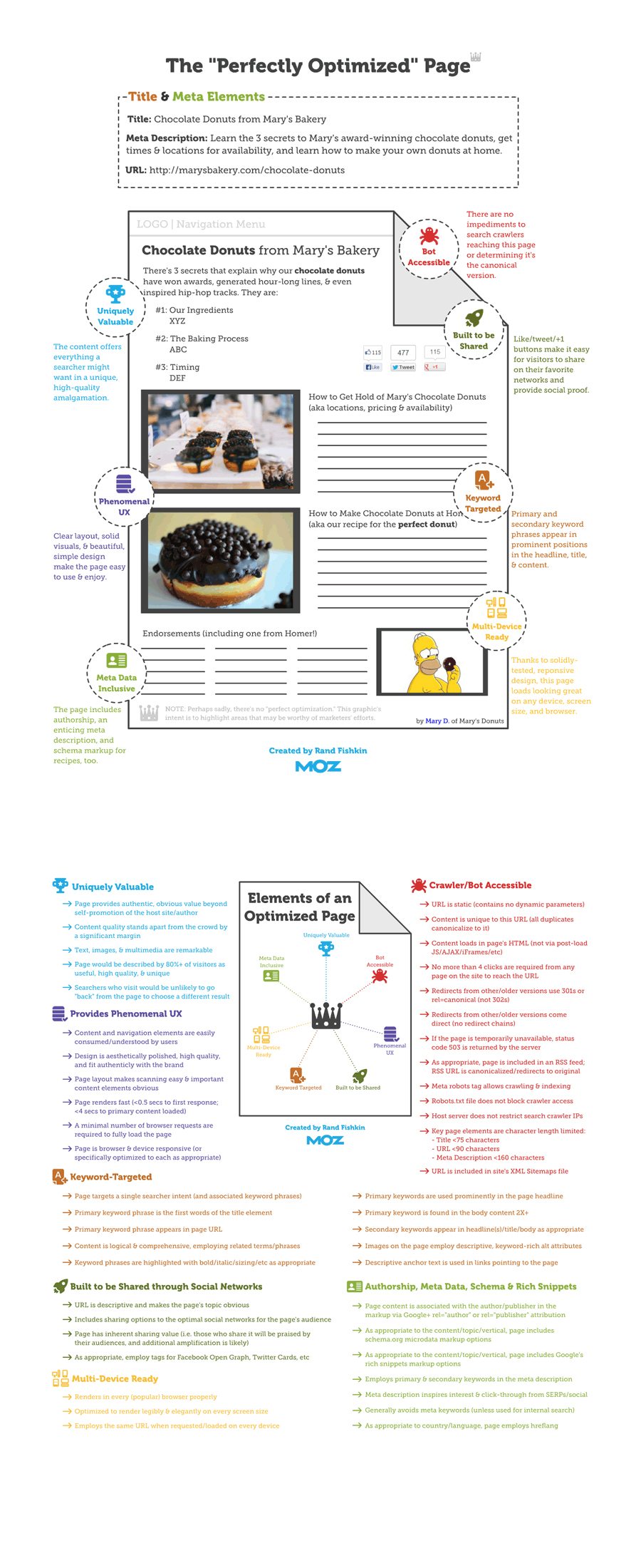
Rand Fishkin from Moz has put together what he believes a perfectly optimised web page should include in the infographic below.
In the ever-evolving digital landscape, search engine optimization (SEO) remains a cornerstone of online success. Whether you’re running a blog, an e-commerce site, or a corporate webpage, getting your website to rank high on search engine results pages (SERPs) is crucial. One of the fundamental aspects of SEO is the structure of your web pages. In this comprehensive guide, we will delve into the SEO basics of structuring a perfectly optimized web page.
1. Understanding the Importance of Page Structure
1.1 Why Is Page Structure Important for SEO?
Before diving into the nitty-gritty details, let’s establish why the structure of your web pages matters for SEO. Search engines like Google use complex algorithms to determine how well a web page matches a user’s query. A well-structured page provides several benefits:
- Improved Readability: A clear structure makes it easier for both users and search engine crawlers to understand the content on your page.
- Keyword Optimization: Properly structured pages allow you to strategically place keywords, which can boost your search engine rankings.
- User Engagement: An organized layout enhances user experience, encouraging visitors to stay longer and explore your site.
- Crawler Friendliness: Search engine spiders can efficiently crawl and index your content when it’s well-structured, helping your pages appear in search results.
1.2 User Experience and SEO
The relationship between user experience (UX) and SEO cannot be overstated. Google’s algorithms prioritize user-centric websites. When users find your site easy to navigate and the content valuable, they are more likely to engage with it, reducing bounce rates and increasing dwell time. Google interprets these signals as indicators of a high-quality website, which can positively impact your search rankings.
Now that we understand why page structure matters, let’s dissect the key elements of a perfectly optimized web page.
2. The Anatomy of a Perfectly Optimized Web Page
To create a perfectly optimized web page, you need to pay attention to various on-page SEO elements. Here’s a breakdown of the essential components:
2.1 Title Tag
The title tag is one of the most critical on-page SEO elements. It serves as the title of your page in search engine results and appears in the browser tab when someone visits your site. To optimize your title tag:
- Keep it concise (around 60 characters).
- Include your primary keyword.
- Make it engaging and descriptive to attract clicks.
2.2 URL Structure
A clean and descriptive URL structure is not only beneficial for SEO but also for user experience. Avoid long and cryptic URLs. Instead:
- Include your target keyword.
- Use hyphens to separate words.
- Keep it relevant to the content on the page.
2.3 Header Tags (H1, H2, H3)
Header tags are used to structure the content on your page. They provide hierarchy and help both users and search engines understand the content’s organization. Best practices for header tags include:
- Use a single H1 tag for the main title.
- Incorporate keywords naturally in H2 and H3 tags.
- Maintain a logical hierarchy for content sections.
2.4 Meta Description
The meta description appears below the title tag in search results. While it doesn’t directly impact rankings, it influences click-through rates. To optimize your meta description:
- Write compelling, concise descriptions (around 150-160 characters).
- Include relevant keywords.
- Encourage users to click by creating a call-to-action.
2.5 Keyword Placement
Strategically place keywords throughout your content, including in the title, headers, and body text. However, avoid keyword stuffing, which can lead to penalties. Focus on natural and meaningful incorporation of keywords.
2.6 Content Quality and Relevance
Ultimately, content is king in the world of SEO. High-quality, relevant content that satisfies user intent is crucial. Ensure that your content:
- Provides valuable information.
- Is well-researched and authoritative.
- Solves user problems or answers their questions.
3. Optimizing Page Load Speed
Page load speed is a significant ranking factor for search engines and a vital component of user experience. A slow-loading page can lead to high bounce rates and lower search rankings. To optimize page load speed:
3.1 Image Optimization
- Compress images to reduce file size.
- Use responsive images that adapt to different screen sizes.
- Implement lazy loading to load images as users scroll.
3.2 Minimize HTTP Requests
- Reduce the number of requests by combining CSS and JavaScript files.
- Use browser caching to store frequently accessed resources locally.
3.3 Mobile Responsiveness
Ensure that your website is mobile-friendly. Google prioritizes mobile-first indexing, so a responsive design is crucial for SEO success.
3.4 Caching
Implement browser caching to store static assets on users’ devices, reducing load times for returning visitors.
4. Internal and External Linking
Linking plays a vital role in SEO by connecting your content and improving user navigation. Here’s how to optimize your linking strategy:
4.1 Internal Links
- Use descriptive anchor text.
- Link to relevant pages within your site.
- Ensure a logical flow of information through internal links.
4.2 External Links
- Link to authoritative sources when appropriate.
- Avoid excessive external linking, which can dilute your SEO efforts.
4.3 Anchor Text Optimization
Optimize anchor text for both internal and external links by incorporating relevant keywords and providing context.
5. User-Friendly Design and Navigation
A user-friendly design enhances the overall user experience, which in turn can boost your SEO efforts. Here’s how to achieve it:
5.1 Responsive Design
Ensure your website adapts seamlessly to various screen sizes and devices, including smartphones and tablets.
5.2 Clear and Intuitive Navigation
Make your site easy to navigate with a logical menu structure and clear labels.
5.3 Mobile-Friendly Design
Consider mobile users by implementing touch-friendly elements and ensuring fast load times on mobile devices.
6. Schema Markup for Enhanced SERP Display
6.1 What Is Schema Markup?
Schema markup is structured data added to your HTML to provide search engines with more context about your content. It helps search engines understand your content better.
6.2 Benefits of Schema Markup
- Enhanced SERP display with rich snippets.
- Improved visibility and click-through rates.
- Better understanding of content for search engines.
6.3 How to Implement Schema Markup
Use schema markup to describe various types of content on your page, such as articles, products, events, and reviews. Google’s Structured Data Markup Helper can assist in implementing schema markup effectively.
7. Regularly Updating and Maintaining Your Web Pages
SEO is an ongoing process, and regularly updating and maintaining your web pages is crucial for long-term success.
7.1 Fresh and Relevant Content
- Update outdated content.
- Add new, valuable information to keep users engaged.
- Monitor industry trends and adjust your content accordingly.
7.2 Monitoring and Analytics
Use tools like Google Analytics and Google Search Console to monitor your website’s performance. Analyze data to identify areas for improvement.
7.3 User Feedback and Improvements
Listen to user feedback and make improvements based on their suggestions. A user-centric approach can lead to higher satisfaction and better SEO results.
8. Conclusion
Optimizing the structure of your web pages is a fundamental aspect of SEO. By following the SEO basics outlined in this guide, you can create perfectly optimized web pages that not only rank well in search engines but also provide a great user experience. Keep in mind that SEO is an ongoing process, so regularly revisit and refine your strategies to stay ahead in the competitive online landscape.

Author:
Mark Ford