
Are you just getting started with a social media plan of action for your business? Want to ensure you aren’t using tactics that could make you look like a spammer?
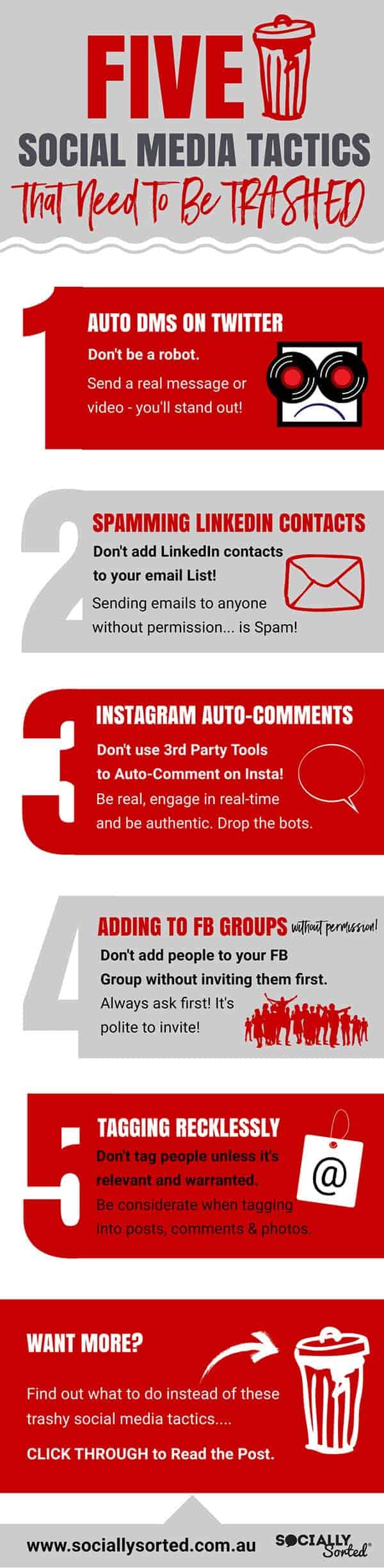
Socially Sorted share their social media tactics to avoid in this infographic.
Here’s what makes their list:
- Auto DM’s on Twitter
- Spamming LinkedIn contacts
- Instagram auto comments
- Adding to Facebook groups
- Tagging recklessly
Check out the infographic for more detail.
In today’s digital landscape, maintaining a positive online reputation is crucial for individuals and businesses alike. Social media offers unparalleled opportunities for engagement, marketing, and networking, but it can also become a breeding ground for spammy tactics that can tarnish your reputation. Here, we’ll explore five common spammy social media tactics that can kill your online presence and provide insights on how to avoid them.
Auto DM’s on Twitter
The Illusion of Personal Touch
Auto direct messages (DMs) on Twitter can be a tempting strategy for small businesses looking to streamline their engagement with new followers. However, while this tactic may seem efficient, it can easily backfire if not executed thoughtfully. Here’s a deeper dive into the issues surrounding auto DMs on Twitter and in-depth tips on how small businesses can navigate this feature more effectively.
The Problem with Auto DMs
- Lack of Personalization: The primary issue with auto DMs is their generic nature. Most users can spot an automated message from a mile away. Messages that lack personal touches can give the impression that you’re not genuinely interested in building a relationship.
- Spammy Perception: Many users view auto DMs as spam. When they receive a message that feels more like a sales pitch than a warm welcome, they are likely to unfollow or mute you, damaging your credibility.
- Opportunity Cost: By relying on auto DMs, you miss out on valuable opportunities for authentic interaction. Personalized messages can lead to meaningful conversations and stronger connections with your audience.
- Increased Unfollows: If your auto DMs include promotional content or links to products/services, users might find this intrusive, leading to an increase in unfollows.
Best Practices for Auto DMs
If you decide to use auto DMs, consider the following strategies to mitigate the potential downsides:
- Keep It Personal
- Customize Messages: Use the recipient’s name and tailor your message based on your understanding of their interests. For instance, if a follower mentions their profession in their bio, reference it in your message to create a more personalized experience.
- Segment Your Audience: Consider segmenting your followers based on common traits, interests, or demographics. This will allow you to create targeted auto DMs that resonate better with each group.
- Offer Value
- Provide Useful Information: Instead of simply welcoming new followers, provide them with valuable information. This could be a link to a helpful blog post, a special offer, or an invitation to a webinar. For example, “Thanks for following us! If you’re interested in [topic], check out our latest blog post [link].”
- Encourage Engagement: Invite new followers to ask questions or share their thoughts. Phrasing like “Feel free to reply with any questions or topics you’re interested in!” encourages interaction.
- Use Auto DMs Sparingly
- Limit Frequency: Instead of sending an auto DM to every new follower, consider limiting this tactic to specific occasions, such as significant milestones (like your business anniversary or the launch of a new product).
- Monitor Engagement Rates: Keep an eye on how your followers respond to auto DMs. If you notice a trend of unfollows or negative responses, it might be time to rethink your strategy.
- Be Genuine and Friendly
- Maintain a Conversational Tone: Auto DMs should reflect your brand’s voice and tone. Use language that feels friendly and approachable. Instead of sounding robotic, aim for a conversational style.
- Show Appreciation: Thank your followers for connecting with you genuinely. A simple “We appreciate you following us!” can go a long way in making users feel valued.
- Create an Opt-In Experience
- Encourage Sign-ups for More Information: Instead of sending a direct DM immediately after a user follows you, consider directing them to a sign-up link for newsletters, exclusive content, or promotions. For example, “Thanks for the follow! Sign up for our newsletter for the latest updates and exclusive offers: [link].”
- Direct to an Interactive Experience: Instead of a direct message, consider directing them to a chat bot or a landing page where they can interact with your brand more meaningfully.
- Monitor and Adapt
- Analyze Results: Use Twitter analytics tools to evaluate the performance of your auto DMs. Are they leading to more engagement, or are users simply ignoring them? Based on this data, adjust your approach accordingly.
- Solicit Feedback: Encourage your followers to share their thoughts about your auto DMs. If you notice a consistent theme in feedback, make the necessary adjustments to better meet their expectations.
Conclusion
While auto DMs on Twitter can streamline communication, they must be approached with caution. A poorly executed auto DM strategy can quickly damage your small business’s reputation. However, by focusing on personalization, providing value, maintaining authenticity, and monitoring your results, you can create a more engaging and meaningful experience for your followers.
In a social media landscape that values genuine interactions, remember that fostering real connections is far more beneficial than relying solely on automated processes. By adopting these best practices, you can ensure that your auto DMs enhance, rather than harm, your online reputation.
Spamming LinkedIn Contacts
Professionalism at Stake
LinkedIn is a powerful networking platform designed for professionals to connect, collaborate, and grow their careers or businesses. However, the effectiveness of LinkedIn can quickly diminish if users resort to spammy tactics, such as sending unsolicited connection requests and overly promotional messages. For small businesses, maintaining professionalism on LinkedIn is crucial for building a strong reputation and fostering meaningful relationships. Here’s a deeper dive into the problems associated with spamming LinkedIn contacts and in-depth tips on how small businesses can engage effectively on this platform.
The Dangers of Spamming LinkedIn Contacts
- Professional Reputation at Risk: Sending mass connection requests or unsolicited sales pitches can lead to negative perceptions. Users who feel spammed may view your brand as unprofessional or disrespectful, potentially jeopardizing your business’s reputation.
- Connection Quality Over Quantity: Focusing on the number of connections rather than the quality of those relationships can dilute your network. Connections made through spammy tactics are less likely to engage with your content or collaborate meaningfully.
- Potential Account Restrictions: LinkedIn actively monitors user behavior for signs of spamming. Excessive connection requests, especially to people you don’t know, can lead to account restrictions or bans, limiting your ability to network effectively.
- Alienating Your Audience: Overly promotional messages can turn off your current connections. If they perceive you as someone who only seeks to sell rather than build relationships, they may unfollow or disconnect from you.
Best Practices to Avoid Spamming on LinkedIn
If you want to leverage LinkedIn effectively for your small business, consider the following strategies to engage authentically with your contacts:
- Personalize Connection Requests
- Craft Tailored Messages: Always include a personal note when sending connection requests. Reference how you found their profile or any mutual connections or interests. For example, “Hi [Name], I noticed we both attended [Event/Conference]. I’d love to connect and share insights on [Topic].”
- Avoid Generic Messages: Avoid using the default connection request message. Generic messages can make users feel like you’re only interested in boosting your numbers rather than forming a meaningful connection.
- Build a Targeted Network
- Identify Your Ideal Contacts: Determine the types of professionals or businesses that align with your goals. This could include industry peers, potential clients, or thought leaders in your field. Use LinkedIn’s search features to find individuals who fit these criteria.
- Engage with Shared Interests: Focus on connecting with individuals who share common interests, experiences, or affiliations. This increases the likelihood that your connections will be meaningful and valuable.
- Nurture Your Connections
- Engage Authentically: After connecting, engage with your contacts by liking, commenting on, and sharing their content. This not only shows your interest but also keeps you on their radar.
- Send Personalized Follow-Up Messages: Once you’ve connected, send a thank-you message and express your desire to learn more about them. Ask questions about their work, challenges, or interests to foster a genuine conversation.
- Provide Value in Your Messaging
- Avoid Sales Pitches: Resist the urge to immediately promote your products or services. Instead, focus on building a rapport first. If appropriate, share valuable content, such as articles, resources, or insights related to their industry or interests.
- Be Helpful: Offer assistance or insights without expecting anything in return. For example, if someone posts about a challenge they’re facing, respond with suggestions or resources that could help.
- Share Quality Content
- Post Engaging Content: Regularly share valuable and relevant content that resonates with your audience. This could include industry news, tips, case studies, or success stories. Engaging content can encourage more interaction from your network.
- Encourage Discussion: Create posts that invite feedback or discussion. Questions or polls can stimulate conversation and engagement, making your profile more interactive.
- Join and Participate in Relevant Groups
- Engage in Groups: Instead of spamming your contacts, participate in LinkedIn groups related to your industry. Share your expertise, answer questions, and engage with other group members. This positions you as a thought leader and helps you make valuable connections.
- Create Value in Group Discussions: When contributing to group discussions, focus on providing helpful insights rather than self-promotion. This approach builds trust and enhances your professional image.
- Monitor Your Connection Strategies
- Evaluate Your Outreach: Periodically review your connection and messaging strategies. Are you seeing positive engagement? Are users responding to your messages? Adjust your approach based on feedback and results.
- Be Mindful of Connection Limits: LinkedIn imposes limits on the number of connection requests you can send in a day. Be mindful of these limits to avoid being flagged for spammy behavior. Focus on building a smaller, more engaged network rather than a large, unresponsive one.
- Leverage LinkedIn’s Features
- Utilize LinkedIn Sales Navigator: If your business relies heavily on B2B connections, consider using LinkedIn Sales Navigator. This tool offers advanced search features, lead recommendations, and insights to help you connect with your target audience more effectively.
- Regularly Update Your Profile: Keep your LinkedIn profile up to date with relevant information, achievements, and content. A well-maintained profile can attract the right connections and serve as a valuable resource for your network.
Conclusion
Spamming LinkedIn contacts is a surefire way to damage your professional reputation and hinder your business growth. By adopting personalized, authentic, and value-driven engagement strategies, small businesses can leverage LinkedIn as a powerful networking tool. Focus on building meaningful relationships rather than chasing numbers, and you’ll foster a network that is more likely to support your business goals.
In a world where professional interactions are increasingly digital, authenticity and respect for your connections can set you apart. Remember, LinkedIn is not just a platform for connection but a community for collaboration, learning, and growth. By prioritizing genuine interactions, you’ll cultivate a positive and productive online presence that benefits both your business and your network.
Instagram Auto Comments
The Bot Trap
Instagram has become a cornerstone for businesses looking to engage with their audience visually. However, as with any social media platform, the rise of automation tools, including auto commenting, has created a double-edged sword for small businesses. While it can save time and streamline interactions, improper use of auto comments can lead to negative perceptions and damage your brand reputation. This section will delve into the challenges posed by Instagram auto comments and provide actionable tips for small businesses to navigate this feature effectively.
The Issues with Instagram Auto Comments
- Generic Responses: One of the main pitfalls of auto comments is their lack of personalization. Many users can quickly spot an automated response, which can come across as insincere and disengaging. A one-size-fits-all comment fails to resonate with followers and diminishes the authenticity of your brand.
- Spammy Perception: Auto comments can be perceived as spam, especially if they are overly promotional or irrelevant to the post. This can lead to users unfollowing your account or reporting your comments as spam, further harming your reach and engagement.
- Missed Opportunities for Real Engagement: Relying on auto comments can prevent businesses from having meaningful conversations with their audience. Genuine interactions foster loyalty and community, which are vital for long-term success on Instagram.
- Negative Brand Image: When users feel they are being spoken to by a bot rather than a real person, it can lead to a perception that your brand doesn’t care about its customers or audience. This can significantly damage your brand’s reputation over time.
Best Practices for Using Instagram Auto Comments
If you choose to use auto comments, it’s essential to do so thoughtfully and strategically. Here are some best practices to ensure that your use of this feature is beneficial rather than detrimental:
- Personalize Your Auto Comments
- Use Variables: Many automation tools allow for the inclusion of variables like the user’s name or the content of their post. For example, an auto comment like, “Thanks for sharing this, [Name]! We love your take on [topic]!” feels more personal than a generic message.
- Tailor to the Context: Design your auto comments to fit the specific context of the post you are commenting on. For instance, if a user posts a photo of a product you sell, your comment could be something like, “Great choice! We love how you styled that!”
- Keep it Relevant
- Focus on Genuine Interactions: Ensure your auto comments add value to the conversation. For example, if someone shares a travel photo, a comment like, “Looks like an amazing trip! What was your favorite part?” invites further engagement.
- Avoid Overly Promotional Language: Steer clear of comments that come off as blatant promotions. Instead, focus on fostering discussions and building relationships. Comments like “Check out our profile for more great products!” may come off as spammy.
- Limit the Frequency of Auto Comments
- Be Selective: Instead of auto commenting on every post from your followers, select specific posts or certain users to engage with. This approach keeps your interactions meaningful and prevents overwhelming your audience with too many comments.
- Monitor Engagement: Use insights and analytics to determine which types of posts are getting more engagement. Adjust your auto comment strategy based on what resonates with your audience.
- Use Auto Comments as a Supplement, Not a Replacement
- Combine Automation with Authenticity: Use auto comments to streamline responses but ensure they complement your genuine interactions. Regularly engage with your audience by responding personally to comments, direct messages, and mentions.
- Encourage Community Interaction: Foster a sense of community by encouraging your followers to engage with each other. You can do this by commenting on their posts or creating posts that invite discussion.
- Be Mindful of Hashtags and Mentions
- Avoid Misuse of Hashtags: Using popular hashtags in your auto comments may attract unwanted attention and come off as spammy. Instead, focus on relevant hashtags that pertain to the context of the post you are commenting on.
- Mention Users Thoughtfully: If your auto comment tool allows mentions, use them sparingly and thoughtfully. Tagging users in your comments can encourage them to engage further, but excessive tagging can be perceived as intrusive.
- Test and Adjust Your Strategy
- Experiment with Different Styles: Try out various styles of auto comments to see what resonates best with your audience. Analyze engagement metrics to refine your approach continually.
- Solicit Feedback: Encourage your audience to share their thoughts about your interactions. If followers express that they appreciate the engagement, continue those practices. Conversely, if they find your comments unhelpful, be prepared to pivot.
- Follow Instagram’s Community Guidelines
- Understand Instagram’s Policies: Ensure your auto commenting strategy aligns with Instagram’s community guidelines. Violating these guidelines can lead to your account being restricted or banned.
- Avoid Excessive Automation: Instagram monitors accounts for suspicious activity, including excessive automated actions. Aim to maintain a balance between automation and authentic interactions to avoid drawing negative attention to your account.
Conclusion
While auto comments on Instagram can streamline engagement, they must be used judiciously to avoid coming across as insincere or spammy. By personalizing messages, keeping interactions relevant, and fostering genuine connections, small businesses can effectively leverage this tool to enhance their online presence without compromising their reputation.
Remember that Instagram is a platform built on visual storytelling and community engagement. Focus on creating authentic interactions, and you’ll find that your audience is more likely to engage positively with your brand. In a world where customers value transparency and authenticity, thoughtful use of auto comments can help you stand out while preserving the integrity of your business.
Adding to Facebook Groups
Group Etiquette
Facebook groups have become a powerful tool for small businesses to connect with their audience, share valuable content, and foster community engagement. However, improper use of this feature can lead to negative perceptions and potential backlash. If you want to harness the potential of Facebook groups while avoiding spammy tactics, it’s essential to approach this strategy thoughtfully. In this section, we’ll explore the benefits of adding to Facebook groups, the challenges involved, and effective strategies for small businesses.
The Importance of Facebook Groups
- Community Building: Facebook groups allow businesses to create a community around their brand. This fosters loyalty and encourages customer engagement by providing a platform for discussions and shared interests.
- Targeted Engagement: Groups offer a space for businesses to engage with a specific audience segment. This targeted approach can lead to higher-quality interactions and more meaningful relationships.
- Feedback and Insights: Facebook groups provide businesses with direct access to their customers. This allows for gathering feedback, understanding customer needs, and improving products or services based on insights gained from discussions.
- Increased Visibility: Participating in groups can help boost your brand’s visibility. When you share valuable content or insights, you position yourself as an expert, which can lead to increased engagement and potential sales.
Challenges with Adding to Facebook Groups
- Spammy Perceptions: Adding to Facebook groups without genuine engagement can lead to perceptions of spam. Users may become annoyed if they feel targeted for promotions rather than meaningful interactions.
- Group Rules and Regulations: Each group has its own set of rules regarding promotions, links, and engagement. Failing to adhere to these rules can result in being removed from the group or facing backlash from members.
- Oversaturation: Many businesses are leveraging Facebook groups, which can lead to oversaturation. Standing out amidst the noise can be challenging if your approach is not well thought out.
- Time Commitment: Engaging effectively in Facebook groups requires time and effort. Small businesses must be willing to invest time in building relationships rather than simply promoting their products.
Best Practices for Adding to Facebook Groups
To maximize the benefits of Facebook groups while avoiding spammy behavior, consider the following best practices:
- Choose the Right Groups
- Research Relevant Groups: Identify groups that align with your industry, target audience, and business goals. Look for groups where your potential customers are active and engaged.
- Evaluate Group Activity: Join groups that are active and have a healthy number of engaged members. A vibrant group is more likely to yield meaningful interactions and connections.
- Understand Group Rules and Culture
- Read the Rules: Before posting or commenting, carefully read the group’s rules. Understanding what is allowed and what is not will help you navigate the group effectively.
- Observe Group Dynamics: Spend time observing the group dynamics before actively participating. Note how members interact, the type of content shared, and the overall tone of discussions.
- Contribute Value First
- Focus on Providing Value: Engage in discussions by offering valuable insights, tips, or resources related to your expertise. Aim to contribute to the community rather than promote your business initially.
- Share Relevant Content: If you share content from your business, ensure it is relevant to the group’s interests. For example, if you run a bakery and the group is focused on healthy eating, share recipes that incorporate healthier ingredients.
- Build Relationships
- Engage Authentically: Take the time to respond to comments and questions. Engaging authentically helps you build relationships and establishes trust within the group.
- Personalize Your Interactions: Use members’ names and reference specific points from their posts when commenting. Personalizing interactions demonstrates that you value their input.
- Use Promotions Sparingly
- Limit Promotional Posts: If group rules allow promotions, do so sparingly. Instead of directly promoting your products, consider offering special discounts or exclusive content to group members.
- Frame Promotions as Benefits: When sharing promotional content, frame it in a way that emphasizes the benefits to group members. For example, instead of simply posting a link to your product, explain how it solves a specific problem they may have.
- Create Your Own Group
- Consider Starting a Group: If you can’t find a suitable group that aligns with your business, consider creating your own. This gives you control over the content and engagement strategies.
- Set Clear Objectives: Define the purpose of your group clearly. Whether it’s to share knowledge, provide support, or discuss specific topics, having clear objectives will guide your group’s direction.
- Monitor Engagement and Adapt
- Track Group Interactions: Keep an eye on how your posts and comments are received. Use analytics to track engagement and adjust your approach based on what resonates with group members.
- Solicit Feedback: Ask group members for feedback on the content and discussions you’re sharing. This helps you understand their interests better and allows you to tailor your contributions accordingly.
- Stay Active and Consistent
- Regular Participation: Consistently participate in the group to maintain visibility and relevance. Regular contributions show that you’re invested in the community and care about its members.
- Avoid One-Time Engagement: Don’t treat group participation as a one-off activity. Building a reputation and rapport takes time, so engage consistently over weeks and months.
Conclusion
Adding to Facebook groups can be an effective strategy for small businesses to foster community engagement, build relationships, and increase brand visibility. However, it requires a thoughtful approach to avoid coming across as spammy. By choosing the right groups, understanding the dynamics, providing value, and engaging authentically, businesses can create a positive impact within these communities.
Remember, the key to successful engagement in Facebook groups lies in prioritizing relationships over promotions. When members see you as a valuable contributor rather than just a business trying to sell, you’ll create a foundation for lasting connections and business growth.
Tagging Recklessly
The Tagging Dilemma
Tagging individuals and businesses on social media platforms can enhance engagement and broaden reach. However, reckless tagging can quickly lead to negative perceptions, annoy followers, and damage your brand’s reputation. Small businesses must be strategic in their tagging practices to maintain a positive image and foster genuine connections. This section will explore the challenges associated with reckless tagging and provide actionable tips to ensure your tagging strategy enhances your social media presence.
The Challenges of Reckless Tagging
- Perception of Spam: Tagging users who are not relevant to the content can come off as spammy. If followers feel that they are being tagged solely for promotional purposes, they may unfollow or mute your account.
- Annoying Users: Reckless tagging can irritate users, particularly if they receive notifications for irrelevant content. This can lead to negative sentiments toward your brand, harming potential future interactions.
- Violating Platform Guidelines: Many social media platforms have guidelines regarding tagging. Failing to adhere to these guidelines can result in account restrictions or penalties.
- Damage to Relationships: Over-tagging can strain relationships with users, influencers, or other businesses. If they feel you are only interested in leveraging their audience for your gain, they may choose to disengage.
Best Practices for Tagging on Social Media
To use tagging effectively without falling into the trap of reckless tagging, consider the following best practices:
- Be Selective with Your Tags
- Relevant Tags Only: Ensure that the individuals or brands you tag are directly relevant to the content you’re sharing. For example, if you’re showcasing a collaboration with an influencer, tag them to acknowledge their contribution.
- Tagging Criteria: Develop criteria for tagging, such as relevance to the content, prior engagement, or established partnerships. This helps you maintain a focused and meaningful tagging strategy.
- Limit the Number of Tags
- Quality Over Quantity: Instead of tagging a large number of users, focus on a few key individuals or businesses that genuinely add value to the post. Over-tagging can dilute your message and come off as desperate for attention.
- Platform Limitations: Be mindful of platform-specific tagging limits. For instance, Instagram allows up to 20 tags per post, but exceeding this limit can make your post look cluttered and unprofessional.
- Use Tags to Foster Engagement
- Encourage Conversations: Tagging users can be a way to initiate conversations. For instance, if you post a photo of a customer using your product, tag them and ask for their thoughts. This approach encourages interaction and strengthens community ties.
- Highlight User-Generated Content: If a follower shares a photo of your product, tag them in your repost. This not only gives credit but also encourages others to share their experiences with your brand.
- Respect Privacy and Preferences
- Avoid Tagging Without Consent: Always obtain permission from individuals before tagging them in a post. Some users prefer not to be tagged in promotional content, and respecting their preferences helps maintain a positive relationship.
- Be Mindful of Sensitive Topics: If your content touches on sensitive subjects, think twice before tagging individuals who may not want to be associated with that topic. Respect their boundaries and avoid causing discomfort.
- Tailor Tags to Platform Dynamics
- Different Strategies for Different Platforms: Each social media platform has its own culture and best practices for tagging. For example, LinkedIn is more formal, while Instagram allows for more casual tagging. Adjust your approach based on the platform’s expectations.
- Instagram Best Practices: On Instagram, tagging relevant accounts can enhance discoverability. Utilize location tags and relevant hashtags alongside user tags to maximize reach.
- Twitter Best Practices: On Twitter, tagging is often used to start conversations or directly mention users. Use tags sparingly to avoid cluttering your message.
- Monitor Engagement and Feedback
- Track User Reactions: Pay attention to how tagged users and your audience respond to your tagging strategy. If you notice negative feedback or decreased engagement, reassess your approach.
- Solicit Feedback: Encourage your audience to share their thoughts on your tagging practices. This feedback can guide you in refining your strategy to better meet their expectations.
- Maintain a Consistent Brand Voice
- Stay True to Your Brand: When tagging, ensure that your tone aligns with your brand voice. Consistency in communication helps reinforce your brand identity and makes interactions feel more genuine.
- Use Humor Judiciously: If humor is part of your brand voice, you can incorporate it into your tagging strategy. However, be cautious not to offend or alienate users. Always prioritize respect and inclusivity.
- Educate Your Team
- Establish Guidelines: If you have a team managing your social media, create guidelines for tagging. Ensure everyone understands the importance of relevant and respectful tagging practices.
- Training and Workshops: Consider hosting training sessions or workshops to educate your team on effective social media strategies, including tagging etiquette.
Conclusion
Tagging on social media can significantly enhance your engagement and visibility when done thoughtfully. Reckless tagging, on the other hand, can lead to negative perceptions and damage your brand’s reputation. By being selective, relevant, and respectful in your tagging practices, small businesses can build genuine relationships with their audience and foster a positive online presence.
Remember that social media is ultimately about creating connections and community. By focusing on meaningful interactions and fostering a sense of belonging, you can use tagging as a powerful tool to enhance your brand while maintaining a positive image.
Conclusion
Maintaining a positive online reputation is essential in the digital age, and avoiding spammy tactics is crucial for achieving this goal. Auto DMs on Twitter, spamming LinkedIn contacts, Instagram auto comments, adding to Facebook groups without permission, and reckless tagging are all behaviors that can damage your reputation. By prioritizing genuine engagement and personal connections, you can build a robust online presence that fosters trust and loyalty among your audience.
In an era where authenticity reigns supreme, remember that building relationships is far more valuable than quick, spammy interactions. Engage thoughtfully, respect your audience, and you’ll cultivate a positive online reputation that stands the test of time.

Author:
Mark Ford