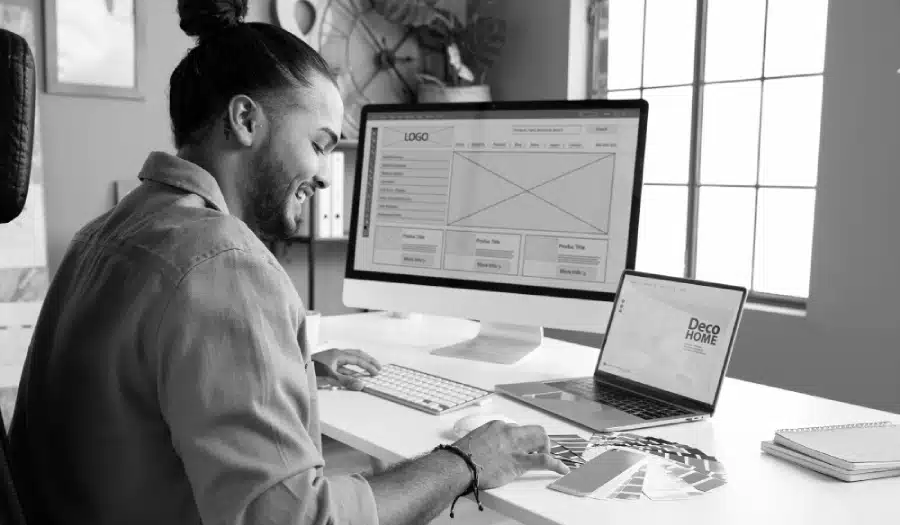
Are you wondering how professional website design can boost your business performance? Want to discover the key benefits that make investing in good design a smart decision?
You’ll find some web design basics in this infographic.
Here’s a summary of what’s covered:
- First Impressions
- User Engagement
- Improved User Experience (UX)
- Mobile Responsiveness
- Better SEO (Search Engine Optimisation)
- Faster Load Times
- Brand Consistency
- Increased Conversion Rates
- Reduced Bounce Rates
- Enhanced Content Presentation
Check out the post below for more.

A website is more than just a digital presence—it’s the foundation of your brand’s online identity. In today’s competitive marketplace, where users form opinions in seconds, professional website design can make or break business success. Beyond aesthetics, design influences trust, engagement, conversions, and long-term growth.
In this post, we’ll explore the business case for investing in professional website design. We’ll cover 16 powerful benefits that show why good design isn’t just a nice-to-have, but a crucial driver of profitability and competitive advantage.
First Impressions
A well-designed website sets the tone for how potential customers perceive your business. First impressions are formed in seconds, and poor design can instantly create doubt about your credibility. On the other hand, professional design communicates trust, quality, and confidence.
- Use modern layouts and visuals to reflect professionalism.
- Ensure your homepage communicates your value proposition clearly.
- Incorporate consistent branding that aligns with your offline presence.
- Avoid cluttered designs that overwhelm or confuse visitors.
User Engagement
Engagement is vital to turning visitors into customers. Professional website design creates intuitive navigation and encourages users to interact with your content. When users can easily find what they need, they’re more likely to stay, explore, and take action.
- Design simple navigation menus that guide users naturally.
- Use interactive features like videos, chat, or hover effects.
- Present content in digestible sections to maintain attention.
- Include clear next steps to keep users moving through the site.
Improved User Experience (UX)
User experience is the backbone of a website’s success. A professional design ensures that usability, accessibility, and consistency are prioritised. When users enjoy navigating your site, they’re more likely to return and recommend it to others.
- Create logical pathways for different types of visitors.
- Ensure buttons, links, and forms are easy to use on all devices.
- Reduce friction in customer journeys by simplifying processes.
- Test the site regularly to fix pain points and broken elements.
Mobile Responsiveness
With more than half of web traffic now coming from mobile devices, responsive design is essential. A professional website adapts seamlessly to different screen sizes, ensuring usability for all visitors. This widens your reach and improves user satisfaction.
- Implement responsive design that adjusts across devices.
- Optimise images and media to load quickly on mobile.
- Test the site on multiple devices to spot display issues.
- Prioritise mobile-friendly navigation and clickable elements.
Better SEO (Search Engine Optimisation)
Search engines reward sites that are well structured and user friendly. Professional design incorporates SEO best practices, improving visibility and rankings. This makes it easier for customers to find your business when searching online.
- Use clean coding structures that search engines can crawl easily.
- Optimise page titles, headings, and metadata.
- Ensure fast-loading pages to improve search engine rankings.
- Integrate SEO-friendly URLs and site architecture.
Faster Load Times
In the digital world, speed matters. A professionally designed site is optimised for quick load times, preventing users from abandoning pages out of frustration. Faster websites also gain favour with search engines.
- Compress images without sacrificing quality.
- Minimise scripts and plugins that slow down performance.
- Use reliable hosting with strong server response times.
- Implement caching techniques to reduce reload delays.
Brand Consistency
Consistency builds recognition and trust. A professional website ensures that your fonts, colours, and tone align with your brand identity. This makes your business appear cohesive, reliable, and memorable to users.
- Use the same colour scheme and branding throughout the site.
- Align online branding with offline materials such as brochures.
- Keep tone of voice and messaging consistent across pages.
- Develop brand guidelines for design and content use.
Increased Conversion Rates
Good design doesn’t just attract users; it persuades them to take action. Professional websites incorporate elements that encourage clicks, sign-ups, and purchases. Effective calls to action are strategically placed to maximise results.
- Use prominent CTAs that are easy to spot and understand.
- Reduce distractions that pull attention away from conversions.
- Offer incentives such as discounts or free resources.
- Ensure checkout or sign-up processes are quick and seamless.
Reduced Bounce Rates
A poor design can drive users away before they explore your content. A professional website reduces bounce rates by engaging users immediately and providing a clear journey. Keeping users on-site longer increases the chance of conversion.
- Design above-the-fold content that hooks attention instantly.
- Make navigation intuitive so users find information fast.
- Incorporate engaging visuals and multimedia elements.
- Ensure content is relevant and matches user intent.
Enhanced Content Presentation
Content is only effective if it’s presented well. Professional design ensures typography, layout, and visuals make content easy to consume. Good presentation improves comprehension and keeps users engaged.
- Use clear headings and subheadings to structure content.
- Break text into shorter paragraphs for readability.
- Pair content with relevant images or icons.
- Highlight key points with bolding or call-out boxes.
Scalability and Adaptability
Businesses evolve, and your website must evolve with them. Professional design ensures scalability, so you can add new features or expand content as needed without starting over. This adaptability supports long-term growth.
- Build with flexible frameworks that support expansion.
- Choose platforms that integrate easily with new tools.
- Plan for content updates without disrupting design flow.
- Future-proof the site by anticipating upcoming business needs.
Improved Security
Cybersecurity threats are a growing concern for businesses. A professionally designed site includes security best practices to protect sensitive data and build user trust. Without these measures, your business could face reputational and financial damage.
- Implement SSL certificates to secure connections.
- Regularly update software, plugins, and frameworks.
- Use strong authentication and encryption protocols.
- Monitor for vulnerabilities and respond to threats quickly.
Competitive Advantage
In crowded markets, standing out is crucial. Professional design gives you a competitive edge by making your brand look credible, polished, and unique. A strong online presence can be the deciding factor in winning business.
- Differentiate with unique visuals and branding.
- Ensure messaging clearly highlights your USP.
- Benchmark competitors’ websites to identify opportunities.
- Keep design updated to stay ahead of industry trends.
Analytics and Insights
Professional websites often integrate analytics tools, helping you track visitor behaviour and performance. These insights provide valuable data to refine strategies and boost results over time.
- Use Google Analytics or similar platforms for tracking.
- Monitor bounce rates, conversions, and user journeys.
- Run A/B tests to optimise design and content.
- Adjust strategies based on measurable outcomes.
Positive User Feedback
User experience directly influences feedback and reviews. A well-designed website encourages positive comments, referrals, and repeat visits. This feedback strengthens reputation and builds trust with future customers.
- Gather reviews and testimonials directly from users.
- Encourage feedback through surveys or on-site prompts.
- Highlight positive feedback as social proof.
- Use feedback to identify areas for improvement.
Cost Efficiency
While professional design requires investment upfront, it saves money long-term. Quality design prevents costly errors, reduces maintenance issues, and avoids the expense of frequent redesigns.
- Invest in scalable solutions that reduce future rebuild costs.
- Choose reliable platforms that minimise downtime.
- Reduce dependency on patchwork fixes with proper planning.
- Avoid reputational costs caused by poor design performance.
Conclusion
Professional website design is not an expense—it’s an investment in the long-term growth of your business. From creating strong first impressions and engaging users to boosting conversions and ensuring scalability, design impacts every area of success. In an increasingly digital-first world, businesses cannot afford to overlook the value of a high-quality website.
By investing in professional design, you’re not just building a website—you’re building trust, credibility, and the foundation for future growth.

Author:
Mark Ford