

Are you looking for ways to improve the conversion rate of your landing pages? Need some help improving your SEO and PPC campaigns?
In the ever-evolving landscape of digital marketing, landing pages remain a cornerstone for businesses looking to convert website visitors into customers. A well-crafted landing page can make all the difference between a bounce and a conversion.
However, creating an effective landing page is more than just putting together a catchy headline and a form. It requires a strategic approach that combines design, content, and psychology. In this blog post, we’ll delve into seven landing page best practices that can help you achieve ultimate conversions.
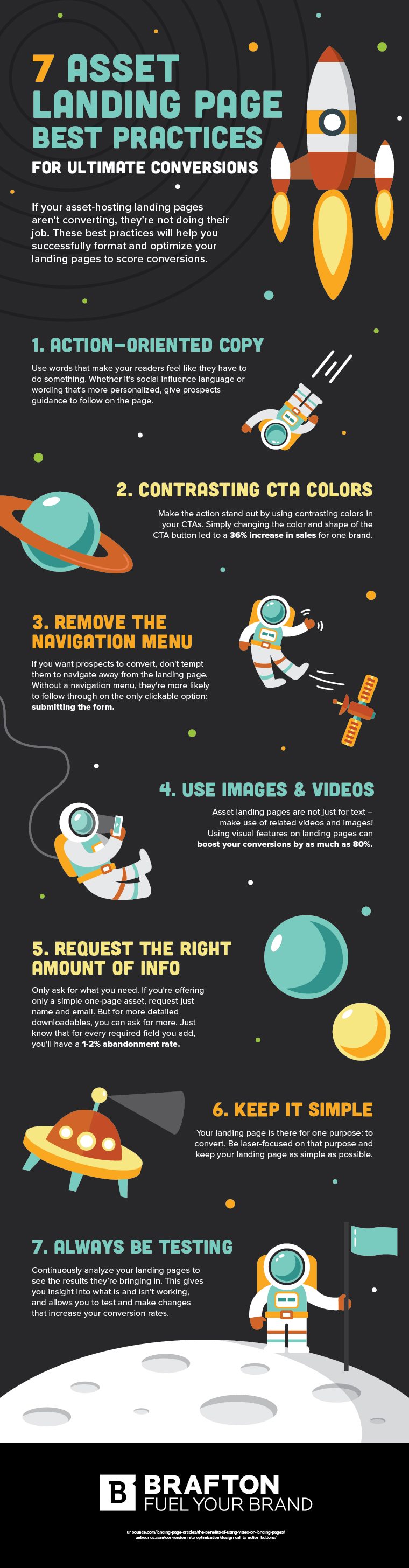
Brafton share their steps to conversion success in this infographic.
1. Start with a Clear and Compelling Headline
Your landing page’s headline is the first thing visitors see, and it plays a crucial role in capturing their attention and keeping them engaged. A clear and compelling headline should convey the unique value proposition of your offer while being concise and easy to understand. It should answer the visitor’s primary question: “What’s in it for me?”
Here are some tips for crafting an effective headline:
- Use action-oriented language: Incorporate action verbs that encourage visitors to take the desired action, such as “Get Started,” “Claim Your Discount,” or “Unlock Exclusive Access.”
- Highlight the benefits: Emphasize the benefits or solutions your product or service offers, addressing the pain points or needs of your target audience.
- Keep it concise: Aim for brevity; a headline that’s too long may lose the reader’s interest. Ideally, it should be under 20 words.
- Test and iterate: Don’t be afraid to A/B test different headlines to determine which one resonates best with your audience.
2. Create an Engaging Visual Hierarchy
The visual layout of your landing page is just as important as its content. A well-structured visual hierarchy guides visitors through the page, directing their attention to the most critical elements and ultimately leading them to the conversion point.
Here’s how you can create an engaging visual hierarchy:
- Prioritize the main message: Ensure that your headline, along with any subheadings, is prominently displayed at the top of the page.
- Use contrasting colors: Make important elements, such as the call-to-action (CTA) button, stand out by using colors that contrast with the rest of the page.
- Employ whitespace effectively: Give your content room to breathe by using whitespace to separate different sections and make the page more visually appealing.
- Incorporate visuals: Use high-quality images or videos that are relevant to your offering. Visuals can help tell your story and engage visitors.
- Keep it mobile-friendly: Given the increasing use of mobile devices, ensure that your landing page is responsive and looks great on smartphones and tablets.
3. Craft Compelling and Relevant Content
Your landing page’s content should be tailored to the specific needs and interests of your target audience. It should provide valuable information while maintaining a persuasive tone that encourages visitors to take action.
Consider the following content elements for your landing page:
- Benefits and features: Clearly communicate what your product or service offers and how it can solve the visitor’s problem or fulfill their needs.
- Use customer testimonials: Showcase positive reviews and testimonials from satisfied customers to build trust and credibility.
- Include a persuasive call-to-action (CTA): Your CTA button should be prominently placed and use compelling language that conveys a sense of urgency or importance.
- Provide social proof: Display trust indicators, such as trust badges, certifications, or the number of satisfied customers, to reassure visitors.
- Keep it scannable: Use bullet points, short paragraphs, and headings to make your content easy to skim and digest.
4. Implement A/B Testing
Creating a high-converting landing page is an iterative process. What works for one audience may not work for another. To maximize your conversion rate, it’s essential to continually optimize your landing page through A/B testing.
A/B testing involves creating two versions of your landing page (A and B) with one variable element changed, such as the CTA button color, headline, or image. By directing equal traffic to both versions and measuring their performance, you can identify which elements have the most significant impact on conversions.
Here are some elements you can A/B test:
- Headlines and subheadings
- CTA button text and color
- Images or videos
- Form fields and length
- Trust indicators and social proof
- Page layout and design
Regular A/B testing allows you to refine your landing page over time, making data-driven improvements that boost conversion rates.
5. Optimize Page Load Speed
In today’s fast-paced digital world, users expect web pages to load quickly. If your landing page takes too long to load, you risk losing potential customers who might abandon your site in frustration.
To optimize page load speed, consider the following best practices:
- Compress images and videos: Large media files can slow down your page. Use compression tools to reduce file sizes while maintaining quality.
- Minimize HTTP requests: Reduce the number of server requests by combining CSS and JavaScript files and utilizing browser caching.
- Choose a reliable hosting provider: Ensure that your hosting provider offers fast server response times and minimal downtime.
- Enable browser caching: Leverage browser caching to store frequently accessed resources locally, reducing load times for returning visitors.
- Test on different devices and browsers: Ensure that your landing page performs well on various devices and browsers to provide a seamless user experience.
Google’s PageSpeed Insights and GTmetrix are useful tools for assessing and improving your landing page’s load speed.
6. Implement Trust-Building Elements
Building trust with your visitors is crucial for conversion. People are more likely to take action when they feel confident that they are making a safe and informed decision. To instill trust on your landing page, consider implementing the following elements:
- Privacy policy: Clearly state your privacy policy and how you handle customer data to assure visitors that their information is secure.
- Trust badges: Display recognizable trust badges from reputable organizations, like SSL certificates, BBB accreditation, or industry-specific certifications.
- Money-back guarantee: Offer a risk-free trial or a money-back guarantee to alleviate concerns about the product’s effectiveness.
- Contact information: Provide clear contact information, including a phone number or email address, so visitors can reach out with questions or concerns.
- Testimonials and reviews: Showcase authentic customer testimonials and reviews to demonstrate that others have had positive experiences with your product or service.
By including these trust-building elements, you can help visitors feel more confident in taking the desired action.
7. Analyze and Iterate
Once your landing page is live and generating traffic, the work doesn’t end. Continuous analysis and iteration are essential to achieving ultimate conversions. Use web analytics tools like Google Analytics or heatmaps to gather data on visitor behavior, bounce rates, and conversion rates.
Here’s how you can leverage data to improve your landing page:
- Identify drop-off points: Analyze user journeys to identify where visitors are dropping off and make improvements in those areas.
- Monitor conversion rates: Keep a close eye on your conversion rates and look for trends or patterns that can inform your optimization efforts.
- Seek feedback: Collect feedback from users through surveys or user testing to understand their pain points and concerns.
- Stay updated: Stay informed about industry trends and best practices to ensure your landing page remains competitive.
Incorporate the insights gained from your analysis into your landing page optimization strategy. Make data-driven decisions to refine your page and enhance its performance over time.
Conclusion
Creating landing pages that drive ultimate conversions is a dynamic and data-driven process. By following these seven best practices, you can build landing pages that capture your audience’s attention, engage them with compelling content, and instill trust that leads to action. Remember that optimization is an ongoing effort, and by analyzing data and iterating on your landing pages, you can continuously improve conversion rates and achieve your marketing goals.

Author:
Mark Ford


