Does your blog fail to engage readers and encourage them to come back? Could it be your design that’s letting you down?
When it comes to running a successful blog, content is king. But, it’s crucial to remember that the design of your blog plays a significant role in attracting and retaining readers. An ugly or poorly designed blog can deter visitors, making it challenging to grow your audience and keep them engaged.
In this blog post, we’ll explore the six cardinal sins of blog design that you should avoid at all costs.
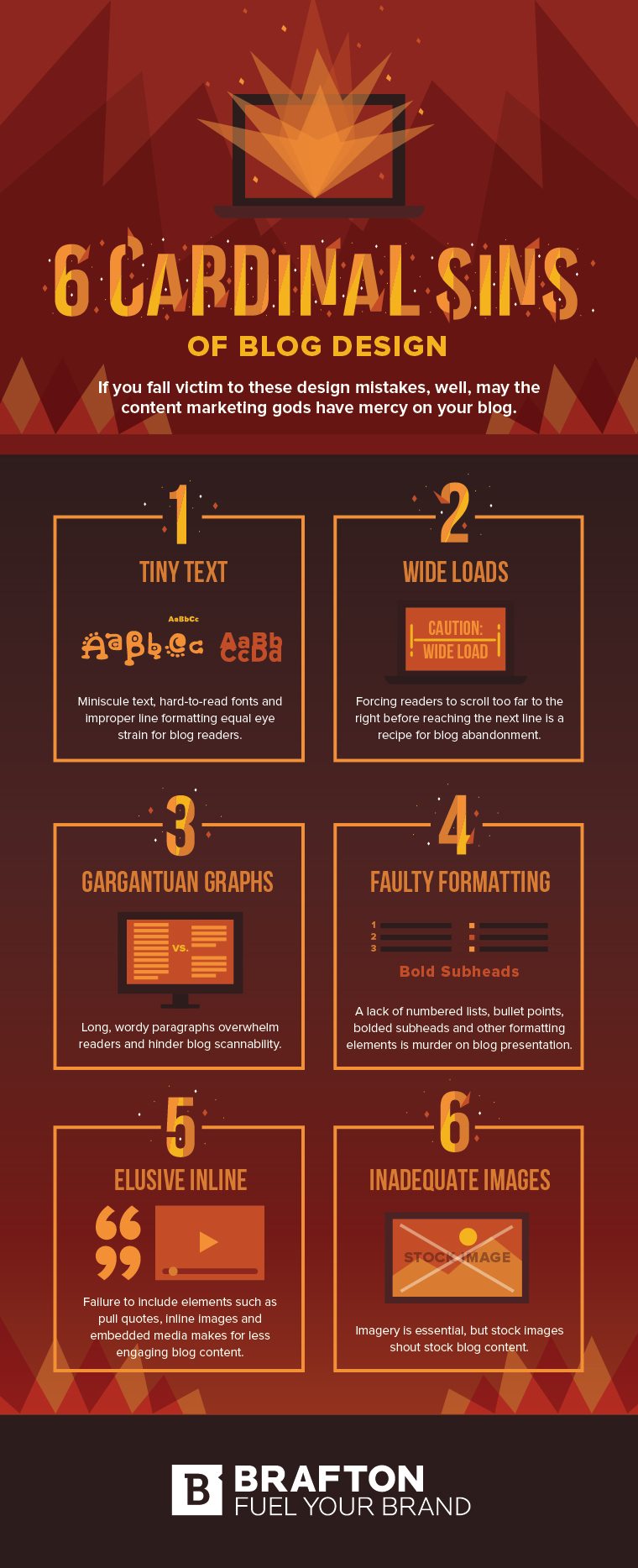
Brafton share the 6 cardinal sins of blog design in this infographic.
1. Cluttered Layouts
One of the most common mistakes bloggers make is cluttering their blog’s layout with too much information, widgets, and advertisements. While it’s essential to monetize your blog and offer valuable resources to your readers, overloading your pages with clutter can be overwhelming and distracting.
Why is it a cardinal sin?
A cluttered layout can result in a poor user experience. When visitors arrive at your blog and are bombarded with an excessive amount of content, they may find it difficult to navigate or focus on your core message. This can lead to high bounce rates, as users quickly leave your blog in search of a more visually pleasing and user-friendly alternative.
How to avoid it:
- Minimalism is key: Embrace a clean and minimalist design that focuses on your content. Remove unnecessary widgets, sidebars, and advertisements that don’t add value to your readers.
- Prioritize readability: Ensure that your font choices, colors, and text sizes are easy to read. Use plenty of white space to break up content and make it more digestible.
- Streamline navigation: Simplify your blog’s menu and navigation options. Make it easy for visitors to find the content they’re looking for.
2. Poor Typography Choices
Typography is a critical aspect of blog design, yet it’s often overlooked. The fonts you choose can significantly impact the readability and overall aesthetic of your blog.
Why is it a cardinal sin?
Using inappropriate fonts, text sizes, and spacing can make your blog difficult to read and unattractive. If readers struggle to decipher your content, they’re likely to leave your blog and seek information elsewhere.
How to avoid it:
- Choose readable fonts: Opt for clean, legible fonts like Arial, Helvetica, or Times New Roman for your body text. Save decorative fonts for headlines or special occasions.
- Mind the size: Ensure that your font size is large enough to be comfortably read on various devices, including smartphones and tablets.
- Maintain consistency: Stick to a consistent font style and size throughout your blog for a cohesive look.
3. Unresponsive Design
With the increasing use of mobile devices, having a responsive blog design is crucial. A responsive design ensures that your blog adapts and looks good on screens of all sizes.
Why is it a cardinal sin?
If your blog is not mobile-friendly, you’re alienating a significant portion of your potential audience. Visitors who struggle to view your content on their mobile devices are likely to abandon your blog.
How to avoid it:
- Use responsive themes: If you’re using a blogging platform like WordPress, choose a responsive theme that automatically adjusts to different screen sizes.
- Test on various devices: Regularly test your blog on smartphones, tablets, and different web browsers to ensure it looks and functions correctly.
- Optimize images: Compress and optimize images to reduce loading times on mobile devices.
4. Inconsistent Branding
Your blog should have a consistent and recognizable brand identity. This includes your logo, color scheme, and overall visual style.
Why is it a cardinal sin?
Inconsistent branding can confuse visitors and make your blog appear unprofessional. A strong and cohesive brand identity helps build trust and makes your blog memorable.
How to avoid it:
- Create a style guide: Develop a style guide that outlines your logo usage, color palette, and typography choices. Stick to these guidelines across your blog and social media channels.
- Use templates: If you create graphics or images for your blog, use templates to maintain a consistent look and feel.
- Regularly audit your content: Periodically review your old blog posts to ensure they align with your current branding guidelines.
5. Ignoring Page Speed
Page speed is a crucial factor in both user experience and search engine optimization (SEO). Slow-loading pages can frustrate visitors and negatively impact your search rankings.
Why is it a cardinal sin?
In today’s fast-paced digital world, people expect web pages to load quickly. If your blog takes too long to load, you risk losing impatient visitors.
How to avoid it:
- Optimize images: Compress images and use formats like WebP to reduce file sizes while maintaining quality.
- Leverage browser caching: Enable browser caching to store certain elements of your blog locally on visitors’ devices, speeding up subsequent visits.
- Use a content delivery network (CDN): A CDN distributes your blog’s content across multiple servers worldwide, reducing load times for users in different geographic locations.
6. Neglecting Accessibility
Accessibility is not only a legal requirement in many regions but also a moral imperative. Your blog should be accessible to all users, including those with disabilities.
Why is it a cardinal sin?
Neglecting accessibility excludes a significant portion of your potential audience and may result in legal consequences. It also goes against the principles of inclusivity and equal access to information.
How to avoid it:
- Use alt text: Add descriptive alt text to images so that screen readers can convey their content to visually impaired users.
- Ensure keyboard navigation: Test your blog’s navigation using only a keyboard to ensure that all interactive elements are accessible.
- Provide transcripts: If you include videos or podcasts, provide transcripts to make the content accessible to those who are deaf or hard of hearing.
Conclusion
The design of your blog is a critical aspect of its success. Avoiding these six cardinal sins of blog design—cluttered layouts, poor typography choices, unresponsive design, inconsistent branding, ignoring page speed, and neglecting accessibility—can help ensure that your blog is visually appealing, user-friendly, and capable of attracting and retaining a loyal readership. By prioritizing good design practices, you’ll create a more enjoyable and engaging experience for your audience, ultimately leading to the growth and success of your blog. Remember, a beautiful blog design is not just about aesthetics; it’s about delivering value to your readers and making their journey on your blog a pleasant one.

Author:
Mark Ford