Do you want your business website to appear higher on Google? Want to know how to achieve local SEO success?
In today’s digital age, having an online presence is crucial for businesses of all sizes. Whether you run a small local bakery or a multinational corporation, being visible on the internet is key to attracting new customers and staying competitive. When it comes to local businesses, one of the most effective ways to improve online visibility is through Local Search Engine Optimization (SEO).
Local SEO focuses on optimizing your online presence to attract local customers. The goal is simple: to get your business on the first page of Google’s search results in your local area. Why is this so important? Because studies show that over 70% of consumers use search engines to find local businesses, and the majority of them only click on the first few results. If your business isn’t on that first page, you’re missing out on valuable traffic and potential customers.
In this comprehensive guide, we’ll walk you through the essential steps to boost your local SEO and increase your chances of appearing on Google’s coveted page one in your local area.
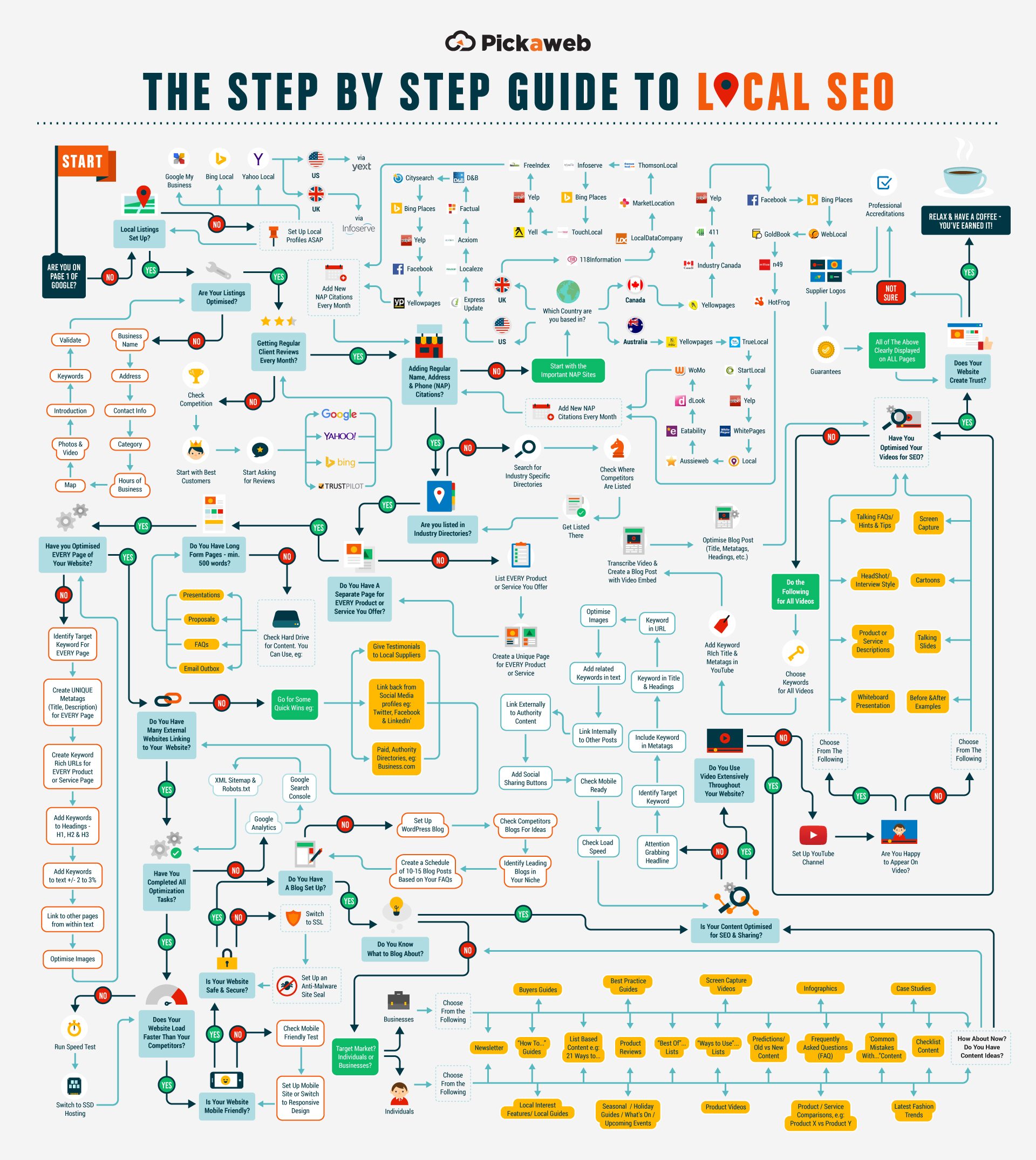
Pickaweb share their guide to local SEO in this infographic.
Click to enlarge.
Chapter 1: Understanding Local SEO
Before diving into the tactics and strategies, it’s essential to understand what Local SEO is and why it matters for your business.
What is Local SEO?
Local SEO is a branch of search engine optimization that focuses on optimizing your online presence for local search results. It’s all about ensuring that your business appears in local search queries, especially when users are looking for products or services near their location. For instance, if someone searches for “best coffee shops near me” or “plumber in [your city],” Local SEO helps your business show up in those search results.
Why Local SEO Matters
Local SEO is not just a buzzword; it has real, tangible benefits for your business:
- Increased Visibility: The higher you rank in local search results, the more visible your business becomes to potential customers in your area.
- Higher Click-Through Rates (CTR): Studies show that businesses on the first page of Google’s local search results receive the majority of clicks, leading to more website visits and potential customers.
- Improved Trust and Credibility: Ranking higher on Google implies that your business is trustworthy and credible, which can boost customer confidence in your products or services.
- Better Targeting: Local SEO ensures that you reach the right audience – people who are actively looking for businesses like yours in your specific area.
Now that you understand the significance of Local SEO let’s move on to the practical steps to help your business get on the first page of Google in your local area.
Chapter 2: Keyword Research and Optimization
Keyword research is the foundation of any successful SEO strategy, and Local SEO is no exception. Here’s how to approach it:
1. Identify Local Keywords
Start by identifying keywords that are relevant to your business and location. Tools like Google Keyword Planner, SEMrush, or Moz can help you find keywords that are frequently searched in your local area.
2. Long-Tail Keywords
Consider using long-tail keywords that include your location. For example, if you’re a florist in New York City, optimize for keywords like “New York City flower delivery” or “best florist in NYC.”
3. Competitor Research
Analyze your local competitors’ websites and see which keywords they are targeting. This can give you valuable insights into what works in your area.
4. On-Page Optimization
Once you’ve identified your target keywords, it’s time to optimize your website:
- Title Tags: Include your target keywords in your page titles, especially on your homepage.
- Meta Descriptions: Write compelling meta descriptions that include keywords and entice users to click on your link.
- Header Tags: Use header tags (H1, H2, H3) to structure your content and include keywords where relevant.
- Content: Create high-quality, informative, and engaging content that naturally incorporates your target keywords. Be sure to include your location where appropriate.
Chapter 3: Google My Business (GMB) Optimization
Google My Business is a free tool that allows you to manage how your business appears on Google Maps and in local search results. Optimizing your GMB listing is critical for Local SEO success:
1. Claim and Verify Your Listing
If you haven’t already, claim your Google My Business listing and verify it. This will give you control over the information that appears when someone searches for your business.
2. Complete Your Profile
Ensure that your GMB profile is complete and accurate. Add essential information like your business name, address, phone number (NAP), website URL, hours of operation, and high-quality images of your business.
3. Choose the Right Categories
Select the most relevant categories for your business. Google uses these categories to understand what your business offers and when to display it in local search results.
4. Encourage Reviews
Positive reviews can boost your GMB listing’s visibility. Encourage happy customers to leave reviews, and respond to reviews, both positive and negative, in a professional and timely manner.
Chapter 4: NAP Consistency
NAP consistency refers to ensuring that your business’s name, address, and phone number are consistent across all online platforms, directories, and your website. Here’s why it’s crucial:
1. Local Citations
Google uses local citations (mentions of your business online) to determine the legitimacy and authority of your business. Inconsistent NAP information can confuse search engines and hurt your rankings.
2. Audit Your Citations
Perform a citation audit to identify any inconsistencies. Tools like Moz Local or Whitespark can help you track down and correct errors.
3. Keep Your NAP Updated
Whenever your business information changes, update it immediately across all platforms. Consistency builds trust with both search engines and potential customers.
Chapter 5: Mobile Optimization
Mobile optimization is essential for local businesses, as many users search for local services on their smartphones. Here are some tips for mobile optimization:
1. Mobile-Friendly Website
Ensure that your website is responsive and mobile-friendly. Google gives preference to mobile-optimized sites in mobile search results.
2. Page Speed
Optimize your website for fast loading times. Slow-loading sites can lead to higher bounce rates and lower rankings.
3. Local Schema Markup
Implement local schema markup on your website to provide search engines with structured data about your business, such as your address, phone number, and hours of operation.
Chapter 6: Link Building and Local SEO
Backlinks, or inbound links from other websites to yours, are a critical factor in SEO. In the context of Local SEO, here’s what you need to know:
1. Quality Over Quantity
Focus on earning high-quality, relevant backlinks from authoritative websites in your industry or location. One high-quality link can be more valuable than many low-quality ones.
2. Local Directories and Listings
Submit your business to local directories, chambers of commerce, and industry-specific websites. These can provide valuable backlinks and citations.
3. Guest Blogging
Guest posting on local blogs or news websites can help you earn backlinks while establishing your authority in your local area.
Chapter 7: Social Media and Reviews
Social media and online reviews play a significant role in local SEO. Here’s how to leverage them effectively:
1. Social Media Presence
Maintain an active presence on social media platforms like Facebook, Instagram, and Twitter. Engage with your audience and share content that is relevant to your local community.
2. Online Reviews
Encourage satisfied customers to leave reviews on platforms like Google, Yelp, and Facebook. Positive reviews can boost your local rankings and reputation.
3. Respond to Reviews
Respond to both positive and negative reviews professionally and promptly. This shows that you value customer feedback and can improve your local SEO.
Chapter 8: Local Content Marketing
Creating and promoting local content is a powerful way to boost your local SEO efforts:
1. Blog About Local Topics
Write blog posts that are relevant to your local audience. This could include event guides, local news, or tips related to your industry.
2. Local Link Building
Reach out to local websites, bloggers, and influencers to collaborate on content or partnerships. This can lead to valuable backlinks and increased exposure.
3. Community Involvement
Participate in local events, sponsorships, or charity activities. These actions not only benefit your community but also provide opportunities for local backlinks and press coverage.
Chapter 9: Monitor and Analyze
Once you’ve implemented the strategies outlined in this guide, it’s essential to monitor and analyze your progress:
1. Google Analytics
Use Google Analytics to track website traffic, user behavior, and conversions. This data can help you fine-tune your strategies.
2. Google Search Console
Monitor your website’s performance in Google Search Console. It provides insights into how Google sees your site, including any crawl errors or indexing issues.
3. Rank Tracking Tools
Use rank tracking tools like Moz or SEMrush to monitor your keyword rankings and track improvements.
4. Review User Behavior
Analyze user behavior on your website, such as bounce rates and time on site, to identify areas for improvement.
Conclusion
Local SEO is an ongoing process that requires dedication and consistent effort. By implementing the strategies outlined in this guide, you can significantly increase your chances of getting your business on the first page of Google in your local area. Remember, the digital landscape is always evolving, so staying up-to-date with the latest SEO trends and algorithm changes is crucial for long-term success. So, roll up your sleeves, put in the work, and watch your local online presence thrive!

Author:
Mark Ford